• Wyszukiwanie zaawansowane
  • Kategorie
  • Kategorie BISAC
  • Książki na zamówienie
  • Promocje
  • Granty
  • Książka na prezent
  • Opinie
  • Pomoc
  • Załóż konto
  • Zaloguj się

Crisis Management in Anesthesiology » książka


zaloguj się | załóż konto
Logo Krainaksiazek.pl

koszyk

konto

szukaj
topmenu
Księgarnia internetowa
Szukaj
Książki na zamówienie
Promocje
Granty
Książka na prezent
Moje konto
Pomoc
 
 
Wyszukiwanie zaawansowane
Pusty koszyk
Bezpłatna dostawa dla zamówień powyżej 20 złBezpłatna dostawa dla zamówień powyżej 20 zł

Kategorie główne

• Nauka
 [2946350]
• Literatura piękna
 [1816154]

  więcej...
• Turystyka
 [70666]
• Informatyka
 [151172]
• Komiksy
 [35576]
• Encyklopedie
 [23172]
• Dziecięca
 [611458]
• Hobby
 [135995]
• AudioBooki
 [1726]
• Literatura faktu
 [225763]
• Muzyka CD
 [378]
• Słowniki
 [2917]
• Inne
 [444280]
• Kalendarze
 [1179]
• Podręczniki
 [166508]
• Poradniki
 [469467]
• Religia
 [507199]
• Czasopisma
 [496]
• Sport
 [61352]
• Sztuka
 [242330]
• CD, DVD, Video
 [3348]
• Technologie
 [219391]
• Zdrowie
 [98638]
• Książkowe Klimaty
 [124]
• Zabawki
 [2382]
• Puzzle, gry
 [3525]
• Literatura w języku ukraińskim
 [259]
• Art. papiernicze i szkolne
 [7107]
Kategorie szczegółowe BISAC

Crisis Management in Anesthesiology

ISBN-13: 9780443065378 / Angielski / Miękka / 2014 / 432 str.
David M Gaba
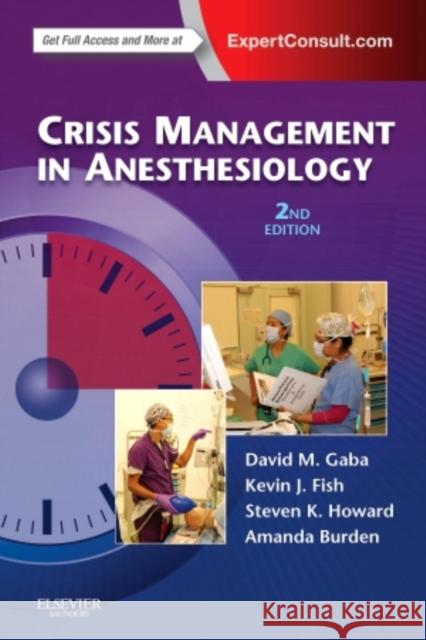
Crisis Management in Anesthesiology David M Gaba 9780443065378  - książkaWidoczna okładka, to zdjęcie poglądowe, a rzeczywista szata graficzna może różnić się od prezentowanej.

Crisis Management in Anesthesiology

ISBN-13: 9780443065378 / Angielski / Miękka / 2014 / 432 str.

David M Gaba
cena 313,40
(netto: 298,48 VAT:  5%)

Najniższa cena z 30 dni: 309,57
Termin realizacji zamówienia:
ok. 30 dni roboczych.

Darmowa dostawa!

The fully updated Crisis Management in Anesthesiology continues to provide updated insights on the latest theories, principles, and practices in anesthesiology. From anesthesiologists and nurse anesthetists to emergency physicians and residents, this medical reference book will effectively prepare you to handle any critical incident during anesthesia. ? "A comprehensive discussion of the latest theories, principles and practices for CRM in perioperative practice and will be a useful resource for anaesthetists of all grades and levels of experience" Reviewed by British Journal of Anaesthesia, Jun 2015 ?..".this book contains essential information that all anesthesiologists should know or readily be able to easily reference..." Reviewed by Jane Torrie, Oct 2015 "Every anesthesia provider needs to study, not just read, this new edition, even if you read the first edition. Also, distilled instructions of key elements of the cases covered in this book need to be included in manuals made available for emergencies (although that, too, needs further study on how best to use them). If I were your patient, I would ask if you had studied these principles. If you hadn't, I might ask for another health care provider into whose hands I would want to entrust my life." Foreword by: ? Jeffrey B. Cooper, PhD Harvard Medical School, Boston, Massachusetts, July 2015?


Kategorie:
Nauka, Medycyna
Kategorie BISAC:
Medical > Anesthesiology
Medical > Critical Care
Medical > Nursing - Anesthesia
Język:
Angielski
ISBN-13:
9780443065378
Rok wydania:
2014
Wydanie:
Revised
Ilość stron:
432
Waga:
0.47 kg
Wymiary:
22.86 x 14.99 x 1.52
Oprawa:
Miękka
Wolumenów:
01
Dodatkowe informacje:
Bibliografia
Wydanie ilustrowane

"Who should buy this book? The authors state in the Preface that they wrote it for everyone who administers anesthesia, from trainees to experienced practitioners. I have to say that I enthusiastically agree!”

"The distinguished authors of this latest edition build on these foundations, which now include new chapters on teaching CRM and the vitally important skill of debriefing colleagues after they have experienced such challenging events. The catalogue of critical incidents has been completely overhauled and updated, to reflect contemporary practice with nearly 20 new scenarios added". Reviewed by British Journal of Anaesthesia, Jun 2015

"Those preparing for examinations, including maintenance of certification, or those preparing others for these exams will find this book to be an excellent resource." Reviewed by Jane Torrie, Oct 2015

"This is a tremendous book with the single focus of improving patient safety in the fluid situation of anesthesia administration. Every residency program has a curriculum to deal with predictable situations, but not necessarily with unpredictable situations. Other books on similar topics stress medical knowledge to improve the safety of patients, but this is the only one that highlights the importance of the development of cognitive and behavioral skills that are important for averting disaster in crisis situations. This is a must read for safe and better care of patients under anesthesia.”

-Tariq M. Malik, MD (University of Chicago Pritzker School of Medicine) Doody's Score: 100 - 5 Stars!

"Who should buy this book? The authors state in the Preface that they wrote it for everyone who administers anesthesia, from trainees to experienced practitioners. I have to say that I enthusiastically agree!"

-Manuel Pardo, Jr., M.D., University of California (Anesthesiology 2016; 124:738-40)

1. Fundamentals of Dynamic Decision Making in Anesthesia

2. Specific Principles of Anesthesia Crisis Resource Management

3. Teaching Anesthesia Crisis Resource Management

4. Debriefing

5. Generic Events

Acute Hemorrhage

Cardiac Arrest

Difficult Tracheal Intubation

Emergent (Crash) Induction of Anesthesia

Esophageal Intubation

High Inspired CO2

High Peak Inspiratory Pressure

Hypertension

Hypotension

Hypoxemia

Operating Room Fire

ST Segment Change

The Septic Patient

The Trauma Patient

6. Cardiovascular Events

Acute Coronary Syndrome

Anaphylactic and Anaphylactoid Reactions

Autonomic Dysreflexia

Cardiac Tamponade

Nonlethal Ventricular Arrhythmias

Pulmonary Edema

Pulmonary Embolism

Sinus Bradycardia

Supraventricular Arrhythmias

Venous Gas Embolism

7. Pulmonary Events

Airway Burn

Airway Rupture

Anterior Mediastinal Mass

Aspiration of Gastric Contents

Bronchospasm

Endobronchial Intubation

Epiglottitis (Supraglottitis)

Hypercarbia

Hypoxemia During One-Lung Ventilation

Massive Hemoptysis

Pneumothorax

Postoperative Stridor

Unplanned Extubation

8. Metabolic Events

Addisonian Crisis (Acute Adrenal Insufficiency)

Diabetic Ketoacidosis

Hyperkalemia

Hypoglycemia

Hypokalemia

Hyponatremia and Hypo-osmolality

Hypothermia

Malignant Hyperthermia

Metabolic Acidosis

Methemoglobinemia

Oliguria

Thyroid Storm

Transfusion Reaction

9. Neurologic Events

Central Nervous System Injury

Local Anesthetic Systemic Toxicity

Perioperative Visual Loss

Peripheral Nerve Injury

Postoperative Alteration in Mental Status

Postoperative Failure to Breathe

Seizures

10. Equipment Events

Carbon Monoxide in the Anesthesia Circuit

Circle System Expiratory Valve Stuck Closed

Circle System Inspiratory Valve Stuck Closed

Circle System Valve Stuck Open

Common Gas Outlet Failure

Drug Administration Error

Electrical Power Failure

Faulty Oxygen Supply

Gas Flow Control Malfunction

Intravenous Line Failure

Loss of Pipeline Oxygen

Major Leak in the Anesthesia Breathing Circuit

Pop-Off Valve Failure

Ventilator Failure

Volatile Anesthetic Overdose

Waste Anesthesia Gas Disposal System Malfunction

11. Cardiac Anesthesia Events

Cardiac Laceration

Coagulopathy Following Cardiopulmonary Bypass

Emergent "Crash" onto Cardiopulmonary Bypass

Hypotension During Cardiopulmonary Bypass

Low Cardiac Output State Post-Cardiopulmonary Bypass

Massive Systemic Air Embolism

Protamine Reaction

12. Obstetric Events

Amniotic Fluid Embolism (also termed Anaphylactoid Syndrome of Pregnancy)

Cardiac Arrest in the Parturient

Difficult Airway in the Parturient

Emergency Cesarean Section

Hypotension Following Neuraxial Anesthesia

Magnesium Toxicity

Obstetric Hemorrhage

Pre-eclampsia and Eclampsia

Total Spinal Anesthesia

13. Pediatric Events

Acute Hemorrhage in the Pediatric Patient

Anaphylaxis in the Pediatric Patient

Aspiration of a Foreign Body

Bradycardia in the Pediatric Patient

Cardiac Arrest in the Pediatric Patient

Difficult Airway Management in the Pediatric Patient

Hypotension in the Pediatric Patient

Laryngospasm

Masseter Muscle Rigidity

Sinus Tachycardia in the Pediatric Patient

David Gaba is a Professor, Anesthesiology, Perioperative and Pain Medicine and Associate Dean for Immersive and Simulation-based Learning in Stanford University School of Medicine. Steven Howard is a Professor, Med Center Line, Anesthesiology, Perioperative and Pain Medicine and Chair, Clinical Competence Committee, Department of Anesthesia. Amanda Burden is a Professor of Anesthesiology, Cooper Medical School of Rowan University and Director, Simulation Program, Cooper University Health Care.


Udostępnij

Facebook - konto krainaksiazek.pl


Opinie o Krainaksiazek.pl na Opineo.pl

Partner Mybenefit

Krainaksiazek.pl w programie rzetelna firma Krainaksiaze.pl - płatności przez paypal

Czytaj nas na:

Facebook - krainaksiazek.pl
  • książki na zamówienie
  • granty
  • książka na prezent
  • kontakt
  • pomoc
  • opinie
  • regulamin
  • polityka prywatności

Zobacz:

  • Księgarnia czeska

  • Wydawnictwo Książkowe Klimaty

1997-2026 DolnySlask.com Agencja Internetowa

© 1997-2022 krainaksiazek.pl
     
KONTAKT | REGULAMIN | POLITYKA PRYWATNOŚCI | USTAWIENIA PRYWATNOŚCI
Zobacz: Księgarnia Czeska | Wydawnictwo Książkowe Klimaty | Mapa strony | Lista autorów
KrainaKsiazek.PL - Księgarnia Internetowa

Polityka prywatnosci - link
Krainaksiazek.pl - płatnośc Przelewy24
Przechowalnia Przechowalnia






