Cosmic Dust from the Laboratory to the Stars » książka

topmenu




Cosmic Dust from the Laboratory to the Stars
ISBN-13: 9789402420098 / Angielski / Twarda / 2020 / 418 str.
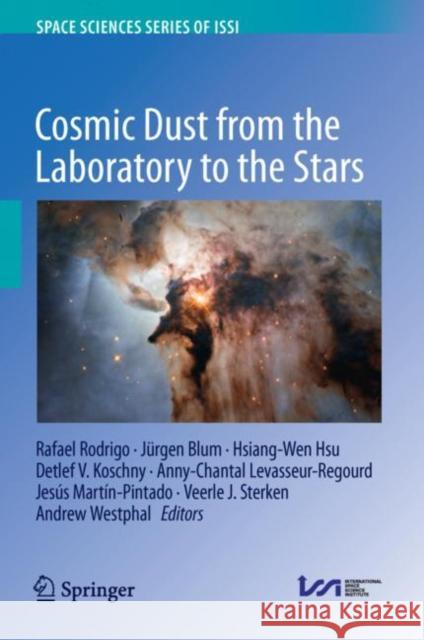
Cosmic Dust from the Laboratory to the Stars
ISBN-13: 9789402420098 / Angielski / Twarda / 2020 / 418 str.
cena 684,33
(netto: 651,74 VAT: 5%)
Najniższa cena z 30 dni: 655,41
(netto: 651,74 VAT: 5%)
Najniższa cena z 30 dni: 655,41
Termin realizacji zamówienia:
ok. 22 dni roboczych.
ok. 22 dni roboczych.
Darmowa dostawa!
Kategorie BISAC:
Wydawca:
Springer
Seria wydawnicza:
Język:
Angielski
ISBN-13:
9789402420098
Rok wydania:
2020
Wydanie:
2020
Numer serii:
000908486
Ilość stron:
418
Waga:
0.72 kg
Wymiary:
23.88 x 16.51 x 2.03
Oprawa:
Twarda
Wolumenów:
01
Preface.- Dust Emission by Active Moons.- Dust Phenomena Relating to Airless Bodies.- Cometary Dust.- Dust Evolution in Protoplanetary Discs and the Formation of Planetesimals.- The Dawn of Dust Astronomy.- Interstellar Dust in the Solar System.- Interplanetary Dust, Meteoroids, Meteors and Meteorites.- Impacts of Cosmic Dust on Planetary Atmospheres and Surfaces.- Circumplanetary Dust Populations.
Rafael Rodrigo received his PhD at the University of Granada in 1979. His scientific career began at the Institute of Astrophysics of Andalusia, of which he was director from 1990 to 2004, and where he was directly involved in the direction of many projects on Planetary Atmospheres and Solar System Exploration. He has been the President of the Spanish National Research Council (CSIC) from 2008 to 2012. He has been or is involved in many space missions (Rosetta, Cassini‐Huygens, Mars Express, Bepi‐Colombo, JUICE…). He is currently a Research Professor at the Centro de Astrobiologia (CSIC), Madrid, and former Executive Director of the International Space Science Institute in Bern, Switzerland from 2012 to 2018. Presently he is General Secretary for Coordination of Science Policy at the Spanish Ministry of Science, Innovation and Universities. He is the author or co‐author of more than 300 scientific publications.
Hsiang-Wen Hsu is a research associate at the Laboratory of Atmospheric and Space Physics, University of Colorado Boulder, USA. He received his master degree from the National Central University, Taiwan in 2005 and his PhD at the Ruprecht Karl University Heidelberg, Germany in 2010. He was a participating scientist involved in the Cassini Grand Finale mission. His research interests include planetary rings, dust-plasma interactions, Ocean worlds (Enceladus and Europa), and small bodies in the solar system.
Jürgen Blum received his PhD (Dr. rer. nat.) at the University of Heidelberg in 1990 and his Venia Legendi (Dr. rer. nat. habil.) from the University of Jena in 1999. His research positions were at the Max Planck Institute for Nuclear Physics in Heidelberg, the Max Planck Research Unit “Dust in Star-Forming Regions” in Jena, the University of Jena, and the Naval Research Laboratory in Washington, D.C., USA. Since 2003, he is Professor at the Technische Universität Braunschweig. His scientific expertise comprises cosmic dust, the formation of planetary systems, small bodies in the Solar System, laboratory astrophysics and low-gravity experiments. He is the author or co‐author of more than 200 scientific publications.
Jesus Martin-Pintado is Research Professor at the Centro de Astrobiología (Spain). He worked on his PhD at the Max-Planck Institute für Radioatronomie (Germany) and received his degree at the Universidad Complutense of Madrid in 1984. He was involved in the HIFI instrument onboard Herschel, and he is currently a member of the science committee of the ESA-JAXA SPICA mission. His main research interests include astrochemistry, the study of star formation and of the physical properties of the interstellar medium in the nuclei of our Galaxy and nearby galaxies.
Dr. Veerle Sterken (Belgian) received a Master’s degree in Aerospace Engineering from the Technical University of Delft (the Netherlands) in 2005, and is specialized in Astrodynamics and Satellite Systems. She worked for the European Space Agency on space systems engineering and at the Technische Universiteit Delft / Thales Alenia Space (France) on the Darwin interferometry mission. She obtained a Ph.D. in Geophysics in 2012 (Technische Universität Braunschweig) on the topic of interstellar dust in the solar system, while working in the cosmic dust group at the Max Planck Institute for Nuclear Physics in Heidelberg (Germany). She moved to Bern (Switzerland) for a post-doctoral fellowship at the International Space Science Institute (ISSI), and subsequently worked at the University of Bern and at the Swiss National Science Foundation, before going back to academia (ETH Zürich) with a European Research Council Starting Grant, for research on interstellar dust and the heliosphere.
Anny-Chantal Levasseur-Regourd is Professor Emeritus at Sorbonne Université (Paris, France), within the LATMOS-CNRS laboratory. She received her PhD in physics in 1976 at Université Paris VI. She is or has been PI or Co-I for many experiments onboard rockets, satellites, space stations and interplanetary probes (including Giotto, Vega, Rosetta and Comet interceptor). Her main research activities are related to the physics of comets, asteroids and interplanetary medium, to light scattering processes on dust particles, and to cosmic dust interactions with planetary atmospheres. She is the author or co-author of more than 250 scientific publications in referee journals, and the author or co-editor of about 19 scientific books. She has, amongst international duties, been chairing commissions at the IAU and at COSPAR, and been a member of the ISSI Science committee. She was France single point of contact for the IYA 2009 (International Year of Astronomy). Her name was given to asteroid 6170.
Detlef Koschny studied aerospace engineering at the TU Munich, Germany. He worked on his Master’s thesis at Caltech, California, performing hypervelocity impact experiments in 1988. From 1988 to 1990 he worked in industry on the German Spacelab D-2 as payload engineer. He received his Ph.D. in planetary science from the TU Munich in 1994. From 1994 to 1997 he worked as technical manager of several space-based camera systems at the Max-Planck Institute for Aeronomy in Katlenburg-Lindau, Germany. He worked on the Mars Pathfinder mission, Mars Polar Lander, Cassini-Huygens, and the Rosetta comet mission. In 1997 he went to the European Space Agency where he started in the team of the Rosetta Project Scientist. Later he was also involved in Smart-1, Mars Express, Venus Express, and BepiColombo (to Mercury). From 2005 to 2015 he worked on several space mission studies to asteroids and the Moon. Since 2008 he spends part of his time co-managing ESA’s near-Earth object segment of the Space Situational Awareness mission. Since 2017, he is also the instrument coordinator for the so-called Close-Up Imager on the ExoMars 2020 mission. His research time is spent on studying meteors and meteoroids, both with ground-based instrumentation and using space-based assets.
Andrew Westphal is a Research Physicist and Senior Space Fellow at the Space Sciences Laboratory at U. C. Berkeley. He got his PhD at Berkeley in 1992 in high-energy astrophysics, and now works on the interface between planetary science and astrophysics. The Westphal group uses some of the most sophisticated x-ray, electron-beam and ion-beam instruments on the planet to study ultra-primitive extraterrestrial materials that contain clues about the earliest history of the solar system. Dr. Westphal recently led an international consortium of more than 60 scientists that announced the discovery of seven particles of likely interstellar origin, returned in the Interstellar Dust Collector of the Stardust spacecraft.
From the Earth's atmosphere to the edges of our Universe, the presence of dust is ubiquitous. One of the main challenges in studying dust in these various environments is thus to harmonize the diverse research techniques and results, including in-situ measurement, remote observation, laboratory experiments and modelling, and analysis of returned samples. For the first time in over a decade, this volume accomplishes exactly that, providing an overarching picture of the current state of dust science and research.
Where possible, the papers in this volume emphasize the interconnections, similarities, and differences in the field, synthesizing results from several techniques into one cohesive view. Importantly, astrobiological connections have now been considered. The dust hazard, future technology and research, and space mission requirements and scenarios are also addressed. The outcome of this endeavor is an interdisciplinary compendium with a unified perspective on cosmic dust science.
Originally published in Space Science Reviews in the Topical Collection "Cosmic Dust from the Laboratory to the Stars"




Czytaj nas na:
1997-2026 DolnySlask.com Agencja Internetowa
Zobacz: Księgarnia Czeska | Wydawnictwo Książkowe Klimaty | Mapa strony | Lista autorów
KrainaKsiazek.PL - Księgarnia Internetowa

KrainaKsiazek.PL - Księgarnia Internetowa

