Correct English: Reality or Myth? » książka





Correct English: Reality or Myth?
ISBN-13: 9780994150202 / Angielski / Miękka / 2015 / 294 str.
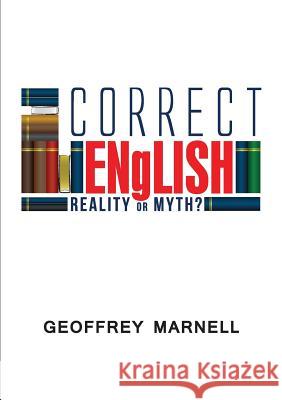
Prescriptivism-the view that there are correct and incorrect ways of speaking and writing-is the default view of most people. But the existence of variants of English, historical and contemporary, poses difficulties for prescriptivism. Further, a philosophical analysis of the concept of correctness shows that calling any way of using language incorrect is akin to calling a lampshade dishonest. It is what philosophers call a category mistake. This book calls for a different, more tolerant, attitude to language, one that respects the innate creativity and lust for novelty that defines Homo sapiens-and one that eradicates the anxiety that many needlessly suffer when they have to put pen to paper or give a talk.Synopsis Chapter 1: The inevitable revolution Explores why the cultural warriors of the 1960s and 70s rejected the teaching of English (with numerous examples to show that much of what was taught was prejudice, wrong or illogical).Chapter 2: The myth of correctness Analyses the concepts of correctness and wrongness and shows that language use, even if understood as following a mere convention, cannot be right or wrong, correct or incorrect.Chapter 3: Prescriptivists fight back Is the English language becoming corrupt? Is it losing its power to communicate effectively? This chapter considers various arguments put forward for keeping language pure (or at least stopping it from changing).Chapter 4: Taking language seriously If no-one owns the English language and no-one has the authority to control it, perhaps we need to rethink what makes good writing good. Perhaps the criterion should be not what is deemed correct, but what best meets our needs as Homo sapiens. By that criterion, is the absolutism of prescriptivism or the relativism of descriptivism the better approach?Chapter 5: The bedrock of good writing Explores the primacy of communication skills over knowledge of the rules of language-use in ensuring writing that is not self-defeating. Illustrates the importance of clarity, familiarity, economy, conceptual lightness, neutrality and consistency in writing that meets the needs of both writer and reader.Chapter 6: Can the quality of writing be measured? Writers have been sued for expecting their readers to understand documents that have a low readability score. This chapter considers the value of the readability scores provided in various word-processing software and concludes that there is none. The quality of writing cannot be measured.Chapter 7: Learning the lingo If we are to prevent another backlash against teaching the basic mechanics of the English language-of the sort we saw in the 1960s and 70s-another approach to teaching is needed. This chapter discusses how active descriptivism is a better philosophy for developing the communicative prowess of students. Epilogue Writing is a form of expression, as is painting and composing music. No-one has the right to tell artists to paint in a particular way nor tell composers to compose in a particular way. So perhaps we have a right to talk and write as we please. But how can we accommodate creativity-or even improve the English language-if our primary purpose is to communicate and there are boundaries to communicative success?
Prescriptivism-the view that there are correct and incorrect ways of speaking and writing-is the default view of most people. But the existence of variants of English, historical and contemporary, poses difficulties for prescriptivism. Further, a philosophical analysis of the concept of correctness shows that calling any way of using language incorrect is akin to calling a lampshade dishonest. It is what philosophers call a category mistake. This book calls for a different, more tolerant, attitude to language, one that respects the innate creativity and lust for novelty that defines Homo sapiens-and one that eradicates the anxiety that many needlessly suffer when they have to put pen to paper or give a talk.Synopsis Chapter 1: The inevitable revolution Explores why the cultural warriors of the 1960s and 70s rejected the teaching of English (with numerous examples to show that much of what was taught was prejudice, wrong or illogical).Chapter 2: The myth of correctness Analyses the concepts of correctness and wrongness and shows that language use, even if understood as following a mere convention, cannot be right or wrong, correct or incorrect.Chapter 3: Prescriptivists fight back Is the English language becoming corrupt? Is it losing its power to communicate effectively? This chapter considers various arguments put forward for keeping language pure (or at least stopping it from changing).Chapter 4: Taking language seriously If no-one owns the English language and no-one has the authority to control it, perhaps we need to rethink what makes good writing good. Perhaps the criterion should be not what is deemed correct, but what best meets our needs as Homo sapiens. By that criterion, is the absolutism of prescriptivism or the relativism of descriptivism the better approach?Chapter 5: The bedrock of good writing Explores the primacy of communication skills over knowledge of the rules of language-use in ensuring writing that is not self-defeating. Illustrates the importance of clarity, familiarity, economy, conceptual lightness, neutrality and consistency in writing that meets the needs of both writer and reader.Chapter 6: Can the quality of writing be measured? Writers have been sued for expecting their readers to understand documents that have a low readability score. This chapter considers the value of the readability scores provided in various word-processing software and concludes that there is none. The quality of writing cannot be measured.Chapter 7: Learning the lingo If we are to prevent another backlash against teaching the basic mechanics of the English language-of the sort we saw in the 1960s and 70s-another approach to teaching is needed. This chapter discusses how active descriptivism is a better philosophy for developing the communicative prowess of students. Epilogue Writing is a form of expression, as is painting and composing music. No-one has the right to tell artists to paint in a particular way nor tell composers to compose in a particular way. So perhaps we have a right to talk and write as we please. But how can we accommodate creativity-or even improve the English language-if our primary purpose is to communicate and there are boundaries to communicative success?




Czytaj nas na:
KrainaKsiazek.PL - Księgarnia Internetowa


