• Wyszukiwanie zaawansowane
  • Kategorie
  • Kategorie BISAC
  • Książki na zamówienie
  • Promocje
  • Granty
  • Książka na prezent
  • Opinie
  • Pomoc
  • Załóż konto
  • Zaloguj się

Corporate Risk Management » książka


zaloguj się | załóż konto
Logo Krainaksiazek.pl

koszyk

konto

szukaj
topmenu
Księgarnia internetowa
Szukaj
Książki na zamówienie
Promocje
Granty
Książka na prezent
Moje konto
Pomoc
 
 
Wyszukiwanie zaawansowane
Pusty koszyk
Bezpłatna dostawa dla zamówień powyżej 20 złBezpłatna dostawa dla zamówień powyżej 20 zł

Kategorie główne

• Nauka
 [2949965]
• Literatura piękna
 [1857847]

  więcej...
• Turystyka
 [70818]
• Informatyka
 [151303]
• Komiksy
 [35733]
• Encyklopedie
 [23180]
• Dziecięca
 [617748]
• Hobby
 [139972]
• AudioBooki
 [1650]
• Literatura faktu
 [228361]
• Muzyka CD
 [398]
• Słowniki
 [2862]
• Inne
 [444732]
• Kalendarze
 [1620]
• Podręczniki
 [167233]
• Poradniki
 [482388]
• Religia
 [509867]
• Czasopisma
 [533]
• Sport
 [61361]
• Sztuka
 [243125]
• CD, DVD, Video
 [3451]
• Technologie
 [219309]
• Zdrowie
 [101347]
• Książkowe Klimaty
 [123]
• Zabawki
 [2362]
• Puzzle, gry
 [3791]
• Literatura w języku ukraińskim
 [253]
• Art. papiernicze i szkolne
 [7933]
Kategorie szczegółowe BISAC

Corporate Risk Management

ISBN-13: 9780470518335 / Angielski / Twarda / 2008 / 440 str.
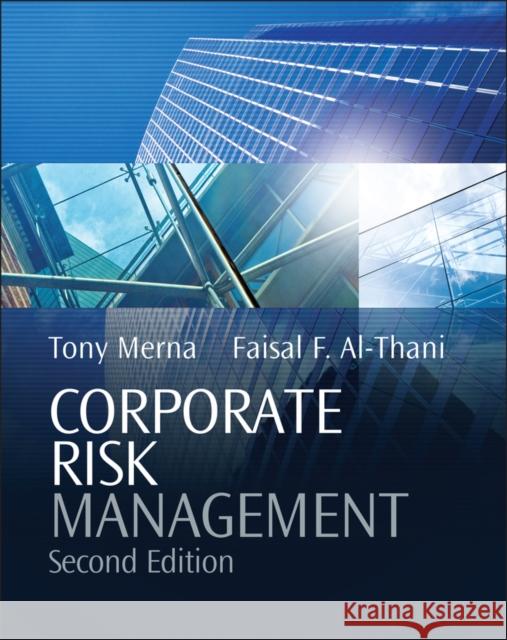
Tony Merna; Faisal F. Al-Thani
Corporate Risk Management Tony Merna Faisal F. Al-Thani 9780470518335 John Wiley & Sons - książkaWidoczna okładka, to zdjęcie poglądowe, a rzeczywista szata graficzna może różnić się od prezentowanej.

Corporate Risk Management

ISBN-13: 9780470518335 / Angielski / Twarda / 2008 / 440 str.

Tony Merna; Faisal F. Al-Thani
cena 276,70
(netto: 263,52 VAT:  5%)

Najniższa cena z 30 dni: 274,43
Termin realizacji zamówienia:
ok. 30 dni roboczych
Bez gwarancji dostawy przed świętami

Darmowa dostawa!

The book analyzes, compares, and contrasts tools and techniques used in risk management at corporate, strategic business and project level and develops a risk management mechanism for the sequencing of risk assessment through corporate, strategic and project stages of an investment in order to meet the requirements of the 1999 Turnbull report. By classifying and categorizing risk within these levels it is possible to drill down and roll-up to any level of the organizational structure and to establish the risks that each project is most sensitive to, so that appropriate risk response strategies may be implemented to benefit all stakeholders. "The new edition of this book provides a clear insight into the intricacies of corporate risk management and the addition of the case study exemplars aids understanding of the management of multiple projects in the real world."
--Professor Nigel Smith, Head of the School of Civil Engineering, University of Leeds


Kategorie:
Nauka, Ekonomia i biznes
Kategorie BISAC:
Business & Economics > Finance - General
Business & Economics > Finanse przedsiębiorstwa
Wydawca:
John Wiley & Sons
Język:
Angielski
ISBN-13:
9780470518335
Rok wydania:
2008
Ilość stron:
440
Waga:
0.77 kg
Wymiary:
22.99 x 16.31 x 3.07
Oprawa:
Twarda
Wolumenów:
01
Dodatkowe informacje:
Bibliografia
Obwoluta

1 Introduction.

1.1 Introduction.

1.2 Why Managing Risk is Important.

1.3 General Definition of Risk Management.

1.4 Background and Structure.

1.5 Aim.

1.6 Scope of the Book.

2 The Concept of Risk and Uncertainty and the Sources and Types of Risk.

2.1 Introduction.

2.2 Background.

2.3 Risk and Uncertainty: Basic Concepts and General Principles.

2.4 The Origin of Risks.

2.5 Uncertainties.

2.6 Sources of Risk.

2.7 Typical Risks.

2.8 Perceptions of Risk.

2.9 Stakeholders in an Investment.

2.10 Summary.

3 The Evolution of Risk Management and the Risk Management Process.

3.1 Introduction.

3.2 The Evolution of Risk Management.

3.3 Risk Management.

3.4 The Risk Management Process Identification, Analysis and Response.

3.5 Embedding Risk Management into Your Organisation.

3.6 Risk Management Plan.

3.7 Executive Responsibility and Risk.

3.8 Summary.

4 Risk Management Tools and Techniques.

4.1 Introduction.

4.2 Definitions.

4.3 Risk Analysis Techniques.

4.4 Qualitative Techniques in Risk Management.

4.5 Quantitative Techniques in Risk Management.

4.6 Quantitative and Qualitative Risk Assessments.

4.7 Value Management.

4.8 Other Risk Management Techniques.

4.9 Country Risk Analysis.

4.10 Summary.

5 Financing Projects, their Risks and Risk Modelling.

5.1 Introduction.

5.2 Corporate Finance.

5.3 Project Finance.

5.4 Financial Instruments.

5.5 Debt 116

5.6 Mezzanine Finance Instruments.

5.7 Equity.

5.8 Financial Risks.

5.9 Non–Financial Risks Affecting Project Finance.

5.10 Managing Financial Risks.

5.11 Risk Modelling.

5.12 Types of Risk Software.

5.13 Summary.

6 Portfolio Analysis and Cash Flows.

6.1 Introduction.

6.2 Selecting a Portfolio Strategy.

6.3 Constructing the Portfolio.

6.4 Portfolio of Cash Flows.

6.5 The Boston Matrix.

6.6 Scenario Analysis.

6.7 Diversification.

6.8 Portfolio Risk Management.

6.9 Cross–Collateralisation.

6.10 Cash Flows.

6.11 An Example of Portfolio Modelling.

6.12 Summary.

7 Risk Management at Corporate Level.

7.1 Introduction.

7.2 Definitions.

7.3 The History of the Corporation.

7.4 Corporate Structure.

7.5 Corporate Management.

7.6 Corporate Functions.

7.7 Corporate Strategy.

7.8 Recognising Risks.

7.9 Specific Risks at Corporate Level.

7.10 The Chief Risk Officer.

7.11 How Risks are Assessed at Corporate Level.

7.12 Corporate Risk Strategy.

7.13 Corporate Risk: An Overview.

7.14 The Future of Corporate Risk.

7.15 Summary.

8 Risk Management at Strategic Business Level.

8.1 Introduction.

8.2 Definitions.

8.3 Business Formation.

8.4 Strategic Business Units.

8.5 Business Strategy.

8.6 Strategic Planning.

8.7 Recognising Risks.

8.8 Portfolio Theory.

8.9 Programme Management.

8.10 Business Risk Strategy.

8.11 Tools at Strategic Business Unit Level.

8.12 Strategic Business Risk: An Overview.

8.13 Summary.

9 Risk Management at Project Level.

9.1 Introduction.

9.2 The History of Project Management.

9.3 Definitions.

9.4 Project Management Functions.

9.5 Project Strategy Analysis.

9.6 Why Project Risk Management is Used.

9.7 Recognising Risks.

9.8 Project Risk Strategy.

9.9 The Future of Project Risk Management.

9.10 Summary.

10 Risk Management at Corporate, Strategic Business and Project Levels.

10.1 Introduction.

10.2 Risk Management.

10.3 The Risk Management Process

10.4 Common Approaches to Risk Management by Organisations.

10.5 Model for Risk Management at Corporate, Strategic Business and Project Levels.

10.6 Summary.

11 Risk Management and Corporate Governance.

11.1 Introduction.

11.2 Corporate Governance.

11.3 Corporate Governance Approach in France.

11.4 Corporate Governance Approach by the European Commission.

11.5 Corporate Governance and Internal Control.

11.6 Summary.

12 Risk Management and Basel II.

12.1 Introduction.

12.2 Risk Rating System (RRS).

12.3 Borrower Risk Rating System and Probability of Default.

12.4 Risk Rating and Provisioning.

12.5 Risk Rating and Pricing.

12.6 Methodology of RRS and Risk Pricing.

12.7 Grid Analysis or Standardising the Risk Analysis.

12.8 Regulation in Operational Risk Management.

12.9 Summary.

13 Quality Related Risks.

13.1 Introduction.

13.2 Defining Quality Risks.

13.3 Standardisation ISO 9000 Series.

13.4 Quality Risks in Manufacturing Products.

13.5 Quality Risks in Services.

13.6 Quality Control and Approaches to Minimise Product Quality Risks.

13.7 Summary.

14 CASE STUDY 1: Risks in Projects in the Pharmaceutical Industry.

14.1 Introduction.

14.2 The Pharmaceutical Industry.

14.3 Filing with the Regulatory Authority.

14.4 Identification and Response to Risks Encountered in DDPs.

14.5 Summary.

15 CASESTUDY2: Risk Modelling of Supply and Off–take Contracts in a Petroleum Refinery Procured through Project Finance.

15.1 Introduction.

15.2 Financing a Refinery Project.

15.3 Bundling Crude Oil Contracts.

15.4 Assessing a Case Study.

15.5 Bundle Solutions After Risk Management.

15.6 Summary.

16 CASE STUDY 3: Development of Risk Registers at Corporate, Strategic Business Unit and Project levels and a Risk Statement.

16.1 Introduction.

16.2 Levels of Risk Assessment.

16.3 Amalgamation and Analysis of Risks Identified.

16.4 The Project: Baggage Handling Facility.

16.5 Risk Statement.

16.6 Summary.

17 CASE STUDY 4: Development of a Typical Risk Statement to Shareholders.

17.1 Introduction.

17.2 UUU Overview and Risk Register.

17.3 Corporate Risk Register.

17.4 Strategic Business Units Risk Register.

17.5 Project Level Risk Register.

17.6 Risk Statement to Shareholders.

17.7 Summary.

References.

Index.

Dr Tony Merna, BSc, MPhil, PhD, graduated with a Doctor of Philosophy degree from UMIST for his work on risk management in corporate organisations. Tony then gained a Doctor of Philosophy degree from UMIST for his research into the assessment of risks in portfolios of projects. Tony is currently working for a London based Investment Boutique focusing in Structured Finance; more specifically infrastructure.

Dr Faisal F. Al–Thani, BSc, MSc, PhD, is Senior Director and Head of Business Development Middle East for Maersk Oil Qatar. A petroleum engineer by profession, he has over 21 years experience in the planning, design, operation, maintenance and finance strategies of oil and gas projects. Faisal is also a board member of the Marsh International Risk Council.

Risk management is one of the most important issues facing organisations today. With an increasing pace of change, customer demands and market globalisation, having a process in place to identify, assess and manage major business risks is essential to survive in today s market. Getting the balance right is key; the opportunities are as important as the threats. Fully updated from the first edition, this book compares and contrasts tools and techniques used in risk management, showing readers how to implement a generic risk management mechanism. Including up–to–date guidance on new regulations in corporate governance, including updates on the Turnbull and Sarbanes Oxley acts, the Higgs report and European legislation, the book presents a fully updated and expanded model framework for analysing risk at corporate, strategic business and project levels. Typical risks affecting organisations including pension–related issues associated with equity risk are discussed, along with sections on the evolution of risk management and its processes, corporate and project finance, portfolio risk management and cash flow analysis. There are also fully updated and expanded sections on financial modeling especially the use of Excel as a powerful financial tool and derivatives, including interest rate, RPI swaps and foreign exchange. Combining theory with practical examples and case studies including interviews with over 90 corporate organizations in the UK and overseas this book is an essential guide to the commercial aspects of risk management and its implementation, at all levels of an organisation. "An excellent well structured book which leads the reader through the broad spectrum of risk management essential in today s business environment. The authors concisely address the key areas of identification, assessment and management/planning relevant for the corporate risk manager, as well as those issues specifically relevant to those involved in project driven endeavours." Gareth Owens , Investment professional, London based commodities principal investment team "This important new edition of Corporate Risk Management updates the highly successful first offering by Merna and Al Thani. The latest research and opinions on corporate governance codes and analytical techniques are described with superb clarity. The wide range of case studies from food and tobacco to pharmaceutical and oil industries help to identify the generic issues that are fundamental to corporate risk management." Professor Tim McCarthy , University of Wollongong, NSW Australia

Merna, Tony Dr Tony Merna, BSc, MPhil, PhD, graduated with a d... więcej >


Udostępnij

Facebook - konto krainaksiazek.pl


Opinie o Krainaksiazek.pl na Opineo.pl

Partner Mybenefit

Krainaksiazek.pl w programie rzetelna firma Krainaksiaze.pl - płatności przez paypal

Czytaj nas na:

Facebook - krainaksiazek.pl
  • książki na zamówienie
  • granty
  • książka na prezent
  • kontakt
  • pomoc
  • opinie
  • regulamin
  • polityka prywatności

Zobacz:

  • Księgarnia czeska

  • Wydawnictwo Książkowe Klimaty

1997-2025 DolnySlask.com Agencja Internetowa

© 1997-2022 krainaksiazek.pl
     
KONTAKT | REGULAMIN | POLITYKA PRYWATNOŚCI | USTAWIENIA PRYWATNOŚCI
Zobacz: Księgarnia Czeska | Wydawnictwo Książkowe Klimaty | Mapa strony | Lista autorów
KrainaKsiazek.PL - Księgarnia Internetowa

Polityka prywatnosci - link
Krainaksiazek.pl - płatnośc Przelewy24
Przechowalnia Przechowalnia





