• Wyszukiwanie zaawansowane
  • Kategorie
  • Kategorie BISAC
  • Książki na zamówienie
  • Promocje
  • Granty
  • Książka na prezent
  • Opinie
  • Pomoc
  • Załóż konto
  • Zaloguj się

Convergent Evolution: Animal Form and Function » książka


zaloguj się | załóż konto
Logo Krainaksiazek.pl

koszyk

konto

szukaj
topmenu
Księgarnia internetowa
Szukaj
Książki na zamówienie
Promocje
Granty
Książka na prezent
Moje konto
Pomoc
 
 
Wyszukiwanie zaawansowane
Pusty koszyk
Bezpłatna dostawa dla zamówień powyżej 20 złBezpłatna dostawa dla zamówień powyżej 20 zł

Kategorie główne

• Nauka
 [2949965]
• Literatura piękna
 [1857847]

  więcej...
• Turystyka
 [70818]
• Informatyka
 [151303]
• Komiksy
 [35733]
• Encyklopedie
 [23180]
• Dziecięca
 [617748]
• Hobby
 [139972]
• AudioBooki
 [1650]
• Literatura faktu
 [228361]
• Muzyka CD
 [398]
• Słowniki
 [2862]
• Inne
 [444732]
• Kalendarze
 [1620]
• Podręczniki
 [167233]
• Poradniki
 [482388]
• Religia
 [509867]
• Czasopisma
 [533]
• Sport
 [61361]
• Sztuka
 [243125]
• CD, DVD, Video
 [3451]
• Technologie
 [219309]
• Zdrowie
 [101347]
• Książkowe Klimaty
 [123]
• Zabawki
 [2362]
• Puzzle, gry
 [3791]
• Literatura w języku ukraińskim
 [253]
• Art. papiernicze i szkolne
 [7933]
Kategorie szczegółowe BISAC

Convergent Evolution: Animal Form and Function

ISBN-13: 9783031114403 / Angielski / Twarda / 2023 / 371 str.
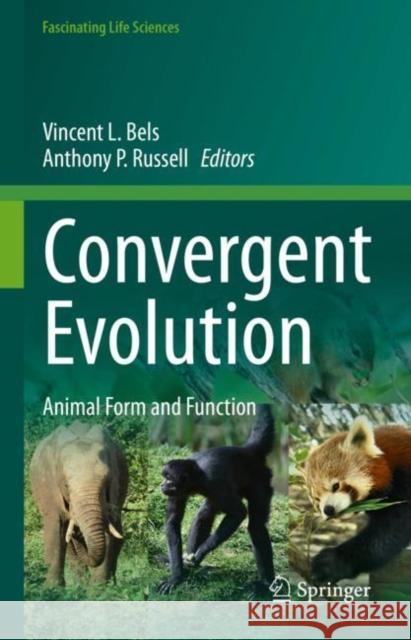
Vincent Bels; Anthony Patrick Russell
Convergent Evolution: Animal Form and Function Vincent Bels Anthony Patrick Russell 9783031114403 Springer - książkaWidoczna okładka, to zdjęcie poglądowe, a rzeczywista szata graficzna może różnić się od prezentowanej.

Convergent Evolution: Animal Form and Function

ISBN-13: 9783031114403 / Angielski / Twarda / 2023 / 371 str.

Vincent Bels; Anthony Patrick Russell
cena 564,88
(netto: 537,98 VAT:  5%)

Najniższa cena z 30 dni: 539,74
Termin realizacji zamówienia:
ok. 22 dni roboczych
Bez gwarancji dostawy przed świętami

Darmowa dostawa!

This volume presents a series of case studies, at different levels of inclusivity, of how organisms exhibit functional convergence as a key evolutionary mechanism resulting in responses to similar environmental constraints in mechanically similar ways. The contributors to this volume have selected and documented cases of convergent evolution of form and function that are perceived to be driven by environmental abiotic and/or biotic challenges that fall within their areas of expertise. Collectively these chapters explore this phenomenon across a broad phylogenetic spectrum. The sequence of chapters follows the organizational principle of increasing phylogenetic inclusivity, rather than the clustering of chapters by perceived similarity of the phenotypic features or biomechanical challenges being considered. This is done to maintain focus on the evolutionary phenomenon that is the primary subject matter of the book, thereby providing a basis for discussion among the readership about what is necessary and sufficient to justify the recognition of functional convergence. All chapters stress the need for integrative approaches for the elucidation of both pattern and process as they relate to convergence at various taxonomic levels.


This volume presents a series of case studies, at different levels of inclusivity, of how organisms exhibit functional convergence as a key evolutionary mechanism resulting in responses to similar environmental constraints in mechanically similar ways. The contributors to this volume have selected and documented cases of convergent evolution of form and function that are perceived to be driven by environmental abiotic and/or biotic challenges that fall within their areas of expertise. Collectively these chapters explore this phenomenon across a broad phylogenetic spectrum. The sequence of chapters follows the organizational principle of increasing phylogenetic inclusivity, rather than the clustering of chapters by perceived similarity of the phenotypic features or biomechanical challenges being considered. This is done to maintain focus on the evolutionary phenomenon that is the primary subject matter of the book, thereby providing a basis for discussion among the readership about what is necessary and sufficient to justify the recognition of functional convergence. All chapters stress the need for integrative approaches for the elucidation of both pattern and process as they relate to convergence at various taxonomic levels.

Kategorie:
Nauka, Biologia i przyroda
Kategorie BISAC:
Science > Life Sciences - Evolution
Technology & Engineering > Materials Science - General
Wydawca:
Springer
Seria wydawnicza:
Fascinating Life Sciences
Język:
Angielski
ISBN-13:
9783031114403
Rok wydania:
2023
Dostępne języki:
Numer serii:
000799451
Ilość stron:
371
Oprawa:
Twarda

(1) The Concept of Convergent Evolution and its Relationship to the Understanding of Form and Function. Vincent Bels (Muséum national d’Histoire naturelle, Paris, France), and Anthony Russell (University of Calgary, Calgary, Canada) - vincent.bels@mnhn.fr/ arussell@ucalgary.ca. 


(2) Odonatopteran approaches to the challenges of flight: convergence of responses subject to a common set of morphological constraints. Andre Nel (Muséum national d’Histoire naturelle, Paris, France) and Bertrand Piney (Thouaré sur Loire, France) - andre.nel@mnhn.fr 

(3) Digging up the convergence in fossorial rodents: insights into burrowing activity and morpho-functional specializations of the masticatory apparatus. Helder Gomes Rodrigues (Muséum national d’Histoire naturelle, Paris, France), Radim Šumbera (University of South Bohemia, Czech Republic), Lionel Hautier (Université de Montpellier, Montpellier, France), and Anthony Herrel (Muséum National d’Histoire Naturelle, Paris, France) - helder.gomes-rodrigues@mnhn.fr 

(4) Testing for convergent evolution in baleen whale cochleae. Travis Park (Natural History Museum, London, United Kingdom) - t.park@nhm.ac.uk  

(5) The sacro-iliac joint of the Felidae and Canidae and their ungulate prey: an example of divergence and convergence Jean-Pierre Pallandre et al. (Muséum national d’Histoire naturelle, Paris, France) - jeanpierre.pallandre@wanadoo.fr  

(6) Convergent approaches to aquatic feeding in Lissamphibia. Egon Heiss (Ark-Biodiversity GmbH, Berlin, Germany) and Patrick Lemell (University of Vienna, Vienna, Austria) - egon.heiss@hotmail.com 

(7) Convergence of aquatic feeding modes in the Sauropsida (crocodiles, birds, lizards, snakes, andturtles). Egon Heiss (Ark-Biodiversity GmbH, Berlin, Germany), Paul M. Gignac (Oklahoma State University, Tulsa, Oklahoma, USA), Laura B. Porro (University College London, London, UK), and Patrick Lemell (University of Vienna, Vienna, Austria) - egon.heiss@hotmail.com 
 
(8) Convergent evolution of secondarily aquatic feeding in mammals. Alexander J. Werth (Hampden-Sydney College, Virginia, USA) and Christopher D. Marshall (Texas A&M University, Texas, USA) - awerth@hsc.edu  

(9) Solutions to a sticky problem: convergence of the adhesive systems of geckos and anoles (Reptilia: Squamata). Anthony P. Russell, (University of Calgary, Calgary, Canada), and Austin Garner (The University of Akron, Akron, USA) - arussell@ucalgary.ca  

(10) Convergent evolution of animal adhesive pads. Thies H Büscher and Stas Gorb (Kiel University, Kiel, Germany) - tbuescher@zoologie.uni-kiel.de 

(11) Convergence of Arboreal Locomotor Specialization in Tetrapods: Morphological and Behavioral Solutions for Movement on Narrow and Compliant Supports. Jesse W. Young (Northeast Ohio Medical University, Ohio, USA) - jwyoung@neomed.edu  

(12) Convergent evolution of object/substrate/food grasping in tetrapods. Emmanuelle Pouydebat  (Muséum national d’Histoire naturelle, Paris, France) , Grégoire Boulinguez-Ambroise G. (Muséum national d’Histoire naturelle, Paris, France), Adriana Manzano (CONICET-UADER, España, Diamante, Entre Ríos, Argentina), Virginia Abdala (Universidad Nacional de Tucuman, Tucuman, Argentina), Diego Sustaita (California State University San Marcos, San Marcos, USA) – Emmanuelle.pouydebat@mnhn.fr

(13) Convergence in Gliding Animals: Morphology, Behavior, and Mechanics. Pranav C. Khandelwal (Max Planck Institute for Intelligent Systems, Stuttgart, Germany), Shane D. Ross (Department of Aerospace and Ocean Engineering, Virginia Tech, USA), Haibo Dong (Department of Mechanical Engineering, University of Virginia, USA), John J. Socha (Department of Biomedical Engineering and Mechanics, Virginia Tech, USA) - jjsocha@vt.edu

(14) Convergence of bipedal locomotion: why walk or run on only two legs. François Druelle (Muséum national d’Histoire naturelle, Paris, France & University of Antwerp, Antwerp, Belgium), Anick Abourachid (Muséum national d’Histoire naturelle, Paris, France), Menelia Vasilopoulou-Kampitsi, (University of Antwerp, Antwerp, Belgium), and Peter Aerts (University of Antwerp, Antwerp, Belgium & University of Ghent, Ghent, Belgium)   - francois.druelle@mnhn.fr

(15) Aquatic locomotion: environmental constraints that drive convergent evolution. Frank E. Fish  (West Chester University, West Chester, USA) - FFish@wcupa.edu 

(16) Convergent evolution of attachment mechanisms in aquatic animals. Jérôme Delroisse (University of Mons, Mons, Belgium & University of Cambridge, Cambridge, UK) Romana Santos, (University of Lisbon, Lisbon, Portugal), and Patrick Flammang (University of Mons, Mons, Belgium) - Patrick.Flammang@umons.ac.be 
 
(17) Convergent evolution: theory and practice for bioinspiration. Chris Broeckhoven (University of Antwerp, Belgium), and Anton du Plessis (Stellenbosch University, Stellenbosch 7602, South Africa) - Chris.Broeckhoven@uantwerpen.be  

(18) Conclusion and perspectives. Paul Katz (University of Massachusetts Amherst, Amherst, USA) - pkatz@umass.edu 

Vincent Bels was born in Verviers, Belgium. He completed his PhD at the University of Liège on the topic of behavioural ritualization. Currently, Professor at the Muséum national d’Histoire naturelle de Paris (France), he investigates the evolution of feeding, drinking, locomotion, and display behaviors in vertebrates. His main objective is the integration of behavioral and functional studies to arrive at a more comprehensive understanding of the "Form-Function" complex as it relates to the evolution of organisms.

Anthony Patrick Russell was born in London, UK. He completed his PhD at the University of London in the area of functional anatomy. As a Professor at the University of Calgary he has authored over 300 peer-reviewed scientific articles, 19 chapters, and three books. The continuing focus of his research has been the structure, function and evolution of geckos. Outside the University he has served as President of the Canadian Society of Zoologists, and President of the International Society of Vertebrate Morphologists.

This volume presents a series of case studies, at different levels of inclusivity, of how organisms exhibit functional convergence as a key evolutionary mechanism resulting in responses to similar environmental constraints in mechanically similar ways. The contributors to this volume have selected and documented cases of convergent evolution of form and function that are perceived to be driven by environmental abiotic and/or biotic challenges that fall within their areas of expertise. Collectively these chapters explore this phenomenon across a broad phylogenetic spectrum. The sequence of chapters follows the organizational principle of increasing phylogenetic inclusivity, rather than the clustering of chapters by perceived similarity of the phenotypic features or biomechanical challenges being considered. This is done to maintain focus on the evolutionary phenomenon that is the primary subject matter of the book, thereby providing a basis for discussion among the readership about what is necessary and sufficient to justify the recognition of functional convergence. All chapters stress the need for integrative approaches for the elucidation of both pattern and process as they relate to convergence at various taxonomic levels.




Udostępnij

Facebook - konto krainaksiazek.pl


Opinie o Krainaksiazek.pl na Opineo.pl

Partner Mybenefit

Krainaksiazek.pl w programie rzetelna firma Krainaksiaze.pl - płatności przez paypal

Czytaj nas na:

Facebook - krainaksiazek.pl
  • książki na zamówienie
  • granty
  • książka na prezent
  • kontakt
  • pomoc
  • opinie
  • regulamin
  • polityka prywatności

Zobacz:

  • Księgarnia czeska

  • Wydawnictwo Książkowe Klimaty

1997-2025 DolnySlask.com Agencja Internetowa

© 1997-2022 krainaksiazek.pl
     
KONTAKT | REGULAMIN | POLITYKA PRYWATNOŚCI | USTAWIENIA PRYWATNOŚCI
Zobacz: Księgarnia Czeska | Wydawnictwo Książkowe Klimaty | Mapa strony | Lista autorów
KrainaKsiazek.PL - Księgarnia Internetowa

Polityka prywatnosci - link
Krainaksiazek.pl - płatnośc Przelewy24
Przechowalnia Przechowalnia



