• Wyszukiwanie zaawansowane
  • Kategorie
  • Kategorie BISAC
  • Książki na zamówienie
  • Promocje
  • Granty
  • Książka na prezent
  • Opinie
  • Pomoc
  • Załóż konto
  • Zaloguj się

Contemporary Empirical Methods in Software Engineering » książka

zaloguj się | załóż konto
Logo Krainaksiazek.pl

koszyk

konto

szukaj
topmenu
Księgarnia internetowa
Szukaj
Książki na zamówienie
Promocje
Granty
Książka na prezent
Moje konto
Pomoc
 
 
Wyszukiwanie zaawansowane
Pusty koszyk
Bezpłatna dostawa dla zamówień powyżej 20 złBezpłatna dostawa dla zamówień powyżej 20 zł

Kategorie główne

• Nauka
 [2949965]
• Literatura piękna
 [1857847]

  więcej...
• Turystyka
 [70818]
• Informatyka
 [151303]
• Komiksy
 [35733]
• Encyklopedie
 [23180]
• Dziecięca
 [617748]
• Hobby
 [139972]
• AudioBooki
 [1650]
• Literatura faktu
 [228361]
• Muzyka CD
 [398]
• Słowniki
 [2862]
• Inne
 [444732]
• Kalendarze
 [1620]
• Podręczniki
 [167233]
• Poradniki
 [482388]
• Religia
 [509867]
• Czasopisma
 [533]
• Sport
 [61361]
• Sztuka
 [243125]
• CD, DVD, Video
 [3451]
• Technologie
 [219309]
• Zdrowie
 [101347]
• Książkowe Klimaty
 [123]
• Zabawki
 [2362]
• Puzzle, gry
 [3791]
• Literatura w języku ukraińskim
 [253]
• Art. papiernicze i szkolne
 [7933]
Kategorie szczegółowe BISAC

Contemporary Empirical Methods in Software Engineering

ISBN-13: 9783030324889 / Angielski / Twarda / 2020 / 525 str.
Michael Felderer; Guilherme Horta Travassos
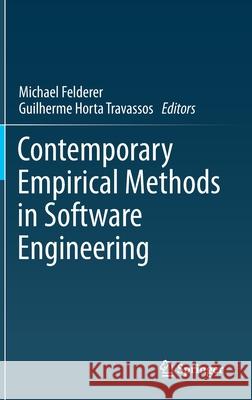
Contemporary Empirical Methods in Software Engineering Michael Felderer Guilherme Horta Travassos 9783030324889 Springer - książkaWidoczna okładka, to zdjęcie poglądowe, a rzeczywista szata graficzna może różnić się od prezentowanej.

Contemporary Empirical Methods in Software Engineering

ISBN-13: 9783030324889 / Angielski / Twarda / 2020 / 525 str.

Michael Felderer; Guilherme Horta Travassos
cena 605,23
(netto: 576,41 VAT:  5%)

Najniższa cena z 30 dni: 578,30
Termin realizacji zamówienia:
ok. 22 dni roboczych
Bez gwarancji dostawy przed świętami

Darmowa dostawa!
inne wydania
Kategorie:
Informatyka, Bazy danych
Kategorie BISAC:
Computers > Software Development & Engineering - Project Management
Computers > Business & Productivity Software - General
Wydawca:
Springer
Język:
Angielski
ISBN-13:
9783030324889
Rok wydania:
2020
Wydanie:
2020
Ilość stron:
525
Waga:
0.91 kg
Wymiary:
23.39 x 15.6 x 3.02
Oprawa:
Twarda
Wolumenów:
01
Dodatkowe informacje:
Wydanie ilustrowane


1. Introduction: The Evolution of Empirical Methods in Software Engineering.- Part I: Study Strategies.- 2. Guidelines for Conducting Software Engineering Research.- 3. Preliminary Guidelines for Case Survey Research in Software Engineering.- 4. Challenges in Survey Research.- 5. The Design Science Paradigm as a Frame for Empirical Software Engineering.- Part II: Data Collection, Production, and Analysis.- 6. Biometric Measurement in Software Engineering.- 7. Empirical Software Engineering Experimentation with Human Computation.- 8. Data Science and Empirical Software Engineering.- 9. Optimization in Software Engineering - A Pragmatic Approach.- 10. The Role of Simulation-based Studies in Software Engineering Research.- 11. Bayesian data analysis in empirical software engineering-The case of missing data.- Part III: Knowledge Acquisition and Aggregation.- 12. Automating Systematic Literature Reviews.- 13. Rapid Reviews in Software Engineering.- 14. Benefitting from the Grey Literature in Software Engineering Research.- 15: Systematic Assessment of Threats to Validity in Software Engineering Secondary Studies.- 16. Evidence Aggregation in Software Engineering.- Part IV: Knowledge Transfer.- 17. Open Science in Software Engineering.- 18. Practical industry co-production and technology and knowledge interchange.


Michael Felderer is a professor at the Department of Computer Science at the University of Innsbruck, Austria, and a guest professor at the Department of Software Engineering at the Blekinge Institute of Technology, Sweden. His fields of expertise and interest include software quality, testing, software processes, data-driven engineering, software analytics and measurement, requirements engineering, model-based software engineering, and empirical research methodology in software and security engineering. His research has a strong empirical focus also using methods of data science and is directed towards development and evaluation of efficient and effective methods to improve quality and value of industrial software systems and processes in close collaboration with companies. He has more than 10 years of industrial experience as a senior executive consultant, project manager and software engineer and is an internationally recognized member of the software engineering research community.

Guilherme Horta Travassos is a professor at the Systems Engineering and Computer Science Program (PESC), COPPE/Federal University of Rio de Janeiro, a CNPq Researcher and an ISERN member. He leads the Experimental Software Engineering Group at COPPE/UFRJ since 2001, after coming back from a post-doctoral at UMCP/USA and NASA/SEL. His research interests concern experimental software engineering and the engineering of contemporary software systems (Internet of things, industry 4.0, and context-awareness, among others) and involve software quality, software verification, validation and testing, ubiquitous systems, simulation, and environments and tools to support the development and evolution of experimentation and development methods in software engineering. He also intensively collaborates with the software industry through research and development projects at the COPPE/UFRJ.


This book presents contemporary empirical methods in software engineering related to the plurality of research methodologies, human factors, data collection and processing, aggregation and synthesis of evidence, and impact of software engineering research. The individual chapters discuss methods that impact the current evolution of empirical software engineering and form the backbone of future research.

Following an introductory chapter that outlines the background of and developments in empirical software engineering over the last 50 years and provides an overview of the subsequent contributions, the remainder of the book is divided into four parts: Study Strategies (including e.g. guidelines for surveys or design science); Data Collection, Production, and Analysis (highlighting approaches from e.g. data science, biometric measurement, and simulation-based studies); Knowledge Acquisition and Aggregation (highlighting literature research, threats to validity, and evidence aggregation); and Knowledge Transfer (discussing open science and knowledge transfer with industry).

Empirical methods like experimentation have become a powerful means of advancing the field of software engineering by providing scientific evidence on software development, operation, and maintenance, but also by supporting practitioners in their decision-making and learning processes. Thus the book is equally suitable for academics aiming to expand the field and for industrial researchers and practitioners looking for novel ways to check the validity of their assumptions and experiences.

Chapter 17 is available open access under a Creative Commons Attribution 4.0 International License via link.springer.com.


Udostępnij

Facebook - konto krainaksiazek.pl


Opinie o Krainaksiazek.pl na Opineo.pl

Partner Mybenefit

Krainaksiazek.pl w programie rzetelna firma Krainaksiaze.pl - płatności przez paypal

Czytaj nas na:

Facebook - krainaksiazek.pl
  • książki na zamówienie
  • granty
  • książka na prezent
  • kontakt
  • pomoc
  • opinie
  • regulamin
  • polityka prywatności

Zobacz:

  • Księgarnia czeska

  • Wydawnictwo Książkowe Klimaty

1997-2025 DolnySlask.com Agencja Internetowa

© 1997-2022 krainaksiazek.pl
     
KONTAKT | REGULAMIN | POLITYKA PRYWATNOŚCI | USTAWIENIA PRYWATNOŚCI
Zobacz: Księgarnia Czeska | Wydawnictwo Książkowe Klimaty | Mapa strony | Lista autorów
KrainaKsiazek.PL - Księgarnia Internetowa

Polityka prywatnosci - link
Krainaksiazek.pl - płatnośc Przelewy24
Przechowalnia Przechowalnia






