Consuming Cultural Hegemony: Bollywood in Bangladesh » książka





Consuming Cultural Hegemony: Bollywood in Bangladesh
ISBN-13: 9783030317096 / Angielski / Miękka / 2021 / 243 str.
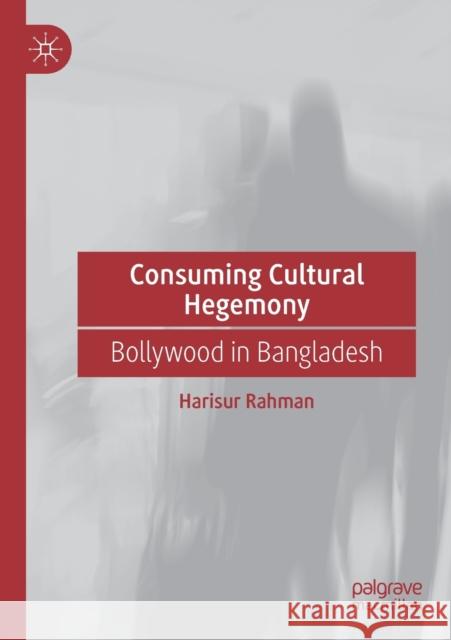
Consuming Cultural Hegemony: Bollywood in Bangladesh
ISBN-13: 9783030317096 / Angielski / Miękka / 2021 / 243 str.
(netto: 325,85 VAT: 5%)
Najniższa cena z 30 dni: 327,68
ok. 16-18 dni roboczych.
Darmowa dostawa!
Acknowledgements
Preface
List of Abbreviation
List of Figures
List of TablesChapter 1: Introduction
Toward the research problematics
Conceptual scheme
From “cultural subscription” to cultural distinctionCultural hegemony
Regional modernity as hegemony
Ethnographic setting
Field setting
Sampling and sample size
Data collection and analysis techniques
Hiatus in the fieldwork
Ethical considerations
Chapter outline
References
Chapter 2: From Partition to Hegemony: Bangladesh and Bangladeshi Films in the South Asian Context
Background
Bangladesh and its polemics with South Asia
Bangladesh’s love-hate relationship with Indian film
Film circulation and viewership in colonial East BengalSound, “Islamicate” culture and the crossover appeal of Hindi films
Film circulation and viewership in East Pakistan
Film circulation and viewership in independent BangladeshReferences
Filmography
Chapter 3: Ethnographic Fieldwork: The Self as an Informant and an Observer
Part one: Me as an informant
My film-watching epiphany
Film and my rural middle-class identity
Film and my urban middle-class identity
Part two: Me as an observer
Defining the field and the value of multi-sited ethnography
Entering into the field
Experience in the CD/DVD stores: A space between “native” and “non-native”Experience with the cable operators
Experience with the viewers
Conclusion
References
Filmography
Chapter 4: The Political Economy, Materiality and the Visceral Experience of Cable Television
Materiality of media and the creation of space
Background of cable TV in Bangladesh
Stages of circulation
The arrival of DTH and the creation of the own control room
Defining and controlling cable operators’ areas
Roles of cable operators and their interactions with subscribers
Number of cable TV channels and films per week
Conclusion
ReferencesChapter 5: The Cultural Economy of the CD/DVD Store and the Creation of Space
Background
The (re)production of CD/DVDs
Promotion and pricing of CD/DVD
CD/DVD placement, supply and demand
Selling and persuasion strategies
Volume of circulation of a new Hindi film
The CD/DVD business in transition
Conclusion
References
Filmography
Chapter 6: Culture of Copying and Copying of Culture: Media “Piracy” in Bangladesh
Culture of copying instead of “piracy”
Media “piracy”, IP law, and Bangladesh
Copying in Dhaka’s CD/DVD market
Indian films and music via “video/movie channels”
The circulation of Indian films and music via FTP and the internet
Indian film music via mobile and FM radio
Viewers’ practices and perceptions about copying and circulation
Conclusion
References
Chapter 7: Belonging to Class: Hindi Film and the Formation of Middle Class Audience in Bangladesh
Putting the film audience into perspective
Defining class through cultural tastes
Middle-class morality and film viewership
Viewer interest in Hindi films and stars
Viewer interest in Bollywood fashion and beauty
Bollywood fashion at Dhaka’s Eid market
ConclusionReferences
Filmography
Chapter 8: Negotiating Mediated Modernity and Culture: When “Soft Power” Becomes Hard
Negotiating “soft power”Controversy over theatrical access to Indian films
Arguments against showing Hindi films in Bangladeshi theatres
Arguments for showing Hindi films in Bangladeshi theatres
Viewers’ opinions on theatrical access to Indian films
Conclusion
References
Filmography
Chapter 9: Bollywoodization or Ghettoization? The Bangladeshi Dream Factory is in Disarray
The Bollywoodization of Bangladeshi films
Labeling film with poverty
The ‘discourse of obscenity’ and the alienation of the middle classThe gentrification of bikolpo dhara (the alternative stream)
Conclusion
References
Filmography
Chapter 10: Summary and Conclusion
` Background
Media circulation of culture
Copying and the commoditization of culture
From cultural consumption to cultural hegemony
Hegemony versus resistance
The hegemony of Bollywood and the marginalized film industry in South AsiaReferences
Index
Harisur Rahman is Assistant Professor at North South University in Dhaka, Bangladesh. He holds a Ph.D. degree in anthropology from the University of Auckland, New Zealand. His dissertation examined the circulation and viewership of Indian films in Bangladesh. His research interests include media anthropology, cultural circulation and consumption, intercultural communication, film and media
'Rahman’s book offers us some rich insights about the workings of cultural hegemony of Bollywood cinema in Bangladesh, not least relating to middle class media consumption practices. This book is a welcomed addition to the literature on film and media studies in the Bangladesh and popular Indian cinema contexts.'
— Professor Rajinder Dudrah, Birmingham City University, UK
'In the world of film scholarship, as in the world(s) of South Asian popular culture, Bollywood has enjoyed a hegemonic position. Rahman’s work opens a unique window on the social, political, academic, technological and cultural dynamics of that hegemony. He provides a long-needed voice for Bangaladeshi film culture and film industry.'
— Professor Gregory D Booth, The University of Auckland, New Zealand
'In an engaging and comprehensive manner the book provides an overview of the circulation of Bollywood films in Bangladesh and their impacts on society and culture industry. A must read for anyone interested in exploring the relationship between film consumption, cultural hegemony and social inequality.'
— Professor Kristin Skare Orgeret, Oslo Metropolitan University, Norway
This book examines the circulation and viewership of Bollywood films and filmi modernity in Bangladesh. The writer poses a number of fundamental questions: what it means to be a Bangladeshi in South Asia, what it means to be a Bangladeshi fan of Hindi film, and how popular film reflects power relations in South Asia. The writer argues that partition has resulted in India holding hegemonic power over all of South Asia’s nation-states at the political, economic, and military levels–a situation that has made possible its cultural hegemony. The book draws on relevant literature from anthropology, sociology, film, media, communication, and cultural studies to explore the concepts of hegemony, circulation, viewership, cultural taste, and South Asian cultural history and politics.
Harisur Rahman is Assistant Professor at North South University in Dhaka, Bangladesh. His research interests include Film, Media, Communication and Cultural Studies, Media Anthropology, Business Anthropology, Advertising Research, Material Culture, Globalization, Consumer Culture, Visual Culture, South Asian Media and Cultural Politics.




Czytaj nas na:
1997-2026 DolnySlask.com Agencja Internetowa
KrainaKsiazek.PL - Księgarnia Internetowa


