• Wyszukiwanie zaawansowane
  • Kategorie
  • Kategorie BISAC
  • Książki na zamówienie
  • Promocje
  • Granty
  • Książka na prezent
  • Opinie
  • Pomoc
  • Załóż konto
  • Zaloguj się

Constructional Viscoelastic Composite Materials: Theory and Application » książka


zaloguj się | załóż konto
Logo Krainaksiazek.pl

koszyk

konto

szukaj
topmenu
Księgarnia internetowa
Szukaj
Książki na zamówienie
Promocje
Granty
Książka na prezent
Moje konto
Pomoc
 
 
Wyszukiwanie zaawansowane
Pusty koszyk
Bezpłatna dostawa dla zamówień powyżej 20 złBezpłatna dostawa dla zamówień powyżej 20 zł

Kategorie główne

• Nauka
 [2952079]
• Literatura piękna
 [1850969]

  więcej...
• Turystyka
 [71058]
• Informatyka
 [151066]
• Komiksy
 [35579]
• Encyklopedie
 [23181]
• Dziecięca
 [620496]
• Hobby
 [139036]
• AudioBooki
 [1646]
• Literatura faktu
 [228729]
• Muzyka CD
 [379]
• Słowniki
 [2932]
• Inne
 [445708]
• Kalendarze
 [1409]
• Podręczniki
 [164793]
• Poradniki
 [480107]
• Religia
 [510956]
• Czasopisma
 [511]
• Sport
 [61267]
• Sztuka
 [243299]
• CD, DVD, Video
 [3411]
• Technologie
 [219640]
• Zdrowie
 [100984]
• Książkowe Klimaty
 [124]
• Zabawki
 [2281]
• Puzzle, gry
 [3363]
• Literatura w języku ukraińskim
 [258]
• Art. papiernicze i szkolne
 [8020]
Kategorie szczegółowe BISAC

Constructional Viscoelastic Composite Materials: Theory and Application

ISBN-13: 9789819917853 / Angielski
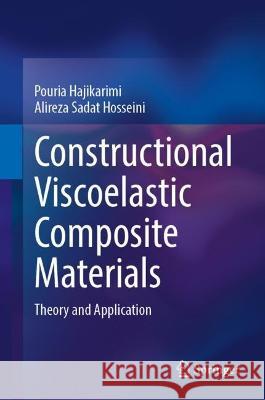
Pouria Hajikarimi; Alireza Sadat Hosseini
Constructional Viscoelastic Composite Materials: Theory and Application Pouria Hajikarimi Alireza Sada 9789819917853 Springer - książkaWidoczna okładka, to zdjęcie poglądowe, a rzeczywista szata graficzna może różnić się od prezentowanej.

Constructional Viscoelastic Composite Materials: Theory and Application

ISBN-13: 9789819917853 / Angielski

Pouria Hajikarimi; Alireza Sadat Hosseini
cena 563,56
(netto: 536,72 VAT:  5%)

Najniższa cena z 30 dni: 539,74
Termin realizacji zamówienia:
ok. 22 dni roboczych
Dostawa w 2026 r.

Darmowa dostawa!
inne wydania

Viscoelasticity is a complicated theorem that is generally used in several aspects of material characterization and modeling of polymers, resins, fiber-reinforced composites, bituminous composites, etc. On the other hand, the heterogeneous nature of composites like asphalt concrete and fiber-reinforced polymers has motivated lots of researchers to investigate the mechanical and rheological properties of these materials. This book mainly consists of the theory and application of viscoelastic materials used for construction. It starts with a comprehensible presentation of the theory of linear and nonlinear viscoelasticity. Wherein, the application of viscoelastic equations and principles on constructional viscoelastic composite materials considering time, temperature, loading rate dependency, and heterogeneity of composite substances is highlighted. The principles and equations of the viscoelasticity theorem are presented in several books, but here it is tried to present them more understandable and straightforwardly. This helps in solving real problems of heterogeneous composite materials, especially those which are used in construction. Moreover, the fundamental experiments for characterizing the elastic and viscoelastic properties of fibrous and bituminous composites are introduced and summarized. Then after, some analytical and empirical formulations for deriving the material properties of composites from the properties of the basic constituents are presented. These are followed by numerical simulation techniques using the finite element method to simulate composite materials.


Viscoelasticity is a complicated theorem that is generally used in several aspects of material characterization and modeling of polymers, resins, fiber-reinforced composites, bituminous composites, etc. On the other hand, the heterogeneous nature of composites like asphalt concrete and fiber-reinforced polymers has motivated lots of researchers to investigate the mechanical and rheological properties of these materials. This book mainly consists of the theory and application of viscoelastic materials used for construction. It starts with a comprehensible presentation of the theory of linear and nonlinear viscoelasticity. Wherein, the application of viscoelastic equations and principles on constructional viscoelastic composite materials considering time, temperature, loading rate dependency, and heterogeneity of composite substances is highlighted. The principles and equations of the viscoelasticity theorem are presented in several books, but here it is tried to present them more understandable and straightforwardly. This helps in solving real problems of heterogeneous composite materials, especially those which are used in construction. Moreover, the fundamental experiments for characterizing the elastic and viscoelastic properties of fibrous and bituminous composites are introduced and summarized. Then after, some analytical and empirical formulations for deriving the material properties of composites from the properties of the basic constituents are presented. These are followed by numerical simulation techniques using the finite element method to simulate composite materials.

Kategorie:
Nauka, Fizyka
Kategorie BISAC:
Science > Termodynamika
Technology & Engineering > Civil - General
Technology & Engineering > Materials Science - General
Wydawca:
Springer
Język:
Angielski
ISBN-13:
9789819917853


Table of Contents

1. Introduction

1.1. Viscoelasticity

1.2. Fibrous Composites in Construction

1.3. Bituminous Composites in Construction

2. Viscoelasticity Theoretical Background

2.1. Relaxation Modulus

2.2. Creep Compliance

2.3. Mechanical Models for Representing Viscoelastic Behavior

2.3.1. Maxwell model

2.3.2. Kelvin-Voigt model

2.3.3. The Burgers model

2.3.4. The Generalized Models

2.3.5. General Format of Constitutive Equations

2.4. Hereditary Approach for Representing Viscoelastic Behavior

2.5. Correspondence Principle

2.6. Interconversion of Constitutive Viscoelastic Functions

2.6.1. Hopkins and Hamming Method

2.6.2. System of linear algebraic equations

2.6.2.1. Viscoelastic solids

2.6.2.2. Viscoelastic liquids

2.7. Time-Temperature Superposition

2.7.1. Effect of Time, Temperature, and Loading rate

2.7.2. Master Curve

3. Nonlinear Viscoelasticity

3.1. Introduction

3.2. Schapery Single-Integral Nonlinear Model 

3.2.1. A Brief Review on Linear Viscoelasticity

3.2.2. The Schapery Equation

3.2.3. Schapery Equation for a Two-Step Stress

3.2.4. Schapery Equation for a Creep and Creep Recovery Test

3.2.5. Determination of Material Parameters from a Creep and Creep-Recovery Test

3.2.5.1. Determination of D0, D1 and n

3.2.5.2. Determination of the quantities g0 and (g1 g2)/(a_σ^n ):

3.2.5.3. Determination of g1, g2 and aσ

3.3. Numerical Formulation

3.3.1. One Dimensional Formulation

4. Experimental Characterization

4.1. Fibers and Inclusions

4.1.1. Single Fiber Test

4.1.3. Ultrasonic Test

4.2. Matrix Component

4.2.1. Experiments under Static Loading

4.2.1.1. Tensile

4.2.1.2. Compression

4.2.1.3. Flexural

4.2.1.5. Relaxation

4.2.2. Dynamic Mechanical Analysis

4.3. Composites

4.3.1. Experiments under Static Loading

4.3.1.1. Tensile

4.3.1.2. Compression

4.3.1.3. Shear

4.3.1.4. Flexural

5. Analytical and Empirical For-mulation

5.1. Rule of Mixture in Composite Materials with Continuous inclusions

5.1.1. Analytical Equations 

5.1.2. Semi-Analytical Equations

5.2. Rule of Mixture in Composite Materials with discontinuous Inclusions

5.2.1. Fibrous Composites

5.2.1.1. Halpin-Tsai Model

5.2.1.2. Shear-Lag Model

5.2.1.3. Blumentritt and Cooper Model (Fiber Efficiency Factor)

5.2.1.4. Christensen and Waal’s Model

5.2.1.5. Fiber Density Function

5.2.2. Granular Composites

5.2.2.1. Dilute Model

5.2.2.2. Mori-Tanaka Model

5.2.2.3. Self-Consistent Model

5.2.2.4. Lielens’ Model

5.2.2.5. Christensen and Lo’s model

5.2.2.6. Differential Scheme Approach

5.2.2.7. Empirical Models

6. Numerical Simulation

6.1. A review on finite element method

6.1.1. FEM for Two-Dimensional Solids

6.1.2. FEM for Plates and Shells

6.1.3. FEM for 3D Solids

6.2. Incremental viscoelastic formulation

6.3. Geometrically homogenous composite modeling

6.3.1. Geometry construction

6.3.2. Material characterization

6.3.3. Boundary conditions

6.4. Geometrically heterogeneous composite modeling

6.4.1. Geometry construction

6.4.2. Boundary conditions and interactions

6.5. An extension of FEM for discontinuity modeling

6.5.1. Fundamentals and formulations

6.5.1.1. Partition of Unity Method

6.5.1.2. Enrichment

6.5.1.3. Extended Finite Element Method

6.5.2. Applications

6.5.2.1. Infinite viscoelastic plate with a circular hole under uniaxial tension

6.5.2.2. The first and second opening mode for an edge crack with in-plane behavior


Pouria Hajikarimi is Assistant Professor and Director of the Advanced Pavement Laboratory in the Department of Civil & Environmental Engineering of Amirkabir University of Technology (Tehran Polytechnic). He has published in a wide range of journals, addressing theoretical aspects as well as practical applications of viscoelasticity theorem, and has written one previous textbook: Applications of viscoelasticity: Bituminous materials characterization and modeling 2021 Elsevier. He gained his Ph.D. in Civil Engineering (Pavement Engineering) from the Amirkabir University of Technology.

Alireza Sadat Hosseini is a structural engineer and researcher. His has published in a wide range of journals covering the experimental, analytical, and numerical study of composite materials and structures. He also has work and research experience in coastal and marine structures.

Viscoelasticity is a complicated theorem that is generally used in several aspects of material characterization and modeling of polymers, resins, fiber-reinforced composites, bituminous composites, etc. On the other hand, the heterogeneous nature of composites like asphalt concrete and fiber-reinforced polymers has motivated lots of researchers to investigate the mechanical and rheological properties of these materials. This book mainly consists of the theory and application of viscoelastic materials used for construction. It starts with a comprehensible presentation of the theory of linear and nonlinear viscoelasticity. Wherein, the application of viscoelastic equations and principles on constructional viscoelastic composite materials considering time, temperature, loading rate dependency, and heterogeneity of composite substances is highlighted. The principles and equations of the viscoelasticity theorem are presented in several books, but here it is tried to present them more understandable and straightforwardly. This helps in solving real problems of heterogeneous composite materials, especially those which are used in construction. Moreover, the fundamental experiments for characterizing the elastic and viscoelastic properties of fibrous and bituminous composites are introduced and summarized. Then after, some analytical and empirical formulations for deriving the material properties of composites from the properties of the basic constituents are presented. These are followed by numerical simulation techniques using the finite element method to simulate composite materials.




Udostępnij

Facebook - konto krainaksiazek.pl


Opinie o Krainaksiazek.pl na Opineo.pl

Partner Mybenefit

Krainaksiazek.pl w programie rzetelna firma Krainaksiaze.pl - płatności przez paypal

Czytaj nas na:

Facebook - krainaksiazek.pl
  • książki na zamówienie
  • granty
  • książka na prezent
  • kontakt
  • pomoc
  • opinie
  • regulamin
  • polityka prywatności

Zobacz:

  • Księgarnia czeska

  • Wydawnictwo Książkowe Klimaty

1997-2025 DolnySlask.com Agencja Internetowa

© 1997-2022 krainaksiazek.pl
     
KONTAKT | REGULAMIN | POLITYKA PRYWATNOŚCI | USTAWIENIA PRYWATNOŚCI
Zobacz: Księgarnia Czeska | Wydawnictwo Książkowe Klimaty | Mapa strony | Lista autorów
KrainaKsiazek.PL - Księgarnia Internetowa

Polityka prywatnosci - link
Krainaksiazek.pl - płatnośc Przelewy24
Przechowalnia Przechowalnia




