• Wyszukiwanie zaawansowane
  • Kategorie
  • Kategorie BISAC
  • Książki na zamówienie
  • Promocje
  • Granty
  • Książka na prezent
  • Opinie
  • Pomoc
  • Załóż konto
  • Zaloguj się

Consciousness and Self-Regulation: Advances in Research Volume 1 » książka


zaloguj się | załóż konto
Logo Krainaksiazek.pl

koszyk

konto

szukaj
topmenu
Księgarnia internetowa
Szukaj
Książki na zamówienie
Promocje
Granty
Książka na prezent
Moje konto
Pomoc
 
 
Wyszukiwanie zaawansowane
Pusty koszyk
Bezpłatna dostawa dla zamówień powyżej 20 złBezpłatna dostawa dla zamówień powyżej 20 zł

Kategorie główne

• Nauka
 [2949965]
• Literatura piękna
 [1857847]

  więcej...
• Turystyka
 [70818]
• Informatyka
 [151303]
• Komiksy
 [35733]
• Encyklopedie
 [23180]
• Dziecięca
 [617748]
• Hobby
 [139972]
• AudioBooki
 [1650]
• Literatura faktu
 [228361]
• Muzyka CD
 [398]
• Słowniki
 [2862]
• Inne
 [444732]
• Kalendarze
 [1620]
• Podręczniki
 [167233]
• Poradniki
 [482388]
• Religia
 [509867]
• Czasopisma
 [533]
• Sport
 [61361]
• Sztuka
 [243125]
• CD, DVD, Video
 [3451]
• Technologie
 [219309]
• Zdrowie
 [101347]
• Książkowe Klimaty
 [123]
• Zabawki
 [2362]
• Puzzle, gry
 [3791]
• Literatura w języku ukraińskim
 [253]
• Art. papiernicze i szkolne
 [7933]
Kategorie szczegółowe BISAC

Consciousness and Self-Regulation: Advances in Research Volume 1

ISBN-13: 9781468425703 / Angielski / Miękka / 2012 / 400 str.
Gary Schwartz
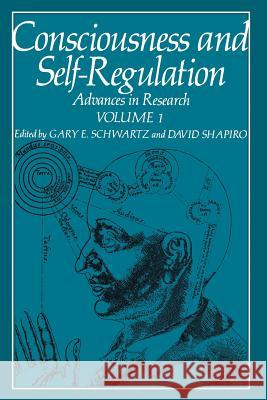
Consciousness and Self-Regulation: Advances in Research Volume 1 Schwartz, Gary 9781468425703 Springer - książkaWidoczna okładka, to zdjęcie poglądowe, a rzeczywista szata graficzna może różnić się od prezentowanej.

Consciousness and Self-Regulation: Advances in Research Volume 1

ISBN-13: 9781468425703 / Angielski / Miękka / 2012 / 400 str.

Gary Schwartz
cena 201,72
(netto: 192,11 VAT:  5%)

Najniższa cena z 30 dni: 192,74
Termin realizacji zamówienia:
ok. 22 dni roboczych
Bez gwarancji dostawy przed świętami

Darmowa dostawa!

The first and foremost concrete fact which every one will affirm to belong to his inner experience is the fact that consciousness of some sort goes on. I -William James, 1893 We are witnessing today a mounting interest among behavioral and biological scientists in problems long recognized as central to our understanding of human nature, yet until recently considered out of the bounds of scientific psychology and physiology. Sometimes thrown into the heading of "altered states of consciousness," this growing research bears directly upon such time-honored questions as the nature of conscious experience, the mind-body relationship, and volition. If one broadly views this research as encompassing the two interrelated areas of consciousness and self-regulation, one can find many relevant contemporary examples of creative and experimentally sophisticated approaches, including research on the regulation of perception and sensory experience, attention, imagery and thinking, emotion and pain; hypnosis and meditation; biofeedback and volun tary control; hemispheric asymmetry and specialization of brain func tion; drug-induced subjective states; and biological rhythms. Because the material is spread over many different kinds of publications and disciplines, it is difficult for anyone person to keep fully abreast of the significant advances. The overall aim of the new Plenum Series in Consciousness and Self-Regulation: Advances in Research is to provide a scholarly forum for discussing integration of these diverse areas by presenting some of the best current research and theory."


Kategorie:
Nauka, Medycyna
Kategorie BISAC:
Self-Help > Motivational & Inspirational
Psychology > Neuropsychology
Psychology > Psychotherapy - General
Wydawca:
Springer
Język:
Angielski
ISBN-13:
9781468425703
Rok wydania:
2012
Wydanie:
Softcover Repri
Ilość stron:
400
Waga:
0.62 kg
Wymiary:
22.9 x 15.2
Oprawa:
Miękka
Wolumenów:
01
Dodatkowe informacje:
Wydanie ilustrowane

1 A Model of Consciousness.- I. Levels of Information.- II. A Personal Research Strategy.- III. EEG Studies.- A. Changes in Synchrony.- B. Tracer Technique.- IV. Average Evoked Potentials.- A. Appearance of New Components and Increased Similarity of AERs from Different Brain Regions during Learning.- B. Readout to Absent but Expected Events.- C. Propagation of Readout from Central Structures.- D. Differential Readout in Differential Generalization.- E. AER Correlates of “Meaning” in Human Perception.- F. Anatomical Distribution of the “Engram”.- V. Unit Studies.- VI. Brain Stimulation Studies.- A. Rapid Transfer to Direct Electrical Stimulation of the Brain.- B. Peripheral-Central Conflict.- C. Perceptual Integration.- D. Loci Responsible for Perceptual Integration.- E. Role of Cortex and Thalamic Reticular Nuclei.- VII. Theoretical Discussion of Electrophysiological Evidence.- References.- 2. Self-Consciousness and Intentionality: A Model Based on an Experimental Analysis of the Brain Mechanisms Involved in the Jamesian Theory of Motivation and Emotion.- I. A Neurobehavioral Analysis of Brain Mechanisms in Motivation and Emotion.- A. Introduction.- B. Case History.- C. A Mediobasal Motor System.- D. The Limbic Systems and Behavior.- II. The Role of Attention in Motivational and Emotional Reactions.- A. Transfer of Training.- B. Psychophysiological Experiments.- C. Habituation.- D. James Reconsidered.- III. Effort and the Expression of Motivation and Emotion.- A. Part Behaviors and Their Integration.- B. The Precentral Motor Cortex and Action.- C. Effort and Volition.- D. The Jamesian Theory of Will.- IV. A Control-Theory Model of Self-Regulation and Self- Consciousness.- A. The Model.- B. Attention Span and Self-Consciousness.- C. Central Competency.- D. External Versus Internal Constraint.- References.- 3. Self-Regulation of Stimulus Intensity: Augmenting/ Reducing and the Average Evoked Response.- I. Introduction.- II. Sensory Experience and Augmenting/Reducing.- A. Petrie and Kinesthetic Figural Aftereffects.- B. Evoked Responses and Augmenting/Reducing.- III. Amplitude/Intensity Relationships in Man.- A. Visual AERs.- B. Auditory AERs.- C. Somatosensory AERs.- D. Summary of Amplitude/Intensity Relationships.- IV. Augmenting/Reducing Reliability and the Measurement of the AER.- V. Genetic Factors in Augmenting/Reducing.- A. Twin Studies.- B. Sex and Chromosome Differences.- VI. Tolerance for High-Intensity Stimulation.- A. Pain Tolerance.- B. Noise Tolerance.- VII. Effects of Arousal, Attention, and Sensory Overload.- A. AER Decrement over Sessions.- B. AER Decrement with Mental Arithmetic.- C. AER Decrement with Loud Noise.- D. Differential Types of AER Decrement.- VIII. Individual Differences and Intensity Judgments.- A. Psychological Magnitude and Power Functions.- B. Power Function Exponents and Augmenting/ Reducing.- C. AER and Psychophysical Scaling.- IX. Sensory Sensitivity and “Strength of the Nervous System”.- A. Response to Low-Intensity Stimuli.- B. “Strength of the Nervous System” and Reducing.- C. Determination of Strength.- X. Self-Regulation and Sensory Homeostasis.- A. Optimum Levels of Stimulation.- B. Relationships between Pain Tolerance, Sensory Homeostasis, and Distraction.- C. Conclusion.- References.- 4. Neodissociation Theory of Multiple Cognitive Control Systems.- I. Pierre Janet’s Theory of Dissociation.- II. Why a Neodissociation Theory?.- III. The Hypnotic Model.- IV. Neodissociation Model of Multiple Cognitive Control Structures.- V. Empirical Approaches to Multiple Control Structures and Divisions of Consciousness.- VI. The Duality of Responsiveness to Pain as Related to Neodissociation Theory.- VII. Conclusion.- References.- 5. Hypnotic Susceptibility, EEG-Alpha, and Self-Regulation.- I. Introduction.- II. The Assessment of Hypnotic Susceptibility.- A. Early Objectification.- B. Modern Hypnotic Susceptibility Scales.- III. Stability of Hypnotic Susceptibility.- IV. Modification of Hypnotic Susceptibility.- V. Hypnotic Susceptibility and Personality.- A. Age and Development.- B. Motivation.- VI. Hypnosis and the EEG.- VII. EEG and Hypnotic Susceptibility: Indirect Relationships.- A. Age.- B. Perceptual or Sensory Deprivation.- VIII. EEG and Hypnotic Susceptibility: Direct Evidence.- A. Base-Rate Alpha Density.- B. Base-Rate Alpha Amplitude.- C. EEG Asymmetry.- D. Evoked Potentials.- E. Conclusion.- IX. The Stability of EEG Base Rates.- X. Increasing Susceptibility by EEG Feedback.- XI. Changes in EEG during Hypnosis.- XII. Task-Specific EEG Changes.- XIII. Conclusions.- References.- 6. Toward a Cognitive Theory of Self-Control.- I. Introduction.- II. Conclusions from Treatment.- A. How Shall We Treat Our Clients’ Cognitions?.- B. Cognitions as Final Common Pathways.- C. Initial, Conceptualization Phase of Therapy.- III. A Cognitive Theory of Self-Control.- A. A Three-Stage Process.- B. How Does Behavior Change through Internal Dialogue?.- IV. Summary.- References.- 7. Physiological and Cognitive Processes in the Regulation of Anxiety.- I. A Descriptive Model of Anxiety Process.- A. Current Stimulus Conditions.- B. The Immediate Anxiety Reaction.- C. Subsequent Maintaining and Reducing Reactions.- D. Intervention Strategies.- II. Research Studies on the Maintenance and Reduction of Anxiety.- A. The Role of Physiological Arousal and Cognition.- B. The Role of Individual Differences in Physiological Arousal and Autonomic Perception.- III. Summary and Conclusions.- References.- 8. Dreaming: Experimental Investigation of Representational and Adaptive Properties.- I. Dream Recall.- A. The Role of Repression.- B. Alternative Factors: Salience and Interference.- C. Implication for Theory.- II. Representational Properties of Dreaming.- A. Validity of Dream Reports.- B. Two Strategies for Investigating Dreaming.- III. Functional Properties of Dreaming.- A. Functions of REM versus NREM Sleep.- B. REM Psychology versus REM Physiology.- C. Dream Content and Psychological Change.- References.- 9. Biofeedback and the Twilight States of Consciousness.- I. The Twilight State.- A. Is a Twilight State the Source of Creative Ideas?.- B. Biofeedback and Creativity.- C. Learning in the Twilight State?.- D. The Production of Low Arousal through Biofeedback.- E. A Twilight-State Biofeedback System.- II. Future Considerations.- A. Is Twilight Learning Minor-Hemisphere Learning?.- B. A Language for the Minor Hemisphere.- C. Retrieval Difficulties.- D. Cognitive Balance.- References.- Author Index.

Gary Schwartz ist Professor für Psychology, Medizin, Neurologie und Psychiatrie an der University of Arizona. Er leitet dort verschiedene Institute und Forschungsprojekte. Er promovierte in Harvard und war lange als Professor für Psychologie und Psychiatrie an der Yale University tätig. Bekannt wurde er als Autorität für Biofeedback.

Schwartz, Gary Gary Schwartz, an independent scholar, was formerl... więcej >


Udostępnij

Facebook - konto krainaksiazek.pl


Opinie o Krainaksiazek.pl na Opineo.pl

Partner Mybenefit

Krainaksiazek.pl w programie rzetelna firma Krainaksiaze.pl - płatności przez paypal

Czytaj nas na:

Facebook - krainaksiazek.pl
  • książki na zamówienie
  • granty
  • książka na prezent
  • kontakt
  • pomoc
  • opinie
  • regulamin
  • polityka prywatności

Zobacz:

  • Księgarnia czeska

  • Wydawnictwo Książkowe Klimaty

1997-2025 DolnySlask.com Agencja Internetowa

© 1997-2022 krainaksiazek.pl
     
KONTAKT | REGULAMIN | POLITYKA PRYWATNOŚCI | USTAWIENIA PRYWATNOŚCI
Zobacz: Księgarnia Czeska | Wydawnictwo Książkowe Klimaty | Mapa strony | Lista autorów
KrainaKsiazek.PL - Księgarnia Internetowa

Polityka prywatnosci - link
Krainaksiazek.pl - płatnośc Przelewy24
Przechowalnia Przechowalnia





