• Wyszukiwanie zaawansowane
  • Kategorie
  • Kategorie BISAC
  • Książki na zamówienie
  • Promocje
  • Granty
  • Książka na prezent
  • Opinie
  • Pomoc
  • Załóż konto
  • Zaloguj się

Connections: Patterns of Discovery » książka


zaloguj się | załóż konto
Logo Krainaksiazek.pl

koszyk

konto

szukaj
topmenu
Księgarnia internetowa
Szukaj
Książki na zamówienie
Promocje
Granty
Książka na prezent
Moje konto
Pomoc
 
 
Wyszukiwanie zaawansowane
Pusty koszyk
Bezpłatna dostawa dla zamówień powyżej 20 złBezpłatna dostawa dla zamówień powyżej 20 zł

Kategorie główne

• Nauka
 [2944077]
• Literatura piękna
 [1814251]

  więcej...
• Turystyka
 [70679]
• Informatyka
 [151074]
• Komiksy
 [35590]
• Encyklopedie
 [23169]
• Dziecięca
 [611005]
• Hobby
 [136031]
• AudioBooki
 [1718]
• Literatura faktu
 [225599]
• Muzyka CD
 [379]
• Słowniki
 [2916]
• Inne
 [443741]
• Kalendarze
 [1187]
• Podręczniki
 [166463]
• Poradniki
 [469211]
• Religia
 [506887]
• Czasopisma
 [481]
• Sport
 [61343]
• Sztuka
 [242115]
• CD, DVD, Video
 [3348]
• Technologie
 [219293]
• Zdrowie
 [98602]
• Książkowe Klimaty
 [124]
• Zabawki
 [2385]
• Puzzle, gry
 [3504]
• Literatura w języku ukraińskim
 [260]
• Art. papiernicze i szkolne
 [7151]
Kategorie szczegółowe BISAC

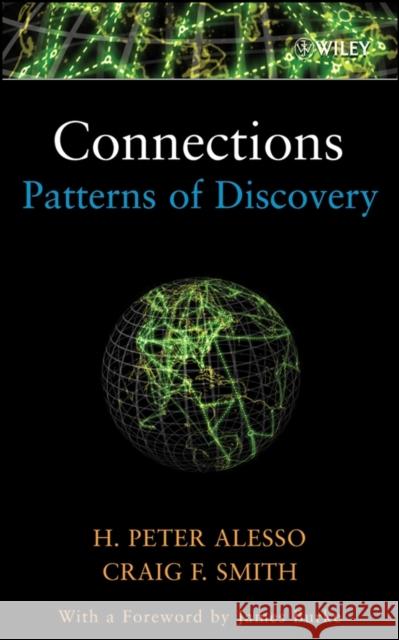
Connections: Patterns of Discovery

ISBN-13: 9780470118818 / Angielski / Twarda / 2008 / 224 str.
Craig F. Smith; H. Peter Alesso
Connections: Patterns of Discovery Alesso, H. Peter 9780470118818 IEEE Computer Society Press - książkaWidoczna okładka, to zdjęcie poglądowe, a rzeczywista szata graficzna może różnić się od prezentowanej.

Connections: Patterns of Discovery

ISBN-13: 9780470118818 / Angielski / Twarda / 2008 / 224 str.

Craig F. Smith; H. Peter Alesso
cena 355,47
(netto: 338,54 VAT:  5%)

Najniższa cena z 30 dni: 351,13
Termin realizacji zamówienia:
ok. 30 dni roboczych.

Darmowa dostawa!

"In their fascinating analysis of the recent history of information technology, H. Peter Alesso and Craig F. Smith reveal the patterns in discovery and innovation that have brought us to the present tipping point. . . . A generation from now, every individual will have personally tailored access to the whole of knowledge . . . the sooner we all begin to think about how we got here, and where we're going, the better. This exciting book is an essential first step."
--From the Foreword by James Burke Many people envision scientists as dispassionate characters who slavishly repeat experiments until "eureka"--something unexpected happens. Actually, there is a great deal more to the story of scientific discovery, but seeing "the big picture" is not easy. Connections: Patterns of Discovery uses the primary tools of forecasting and three archetypal patterns of discovery--Serendipity, Proof of Principle, and 1% Inspiration and 99% Perspiration--to discern relationships of past developments and synthesize a cohesive and compelling vision for the future. It challenges readers to think of the consequences of extrapolating trends, such as Moore's Law, to either reach real machine intelligence or retrench in the face of physical limitations. From this perspective, the book draws "the big picture" for the Information Revolution's innovations in chips, devices, software, and networks. With a Foreword by James Burke and bursting with fascinating detail throughout, Connections: Patterns of Discovery is a must-read for computer scientists, technologists, programmers, hardware and software developers, students, and anyone with an interest in tech-savvy topics.


Kategorie:
Informatyka
Kategorie BISAC:
Technology & Engineering > Electronics - General
Computers > Computer Science
Wydawca:
IEEE Computer Society Press
Seria wydawnicza:
Wiley Series on Systems Engineering and Analysis
Język:
Angielski
ISBN-13:
9780470118818
Rok wydania:
2008
Numer serii:
000091286
Ilość stron:
224
Waga:
0.50 kg
Wymiary:
23.44 x 16.51 x 2.01
Oprawa:
Twarda
Wolumenów:
01
Dodatkowe informacje:
Bibliografia
Glosariusz/słownik
Wydanie ilustrowane

Foreword.

Introduction.

Acknowledgements.

Organization of this Book.

Chapter 1: Connecting Information.

The Google Story.

Information Revolution.

Defining Information.

Looking Good.

Google Connects Information.

Patterns of Discovery.

Forecast for Connecting Information.

Chapter 2: Connecting Circuits.

The Moore′ Law Story.

Edison′s Electric Light.

The Vacuum Tube Diode.

The First Programmable Computers.

ENIAC.

The Transistor.

How Transistors Work.

The Proof of Principle for the Transistor.

The Microprocessor.

How Microprocessors Work.

Moore′s law.

Patterns of Discovery.

Forecast for Connecting Circuits .

Chapter 3: Connecting Chips.

The Personal Computer Story.

Vannevar Bush.

Robert Taylor.

J.C.R. Licklider.

Alan Kay.

Butler Lampson.

Charles (Chuck) Thacker.

Personal Computing.

The Xerox Alto.

Apple Computer.

IBM PC.

Patterns of Discovery.

Forecast for Connecting Chips.

Chapter 4: Connecting Processes.

The Software Story.

John Von Neumann.

Claude Shannon.

The Evolution of Programming Languages.

Sir Charles Antony Richard (Tony) Hoare.

Software as an Industry.

Software Productivity.

Fourth Generation Languages.

Proprietary versus Open Standards.

Emergent Fifth Generation Languages (5GLs).

Charles Simonyi.

William H. Gates.

Linus Torvalds.

Patterns of Discovery.

Forecast for Connecting Processes.

Chapter 5: Connecting Machines.

The Ethernet Story.

Xerox PARC and Ethernet.

Robert Metcalf.

Patterns of Discovery.

Forecast for Connecting Machines.

Chapter 6: Connecting Networks.

The Internet Story.

Vint Cerf.

Transition to the World Wide Web.

Berners–Lee.

Patterns of Discovery.

Forecast for Connecting Machines.

Chapter 7: Connecting Devices.

The Ubiquitous Computing Story.

Ubiquitous Computing.

Mark Weiser.

Jeff Hawkins.

Patterns of Discovery.

Forecast for Connecting Devices.

Chapter 8: Connecting the Web.

The Ubiquitous Web Story.

Michael Dertouzos.

Project Oxygen.

Perfect Search.

Berners–Lee and the Semantic Web.

Patterns of Discovery.

Forecast for Connecting the Web.

Chapter 9: Connecting the Intelligence.

The Ubiquitous Intelligence Story.

Kurt Gödel.

Alan Turing.

Marvin Minsky.

Ubiquitous Intelligence .

The Web ′Brain′.

What is Web Intelligence?

Patterns of Discovery.

Forecast for Connecting Intelligence.

Chapter 10: Connecting Patterns.

Ray Kurzweil.

Evolving Complex Intelligence.

The Law of Accelerating Returns.

Singularities.

The Software of Intelligence.

Patterns.

Connecting Pattern.

Patterns of Discovery.

Forecasts for Connecting Patterns.

Epilog.

Bibliography.

Glossary.

Index.

H. Peter Alesso is an innovator with twenty years of research experience at LawrenceLivermore National Laboratory (LLNL). As Engineering Group Leader at LLNL, he has leda team of computer scientists and engineers in a wide range of successful software and hardware research projects. He has published several software titles, numerous scientific journaland conference articles, and four books.

Craig F. Smith, PhD, is a Fellow of the American Association for the Advancement ofScience and is the Lawrence Livermore Chair Professor at the Naval Postgraduate School in Monterey, California. His areas of interest include sensors, robotics, and automated systems; information technology applications; and future energy systems. Dr. Smith has coauthoredthree books and has published numerous scientific journal and conference articles on advanced engineering topics.

"In their fascinating analysis of the recent history of information technology, H. Peter Alesso and Craig F. Smith reveal the patterns in discovery and innovation that have brought us to the present tipping point. . . .

A generation from now, every individual will have personally tailored access to the whole of knowledge . . . the sooner we all begin to think about how we got here, and where we′re going, the better. This exciting book is an essential

first step."
From the Foreword by James Burke

Many people envision scientists as dispassionate characters who slavishly repeat experiments until "eureka" something unexpected happens. Actually, there is a great deal more to the story of scientific discovery, but seeing "the big picture" is not easy. Connections: Patterns of Discovery uses the primary tools of forecasting and three archetypal patterns of discovery Serendipity, Proof of Principle, and 1% Inspiration and 99% Perspiration to discern relationships of past developments and synthesize a cohesive and compelling vision for the future. It challenges readers to think of the consequences of extrapolating trends, such as Moore′s Law, to either reach real machine intelligence or retrench in the face of physical limitations. From this perspective,the book draws "the big picture" for the Information Revolution′s innovations in chips, devices, software, and networks.

With a Foreword by James Burke and bursting with fascinating detail throughout, Connections: Patterns of Discovery is a must–read for computer scientists, technologists, programmers, hardware and software developers, students, and anyone with an interest in tech–savvy topics.

Smith, Craig F. Smith is an engineer with 30 years experience in r... więcej >
Alesso, H. Peter As a scientist and author specializing in technolo... więcej >


Udostępnij

Facebook - konto krainaksiazek.pl


Opinie o Krainaksiazek.pl na Opineo.pl

Partner Mybenefit

Krainaksiazek.pl w programie rzetelna firma Krainaksiaze.pl - płatności przez paypal

Czytaj nas na:

Facebook - krainaksiazek.pl
  • książki na zamówienie
  • granty
  • książka na prezent
  • kontakt
  • pomoc
  • opinie
  • regulamin
  • polityka prywatności

Zobacz:

  • Księgarnia czeska

  • Wydawnictwo Książkowe Klimaty

1997-2026 DolnySlask.com Agencja Internetowa

© 1997-2022 krainaksiazek.pl
     
KONTAKT | REGULAMIN | POLITYKA PRYWATNOŚCI | USTAWIENIA PRYWATNOŚCI
Zobacz: Księgarnia Czeska | Wydawnictwo Książkowe Klimaty | Mapa strony | Lista autorów
KrainaKsiazek.PL - Księgarnia Internetowa

Polityka prywatnosci - link
Krainaksiazek.pl - płatnośc Przelewy24
Przechowalnia Przechowalnia






