• Wyszukiwanie zaawansowane
  • Kategorie
  • Kategorie BISAC
  • Książki na zamówienie
  • Promocje
  • Granty
  • Książka na prezent
  • Opinie
  • Pomoc
  • Załóż konto
  • Zaloguj się

Connectionist Models of Development » książka


zaloguj się | załóż konto
Logo Krainaksiazek.pl

koszyk

konto

szukaj
topmenu
Księgarnia internetowa
Szukaj
Książki na zamówienie
Promocje
Granty
Książka na prezent
Moje konto
Pomoc
 
 
Wyszukiwanie zaawansowane
Pusty koszyk
Bezpłatna dostawa dla zamówień powyżej 20 złBezpłatna dostawa dla zamówień powyżej 20 zł

Kategorie główne

• Nauka
 [2948695]
• Literatura piękna
 [1824038]

  więcej...
• Turystyka
 [70868]
• Informatyka
 [151073]
• Komiksy
 [35227]
• Encyklopedie
 [23181]
• Dziecięca
 [621575]
• Hobby
 [138961]
• AudioBooki
 [1642]
• Literatura faktu
 [228651]
• Muzyka CD
 [371]
• Słowniki
 [2933]
• Inne
 [445341]
• Kalendarze
 [1243]
• Podręczniki
 [164416]
• Poradniki
 [479493]
• Religia
 [510449]
• Czasopisma
 [502]
• Sport
 [61384]
• Sztuka
 [243086]
• CD, DVD, Video
 [3417]
• Technologie
 [219673]
• Zdrowie
 [100865]
• Książkowe Klimaty
 [124]
• Zabawki
 [2168]
• Puzzle, gry
 [3372]
• Literatura w języku ukraińskim
 [260]
• Art. papiernicze i szkolne
 [7838]
Kategorie szczegółowe BISAC

Connectionist Models of Development

ISBN-13: 9781841692685 / Angielski / Twarda / 2003 / 400 str.
Philip T. Quinlin
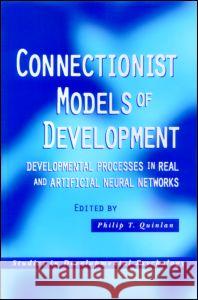
Connectionist Models of Development Quinlan, Philip T. 9781841692685 Psychology Press (UK) - książkaWidoczna okładka, to zdjęcie poglądowe, a rzeczywista szata graficzna może różnić się od prezentowanej.

Connectionist Models of Development

ISBN-13: 9781841692685 / Angielski / Twarda / 2003 / 400 str.

Philip T. Quinlin
cena 657,15
(netto: 625,86 VAT:  5%)

Najniższa cena z 30 dni: 651,77
Termin realizacji zamówienia:
ok. 22 dni roboczych.

Darmowa dostawa!

Connectionist Models of Development is an edited collection of essays on the current work concerning connectionist or neural network models of human development. The brain comprises millions of nerve cells that share myriad connections, and this book looks at how human development in these systems is typically characterised as adaptive changes to the strengths of these connections. The traditional accounts of connectionist learning, based on adaptive changes to weighted connections, are explored alongside the dynamic accounts in which networks generate their own structures as learning proceeds.
Unlike most connectionist accounts of psychological processes which deal with the fully-mature system, this text brings to the fore a discussion of developmental processes. To investigate human cognitive and perceptual development, connectionist models of learning and representation are adopted alongside various aspects of language and knowledge acquisition. There are sections on artificial intelligence and how computer programs have been designed to mimic the development processes, as well as chapters which describe what is currently known about how real brains develop.
This book is a much-needed addition to the existing literature on connectionist development as it includes up-to-date examples of research on current controversies in the field as well as new features such as genetic connectionism and biological theories of the brain. It will be invaluable to academic researchers, post-graduates and undergraduates in developmental psychology and those researching connectionist/neural networks as well as those in related fields such as psycholinguistics.


Kategorie:
Nauka, Psychologia
Kategorie BISAC:
Psychology > Developmental - General
Psychology > Neuropsychology
Computers > Data Science - Neural Networks
Wydawca:
Psychology Press (UK)
Seria wydawnicza:
Studies in Developmental Psychology
Język:
Angielski
ISBN-13:
9781841692685
Rok wydania:
2003
Numer serii:
000027971
Ilość stron:
400
Waga:
0.74 kg
Wymiary:
23.37 x 15.49 x 2.29
Oprawa:
Twarda
Wolumenów:
01
Dodatkowe informacje:
Bibliografia
Wydanie ilustrowane

This book is a selection of state-of-the-art papers on connectionist models of development that illustrate how a range of different kinds of connectionist approaches and methodologies can be used to shed light on particular developmental phenomena and on more general issues in developmental theory. - Julian Pine, University of Nottingham, UK

This volume nicely reflects the vibrant nature of thinking, modelling and research in neural network models of development. The range of topics is both impressive and entertaining and the links between new facts about brain development and new methods for computation modelling are particularly exciting. - Brian MacWhinney, Carnegie Mellon University, USA

P.T. Quinlan, Modelling Human Development: In Brief. A Personal Perspective. The Structure of the Book. References. S. Sirois, T.R. Shultz, A Connectionist Perspective on Piagetian Development. Piaget's Mechanisms of Change. The CC Generative Algorithm. A Model of Conservation. Conservation Acquisition. The Problem Size Effect. The Length Bias Effect. The Screening Effect. Discussion. A Model of Discrimination Shifts. Empirical Regularities. A Model of Discrimination Shifts. Discussion. General Discussion. References. D. Mareschal, Connectionist Models of Learning and Development in Infancy. Processing a Single Source of Information: The Case of Perceptual Categorisation. Perceptual Category Learning in Infants. Building the Model. The Development of Cat and Dog Categories. The Asymmetric Exclusivity of the Cat and Dog Categories. The Source of the Asymmetry. Processing Multiple Sources of Information: The Case of Phoneme Discrimination. Word Learning and Speech Sound Discrimination in Young Infants. Building the Model. Model Results. The Impact of Architectural Constraints: The Case of Infants and Objects. Infant Object Directed-behaviours. Building the Model. Model Results. Encapsulated Processing Modules: The Case of the Perception of Object Unity. The Perception of Object Unity by Young Infants. Building the Model. Model Results. General Discussion and Future Directions. References. Y. Munakata, J.B. Morton, J.M. Stedron, The Role of Prefrontal Cortex in Perseveration: Developmental and Computational Explorations. Introduction. Prefrontal Cortex and Perseveration. A-not-B. Architecture and Environment. Performance and Internal Representations. Predictions. Towel-pulling. Architecture and Environment. Performance and Internal Representations. Predictions. Card Sorting and Speech Interpretation Task. Architecture and Environment. Performance and Internal Representations. Predictions. Dissociations. A-not-B. Card Sorting and Speech Interpretation Task. Decalage. Discussion. Working Memory and Inhibition. Miscategorisation. Reflective Consciousness. Conclusion. References. P. Li, Language Acquisition in a Self-Organising Neural Network Model. Introduction. The Interaction between Verb Semantics and Morphology. Prefixes, Suffixes, and Verbs. The Acquisition of Lexicon and Morphology. Self-organising Neural Network and Language Acquisition. Modelling Semantics in Connectionist Networks. Self-Organising Feature Maps and Language Representation. A SOFM Model of Lexical and Morphological Acquisition. Method. Input and Representation. Task and Procedure. Stages of Training. Results and Discussion: Prefix Simulations. Representation of Cryptotype. Representation and Overgeneralisation. Mechanisms of Recovery from Generalisations. Results and Discussion: Suffix Simulations. Role of Input. Emergence of Semantic Categories of Lexical Aspect. From Strong Associations to Diverse Mappings. Conclusions. References. M.H. Davis, Connectionist Modelling of Lexical Segmentation and Vocabulary Acquisition. Modelling Language Acquisition. Pre-requisites for Language Acquisition. The Acquisition of Lexical Segmentation. Experimental Investigations. Computational Simulations. Learning from Utterance Boundaries. Distributional Accounts of Segmentation. Combining Multiple Cues for Segmentation and Identification. Vocabulary Acquisition. Mapping from Speech to Meaning. Experimental Investigations of Early Vocabulary Acquisition. Computational Models of Spoken Word Identification. Simulation 1: Learning to Identify Words in Connected Speech. Method. Results. Discussion. Simulation 2: Combining Phonological Learning and Vocabulary Acquisition. Method. Results and Discussion. General Discussion. Puzzles and Contradictions in Vocabulary Acquisition. References. D.L.T. Rohde, D.C. Plaut, Less is Less in Language Acquisition.

Philip Quinlan is an experienced Senior Lecturer in Psychology at the University of York, and the author of a previous book on Connectionism and Psychology.


Udostępnij

Facebook - konto krainaksiazek.pl


Opinie o Krainaksiazek.pl na Opineo.pl

Partner Mybenefit

Krainaksiazek.pl w programie rzetelna firma Krainaksiaze.pl - płatności przez paypal

Czytaj nas na:

Facebook - krainaksiazek.pl
  • książki na zamówienie
  • granty
  • książka na prezent
  • kontakt
  • pomoc
  • opinie
  • regulamin
  • polityka prywatności

Zobacz:

  • Księgarnia czeska

  • Wydawnictwo Książkowe Klimaty

1997-2026 DolnySlask.com Agencja Internetowa

© 1997-2022 krainaksiazek.pl
     
KONTAKT | REGULAMIN | POLITYKA PRYWATNOŚCI | USTAWIENIA PRYWATNOŚCI
Zobacz: Księgarnia Czeska | Wydawnictwo Książkowe Klimaty | Mapa strony | Lista autorów
KrainaKsiazek.PL - Księgarnia Internetowa

Polityka prywatnosci - link
Krainaksiazek.pl - płatnośc Przelewy24
Przechowalnia Przechowalnia






