Confronting Religious Absolutism » książka





Confronting Religious Absolutism
ISBN-13: 9781498228848 / Angielski / Miękka / 2016 / 150 str.
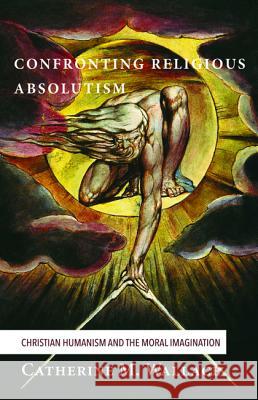
Confronting Religious Absolutism
ISBN-13: 9781498228848 / Angielski / Miękka / 2016 / 150 str.
(netto: 82,50 VAT: 5%)
Najniższa cena z 30 dni: 82,47
ok. 16-18 dni roboczych.
Darmowa dostawa!
Papal infallibility and biblical inerrancy provide the conceptual foundations of theocracy, which is to say religiously-based totalitarianism. These absolutist doctrines emerge for the very first time among the Victorians: they are not ancient beliefs at all. They appear in the 19th century, right alongside secular varieties totalitarian thought, and in response to all the same cultural anxieties. Reactionary religious leaders used these doctrines to oppose scholarly conclusions in geology and evolutionary biology. That much everyone knows. What's not as well known is the fact that their principal target was Christian-humanist biblical scholarship, an unbroken 500-year tradition of inquiry undertaken primarily by Christian clergy and seminary faculty. The alternative to faith-based totalitarianism is faith based upon the imagination, our most sophisticated cognitive skill. Faith rooted in the moral imagination does not depend upon abject deference to an array of rigid doctrines and improbable claims. Wallace contends that faith is best understood as a creative process, and religion is best understood as a multi-media art (and originally the Mother of all arts). The arts convince, they do not command. They persuade, they do not prove. The arts provide humane resources whereby we grapple with life's deepest mysteries. Symbolism, like quantum mathematics, is a tool for grappling with inescapable paradox at the heart of reality. It is an ancient strategy for articulating what we discover at the elusive mind-body interface. ""Wallace displays an enviable ability to present in reader-friendly terms her thorough grasp of fields as diverse as social and intellectual history, literary theory, and cognitive science, all in the service of a sympathetic evaluation of spiritual experience."" --J. Gerald Janzen, Author ofWhen Prayer Takes Place: Forays into a Biblical World(Cascade Books) ""This is an extraordinarily timely book during an election year when humaneness and critical thinking are in short supply.Wallace holds up these two virtues as the antidote to the tyranny of religious absolutism, but her carefully layered argument has broader applicability to the rise of political meanness and proud know-nothingness causing so many Americans dismay these days."" --John Addison Dally, Professor of Religion and Culture, Bexley Seabury Seminary Federation, Chicago ""Rarely does a book make me catch my breath with one 'aha ' after another, moments where assorted random things I thought I knew suddenly coalesce into a new and clearer picture of the world. In this book, Cate Wallace weaves together history, philosophy, theology, story, and her own imaginative wit to shape a picture of Christianity and religious absolutism that is fresh and new--while at the same time seeming almost self-evident in its clarity."" --Jennifer Kerr Budziak, Author, composer, conductor ""Catherine Wallace has a gift. With piercing intelligence and an open heart, she not only shows us in this book why fundamentalism in general is dangerous (that would be too easy), but what a viable and more virtuous alternative can look like. Christianity, the virtuous art of faith, is worth rescuing from fundamentalists. In fact, it must be."" --Tripp Hudgins, Director of Admissions, American Baptist Seminary of The West Catherine Miles Wallace, PhD, is a cultural historian on the faculty of the Feinberg School of Medicine at Northwestern University. She is the author of For Fidelity: How Intimacy and Commitment Enrich Our Lives (1998)."
Papal infallibility and biblical inerrancy provide the conceptual foundations of theocracy, which is to say religiously-based totalitarianism. These absolutist doctrines emerge for the very first time among the Victorians: they are not ancient beliefs at all. They appear in the 19th century, right alongside secular varieties totalitarian thought, and in response to all the same cultural anxieties. Reactionary religious leaders used these doctrines to oppose scholarly conclusions in geology and evolutionary biology. That much everyone knows. Whats not as well known is the fact that their principal target was Christian-humanist biblical scholarship, an unbroken 500-year tradition of inquiry undertaken primarily by Christian clergy and seminary faculty. The alternative to faith-based totalitarianism is faith based upon the imagination, our most sophisticated cognitive skill. Faith rooted in the moral imagination does not depend upon abject deference to an array of rigid doctrines and improbable claims. Wallace contends that faith is best understood as a creative process, and religion is best understood as a multi-media art (and originally the Mother of all arts). The arts convince, they do not command. They persuade, they do not prove. The arts provide humane resources whereby we grapple with lifes deepest mysteries. Symbolism, like quantum mathematics, is a tool for grappling with inescapable paradox at the heart of reality. It is an ancient strategy for articulating what we discover at the elusive mind-body interface.""Wallace displays an enviable ability to present in reader-friendly terms her thorough grasp of fields as diverse as social and intellectual history, literary theory, and cognitive science, all in the service of a sympathetic evaluation of spiritual experience.""--J. Gerald Janzen, Author of When Prayer Takes Place: Forays into a Biblical World (Cascade Books)""This is an extraordinarily timely book during an election year when humaneness and critical thinking are in short supply. Wallace holds up these two virtues as the antidote to the tyranny of religious absolutism, but her carefully layered argument has broader applicability to the rise of political meanness and proud know-nothingness causing so many Americans dismay these days.""--John Addison Dally, Professor of Religion and Culture, Bexley Seabury Seminary Federation, Chicago""Rarely does a book make me catch my breath with one aha! after another, moments where assorted random things I thought I knew suddenly coalesce into a new and clearer picture of the world. In this book, Cate Wallace weaves together history, philosophy, theology, story, and her own imaginative wit to shape a picture of Christianity and religious absolutism that is fresh and new--while at the same time seeming almost self-evident in its clarity.""--Jennifer Kerr Budziak, Author, composer, conductor""Catherine Wallace has a gift. With piercing intelligence and an open heart, she not only shows us in this book why fundamentalism in general is dangerous (that would be too easy), but what a viable and more virtuous alternative can look like. Christianity, the virtuous art of faith, is worth rescuing from fundamentalists. In fact, it must be."" --Tripp Hudgins, Director of Admissions, American Baptist Seminary of The WestCatherine Miles Wallace, PhD, is a cultural historian on the faculty of the Feinberg School of Medicine at Northwestern University. She is the author of For Fidelity: How Intimacy and Commitment Enrich Our Lives (1998).




Czytaj nas na:
KrainaKsiazek.PL - Księgarnia Internetowa


