Configuring Ipcop Firewalls: Closing Borders with Open Source » książka





Configuring Ipcop Firewalls: Closing Borders with Open Source
ISBN-13: 9781904811367 / Angielski / Miękka / 2006 / 244 str.
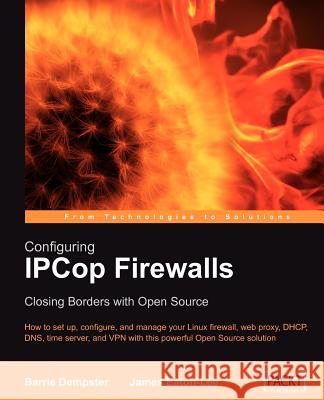
This book is an easy-to-read guide to using IPCop in a variety of different roles within the network. The book is written in a very friendly style that makes this complex topic easy and a joy to read. It first covers basic IPCop concepts, then moves to introduce basic IPCop configurations, before covering advanced uses of IPCop. This book is for both experienced and new IPCop users. IPCop is a powerful, open source, Linux based firewall distribution for primarily Small Office Or Home (SOHO) networks, although it can be used in larger networks. It provides most of the features that you would expect a modern firewall to have, and what is most important is that it sets this all up for you in a highly automated and simplified way. This book is an easy introduction to this popular application. After introducing and explaining the foundations of firewalling and networking and why they're important, the book moves on to cover using IPCop, from installing it, through configuring it, to more advanced features, such as configuring IPCop to work as an IDS, VPN and using it for bandwidth management. While providing necessary theoretical background, the book takes a practical approach, presenting sample configurations for home users, small businesses, and large businesses. The book contains plenty of illustrative examples. Chapter 1 briefly introduces some firewall and networking concepts. The chapter introduces the roles of several common networking devices and explains how firewalls fit into this. Chapter 2 introduces the IPCop package itself, discussing how IPCop's red/orange/blue/green interfaces fit into a network topology. It then covers the configuration of IPCop in other common roles, such as those of a web proxy, DHCP, DNS, time, and VPN server. Chapter 3 covers three sample scenarios where we learn how to deploy IPCop, how IPCop interfaces connect to each other and to the network as a whole. Chapter 4 covers installing IPCop. It outlines the system configuration required to run IPCop, and explains the configuration required to get IPCop up and running. In Chapter 5, we will learn how to employ the various tools IPCop provides us with to administrate, operate, troubleshoot, and monitor our IPCop firewall Chapter 6 starts off with explaining the need for an IDS in our system and then goes on to explain how to use the SNORT IDS with IPCop. Chapter 7 introduces the VPN concept and explains how to set up an IPSec VPN configuration for a system. Special focus is laid on configuring the blue zone - a secured wireless network augmenting the security of a wireless segment, even one already using WEP or WPA. Chapter 8 demonstrates how to manage bandwidth using IPCop making use of traffic shaping techniques and cache management. The chapter also covers the configuration of the Squid web proxy and caching system. Chapter 9 focuses on the vast range of add-ons available to configure IPCop to suit our needs. We see how to install add-ons and then learn more about common add-ons like SquidGuard, Enhanced Filtering, Blue Access, LogSend, and CopFilter. Chapter 10 covers IPCop security risks, patch management and some security and auditing tools and tests. Chapter 11 outlines the support IPCop users have in the form of mailing lists and IRC. The book is suitable for anyone interested in securing their networks with IPCop - from those new to networking and firewalls, to networking and IT Professionals with previous experience of IPCop. No knowledge of Linux or IPCop is required.
This book is an easy-to-read guide to using IPCop in a variety of different roles within the network. The book is written in a very friendly style that makes this complex topic easy and a joy to read. It first covers basic IPCop concepts, then moves to introduce basic IPCop configurations, before covering advanced uses of IPCop. This book is for both experienced and new IPCop users.IPCop is a powerful, open source, Linux based firewall distribution for primarily Small Office Or Home (SOHO) networks, although it can be used in larger networks. It provides most of the features that you would expect a modern firewall to have, and what is most important is that it sets this all up for you in a highly automated and simplified way.This book is an easy introduction to this popular application. After introducing and explaining the foundations of firewalling and networking and why theyre important, the book moves on to cover using IPCop, from installing it, through configuring it, to more advanced features, such as configuring IPCop to work as an IDS, VPN and using it for bandwidth management. While providing necessary theoretical background, the book takes a practical approach, presenting sample configurations for home users, small businesses, and large businesses. The book contains plenty of illustrative examples. Chapter 1 briefly introduces some firewall and networking concepts. The chapter introduces the roles of several common networking devices and explains how firewalls fit into this. Chapter 2 introduces the IPCop package itself, discussing how IPCops red/orange/blue/green interfaces fit into a network topology. It then covers the configuration of IPCop in other common roles, such as those of a web proxy, DHCP, DNS, time, and VPN server.Chapter 3 covers three sample scenarios where we learn how to deploy IPCop, how IPCop interfaces connect to each other and to the network as a whole.Chapter 4 covers installing IPCop. It outlines the system configuration required to run IPCop, and explains the configuration required to get IPCop up and running.In Chapter 5, we will learn how to employ the various tools IPCop provides us with to administrate, operate, troubleshoot, and monitor our IPCop firewallChapter 6 starts off with explaining the need for an IDS in our system and then goes on to explain how to use the SNORT IDS with IPCop. Chapter 7 introduces the VPN concept and explains how to set up an IPSec VPN configuration for a system. Special focus is laid on configuring the blue zone - a secured wireless network augmenting the security of a wireless segment, even one already using WEP or WPA. Chapter 8 demonstrates how to manage bandwidth using IPCop making use of traffic shaping techniques and cache management. The chapter also covers the configuration of the Squid web proxy and caching system.Chapter 9 focuses on the vast range of add-ons available to configure IPCop to suit our needs. We see how to install add-ons and then learn more about common add-ons like SquidGuard, Enhanced Filtering, Blue Access, LogSend, and CopFilter. Chapter 10 covers IPCop security risks, patch management and some security and auditing tools and tests.Chapter 11 outlines the support IPCop users have in the form of mailing lists and IRC.The book is suitable for anyone interested in securing their networks with IPCop - from those new to networking and firewalls, to networking and IT Professionals with previous experience of IPCop. No knowledge of Linux or IPCop is required.




Czytaj nas na:
KrainaKsiazek.PL - Księgarnia Internetowa


