• Wyszukiwanie zaawansowane
  • Kategorie
  • Kategorie BISAC
  • Książki na zamówienie
  • Promocje
  • Granty
  • Książka na prezent
  • Opinie
  • Pomoc
  • Załóż konto
  • Zaloguj się

Computational Toxicology: Volume II » książka

zaloguj się | załóż konto
Logo Krainaksiazek.pl

koszyk

konto

szukaj
topmenu
Księgarnia internetowa
Szukaj
Książki na zamówienie
Promocje
Granty
Książka na prezent
Moje konto
Pomoc
 
 
Wyszukiwanie zaawansowane
Pusty koszyk
Bezpłatna dostawa dla zamówień powyżej 20 złBezpłatna dostawa dla zamówień powyżej 20 zł

Kategorie główne

• Nauka
 [2950560]
• Literatura piękna
 [1849509]

  więcej...
• Turystyka
 [71097]
• Informatyka
 [151150]
• Komiksy
 [35848]
• Encyklopedie
 [23178]
• Dziecięca
 [617388]
• Hobby
 [139064]
• AudioBooki
 [1657]
• Literatura faktu
 [228597]
• Muzyka CD
 [383]
• Słowniki
 [2855]
• Inne
 [445295]
• Kalendarze
 [1464]
• Podręczniki
 [167547]
• Poradniki
 [480102]
• Religia
 [510749]
• Czasopisma
 [516]
• Sport
 [61293]
• Sztuka
 [243352]
• CD, DVD, Video
 [3414]
• Technologie
 [219456]
• Zdrowie
 [101002]
• Książkowe Klimaty
 [124]
• Zabawki
 [2311]
• Puzzle, gry
 [3459]
• Literatura w języku ukraińskim
 [254]
• Art. papiernicze i szkolne
 [8079]
Kategorie szczegółowe BISAC

Computational Toxicology: Volume II

ISBN-13: 9781493963263 / Angielski / Miękka / 2016 / 648 str.
Brad Reisfeld; Arthur N. Mayeno
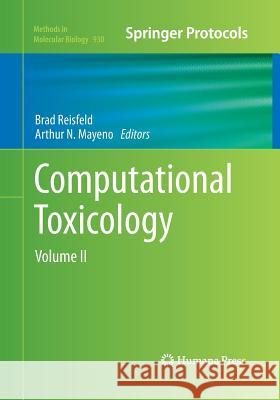
Computational Toxicology: Volume II Reisfeld, Brad 9781493963263 Humana Press - książkaWidoczna okładka, to zdjęcie poglądowe, a rzeczywista szata graficzna może różnić się od prezentowanej.

Computational Toxicology: Volume II

ISBN-13: 9781493963263 / Angielski / Miękka / 2016 / 648 str.

Brad Reisfeld; Arthur N. Mayeno
cena 442,79
(netto: 421,70 VAT:  5%)

Najniższa cena z 30 dni: 424,07
Termin realizacji zamówienia:
ok. 22 dni roboczych
Dostawa w 2026 r.

Darmowa dostawa!

This resource features essential background, context, examples, useful tips, and an overview of current developments in the field. It includes cutting-edge methods and protocols as well as implementation advice from the experts.


Kategorie:
Nauka, Medycyna
Kategorie BISAC:
Medical > Farmakologia
Science > Biologia i przyroda
Science > Research & Methodology
Wydawca:
Humana Press
Seria wydawnicza:
Methods in Molecular Biology
Język:
Angielski
ISBN-13:
9781493963263
Rok wydania:
2016
Wydanie:
Softcover Repri
Numer serii:
000014950
Ilość stron:
648
Waga:
1.12 kg
Wymiary:
25.4 x 17.81 x 3.38
Oprawa:
Miękka
Wolumenów:
01
Dodatkowe informacje:
Wydanie ilustrowane

Part 1. Toxicological/Pharmacological Endpoint Prediction


1. Methods for Building QSARs

            James Devillers


2. Accessing and Using Chemical Databases

            Nikolai Nikolov, Todor Pavlov, Jay R. Niemelä, and Ovanes Mekenyan


3. From QSAR to QSIIR: Searching for Enhanced Computational Toxicology Models

            Hao Zhu


4. Mutagenicity, Carcinogenicity and Other Endpoints

            Romualdo Benigni, Chiara Laura Battistelli, Cecilia Bossa, Mauro Colafranceschi, and Olga Tcheremenskaia


5. Classification Models for Safe Drug Molecules

            A.K. Madan, Sanjay Bajaj, and Harish Dureja


6. QSAR and Metabolic Assessment Tools in the Assessment of Genotoxicity

            Andrew P. Worth, Silvia Lapenna, and Rositsa Serafimova


Part II. Biological Network Modeling


7. Gene Expression Networks

            Reuben Thomas and Christopher J. Portier


8. Construction of Cell Type-Specific Logic Models of Signaling Networks Using CellNetOptimizer

            Melody K. Morris, Ioannis Melas, and Julio Saez-Rodriguez


9. Regulatory Networks

            Gilles Bernot, Jean-Paul Comet, and Christine Risso- de Faverney


10. Computational Reconstruction of Metabolic Networks from KEGG

            Tingting Zhou


Part III. Biomarkers


11. Biomarkers

            Harmony Larson, Elena Chan, Sucha Sudarsanam, and Dale E. Johnson


12. Biomarkers: Environmental Public Health Indicators

            Andrey I. Egorov, Dafina Dalbokova, and Michal Kryzanowski


Part IV. Modeling for Regulatory Purposes (Risk and Safety Assessment)


13. Modeling for Regulatory Purposes (Risk and Safety Assessment)

            Hisham El-Masri


14. Developmental Toxicity Prediction

            Raghuraman Venkatapathy and Nina Ching Y. Wang


15. Predictive Computational Toxicology to Support Drug Safety Assessment

            Luis G. Valerio, Jr.


Part V. Integrated Modeling/Systems Toxicology Approaches


16. Developing a Practical Toxicogenomics Data Analysis System Utilizing Open-Source Software

            Takehiro Hirai and Naoki Kiyosawa


17. Systems Toxicology from Genes to Organs

            John Jack, John Wambaugh, and Imran Shah


18. Agent Based Models of Cellular Systems

            Nicola Cannata, Flavio Corradini, Emanuela Merelli, and Luca Tesei


Part VI. Mathematical and Statistical Background


19. Linear Algebra

            Kenneth Kuttler


20. Ordinary Differential Equations

            Jiří Lebl


21. On the Development and Validation of QSAR Models

            Paola Gramatica


22. Principal Components Analysis

            Detlef Groth, Stefanie Hartmann, Sebastian Klie, and Joachim Selbig


23. Partial Least Square Methods: Partial Least Squares Correlation and Partial Least Square Regression

            Hervé Abdi and Lynne J. Williams


24. Maximum Likelihood

            Shuying Yang and Daniela De Angelis


25. Bayesian Inference

            Frédéric Y. Bois

Rapid advances in computer science, biology, chemistry, and other disciplines are enabling powerful new computational tools and models for toxicology and pharmacology. These computational tools hold tremendous promise for advancing science, from streamlining drug efficacy and safety testing, to increasing the efficiency and effectiveness of risk assessment for environmental chemicals. Computational Toxicology provides biomedical and quantitative scientists with essential background, context, examples, useful tips, and an overview of current developments in the field. Divided into four sections, Volume I covers a wide array of methodologies and topics. Opening with an introduction to the field of computational toxicology and its current and potential applications, the volume continues with ’best practices’ in mathematical and computational modeling, followed by chemoinformatics and the use of computational techniques and databases to predict chemical properties and toxicity, as well as an overview of molecular dynamics.  The final section is a compilation of the key elements and main approaches used in pharmacokinetic and pharmacodynamic modeling, including the modeling of absorption, compartment and non-compartmental modeling, physiologically based pharmacokinetic modeling, interspecies extrapolation, and population effects. Written in the successful Methods in Molecular Biology™ series format where possible, chapters include introductions to their respective topics, lists of the materials and software tools used, methods, and notes on troubleshooting.

Authoritative and easily accessible, Computational Toxicology will allow motivated readers to participate in this exciting field and undertake a diversity of realistic problems of interest.


Udostępnij

Facebook - konto krainaksiazek.pl


Opinie o Krainaksiazek.pl na Opineo.pl

Partner Mybenefit

Krainaksiazek.pl w programie rzetelna firma Krainaksiaze.pl - płatności przez paypal

Czytaj nas na:

Facebook - krainaksiazek.pl
  • książki na zamówienie
  • granty
  • książka na prezent
  • kontakt
  • pomoc
  • opinie
  • regulamin
  • polityka prywatności

Zobacz:

  • Księgarnia czeska

  • Wydawnictwo Książkowe Klimaty

1997-2025 DolnySlask.com Agencja Internetowa

© 1997-2022 krainaksiazek.pl
     
KONTAKT | REGULAMIN | POLITYKA PRYWATNOŚCI | USTAWIENIA PRYWATNOŚCI
Zobacz: Księgarnia Czeska | Wydawnictwo Książkowe Klimaty | Mapa strony | Lista autorów
KrainaKsiazek.PL - Księgarnia Internetowa

Polityka prywatnosci - link
Krainaksiazek.pl - płatnośc Przelewy24
Przechowalnia Przechowalnia






