Computational Ship Design » książka





Computational Ship Design
ISBN-13: 9789811048845 / Angielski / Twarda / 2017 / 377 str.
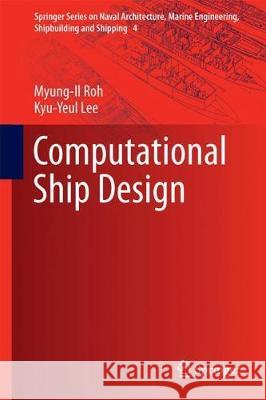
Computational Ship Design
ISBN-13: 9789811048845 / Angielski / Twarda / 2017 / 377 str.
(netto: 766,76 VAT: 5%)
Najniższa cena z 30 dni: 693,97
ok. 22 dni roboczych.
Darmowa dostawa!
This book offers an introduction to the fundamental principles and systematic methodologies employed in computational approaches to ship design. Over eight chapters and appendices the book covers the complete process of ship design, from a detailed description of design theories through to cutting-edge applications.
Preface.
Chapter 1 Introduction. 1.1. Generals. 1.2. Basic requirements and functions of a ship. 1.3. Ship terminologies. 1.4. Design stages.
Chapter 2 Analysis of Ship Owner’s Requirements. 2.1. Generals. 2.2. Ship owner’s requirements. 2.3. Survey of parent ships. 2.4. Review of rules and regulations.
Chapter 3 Design Constraints. 3.1. Generals. 3.2. Physical constraint. 3.3. Economical constraints. 3.4. Regulatory constraints. 3.5. Computational guide.
Chapter 4 Estimation of Lightweight. 4.1. Generals. 4.2. Method 1. 4.3. Method 2. 4.4. Method 3. 4.5. Method 4. 4.6. Computational guide.
Chapter 5 Prediction of Resistance and Power. 5.1. Generals. 5.2. Ship resistance. 5.3. Methods for prediction of resistance. 5.4. Prediction of resistance by Holtrop and Mennen’s method. 5.5. Prediction of propulsion factors. 5.6. Power prediction. 5.7. Computational guide.Chapter 6 Selection of Main Engine. 6.1. Generals. 6.2. Characteristics of diesel engine. 6.3. Power and speed of engine. 6.4. Layout diagram of engine. 6.5. Selection of main engine. 6.6. Estimation of DFOC. 6.7. Estimation of capacity of fuel oil. 6.8. Computational guide.
Chapter 7 Determination of Principal Dimensions of Propeller. 7.1. Generals. 7.2. Principal dimensions of propeller. 7.3. Non-dimensional coefficients in propeller design. 7.4. Determination of principal dimensions of propeller. 7.5. Relation between propeller speed, diameter, and efficiency. 7.6. Computational guide.
Chapter 8 Estimation of Capacity of Cargo Hold. 8.1. Generals. 8.2. Method 1. 8.3. Method 2. 8.4. Computational guide.
Chapter 9 Calculation of Freeboard. 9.1. Generals. 9.2. Freeboard. 9.3. Freeboard deck and length. 9.4. Calculation of the required freeboard by ICLL. 9.5. Check for the freeboard requirement. 9.6. Load line mark. 9.7. Computational guide.Chapter 10 Determination of Principal Dimensions. 10.1. Generals. 10.2. Weight equation. 10.3. Volume equation. 10.4. Required freeboard. 10.5. Types of ships considering cargo density. 10.6. Procedure for determining principal dimensions of ship. 10.7. Computational guide.
Chapter 11 Hull Form Design. 11.1. Generals. 11.2. Generation of hull form. 11.3. Hull form variation. 11.4. Hull form fairing. 11.5. Performance evaluation of hull form. 11.6. Generation of hull lines and hull form surface. 11.7. Appendage design. 11.8. Computational guide.
Chapter 12 General Arrangement Design. 12.1. Generals. 12.2. Various types of tankers. 12.3. Rules and regulations for tanker. 12.4. Cargo hold arrangement. 12.5. Fore body arrangement. 12.6. Engine room arrangement. 12.7. After body arrangement. 12.8. Stability evaluation. 12.9. Generation of general arrangement plan. 12.10. Computational guide.Chapter 13 Hull Structural Design. 13.1. Generals. 13.2. Design loads. 13.3. Hull girder strength. 13.4. Hull local scantling. 13.5. Buckling strength. 13.6. Fatigue strength. 13.7. Verification of hull structural design. 13.8. Generation of hull structural plans and hull structural model. 13.9. Computational guide.
Chapter 14 Outfitting Design. 14.1. Generals. 14.2. Hull outfitting. 14.3. Machinery outfitting. 14.4. Accommodation outfitting. 14.5. Electric outfitting. 14.6. Generation of P&ID (Piping & Instrumentation Diagram) and WD (Wiring Diagram) plans. 14.7. Computational guide.
Chapter 15 Economic Evaluation. 15.1. Generals. 15.2. Estimation of shipbuilding cost. 15.3. Estimation of operating cost. 15.4. Estimation of RFR (Required Freight Rate). 15.5. Estimation of OPF (Operational Profit Factor). 15.6. Computational guide.Chapter 16 Example of Determination of Principal Dimensions. 16.1. Generals. 16.2. Ship owner’s requirements. 16.3. Determination of principal dimensions of ship. 16.4. Prediction of resistance and power. 16.5. Selection of main engine. 16.6. Determination of principal dimensions of propeller. 16.7. Calculation of equipment numeral. 16.8. Check for non-visibility length. 16.9. Summary of principal dimensions of ship.
Chapter 17 Examples of Ship Design Model. 17.1. Generals. 17.2. Examples of hull form model. 17.3. Example of compartment model. 17.4. Example of hull structural model. Appendices.
A.1. Introduction to optimum design. A.2. Selective optimization methods. A.3. Example of optimal dimension design. A.4. Example of optimal arrangement design.References.
Index.
Dr Myung-Il Roh is an Associate Professor in the Department of Naval Architecture and Ocean Engineering, Seoul National University, Korea. He is also a Head of Interdisciplinary Program in Offshore Plant Engineering at Seoul National University, Korea from 2016. He received the B.S. degree in 1998, the M.S. degree in 2000, and the Ph.D. degree in 2005 in naval architecture and ocean engineering from Seoul National University, Korea. Before joining the faculty of Seoul National University in 2013, he had worked as an assistant professor of the School of Naval Architecture and Ocean Engineering at University of Ulsan, Korea from 2007 to 2013. His teaching and research interests include design technologies of ships and offshore structures, such as optimization, simulation, computerization, and integration. He is a member of the Board of Directors of the Society for Computational Design and Engineering, an Editor for the PLOS ONE Journal and the International Journal of Computational Design and Engineering, and an Editorial Board member for the International Journal of Ocean Systems Engineering and the Journal of Shipping and Ocean Engineering. He published over 10 lecture notes, 120 journal papers, and 230 conference papers so far.
Dr Kyu-Yeul Lee is a Professor Emeritus in the Department of Naval Architecture and Ocean Engineering, Seoul National University, Korea. He received the B.S. degree in naval architecture and ocean engineering from Seoul National University, the M.S. degree, and the Ph.D. degree in naval architecture from the University of Hannover, Germany. His main areas of teaching and research interests include ship and offshore structure design, optimization, CAD, robotics, and multibody dynamics. He had worked as a research engineer and a lecturer at the University of Hannover and as a principal researcher and a project leader on ‘Computerized Ship Design and Production System’ at the Korea Research Institute of Ships and Ocean Engineering. He published over 10 lecture notes, 150 journal papers, and 300 conference papers so far.
This book offers an introduction to the fundamental principles and systematic methodologies employed in computational approaches to ship design. It takes a detailed approach to the description of the problem definition, related theories, mathematical formulation, algorithm selection, and other core design information.
Over eight chapters and appendices the book covers the complete process of ship design, from a detailed description of design theories through to cutting-edge applications. Following an introduction to relevant terminology, the first chapters consider ship design equations and models, freeboard calculations, resistance prediction and power estimation. Subsequent chapters cover topics including propeller deign, engine selection, hull form design, structural design and outfitting. The book concludes with two chapters considering operating design and economic factors including construction costs and fuel consumption.
The book reflects first-hand experiences in ship design and R&D activities, and incorporates improvements based on feedback received from many industry experts. Examples provided are based on genuine case studies in the field. The comprehensive description of each design stage presented in this book offers guidelines for academics, researchers, students, and industrial manufactures from diverse fields, including ocean engineering and mechanical engineering. From a commercial point of view the book will be of great value to those involved in designing a new vessel or improving an existing ship.




Czytaj nas na:
1997-2026 DolnySlask.com Agencja Internetowa
KrainaKsiazek.PL - Księgarnia Internetowa


