• Wyszukiwanie zaawansowane
  • Kategorie
  • Kategorie BISAC
  • Książki na zamówienie
  • Promocje
  • Granty
  • Książka na prezent
  • Opinie
  • Pomoc
  • Załóż konto
  • Zaloguj się

Computational Neuroscience of Drug Addiction » książka


zaloguj się | załóż konto
Logo Krainaksiazek.pl

koszyk

konto

szukaj
topmenu
Księgarnia internetowa
Szukaj
Książki na zamówienie
Promocje
Granty
Książka na prezent
Moje konto
Pomoc
 
 
Wyszukiwanie zaawansowane
Pusty koszyk
Bezpłatna dostawa dla zamówień powyżej 20 złBezpłatna dostawa dla zamówień powyżej 20 zł

Kategorie główne

• Nauka
 [2946600]
• Literatura piękna
 [1856966]

  więcej...
• Turystyka
 [72221]
• Informatyka
 [151456]
• Komiksy
 [35826]
• Encyklopedie
 [23190]
• Dziecięca
 [619653]
• Hobby
 [140543]
• AudioBooki
 [1577]
• Literatura faktu
 [228355]
• Muzyka CD
 [410]
• Słowniki
 [2874]
• Inne
 [445822]
• Kalendarze
 [1744]
• Podręczniki
 [167141]
• Poradniki
 [482898]
• Religia
 [510455]
• Czasopisma
 [526]
• Sport
 [61590]
• Sztuka
 [243598]
• CD, DVD, Video
 [3423]
• Technologie
 [219201]
• Zdrowie
 [101638]
• Książkowe Klimaty
 [124]
• Zabawki
 [2473]
• Puzzle, gry
 [3898]
• Literatura w języku ukraińskim
 [254]
• Art. papiernicze i szkolne
 [8170]
Kategorie szczegółowe BISAC

Computational Neuroscience of Drug Addiction

ISBN-13: 9781461407508 / Angielski / Twarda / 2011 / 342 str.
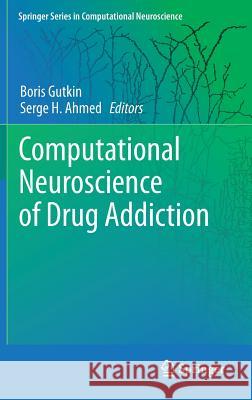
Computational Neuroscience of Drug Addiction  9781461407508 Springer, Berlin - książkaWidoczna okładka, to zdjęcie poglądowe, a rzeczywista szata graficzna może różnić się od prezentowanej.

Computational Neuroscience of Drug Addiction

ISBN-13: 9781461407508 / Angielski / Twarda / 2011 / 342 str.

cena 806,99 zł
(netto: 768,56 VAT:  5%)

Najniższa cena z 30 dni: 771,08 zł
Termin realizacji zamówienia:
ok. 22 dni roboczych
Bez gwarancji dostawy przed świętami

Darmowa dostawa!
inne wydania

Drug addiction remains one of the most important public health problems in western societies and is a rising concern for developing nations. Over the past 3 decades, experimental research on the neurobiology and psychology of drug addiction has generated a torrent of exciting data, from the molecular up to the behavioral levels. As a result, a new and pressing challenge for addiction research is to formulate a synthetic theoretical framework that goes well beyond mere scientific eclectism to deepen our understanding of drug addiction and to foster our capacity to prevent and to cure drug addiction. Intrigued by the apparent irrational behavior of drug addicts, researchers from a wide range of scientific disciplines have formulated a plethora of theoretical schemes over the years to understand addiction. However, most of these theories and models are qualitative in nature and are formulated using terms that are often ill-defined. As a result, the empirical validity of these models has been difficult to test rigorously, which has served to generate more controversy than clarity. In this context, as in other scientific fields, mathematical and computational modeling should contribute to the development of more testable and rigorous models of addiction.


Drug addiction remains one of the most important public health problems in western societies§and is a rising concern for developing nations. Over the past 3 decades, experimental research on the§neurobiology and psychology of drug addiction has generated a torrent of exciting data, from the molecular up to the behavioral levels. As a result, a new and pressing challenge for addiction research is to formulate a synthetic theoretical framework that goes well beyond mere scientific eclectism to deepen our understanding of drug addiction and to foster our capacity to prevent and to cure drug addiction.§Intrigued by the apparent irrational behavior of drug addicts, researchers from a wide range of scientific§disciplines have formulated a plethora of theoretical schemes over the years to understand addiction.§However, most of these theories and models are qualitative in nature and are formulated using terms that are often ill-defined. As a result, the empirical validity of these models has been difficult to test rigorously, which has served to generate more controversy than clarity. In this context, as in other scientific fields, mathematical and computational modeling should contribute to the development of more testable and rigorous models of addiction.

Kategorie:
Nauka, Medycyna
Kategorie BISAC:
Medical > Neuroscience
Computers > Business & Productivity Software - Accounting & Finance
Medical > Neurologia i neurofizjologia kliniczna
Wydawca:
Springer, Berlin
Seria wydawnicza:
Springer Series in Computational Neuroscience
Język:
Angielski
ISBN-13:
9781461407508
Rok wydania:
2011
Wydanie:
2012
Numer serii:
000364813
Ilość stron:
342
Waga:
0.63 kg
Wymiary:
23.11 x 15.49 x 2.29
Oprawa:
Twarda
Wolumenów:
01
Dodatkowe informacje:
Bibliografia

From the reviews:

"This is a fascinating ... new book covering mathematical modeling of various aspects of addiction. ... Written and edited by experts in the field, this is a welcome addition to the neuroscientific literature of addictions. ... Each chapter concludes with timely and relevant citations of the scientific literature. ... This new ... book is a stimulating introduction to the field for those with the computational neuroscientific background knowledge to comprehend it." (Michael Joel Schrift, Doody's Book Reviews, March, 2013)

Foreword: P Dayan


Part 1 – Pharmacological-based models of addiction


Chapter 1. Simple deterministic mathematical Model of maintained drug delf-Administration behavior and its pharmacological applications.

V.L. Tsibulsky* and A.B. Norman


Chapter 2. Intermittent Adaptation : A mathematical model of drug tolerance,

dependence and addiction.

A. Peper


Chapter 3. Control theory and addictive behavior.

D. Newlin, P.A. Regalia, T.I. Seidman, G. Bobashev


Part 2 – Neurocomputational models of addiction


Chapter 4. Circuit models of addiction: receptors and neural dynamics in nicotine self-administration.

M. Graupner and B. Gutkin


Chapter 5. N Dual-system learning models and drugs of abuse.

N.D. Daw and D.A. Simon.


Chapter 6. Modeling decision-making systems in addiction

Z. Kurth-Nelson and A. D. Redish


Chapter 7. Computational models of incentive-sensitization in addiction: Dynamic limbic transformation of learning into motivation

J. Zhang, K. C. Berridge, and J. W. Aldridge


Chapter 8.  Understanding addiction as a pathological state of multiple decision making processes: a neurocomputational perspective.

M. Keramati, A. Dezfouli and P. Piray


Part 3 – Economic-based models of addiction


Chapter 9. Policies and priors

K Friston


Chapter 10. Toward a Computationally Unified Behavioral-Economic Model of Addiction

E.T. Mueller, L.P. Carter and W.K. Bickel


Chapter 11. Simulating Patterns of Heroin Addiction within the Social Context of a Local Heroin Market

L. Hoffer, G. Bobashev and R. J Morris


Chapter 10. Toward a Computationally Unified Behavioral-Economic Model of Addiction

E.T. Mueller, L.P. Carter and W.K. Bickel


Chapter 11. Simulating Patterns of Heroin Addiction within the Social Context of a Local Heroin Market

L. Hoffer, G. Bobashev and R. J Morris

Drug addiction is one of the most important public health problems in Western societies, and is a rising concern for developing nations. Over the past three decades, experimental research on the neurobiology and psychology of drug addiction has generated a tremendous amount of exciting data, from the molecular to the behavioral levels. As a result, a new and pressing challenge for addiction research is to formulate a synthetic theoretical framework that goes well beyond mere scientific eclecticism to deepen our understanding of drug addiction and to foster our capacity to prevent and to cure drug addiction.

Recently, researchers from a broad spectrum of scientific disciplines – from pharmacokinetics to neuroeconomics – have begun to take up this challenge. Computational Neuroscience of Drug Addiction collects recent mathematical and neurocomputational modeling approaches to drug self-administration and addiction. This selection of chapters illustrates how mathematical modeling can contribute to our understanding of the mechanisms underlying the transition between the different stages of addiction, from initiation of regulated drug use and subsequent loss of control over drug use to relapse after long-term abstinence. The volume provides an overview of this emerging area and will serve as a standard reference for addiction researchers and quantitative scientists entering the field.


Udostępnij

Facebook - konto krainaksiazek.pl


Opinie o Krainaksiazek.pl na Opineo.pl

Partner Mybenefit

Krainaksiazek.pl w programie rzetelna firma Krainaksiaze.pl - płatności przez paypal

Czytaj nas na:

Facebook - krainaksiazek.pl
  • książki na zamówienie
  • granty
  • książka na prezent
  • kontakt
  • pomoc
  • opinie
  • regulamin
  • polityka prywatności

Zobacz:

  • Księgarnia czeska

  • Wydawnictwo Książkowe Klimaty

1997-2025 DolnySlask.com Agencja Internetowa

© 1997-2022 krainaksiazek.pl
     
KONTAKT | REGULAMIN | POLITYKA PRYWATNOŚCI | USTAWIENIA PRYWATNOŚCI
Zobacz: Księgarnia Czeska | Wydawnictwo Książkowe Klimaty | Mapa strony | Lista autorów
KrainaKsiazek.PL - Księgarnia Internetowa

Polityka prywatnosci - link
Krainaksiazek.pl - płatnośc Przelewy24
Przechowalnia Przechowalnia





