• Wyszukiwanie zaawansowane
  • Kategorie
  • Kategorie BISAC
  • Książki na zamówienie
  • Promocje
  • Granty
  • Książka na prezent
  • Opinie
  • Pomoc
  • Załóż konto
  • Zaloguj się

Computational Modeling of Multilevel Organisational Learning and Its Control Using Self-modeling Network Models » książka


zaloguj się | załóż konto
Logo Krainaksiazek.pl

koszyk

konto

szukaj
topmenu
Księgarnia internetowa
Szukaj
Książki na zamówienie
Promocje
Granty
Książka na prezent
Moje konto
Pomoc
 
 
Wyszukiwanie zaawansowane
Pusty koszyk
Bezpłatna dostawa dla zamówień powyżej 20 złBezpłatna dostawa dla zamówień powyżej 20 zł

Kategorie główne

• Nauka
 [2946912]
• Literatura piękna
 [1852311]

  więcej...
• Turystyka
 [71421]
• Informatyka
 [150889]
• Komiksy
 [35717]
• Encyklopedie
 [23177]
• Dziecięca
 [617324]
• Hobby
 [138808]
• AudioBooki
 [1671]
• Literatura faktu
 [228371]
• Muzyka CD
 [400]
• Słowniki
 [2841]
• Inne
 [445428]
• Kalendarze
 [1545]
• Podręczniki
 [166819]
• Poradniki
 [480180]
• Religia
 [510412]
• Czasopisma
 [525]
• Sport
 [61271]
• Sztuka
 [242929]
• CD, DVD, Video
 [3371]
• Technologie
 [219258]
• Zdrowie
 [100961]
• Książkowe Klimaty
 [124]
• Zabawki
 [2341]
• Puzzle, gry
 [3766]
• Literatura w języku ukraińskim
 [255]
• Art. papiernicze i szkolne
 [7810]
Kategorie szczegółowe BISAC

Computational Modeling of Multilevel Organisational Learning and Its Control Using Self-modeling Network Models

ISBN-13: 9783031287343 / Angielski
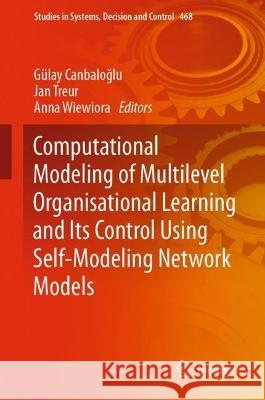
Gülay Canbaloğlu; Jan Treur; Anna Wiewiora
Computational Modeling of Multilevel Organisational Learning and Its Control Using Self-modeling Network Models G?lay Canbaloğlu Jan Treur Anna Wiewiora 9783031287343 Springer - książkaWidoczna okładka, to zdjęcie poglądowe, a rzeczywista szata graficzna może różnić się od prezentowanej.

Computational Modeling of Multilevel Organisational Learning and Its Control Using Self-modeling Network Models

ISBN-13: 9783031287343 / Angielski

Gülay Canbaloğlu; Jan Treur; Anna Wiewiora
cena 724,58
(netto: 690,08 VAT:  5%)

Najniższa cena z 30 dni: 693,97
Termin realizacji zamówienia:
ok. 22 dni roboczych
Bez gwarancji dostawy przed świętami

Darmowa dostawa!
inne wydania

Although there is much literature on organisational learning, mathematical formalisation and computational simulation, there is no literature that uses mathematical modelling and simulation to represent and explore different facets of multilevel learning. This book provides an overview of recent work on mathematical formalisation and computational simulation of multilevel organisational learning by exploiting the possibilities of self-modeling network models to address it.This is the first book addressing mathematical formalisation and computational modeling of multilevel organisational learning in a systematic, principled manner.A self-modeling network modeling approach from AI and Network Science is used where in a reflective manner some of the network nodes (called self-model nodes) represent parts of the network’s own network structure characteristics.This is supported by a dedicated software environment allowing to design and implement (higher-order) adaptive network models by specifying them in a conceptual manner at a high level of abstraction in a standard table format, without any need of algorithmic specification or programming.This modeling approach allows to model the development of knowledge in an organisational setting in a neatly structured manner at three different levels for the usage, adaptation and control, respectively, of the underlying mental models.Several examples of realistic cases of multilevel organisational learning are used to illustrate the approach.Crucial concepts such as the aggregation of mental models to form shared mental models out of individual mental models are addressed extensively.It is shown how to model context-sensitive control of organisational learning taking into account a wide variety of context factors, for example relating to levels of expertise of individuals or to leadership styles of managers involved.Mathematical equilibrium analysis of models of organisational learning is also addressed, among others allowing verification of correctness of the implemental models in comparison to their conceptual design.Chapters in this book also contribute to the Management and Business Sciences research by demonstrating how computational modeling can be used to capture complex management phenomena such as multilevel organizational learning.This book has a potential implication for practice by demonstrating how computational modeling can be used to capture learning scenarios, which then provide a basis for more informed managerial decisions.


Although there is much literature on organisational learning, mathematical formalisation and computational simulation, there is no literature that uses mathematical modelling and simulation to represent and explore different facets of multilevel learning. This book provides an overview of recent work on mathematical formalisation and computational simulation of multilevel organisational learning by exploiting the possibilities of self-modeling network models to address it. 

  • This is the first book addressing mathematical formalisation and computational modeling of multilevel organisational learning in a systematic, principled manner.  
  • A self-modeling network modeling approach from AI and Network Science is used where in a reflective manner some of the network nodes (called self-model nodes) represent parts of the network’s own network structure characteristics. 
  • This is supported by a dedicated software environment allowing to design and implement (higher-order) adaptive network models by specifying them in a conceptual manner at a high level of abstraction in a standard table format, without any need of algorithmic specification or programming. 
  • This modeling approach allows to model the development of knowledge in an organisational setting in a neatly structured manner at three different levels for the usage, adaptation and control, respectively, of the underlying mental models.  
  • Several examples of realistic cases of multilevel organisational learning are used to illustrate the approach.  
  • Crucial concepts such as the aggregation of mental models to form shared mental models out of individual mental models are addressed extensively. 
  • It is shown how to model context-sensitive control of organisational learning taking into account a wide variety of context factors, for example relating to levels of expertise of individuals or to leadership styles of managers involved. 
  • Mathematical equilibrium analysis of models of organisational learning is also addressed, among others allowing verification of correctness of the implemental models in comparison to their conceptual design. 
  • Chapters in this book also contribute to the Management and Business Sciences research by demonstrating how computational modeling can be used to capture complex management phenomena such as multilevel organizational learning.   
  • This book has a potential implication for practice by demonstrating how computational modeling can be used to capture learning scenarios, which then provide a basis for more informed managerial decisions.  

Kategorie:
Technologie
Kategorie BISAC:
Technology & Engineering > Engineering (General)
Computers > Computer Simulation
Computers > Artificial Intelligence - General
Wydawca:
Springer
Seria wydawnicza:
Studies in Systems, Decision and Control
Język:
Angielski
ISBN-13:
9783031287343

On Computational Analysis and Simulation for Multilevel Organizational Learning.- Multilevel Organisational Learning.- Modeling Dynamics, Adaptivity and Control by Self-Modeling Networks.- Modeling Mental Models: their Use, Adaptation and Control.- From Conceptual to Computational Mechanisms for Multilevel Organisational Learning.- Using Self-Modeling Networks to Model Organisational Learning.

Although there is much literature on organisational learning, mathematical formalisation and computational simulation, there is no literature that uses mathematical modelling and simulation to represent and explore different facets of multilevel learning. This book provides an overview of recent work on mathematical formalisation and computational simulation of multilevel organisational learning by exploiting the possibilities of self-modeling network models to address it.

  • This is the first book addressing mathematical formalisation and computational modeling of multilevel organisational learning in a systematic, principled manner.  
  • A self-modeling network modeling approach from AI and Network Science is used where in a reflective manner some of the network nodes (called self-model nodes) represent parts of the network’s own network structure characteristics. 
  • This is supported by a dedicated software environment allowing to design and implement (higher-order) adaptive network models by specifying them in a conceptual manner at a high level of abstraction in a standard table format, without any need of algorithmic specification or programming. 
  • This modeling approach allows to model the development of knowledge in an organisational setting in a neatly structured manner at three different levels for the usage, adaptation and control, respectively, of the underlying mental models.  
  • Several examples of realistic cases of multilevel organisational learning are used to illustrate the approach.  
  • Crucial concepts such as the aggregation of mental models to form shared mental models out of individual mental models are addressed extensively. 
  • It is shown how to model context-sensitive control of organisational learning taking into account a wide variety of context factors, for example relating to levels of expertise of individuals or to leadership styles of managers involved. 
  • Mathematical equilibrium analysis of models of organisational learning is also addressed, among others allowing verification of correctness of the implemental models in comparison to their conceptual design.
  • Chapters in this book also contribute to the Management and Business Sciences research by demonstrating how computational modeling can be used to capture complex management phenomena such as multilevel organizational learning. 
  • This book has a potential implication for practice by demonstrating how computational modeling can be used to capture learning scenarios, which then provide a basis for more informed managerial decisions.




Udostępnij

Facebook - konto krainaksiazek.pl


Opinie o Krainaksiazek.pl na Opineo.pl

Partner Mybenefit

Krainaksiazek.pl w programie rzetelna firma Krainaksiaze.pl - płatności przez paypal

Czytaj nas na:

Facebook - krainaksiazek.pl
  • książki na zamówienie
  • granty
  • książka na prezent
  • kontakt
  • pomoc
  • opinie
  • regulamin
  • polityka prywatności

Zobacz:

  • Księgarnia czeska

  • Wydawnictwo Książkowe Klimaty

1997-2025 DolnySlask.com Agencja Internetowa

© 1997-2022 krainaksiazek.pl
     
KONTAKT | REGULAMIN | POLITYKA PRYWATNOŚCI | USTAWIENIA PRYWATNOŚCI
Zobacz: Księgarnia Czeska | Wydawnictwo Książkowe Klimaty | Mapa strony | Lista autorów
KrainaKsiazek.PL - Księgarnia Internetowa

Polityka prywatnosci - link
Krainaksiazek.pl - płatnośc Przelewy24
Przechowalnia Przechowalnia



