• Wyszukiwanie zaawansowane
  • Kategorie
  • Kategorie BISAC
  • Książki na zamówienie
  • Promocje
  • Granty
  • Książka na prezent
  • Opinie
  • Pomoc
  • Załóż konto
  • Zaloguj się

Comprehensive Virology: Vol 15: Virus-Host Interactions Immunity to Viruses » książka


zaloguj się | załóż konto
Logo Krainaksiazek.pl

koszyk

konto

szukaj
topmenu
Księgarnia internetowa
Szukaj
Książki na zamówienie
Promocje
Granty
Książka na prezent
Moje konto
Pomoc
 
 
Wyszukiwanie zaawansowane
Pusty koszyk
Bezpłatna dostawa dla zamówień powyżej 20 złBezpłatna dostawa dla zamówień powyżej 20 zł

Kategorie główne

• Nauka
 [2952079]
• Literatura piękna
 [1850969]

  więcej...
• Turystyka
 [71058]
• Informatyka
 [151066]
• Komiksy
 [35579]
• Encyklopedie
 [23181]
• Dziecięca
 [620496]
• Hobby
 [139036]
• AudioBooki
 [1646]
• Literatura faktu
 [228729]
• Muzyka CD
 [379]
• Słowniki
 [2932]
• Inne
 [445708]
• Kalendarze
 [1409]
• Podręczniki
 [164793]
• Poradniki
 [480107]
• Religia
 [510956]
• Czasopisma
 [511]
• Sport
 [61267]
• Sztuka
 [243299]
• CD, DVD, Video
 [3411]
• Technologie
 [219640]
• Zdrowie
 [100984]
• Książkowe Klimaty
 [124]
• Zabawki
 [2281]
• Puzzle, gry
 [3363]
• Literatura w języku ukraińskim
 [258]
• Art. papiernicze i szkolne
 [8020]
Kategorie szczegółowe BISAC

Comprehensive Virology: Vol 15: Virus-Host Interactions Immunity to Viruses

ISBN-13: 9781461330110 / Angielski / Miękka / 2011 / 294 str.
Heinz Fraenkel-Conrat
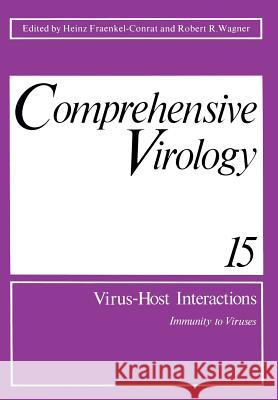
Comprehensive Virology: Vol 15: Virus-Host Interactions Immunity to Viruses Fraenkel-Conrat, Heinz 9781461330110 Springer - książkaWidoczna okładka, to zdjęcie poglądowe, a rzeczywista szata graficzna może różnić się od prezentowanej.

Comprehensive Virology: Vol 15: Virus-Host Interactions Immunity to Viruses

ISBN-13: 9781461330110 / Angielski / Miękka / 2011 / 294 str.

Heinz Fraenkel-Conrat
cena 201,24
(netto: 191,66 VAT:  5%)

Najniższa cena z 30 dni: 192,74
Termin realizacji zamówienia:
ok. 22 dni roboczych.

Darmowa dostawa!

The time seems ripe for a critical compendium of that segment of the biological universe we call viruses. Virology, as a science, having passed only recently through its descriptive phase of naming and num- bering, has probably reached that stage at which relatively few new-truly new-viruses will be discovered. Triggered by the intellectual probes and techniques of molecular biology, genetics, bio- chemical cytology, and high resolution microscopy and spec- troscopy, the field has experienced a genuine information explosion. Few serious attempts have been made to chronicle these events. This comprehensive series, which will comprise some 6000 pages in a total of about 18 volumes, represents a commitment by a large group of active investigators to analyze, digest, and expostulate on the great mass of data relating to viruses, much of which is now amorphous and disjointed, and scattered throughout a wide literature. In this way, we hope to place the entire field in perspective, and to develop an invalua- ble reference and sourcebook for researchers and students at all levels. This series is designed as a continuum that can be entered anywhere, but which also provides a logical progression of developing facts and integrated concepts.


Kategorie:
Nauka, Medycyna
Kategorie BISAC:
Science > Life Sciences - Evolution
Science > Zoologia i nauki o zwierzętach
Medical > Microbiology
Wydawca:
Springer
Seria wydawnicza:
Comprehensive Virology
Język:
Angielski
ISBN-13:
9781461330110
Rok wydania:
2011
Wydanie:
Softcover Repri
Numer serii:
000176908
Ilość stron:
294
Waga:
0.54 kg
Wymiary:
24.4 x 17.0
Oprawa:
Miękka
Wolumenów:
01
Dodatkowe informacje:
Wydanie ilustrowane

1 Immune Responses, Immune Tolerance, and Viruses.- 1. Introduction.- 2. Immune System.- 2.1. Organization, Interaction, and Genetic Control.- 2.2. Measurement of Immune Responsiveness: Antigen-Binding Cells.- 2.3. Measurement of Immune Responsiveness: B-Cell Products (Antibodies).- 2.4. Measurement of Immune Responsiveness: T-Cell Activities.- 3. Immune Responses in Nonviral Systems.- 3.1. Immune Regulation.- 3.2. Central Tolerance.- 3.3. Peripheral Tolerance.- 3.4. Divergence in B- and T-Cell Tolerance.- 3.5. Breaking of Immune Tolerance.- 4. Immune Responses in Viral Systems.- 4.1. Responses to Nonviral Antigens.- 4.2. Responses to Viral Antigens.- 4.3. Interactions between Viruses and Leukocytes.- 5. Immune Tolerance in Viral Systems.- 5.1. LCMV Infection.- 5.2. B-Cell Responses to LCMV.- 5.3. T-Cell Responses to LCMV.- 5.4. Retrovirus Models.- 5.5. Unconventional Viruses.- 6. Conclusion.- 7. References.- 2 Interaction of Viruses with Neutralizing Antibodies.- 1. Introduction.- 2. Methods.- 2.1 Static (End-Point) Methods.- 2.2 Kinetic Method.- 3. Antibody.- 3.1 Physicochemical Characteristics.- 3.2 Heterogeneity.- 4. Antigen-Antibody Interaction.- 4.1 Hapten-Antibody Interaction.- 4.2 Studies.- 5. Neutralization.- 5.1 Intrinsic Neutralization.- 5.2 Extrinsic Neutralization.- 5.3 Pseudoneutralization.- 6. Viral Neutralization.- 6.1 Kinetics of the Neutralization Reaction.- 6.2 Kinetics of Reactivation.- 6.3 Single-Hit and Multihit Reactions.- 6.4 Reversibility of the Virus-Antibody Reaction.- 7. The Nonneutralized Fraction (NNF).- 7.1. Explanatory Hypotheses.- 7.2. Mediated Neutralization.- 8. Neutralization by Antibody Fragments.- 9. Virolysis.- 10. Mechanisms.- 10.1. Conformational Change in Antibody Induced by Antigen.- 10.2. Conformational Change in Antigen Induced by Antibody.- 10.3. Mechanisms Pertaining to the Nonneutralized Fraction.- 10.4. Mechanisms Pertaining to Intrinsic Neutralization.- 11. General Concluding Comments.- 12. References.- 3 Humoral Immunity to Viruses.- 1.Introduction.- 2. The Complement System.- 2.1. Constituents and Molecular Mechanisms.- 2.2. Biological Reactions Accompanying Complement Activation.- 3. General Considerations of Virus Structure and Interactions with Humoral Elements.- 4. Nonimmune Non-Complement-Related Humoral Viral Neutralizing Factors.- 5. Antibody-Dependent Viral Neutralization.- 5.1 General Considerations.- 5.2 Neutralization by Envelopment.- 5.3 Neutralization by Aggregation.- 6. General Features of Antibody- and Complement-Dependent Viral Neutralization.- 6.1 Historical Considerations and Overview.- 6.2 The Complement-Fixation Test.- 6.3 Host-Cell Modification of Viruses.- 6.4 Factors Involved in Susceptibility to Lysis.- 7. Antibody- and Complement-Dependent Viral Neutralization: Nonlytic Mechanisms.- 7.1 Envelopment with Complement Proteins.- 7.2. Aggregation by Complement Proteins.- 7.3. Uncertain Mechanisms.- 8. Antibody- and Complement-Dependent Viral Neutralization: Lytic Mechanisms.- 8.1. Methods Employed to Demonstrate Viral Lysis.- 8.2. Viruses Lysed by Antibody and Complement.- 9. Nonimmune Complement-Dependent Viral Inactivation.- 9.1. The Properdin System.- 9.2. Nonlytic Mechanisms: Vesicular Stomatitis Virus.- 9.3. Lytic Mechanisms: Retroviruses.- 10. Conclusions.- 11. References.- 4 Cellular Immune Response to Viruses and the Biological Role of Polymorphic Major Transplantation Antigens.- 1. Introduction.- 2. Cellular Immunity and the Major Histocompatibility Gene Complex.- 2.1. Dual Specificity.- 2.2. Clonality of Anti-X and Anti-Self-H Specificity.- 2.3. Differentiation of Restriction Specificities in the Thymus.- 2.4. Restriction Specificity of Effector T Cells.- 2.5. Regulation of Immune Responsiveness.- 3. Antigens Involved in Immune Recognition: Viral Antigens and Self Antigens Coded by the Major Histocompatibility Gene Complex.- 3.1. Major Transplantation Antigens and Their Possible Function.- 3.2. Experimental Virus Infection.- 3.3. Virally Induced Target Antigens.- 3.4. Evidence for the Interaction of Self and Viral Antigens.- 4. MHC Restriction and Immune Responsiveness.- 4.1. Immune Response (Ir) Genes.- 4.2. Ir Genes Regulating Responsiveness of Virus-Specific Cytotoxic T Cells Mapping to K, D and “Dominance” of Low Responsiveness.- 5. Polymorphism of MHC Products and MHC-Linked Susceptibility to Disease.- 6. References.- 5 Interferons.- 1. Introduction.- 2. Interferon Synthesis.- 2.1. Interferon Synthesis in Vitro.- 2.2. In the Animal.- 3. Mechanisms of the Antiviral Activity.- 3.1. Establishment of the Antiviral State.- 3.2. Nature of the Antiviral State.- 4. Molecular Characterization of Interferons.- 4.1. General Considerations.- 4.2. Human Interferon.- 4.3. Mouse Interferon.- 4.4. Concluding Remarks.- 5. Interaction with the Immune System.- 5.1. Introduction.- 5.2. Antibody Formation.- 5.3. Cell-Mediated Immunity.- 5.4. Effects on Lymphocyte and Macrophage Activity as Monitored in Vitro.- 5.5. Concluding Remarks.- 6. Antitumor and Cell Multiplication Inhibitory Effects.- 6.1. Antitumor Effect.- 6.2. Cell Multiplication Inhibitory Effect.- 6.3. Mechanism of the Antitumor Effect.- Type II Interferon.- 7.1. Introduction.- 7.2. Production.- 7.3. Interaction with the Immune System.- 8. Summary and Conclusions.- 9. References.


Udostępnij

Facebook - konto krainaksiazek.pl


Opinie o Krainaksiazek.pl na Opineo.pl

Partner Mybenefit

Krainaksiazek.pl w programie rzetelna firma Krainaksiaze.pl - płatności przez paypal

Czytaj nas na:

Facebook - krainaksiazek.pl
  • książki na zamówienie
  • granty
  • książka na prezent
  • kontakt
  • pomoc
  • opinie
  • regulamin
  • polityka prywatności

Zobacz:

  • Księgarnia czeska

  • Wydawnictwo Książkowe Klimaty

1997-2026 DolnySlask.com Agencja Internetowa

© 1997-2022 krainaksiazek.pl
     
KONTAKT | REGULAMIN | POLITYKA PRYWATNOŚCI | USTAWIENIA PRYWATNOŚCI
Zobacz: Księgarnia Czeska | Wydawnictwo Książkowe Klimaty | Mapa strony | Lista autorów
KrainaKsiazek.PL - Księgarnia Internetowa

Polityka prywatnosci - link
Krainaksiazek.pl - płatnośc Przelewy24
Przechowalnia Przechowalnia





