• Wyszukiwanie zaawansowane
  • Kategorie
  • Kategorie BISAC
  • Książki na zamówienie
  • Promocje
  • Granty
  • Książka na prezent
  • Opinie
  • Pomoc
  • Załóż konto
  • Zaloguj się

Composite Reinforcements for Optimum Performance » książka

zaloguj się | załóż konto
Logo Krainaksiazek.pl

koszyk

konto

szukaj
topmenu
Księgarnia internetowa
Szukaj
Książki na zamówienie
Promocje
Granty
Książka na prezent
Moje konto
Pomoc
 
 
Wyszukiwanie zaawansowane
Pusty koszyk
Bezpłatna dostawa dla zamówień powyżej 20 złBezpłatna dostawa dla zamówień powyżej 20 zł

Kategorie główne

• Nauka
 [2946912]
• Literatura piękna
 [1852311]

  więcej...
• Turystyka
 [71421]
• Informatyka
 [150889]
• Komiksy
 [35717]
• Encyklopedie
 [23177]
• Dziecięca
 [617324]
• Hobby
 [138808]
• AudioBooki
 [1671]
• Literatura faktu
 [228371]
• Muzyka CD
 [400]
• Słowniki
 [2841]
• Inne
 [445428]
• Kalendarze
 [1545]
• Podręczniki
 [166819]
• Poradniki
 [480180]
• Religia
 [510412]
• Czasopisma
 [525]
• Sport
 [61271]
• Sztuka
 [242929]
• CD, DVD, Video
 [3371]
• Technologie
 [219258]
• Zdrowie
 [100961]
• Książkowe Klimaty
 [124]
• Zabawki
 [2341]
• Puzzle, gry
 [3766]
• Literatura w języku ukraińskim
 [255]
• Art. papiernicze i szkolne
 [7810]
Kategorie szczegółowe BISAC

Composite Reinforcements for Optimum Performance

ISBN-13: 9780081016794 / Angielski / Miękka / 2011 / 704 str.
Philippe Boisse
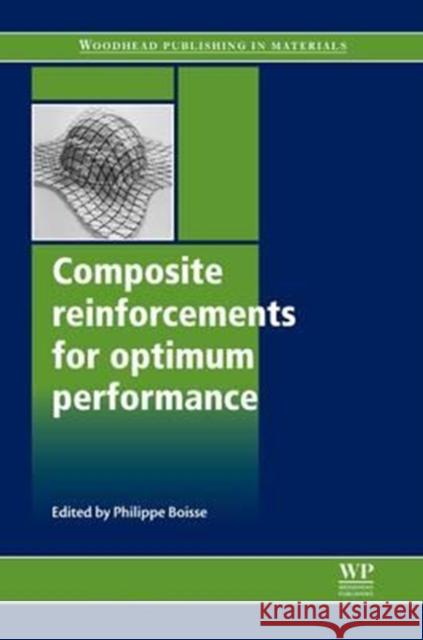
Composite Reinforcements for Optimum Performance Philippe Boisse 9780081016794 Woodhead Publishing - książkaWidoczna okładka, to zdjęcie poglądowe, a rzeczywista szata graficzna może różnić się od prezentowanej.

Composite Reinforcements for Optimum Performance

ISBN-13: 9780081016794 / Angielski / Miękka / 2011 / 704 str.

Philippe Boisse
cena 941,44
(netto: 896,61 VAT:  5%)

Najniższa cena z 30 dni: 941,44
Termin realizacji zamówienia:
ok. 30 dni roboczych
Dostawa w 2026 r.

Darmowa dostawa!

Reinforcements are an integral part of all composites and the quality and performance of the composite can be optimised by modelling the type and structure of the reinforcement before moulding. Composite reinforcements for optimum performance reviews the materials, properties and modelling techniques used in composite production and highlights their uses in optimising performance.

Part one covers materials for reinforcements in composites, including chapters on fibres, carbon nanotubes and ceramics as reinforcement materials. In part two, different types of structures for reinforcements are discussed, with chapters covering woven and braided reinforcements, three-dimensional fibre structures and two methods of modelling the geometry of textile reinforcements: WiseTex and TexGen. Part three focuses on the properties of composite reinforcements, with chapters on topics such as in-plane shear properties, transverse compression, bending and permeability properties. Finally, part four covers characterising and modelling of reinforcements in composites, with chapters focusing on such topics as microscopic and mesoscopic approaches, X-ray tomography analysis and modelling reinforcement forming processes.

With its distinguished editor and international team of contributors, Composite reinforcements for optimum performance is an essential reference for designers and engineers in the composite and composite reinforcement manufacturing industry, as well as all those with an academic research interest in the subject.

  • Reviews the materials, properties and modelling techniques used in composite production and highlights their uses in performance optimisation
  • Covers materials for reinforcements in composites, including fibres, carbon nanotubes and ceramics
  • Discusses characterising and modelling of reinforcements in composites, focusing on such topics as microscopic and mesoscopic approaches, X-ray tomography analysis and modelling reinforcement forming processes


Kategorie:
Technologie
Kategorie BISAC:
Technology & Engineering > Textiles & Polymers
Technology & Engineering > Mechanical
Technology & Engineering > Structural
Wydawca:
Woodhead Publishing
Język:
Angielski
ISBN-13:
9780081016794
Rok wydania:
2011
Ilość stron:
704
Waga:
0.96 kg
Wymiary:
23.39 x 15.6 x 3.58
Oprawa:
Miękka
Wolumenów:
01

Contributor contact details

Part I: Materials for reinforcements in composites

Chapter 1: Fibres for composite reinforcement: properties and microstructures

Abstract:

1.1 Introduction

1.2 Fineness, units, flexibility and strength

1.3 Comparison of materials

1.4 Organic fibres

1.5 Glass fibres

1.6 Chemical vapour deposition (CVD) monofilaments

1.7 Carbon fibres

1.8 Small-diameter ceramic fibres

1.9 Conclusions

Chapter 2: Carbon nanotube reinforcements for composites

Abstract:

2.1 Carbon nanotubes (CNTs)

2.2 Carbon nanotube (CNT) polymer composites

2.3 Performance and applications

Chapter 3: Ceramic reinforcements for composites

Abstract:

3.1 Introduction

3.2 Ceramic fibers: general features

3.3 Fracture strength: statistical features

3.4 Mechanical behavior at high temperatures

3.5 Fiber-matrix interfaces: influence on mechanical behavior

3.6 Mechanical behavior of composites: influence of fibers and interfaces

3.7 Conclusion

Part II: Structures for reinforcements in composites

Chapter 4: Woven reinforcements for composites

Abstract:

4.1 Introduction: from the beginning of weaving to technical applications

4.2 Technology description

4.3 Woven fabric definitions

4.4 Applications for composite reinforcements

4.5 Conclusion and future trends

4.6 Acknowledgement

Chapter 5: Braided reinforcements for composites

Abstract:

5.1 Introduction

5.2 Fundamentals of braiding

5.3 Braiding technologies for preforming

5.4 Key parameters for using braiding machines

5.5 Characteristics and properties of braided textiles

5.6 Mandrel technologies

5.7 Further processing

5.8 Typical applications

5.9 Limitations and drawbacks

5.10 Future trends

Chapter 6: Three-dimensional (3D) fibre reinforcements for composites

Abstract:

6.1 Introduction

6.2 Manufacture of three-dimensional (3D) fibre composites

6.3 Microstructure of three-dimensional (3D) fibre composites

6.4 Delamination fracture of three-dimensional (3D) fibre composites

6.5 Impact damage resistance and tolerance of three-dimensional (3D) fibre composites

6.6 Through-thickness stiffness and strength of three dimensional (3D) fibre composites

6.7 Through-thickness thermal properties of three-dimensional (3D) fibre composites

6.8 In-plane mechanical properties of three-dimensional (3D) fibre composites

6.9 Joint properties of three-dimensional (3D) fibre composites

6.10 Conclusions

Chapter 7: Modelling the geometry of textile reinforcements for composites: WiseTex

Abstract:

7.1 Introduction

7.2 Generic data structure for description of internal geometry of textile reinforcement

7.3 Geometrical description of specific types of reinforcements

7.4 Geometrical model as a pre-processor for prediction of mechanical properties of the reinforcement

7.5 Conclusion

Chapter 8: Modelling the geometry of textile reinforcements for composites: TexGen

Abstract:

8.1 Introduction: rationale and background to TexGen

8.2 Implementation

8.3 Modelling theory

8.4 Rendering and export of model

8.5 Applications

8.6 Future trends

Part III: Properties of composite reinforcements

Chapter 9: In-plane shear properties of woven fabric reinforced composites

Abstract:

9.1 Introduction

9.2 Fabric properties

9.3 Experimental setups of the trellis-frame test

9.4 Experimental results of the trellis-frame test

9.5 Experimental setups of the bias extension test

9.6 Experimental results of the bias extension test

9.7 Conclusions

9.8 Acknowledgments

Chapter 10: Biaxial tensile properties of reinforcements in composites

Abstract:

10.1 Introduction

10.2 Experimental analysis

10.3 Analytical model

10.4 Numerical modelling

10.5 Conclusions

Chapter 11: Transverse compression properties of composite reinforcements

Abstract:

11.1 Introduction

11.2 Transverse compression of composite reinforcements

11.3 Inelastic response of fibrous materials

11.4 Inelastic models of reinforcement compression

11.5 Future trends

Chapter 12: Bending properties of reinforcements in composites

Abstract:

12.1 Context

12.2 Improved cantilever test

12.3 Results and discussion

12.4 Conclusions

12.5 Acknowledgement

Chapter 13: Friction properties of reinforcements in composites

Abstract:

13.1 Introduction

13.2 Theory

13.3 Testing methodologies (static and dynamic friction coefficients)

13.4 Experimental data

13.5 Modeling of thermostamping

13.6 Conclusion

Chapter 14: Permeability properties of reinforcements in composites

Abstract:

14.1 Introduction

14.2 The permeability tensor

14.3 Saturated permeability modelling for fibre preforms

14.4 Unsaturated permeability modelling

14.5 Permeability measurement methods

14.6 Conclusion and future trends

Part IV: Characterising and modelling reinforcements in composites

Chapter 15: Microscopic approaches for understanding the mechanical behaviour of reinforcement in composites

Abstract:

15.1 Introduction

15.2 Interests and goals of the approach at microscopic scale

15.3 Modelling approach to textile composites at microscopic scale

15.4 Application examples

15.5 Conclusions

Chapter 16: Mesoscopic approaches for understanding the mechanical behaviour of reinforcements in composites

Abstract:

16.1 Introduction

16.2 Mechanical behaviour of the reinforcement

16.3 Mechanical behaviour of the yarn

16.4 Geometric modelling

16.5 Behaviour identification and finite element modelling

16.6 Finite element simulations, use and results

16.7 Conclusions and future trends

Chapter 17: Continuous models for analyzing the mechanical behavior of reinforcements in composites

Abstract:

17.1 Introduction

17.2 Continuum mechanics-based non-orthogonal model

17.3 Non-orthogonal constitutive model for woven fabrics

17.4 Specific application for a plain weave composite fabric

17.5 Validation of the non-orthogonal model

17.6 General fiber-reinforced hyperelastic model

17.7 Specific fiber-reinforced hyperelastic model for woven composite fabrics

17.8 Conclusions

17.9 Acknowledgment

Chapter 18: X-ray tomography analysis of the mechanical behaviour of reinforcements in composites

Abstract:

18.1 Introduction

18.2 X-ray tomography of composite reinforcements

18.3 Analyses of the structure of a textile reinforcement

18.4 Application of the mechanical behaviour of woven reinforcements to finite element simulations

18.5 Conclusion

Chapter 19: Flow modeling in composite reinforcements

Abstract:

19.1 Introduction

19.2 Governing flow equations

19.3 Analytical solution

19.4 Numerical solution

19.5 Application examples

19.6 Conclusions

Chapter 20: Modelling short fibre polymer reinforcements for composites

Abstract:

20.1 Introduction

20.2 Observations

20.3 Models

20.4 Computation of fibre orientation in injection moulding

20.5 Conclusions

Chapter 21: Modelling composite reinforcement forming processes

Abstract:

21.1 Introduction

21.2 A mesoscopic approach

21.3 Continuous approaches

21.4 The semi-discrete approach

21.5 Discussion and conclusion

21.6 Acknowledgements

Index

Boisse, Philippe Born in Stockholm in 1954, Johan Harmenberg took u... więcej >


Udostępnij

Facebook - konto krainaksiazek.pl


Opinie o Krainaksiazek.pl na Opineo.pl

Partner Mybenefit

Krainaksiazek.pl w programie rzetelna firma Krainaksiaze.pl - płatności przez paypal

Czytaj nas na:

Facebook - krainaksiazek.pl
  • książki na zamówienie
  • granty
  • książka na prezent
  • kontakt
  • pomoc
  • opinie
  • regulamin
  • polityka prywatności

Zobacz:

  • Księgarnia czeska

  • Wydawnictwo Książkowe Klimaty

1997-2025 DolnySlask.com Agencja Internetowa

© 1997-2022 krainaksiazek.pl
     
KONTAKT | REGULAMIN | POLITYKA PRYWATNOŚCI | USTAWIENIA PRYWATNOŚCI
Zobacz: Księgarnia Czeska | Wydawnictwo Książkowe Klimaty | Mapa strony | Lista autorów
KrainaKsiazek.PL - Księgarnia Internetowa

Polityka prywatnosci - link
Krainaksiazek.pl - płatnośc Przelewy24
Przechowalnia Przechowalnia







