Termin realizacji zamówienia: ok. 30 dni roboczych Dostawa w 2026 r.
Darmowa dostawa!
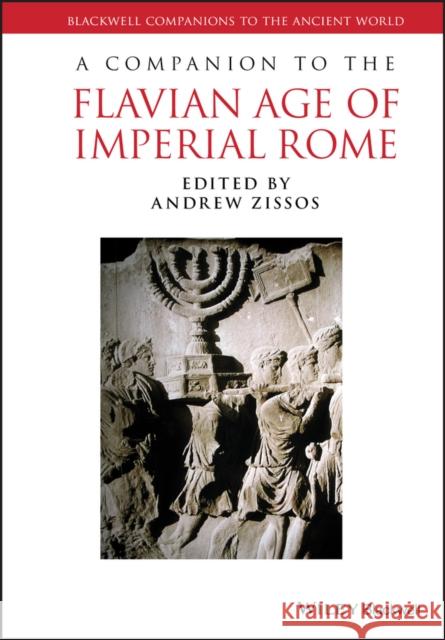
A Companion to the Flavian Age of Imperial Rome provides a systematic and comprehensive examination of the political, economic, social, and cultural nuances of the Flavian Age (69-96 CE).
Includes contributions from over two dozen Classical Studies scholars organized into six thematic sections
Illustrates how economic, social, and cultural forces interacted to create a variety of social worlds within a composite Roman empire
Concludes with a series of appendices that provide detailed chronological and demographic information and an extensive glossary of terms
Examines the Flavian Age more broadly and inclusively than ever before incorporating coverage of often neglected groups, such as women and non-Romans within the Empire
2 The Remarkable Rise of the Flavians 43 Frederik Juliaan Vervaet
3 The Emperor Vespasian 60 John Nicols
4 The Emperor Titus 76 Charles Leslie Murison
5 The Emperor Domitian 92 Alessandro Galimberti
6 Imperial Image ]Making 109 Steven L. Tuck
7 Public Images of the Flavian Dynasty: Sculpture and Coinage 129 Susan Wood
8 Remaking Rome 148 Andrew B. Gallia
9 The Flavians and the Senate 166 Loránd Dészpa
Part III Empire 187
10 The Economic Impact of Flavian Rule 189 Alessandro Launaro
11 Frontiers, Security, and Military Policy 207 Christopher J. Dart
12 Centers and Peripheries 223 Randall Pogorzelski
13 Flavian Judea 239 Mark A. Brighton
14 Flavian Britain 255 Gil Gambash
Part Iv Societies and Cultures 275
15 Foreigners and Flavians: Prejudices and Engagements 277 Grant Parker
16 Women in Flavian Rome 296 Laura K. Van Abbema
17 Education in the Flavian Age 313 Yun Lee Too
18 Flavian Pompeii: Restoration and Renewal 327 Eleanor Winsor Leach
19 The Aesthetics of the Everyday in Flavian Art and Literature 344 Sarah H. Blake
20 Flavian Spectacle: Paradox and Wonder 361 Helen Lovatt
21 Literary Culture 376 Antony Augoustakis
Part v Literature 393
22 Epic Poetry: Historicizing the Flavian Epics 395 Neil W. Bernstein
23 Epigram and Occasional Poetry: Social Life and Values in Martial s Epigrams and Statius Silvae 412 William J. Dominik
24 Latin Prose Literature: Author and Authority in the Prefaces of Pliny and Quintilian 434 Paul Roche
25 Flavian Greek Literature 450 Adam Kemezis
26 Lost Literature 469 Michael Dewar
Part vi Reception 485
27 The Flavian Legacy 487 Andrew Zissos
28 Vesuvius and Pompeii 515 Andrew Zissos
29 Reception of Flavian Literature 535 Andrew Zissos
Appendix 1 Chronology 560
Appendix 2 Demographic and Other Estimates 565
Appendix 3 Flavian Legionary Dispositions 568
Appendix 4 Lex de Imperio Vespasiani 570
Glossary of Terms and Expressions 573
Index of Passages 591
General Index 594
Andrew Zissos is Associate Professor of Classics at the University of California, Irvine. He is the author of numerous peer–reviewed articles on Latin epic, editor of a commentary on Book 1 of Valerius Flaccus
Argonautica (2008), and co–editor, with Ingo Gildenhard, of
Transformative Change in Western Thought: A History of Metamorphosis from Homer to Hollywood (2013).
A Companion to the Flavian Age of Imperial Rome provides a systematic and comprehensive examination of the political, economic, social, and cultural nuances of Rome s second Imperial dynasty. The Flavian Age, while lasting only 27 years (69 96 CE), was a crucial phase in the evolution of the Roman Empire. In addition to addressing the social and historical significance of the period, this volume includes essays on its material culture, art and literature, as well as its economic and political structures.
Divided into six thematic sections and including contributions from over two dozen Classical Studies scholars, A Companion to the Flavian Age of Imperial Rome offers a thorough examination of life during the nearly three decades of Flavian rule. In an effort to further elucidate the complexities of this bygone age, the editor has included a series of appendices that provide detailed chronological and demographic information, as well as an extensive glossary of terms. This Companion will prove invaluable for anyone interested in better understanding the Flavian Age and its role in the propagation of the Roman Empire.