• Wyszukiwanie zaawansowane
  • Kategorie
  • Kategorie BISAC
  • Książki na zamówienie
  • Promocje
  • Granty
  • Książka na prezent
  • Opinie
  • Pomoc
  • Załóż konto
  • Zaloguj się

Community Planning: Integrating Social and Physical Environments » książka


zaloguj się | załóż konto
Logo Krainaksiazek.pl

koszyk

konto

szukaj
topmenu
Księgarnia internetowa
Szukaj
Książki na zamówienie
Promocje
Granty
Książka na prezent
Moje konto
Pomoc
 
 
Wyszukiwanie zaawansowane
Pusty koszyk
Bezpłatna dostawa dla zamówień powyżej 20 złBezpłatna dostawa dla zamówień powyżej 20 zł

Kategorie główne

• Nauka
 [2946912]
• Literatura piękna
 [1852311]

  więcej...
• Turystyka
 [71421]
• Informatyka
 [150889]
• Komiksy
 [35717]
• Encyklopedie
 [23177]
• Dziecięca
 [617324]
• Hobby
 [138808]
• AudioBooki
 [1671]
• Literatura faktu
 [228371]
• Muzyka CD
 [400]
• Słowniki
 [2841]
• Inne
 [445428]
• Kalendarze
 [1545]
• Podręczniki
 [166819]
• Poradniki
 [480180]
• Religia
 [510412]
• Czasopisma
 [525]
• Sport
 [61271]
• Sztuka
 [242929]
• CD, DVD, Video
 [3371]
• Technologie
 [219258]
• Zdrowie
 [100961]
• Książkowe Klimaty
 [124]
• Zabawki
 [2341]
• Puzzle, gry
 [3766]
• Literatura w języku ukraińskim
 [255]
• Art. papiernicze i szkolne
 [7810]
Kategorie szczegółowe BISAC

Community Planning: Integrating Social and Physical Environments

ISBN-13: 9781405198875 / Angielski / Miękka / 2011 / 296 str.
Phil Heywood;¬Abar;¬Abar
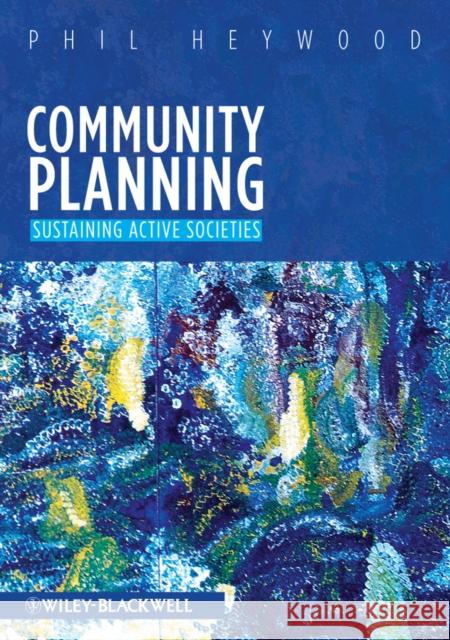
Community Planning: Integrating Social and Physical Environments Heywood, Phil 9781405198875  - książkaWidoczna okładka, to zdjęcie poglądowe, a rzeczywista szata graficzna może różnić się od prezentowanej.

Community Planning: Integrating Social and Physical Environments

ISBN-13: 9781405198875 / Angielski / Miękka / 2011 / 296 str.

Phil Heywood;¬Abar;¬Abar
cena 270,21
(netto: 257,34 VAT:  5%)

Najniższa cena z 30 dni: 269,09
Termin realizacji zamówienia:
ok. 30 dni roboczych
Dostawa w 2026 r.

Darmowa dostawa!

This key planning textbook on designing healthy and sustainable communities informs planners about community life and the processes of planning and equips them with the essential knowledge and skills they need to organise change and improve the quality of urban living. The author examines the impacts of social and economic change on community life and organization and explores ways in which these changes can be planned and managed. Community planning is presented as a means to balance and integrate beneficial change with the maintenance of valued cultural traditions and life styles. This involves bringing together fields of study and practice including urban and regional planning, design, communication, housing, community organization, employment, transport, and governance. Links drawn between personal values, human activities, physical spaces and societal governance assist this process of synthesis. Establishing a common vocabulary to discuss planning - for urban and regional planners, including health planners; and open space planners - enables both students and practitioners to work with each other and with those for whom they provide services to create stronger, healthier and more sustainable communities. The aims and roles of community planning are explored and the key planning operations are explained, including the phases and applications of community planning method; the planning and location of community facilities; the roles of design in shaping responsive community spaces; and the capacity of different types of community governance to improve the relations between citizens and societies. The book is organized into two main parts: after the first three chapters have established the interests and scope of community planning, the next six each moves from an account of issues and theoretical concerns, through a review of case studies, to summaries of leading practice. This positive approach is intended to encourage readers to develop their own capacities for effective participation and action. The concluding chapter draws together the contributions of preceding ones to demonstrate the integrity of the community planning process Supplementary website: www.wiley.com/go/heywood


Kategorie:
Sztuka, Architektura
Kategorie BISAC:
Architecture > Urban & Land Use Planning
Political Science > Public Policy - City Planning & Urban Development
Język:
Angielski
ISBN-13:
9781405198875
Rok wydania:
2011
Ilość stron:
296
Waga:
0.72 kg
Wymiary:
24.38 x 18.8 x 1.78
Oprawa:
Miękka
Wolumenów:
01
Dodatkowe informacje:
Bibliografia
Wydanie ilustrowane
Podręcznik

"So this is a good time to distil key messages from experiences with community planning, and an international perspective can help. Phil Heywood′s new book "Community Planning: Integrating Social and Physical Environments" is a good place to start. It includes a compelling case study of the practice of design–led local community involvement in Northern Queensland." (Cliff Hague World View, 1 August 2011)

"This volume is a most welcomed contribution to the social planning literature from the highly respected and esteemed academic Phil Heywood. Its tone and tenor echoes his passionate effervescent teaching, scholarship and advocacy across the broad spectrum that is community and social planning and is an engaging read throughout, from the preface to the conclusion." (Australian Planner, 2014, vol.51, no.3, 281–292) 

Preface.

Acknowledgements.

1 The Nature and Planning of Community Life.

Part One: Social and Economic Changes.

The current cascade of change.

Part Two: Community Life and Change.

Contemporary challenges to community life.

Part Three: Competing Interpretations of Community Structure and Change.

Order: genetically driven dominance.

Productivity and exchange: through market competition.

Control through transcendence of conflict: equality through struggle.

Collaboration: through negotiation, adjustment and mutual aid.

Part Four: The Roles of Cooperation.

Cooperation in practice.

Conclusions.

2 The Spirit and Characteristics of Community Planning.

Part One: Themes.

Communication.

Consultation.

Participation and exclusion.

The signifi cance of participatory theories.

Negotiation.

Part Two: Applications.

Necessary conditions for effective community consultation.

The role and themes of consultation.

Methods of consultation.

Consultation techniques.

Conclusion: relations of community planning with community action, community development and community organisation.

3 Local Communities of Place and Contact.

Social and organisational characteristics of local communities.

The physical forms of communities.

Spatial justice.

The planning of places.

Community participation and governance.

Conclusion: the durability of local communities of place and contact.

4 Communities of Interest and Interaction.

City communities.

Regional interest communities.

National communities.

Supranational political communities.

Global communities.

The many levels of community planning.

Conclusion: mixed scanning for integrated community planning.

5 Human Values and Community Goals.

Value formation.

The value of prosperity.

The value of liberty.

The values of social justice.

Values for sustainable communities.

Relations among the four community values.

Conclusions: how values can combine to help solve problems and shape creative plans.

6 Communities of Method.

Art and creativity in planning.

Science, knowledge and planning method.

Planning as a craft.

Political control and community participation.

Conclusions: values as the basis for communities of method.

7 Activities and their Analysis.

The links between activity systems and values.

The uses of models of activities.

The role of systems theory within the planning process.

Activity systems analysis in practice.

Conclusions: the roles of activity systems in community planning.

Appendix 1 Household demand and housing land supply statistics, Greater Brisbane 1996 2016.

Appendix 2 Employment Projections: Brisbane Statistical Division.

Key Assumptions.

8 People, Homes and Communities.

Demographic challenges in meeting global and local housing needs.

Technological responses and impacts.

Roads, wheels, wagons and motor vehicles.

Costs, means and access to provision and fi nance of housing.

Balancing demand and supply for shelter.

Conclusions: the contributions of shelter to community life.

9 Facets of Community.

Justifi cations for community intervention.

The planning and organisation of work.

The place of learning in community life.

The planning and delivery of health services.

Conclusion: the many facets of community.

10 Places, Spaces and Community Design.

Places and their properties.

Communal and collective spaces and places.

The language of design and the vocabulary of space and place.

Place–making: designing to make life.

Models of urban form.

Conclusion: bringing places to life.

11 Community Governance and Participation.

Governance, government and community participation.

Issues of freedom and order.

The roles of negotiation and partnership.

The development and evaluation of policies and proposals.

Roles and responsibilities in governance and participation.

Scales of community and their roles of governance and control.

Conclusions: the contributions of participation and governance to community life.

12 Conclusions: Community Planning Today and Tomorrow.

The elements of community planning.

Themes, roles and future directions.

The future of community planning.

Endnotes.

References.

Index.

A colour plate section.

Phil Heywood is a Fellow and former President of the Queensland Division of the Planning Institute of Australia, and has worked and taught in regional and local planning in Australia, Britain, West Africa and Malaysia.

He has been head of planning schools in UK and Australia, and is currently Associate Professor of Urban and Regional Planning at Queensland University of Technology, Brisbane, Australia.

This key planning textbook on shaping integrated and sustainable communities offers clear outlines of practicable planning methods and will help develop essential skills for planners.

The current strong movement towards higher standards of urban life and the challenges of rapid change are not solely about detailed design or matters of style but rather a pursuit of healthier, safer, and more sociable and responsive urban areas.

In Community Planning: Integrating social and physical environments, the author examines the impacts of social and economic change on community life and organisation and explores ways in which these changes can be planned and managed. Community planning is presented as a means to balance and integrate beneficial change with the maintenance of valued cultural traditions and lifestyles.

The aims and roles of community planning are explored and the key planning operations are explained, including the phases and applications of community planning method, the planning and location of community facilities, the roles of design in shaping responsive community spaces, and the capacity of different types of community governance to improve the relations between citizens and societies.

The book is organised into three main sections: the first four chapters establish the interests and scope of community planning. The next five move from accounts of values, methods and analytical techniques to their application in the planning of the key activities of housing, health, education and work. In the third section of the book, the concluding three chapters draw together the preceding themes and demonstrate the integrity of the community planning process in the participatory shaping and governance of healthy and sociable places, and their prospects within the continued evolution of community planning.


Udostępnij

Facebook - konto krainaksiazek.pl


Opinie o Krainaksiazek.pl na Opineo.pl

Partner Mybenefit

Krainaksiazek.pl w programie rzetelna firma Krainaksiaze.pl - płatności przez paypal

Czytaj nas na:

Facebook - krainaksiazek.pl
  • książki na zamówienie
  • granty
  • książka na prezent
  • kontakt
  • pomoc
  • opinie
  • regulamin
  • polityka prywatności

Zobacz:

  • Księgarnia czeska

  • Wydawnictwo Książkowe Klimaty

1997-2025 DolnySlask.com Agencja Internetowa

© 1997-2022 krainaksiazek.pl
     
KONTAKT | REGULAMIN | POLITYKA PRYWATNOŚCI | USTAWIENIA PRYWATNOŚCI
Zobacz: Księgarnia Czeska | Wydawnictwo Książkowe Klimaty | Mapa strony | Lista autorów
KrainaKsiazek.PL - Księgarnia Internetowa

Polityka prywatnosci - link
Krainaksiazek.pl - płatnośc Przelewy24
Przechowalnia Przechowalnia






