• Wyszukiwanie zaawansowane
  • Kategorie
  • Kategorie BISAC
  • Książki na zamówienie
  • Promocje
  • Granty
  • Książka na prezent
  • Opinie
  • Pomoc
  • Załóż konto
  • Zaloguj się

Communications, Radar and Electronic Warfare » książka


zaloguj się | załóż konto
Logo Krainaksiazek.pl

koszyk

konto

szukaj
topmenu
Księgarnia internetowa
Szukaj
Książki na zamówienie
Promocje
Granty
Książka na prezent
Moje konto
Pomoc
 
 
Wyszukiwanie zaawansowane
Pusty koszyk
Bezpłatna dostawa dla zamówień powyżej 20 złBezpłatna dostawa dla zamówień powyżej 20 zł

Kategorie główne

• Nauka
 [2949965]
• Literatura piękna
 [1857847]

  więcej...
• Turystyka
 [70818]
• Informatyka
 [151303]
• Komiksy
 [35733]
• Encyklopedie
 [23180]
• Dziecięca
 [617748]
• Hobby
 [139972]
• AudioBooki
 [1650]
• Literatura faktu
 [228361]
• Muzyka CD
 [398]
• Słowniki
 [2862]
• Inne
 [444732]
• Kalendarze
 [1620]
• Podręczniki
 [167233]
• Poradniki
 [482388]
• Religia
 [509867]
• Czasopisma
 [533]
• Sport
 [61361]
• Sztuka
 [243125]
• CD, DVD, Video
 [3451]
• Technologie
 [219309]
• Zdrowie
 [101347]
• Książkowe Klimaty
 [123]
• Zabawki
 [2362]
• Puzzle, gry
 [3791]
• Literatura w języku ukraińskim
 [253]
• Art. papiernicze i szkolne
 [7933]
Kategorie szczegółowe BISAC

Communications, Radar and Electronic Warfare

ISBN-13: 9780470688717 / Angielski / Twarda / 2011 / 400 str.
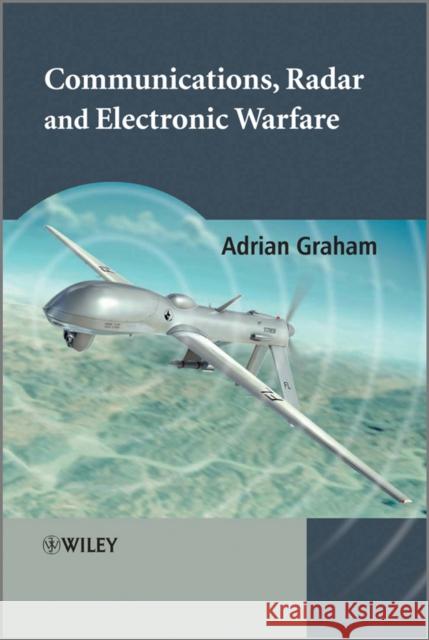
Adrian Graham;¬Abar;¬Abar
Communications, Radar and Electronic Warfare Adrian Graham   9780470688717  - książkaWidoczna okładka, to zdjęcie poglądowe, a rzeczywista szata graficzna może różnić się od prezentowanej.

Communications, Radar and Electronic Warfare

ISBN-13: 9780470688717 / Angielski / Twarda / 2011 / 400 str.

Adrian Graham;¬Abar;¬Abar
cena 477,26 zł
(netto: 454,53 VAT:  5%)

Najniższa cena z 30 dni: 472,37 zł
Termin realizacji zamówienia:
ok. 30 dni roboczych
Bez gwarancji dostawy przed świętami

Darmowa dostawa!

A practical guide to the principles of radio communications for both civilian and military applications In this book, the author covers both the civilian and military uses of technology, focusing particularly on the applications of radio propagation and prediction. Divided into two parts, the author introduces the basic theory of radio prediction before providing a step-by-step explanation of how this theory can be translated into real-life applications. In addition, the book presents up-to-date systems and methods to illustrate how these applications work in practice. This includes systems working in the HF bands and SHF. Furthermore, the author examines the performance of these systems, and also the effects of noise, interference and deliberate jamming, as well as the performance of jamming, detection and intercept systems. Particular attention is paid to the problems caused by Radio Controlled Improvised Explosive Devices (RCIEDs). Key Features:

  • A practical handbook on the topic of radio communications and propagation
  • Written by an expert in both the civilian and military applications of the technology
  • Focuses on methods such as radio and radar jamming, and radio-controlled improvised explosive devices (IEDs)
  • Contains problems and solutions to clarify key topics

A practical guide to the principles of radio communications for both civilian and military applicationsIn this book, the author covers both the civilian and military uses of technology, focusing particularly on the applications of radio propagation and prediction. Divided into two parts, the author introduces the basic theory of radio prediction before providing a step–by–step explanation of how this theory can be translated into real–life applications. In addition, the book presents up–to–date systems and methods to illustrate how these applications work in practice. This includes systems working in the HF bands and SHF. Furthermore, the author examines the performance of these systems, and also the effects of noise, interference and deliberate jamming, as well as the performance of jamming, detection and intercept systems. Particular attention is paid to the problems caused by Radio Controlled Improvised Explosive Devices (RCIEDs).Key Features:

  • A practical handbook on the topic of radio communications and propagation
  • Written by an expert in both the civilian and military applications of the technology
  • Focuses on methods such as radio and radar jamming, and radio–controlled improvised explosive devices (IEDs)
  • Contains problems and solutions to clarify key topics

Kategorie:
Technologie
Kategorie BISAC:
Technology & Engineering > Radio
Technology & Engineering > Telecommunications
Język:
Angielski
ISBN-13:
9780470688717
Rok wydania:
2011
Ilość stron:
400
Waga:
0.83 kg
Wymiary:
24.89 x 17.53 x 2.79
Oprawa:
Twarda
Wolumenów:
01
Dodatkowe informacje:
Bibliografia
Glosariusz/słownik
Wydanie ilustrowane

Preface.

Glossary.

PART ONE BASIC THEORY.

1 Introduction.

1.1 The Aim of this Book.

1.2 Current Radio Technology.

1.3 Factors Constraining Radio Communications.

References and Further Reading.

2 Management of the Radio Spectrum.

2.1 Spectrum Management Fundamentals.

2.2 Civil Spectrum Management.

2.3 Military Spectrum Management.

2.4 Management of EWActivities.

References and Further Reading.

3 The Radio Channel.

3.1 Frequency Aspects of the Radio Channel.

3.2 Narrowband Signals.

3.3 Frequency Hopping Signals.

3.4 Wideband Signals.

3.5 The Effect of Movement on the Radio Channel.

References and Further Reading.

4 Radio Links in the Presence of Noise.

4.1 Sources of Radio Noise.

4.2 Effects of Noise.

4.3 The Radio Receiver.

4.4 Radio Link Budgets in the Presence of Noise.

References and Further Reading.

5 Radio Links in the Presence of Interference.

5.1 Sources of Radio Interference.

5.2 Interference in the Spectral Domain.

5.3 Interference in the Time Domain.

5.4 Interference Mitigation Techniques.

References and Further Reading.

6 Radio Links and Deliberate Jamming.

6.1 The Purpose of Jamming.

6.2 How Jamming Works.

6.3 Types of Communications Jammers.

6.4 Jamming Mitigation Techniques.

References and Further Reading.

7 Radar and Radar Jamming.

7.1 Introduction to Radars.

7.2 The Radar Equation.

7.3 Types of Radar.

7.4 Radar Jamming Techniques.

7.5 Radar Jamming Mitigation Techniques.

References and Further Reading.

8 Radio–Controlled Improvised Explosive Devices.

8.1 The Poor Man s Weapon of Choice: IEDs.

8.2 Radio Control for IEDs.

8.3 Detection of IED Radio Control Systems.

References and Further Reading.

PART TWO PRACTICAL.

9 Predicting HF Radio.

9.1 Propagation at HF.

9.2 HF Skywave Link Budgets.

9.3 Groundwave.

References and Further Reading.

10 VHF to SHF Radio Prediction.

10.1 Propagation above HF.

10.2 Modelling Methods.

10.3 Deterministic Models.

10.4 Empirical Models.

10.5 Combined Models.

10.6 Link Budgets.

References and Further Reading.

11 Data Requirements for Radio Prediction.

11.1 Why Consider Modelling Requirements?

11.2 Communications System Parameters.

11.3 ES Specific Parameters.

11.4 EA Specific Parameters.

11.5 Radar Specific Parameters.

11.6 Third–Party Characteristics.

11.7 General Antenna Characteristics.

11.8 Antenna Environment Considerations.

11.9 Terrain Data.

11.10 Ground and Radio Clutter Data.

11.11 Sunspots, Ionospheric and Atmospheric Data.

References and Further Reading.

12 Planning and Optimising Radio Links.

12.1 Path Profile Prediction.

12.2 Optimising a Link.

12.3 Re–Broadcast Links.

12.4 Linked Networks.

References and Further Reading.

13 Planning Radio Networks for Coverage.

13.1 Coverage Predictions.

13.2 Optimisation of Radio Networks.

13.3 Limiting Coverage.

References and Further Reading.

14 Interference Analysis.

14.1 Introduction to Radio Interference Analysis.

14.2 Fading Considerations.

14.3 Interference from other Channels.

14.4 Different Ways of Representing Co–Existing Signals.

References and Further Reading.

15 Management Techniques for Interference.

15.1 Preventing Interference.

15.2 Managing Interference.

15.3 Interference Reports.

References and Further Reading.

16 Management of Interference at a Radio Site.

16.1 Special Features of Radio Sites with Multiple Systems.

16.2 Sources of Interference at a Radio Site.

16.3 Methods of Managing Interference at Radio Sites.

References and Further Reading.

17 Communications Electronic Warfare.

17.1 Introduction.

17.2 Detection and Intercept Networks.

17.3 Direction Finding Networks.

17.4 Communications Jammers.

17.5 The Role of Unmanned Airborne Vehicles.

17.6 Countering Enemy Communications Electronic Warfare.

References and Further Reading.

18 Non–Communications Electronic Warfare.

18.1 Non–Communications EW.

18.2 Radar Jamming Techniques.

18.3 Platform Self Protection Methods.

18.4 Parametric Information Collection Methods.

References and Further Reading.

19 Countering Radio–Controlled IEDs.

19.1 Introduction to IEDs.

19.2 Radio Controlled IED.

19.3 Basic IED Counter Methods.

20 Summary and Conclusions.

Appendix A: Working with Decibels.

Appendix B: Common Conversion Formulae and Reference Tables.

Index.

Lt Cdr Adrian Graham (Retd) has worked on military and intelligence projects both as a civilian engineer and as a naval technical intelligence specialist. Whilst a director of ATDI Ltd, he worked closely with clients in Special Forces, specialist EW regiments and other government agencies in the EW and intelligence environment. Through this he has provided guidance on Standard Operating Procedures (SOPs) and has designed and delivered many training courses on military communications and electronic warfare. In addition, Adrian is highly experienced at designing radio networks for both military and civil applications, and an expert in the use of computer–based radio prediction and modelling techniques in order to predict their performance in the real world. Having served for 22 years as an intelligence officer in the Defence Intelligence Staff, he is a technical expert on DI 57, Technical Intelligence (Navy).

A practical guide to the principles of radio communications for both civilian and military applications

In this book, the author covers both the civilian and military uses of technology, focusing particularly on the applications of radio propagation and prediction. Divided into two parts, the author introduces the basic theory of radio prediction before providing a step–by–step explanation of how this theory can be translated into real–life applications. In addition, the book presents up–to–date systems and methods to illustrate how these applications work in practice. This includes systems working in the HF bands and SHF. Furthermore, the author examines the performance of these systems, and also the effects of noise, interference and deliberate jamming, as well as the performance of jamming, detection and intercept systems. Particular attention is paid to the problems caused by Radio Controlled Improvised Explosive Devices (RCIEDs).

Key Features:

  • A practical handbook on the topic of radio communications and propagation
  • Written by an expert in both the civilian and military applications of the technology
  • Focuses on methods such as radio and radar jamming, and radio–controlled improvised explosive devices (IEDs)
  • Contains problems and solutions to clarify key topics



Udostępnij

Facebook - konto krainaksiazek.pl


Opinie o Krainaksiazek.pl na Opineo.pl

Partner Mybenefit

Krainaksiazek.pl w programie rzetelna firma Krainaksiaze.pl - płatności przez paypal

Czytaj nas na:

Facebook - krainaksiazek.pl
  • książki na zamówienie
  • granty
  • książka na prezent
  • kontakt
  • pomoc
  • opinie
  • regulamin
  • polityka prywatności

Zobacz:

  • Księgarnia czeska

  • Wydawnictwo Książkowe Klimaty

1997-2025 DolnySlask.com Agencja Internetowa

© 1997-2022 krainaksiazek.pl
     
KONTAKT | REGULAMIN | POLITYKA PRYWATNOŚCI | USTAWIENIA PRYWATNOŚCI
Zobacz: Księgarnia Czeska | Wydawnictwo Książkowe Klimaty | Mapa strony | Lista autorów
KrainaKsiazek.PL - Księgarnia Internetowa

Polityka prywatnosci - link
Krainaksiazek.pl - płatnośc Przelewy24
Przechowalnia Przechowalnia




