• Wyszukiwanie zaawansowane
  • Kategorie
  • Kategorie BISAC
  • Książki na zamówienie
  • Promocje
  • Granty
  • Książka na prezent
  • Opinie
  • Pomoc
  • Załóż konto
  • Zaloguj się

Communicating With Families: Taking The Language of Mental Health From Research to Practice » książka


zaloguj się | załóż konto
Logo Krainaksiazek.pl

koszyk

konto

szukaj
topmenu
Księgarnia internetowa
Szukaj
Książki na zamówienie
Promocje
Granty
Książka na prezent
Moje konto
Pomoc
 
 
Wyszukiwanie zaawansowane
Pusty koszyk
Bezpłatna dostawa dla zamówień powyżej 20 złBezpłatna dostawa dla zamówień powyżej 20 zł

Kategorie główne

• Nauka
 [2950560]
• Literatura piękna
 [1849509]

  więcej...
• Turystyka
 [71097]
• Informatyka
 [151150]
• Komiksy
 [35848]
• Encyklopedie
 [23178]
• Dziecięca
 [617388]
• Hobby
 [139064]
• AudioBooki
 [1657]
• Literatura faktu
 [228597]
• Muzyka CD
 [383]
• Słowniki
 [2855]
• Inne
 [445295]
• Kalendarze
 [1464]
• Podręczniki
 [167547]
• Poradniki
 [480102]
• Religia
 [510749]
• Czasopisma
 [516]
• Sport
 [61293]
• Sztuka
 [243352]
• CD, DVD, Video
 [3414]
• Technologie
 [219456]
• Zdrowie
 [101002]
• Książkowe Klimaty
 [124]
• Zabawki
 [2311]
• Puzzle, gry
 [3459]
• Literatura w języku ukraińskim
 [254]
• Art. papiernicze i szkolne
 [8079]
Kategorie szczegółowe BISAC

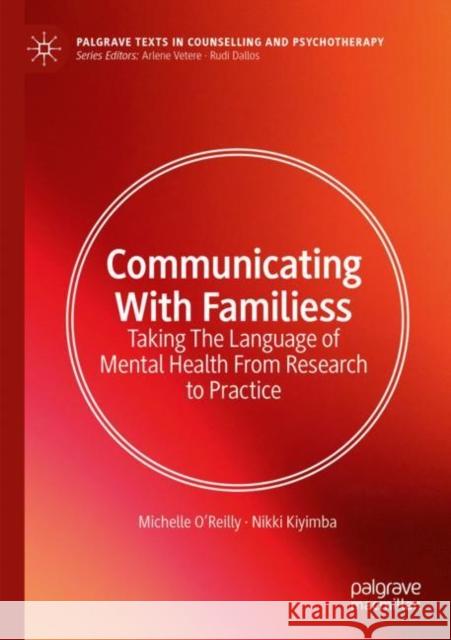
Communicating With Families: Taking The Language of Mental Health From Research to Practice

ISBN-13: 9783031304170 / Angielski / Miękka / 2023 / 238 str.
Nikki Kiyimba
Communicating With Families: Taking The Language of Mental Health From Research to Practice Nikki Kiyimba 9783031304170 Springer International Publishing AG - książkaWidoczna okładka, to zdjęcie poglądowe, a rzeczywista szata graficzna może różnić się od prezentowanej.

Communicating With Families: Taking The Language of Mental Health From Research to Practice

ISBN-13: 9783031304170 / Angielski / Miękka / 2023 / 238 str.

Nikki Kiyimba
cena 341,34
(netto: 325,09 VAT:  5%)

Najniższa cena z 30 dni: 308,41
Termin realizacji zamówienia:
ok. 22 dni roboczych
Dostawa w 2026 r.

Darmowa dostawa!
Kategorie:
Podręczniki, Słowniki
Kategorie BISAC:
Psychology > Psychotherapy - Counseling
Psychology > Clinical Psychology
Psychology > Personality
Wydawca:
Springer International Publishing AG
Seria wydawnicza:
Palgrave Texts in Counselling and Psychotherapy
Język:
Angielski
ISBN-13:
9783031304170
Rok wydania:
2023
Ilość stron:
238
Wymiary:
21.0 x 14.8
Oprawa:
Miękka
Dodatkowe informacje:
Wydanie ilustrowane


Preface
In this short preface, which serves an introduction to the book, we will be clear about our focus in the book, the audiences for the book, and our theoretical foundation for the empirical research contained in the chapters. Here we will explain that our focus on families is those families that have a child, under the age of 18 years in the interaction, rather than being on adult family interactions. 

PART ONE: THEORETICAL CONTEXT 

1. Systems within systems: Families in society
a. This chapter sets the theoretical foundation for the rest of the book. All other chapters are primarily practical, but will draw upon the theoretical framework introduced in this opening chapter. We position the practical and empirical findings from our research into mental health interventions with families and children, in relation to the integration of social ecological theory, systems theory and social constructionism. Each of these theoretical frameworks will be briefly outlined and their intersection will be described to provide readers with a clear understanding of where mental health family conversations are societally situated. Different explanations of normality have different trajectories for the direction of our understanding of mental health and illness. Thus, this chapter will cover: 
i. The language of mental health and illness 
ii. The language of deviance 
iii. Social ecological theory 
iv. Systems theory
v. Social constructionism 
vi. Biomedical and social explanations of mental health 
vii. Political systems, health systems and the Western context (including UK). 
viii. How these ideas are integrated to present our position through the book 
2. Communicating with families 
a. Bearing in mind the wider context outlined in chapter one, and the debates around normality and it biomedical or social underpinnings, we move in this chapter to the history of how family interventions have become an important part of the institutional landscape for working in child mental health. We discuss what family therapy is, and the different kind of work with families (such as mental health assessments). Thus, this chapter will cover: 
i. What constitutes the family – Western context 
ii. What constitutes the family – other cultures – we will use real world examples  
iii. The modern diverse family - including boxes of lived experience – to include new ways of thinking about the family (same sex couples etc)
iv. Family interventions – family therapy (and its history), mental health assessments 
v. Introduce research projects that chapters are based on 
vi. Introduce language-based approaches to research and analysis (Conversation analysis and discourse analysis, e.g., the social action of language – performative discourse) 
3. Forming and maintaining good therapeutic relationships 
a. Language-based therapy relies heavily on the relationship between all parties involved. It is crucial to understand how to develop mutual relationships and to maintain them without encountering rupture. When rupture does occur, the professional needs communication strategies to ‘fix’ the rupture. The language and communication are thus the cornerstone of the intervention. Thus, the chapter will cover: 
i. The importance of the therapeutic relationship
ii. Language as a vehicle for change 
iii. Alignment in multi-party conversations 
iv. Rupture 
v. Who takes responsibility to fix a rupture and how?
vi. Data examples 

PART TWO: ENGAGING CHILDREN 
4. Managing interruptions
a. In the context of multi-party conversations, it is common to find that people may overlap in talk or interrupt one another. This chapter looks at what the social meanings and functions of interruptions are in the context of child and family mental health interventions. Thus, this chapter will cover: 
i. What constitutes interruptions – interruptions as a social construct 
ii. Questioning the notion of power in interruptions 
iii. Politeness markers and their role 
iv. Children’s interruptions and their treatment in the conversation 
v. Therapists’ interruptions 
vi. Parents’ interruptions 
5. Engaging children through questions  
a. This is a very practical chapter that draws upon previously published empirical research exploring specific techniques used to engage children in therapeutic conversations. While lots of information about the child can be gathered from other family members, it is important for professionals to find ways to communicate directly with children to ascertain their thoughts and feelings. Thus, this chapter will include: 
i. The importance of question design 
ii. You said prefaces; using the phrase you said as a preface to introduce difficult topics 
iii. Three wishes; using the phrase ‘if you had three wishes’ to elicit goals from children in therapy or assessments 
iv. Why are you here? Establishing the extent children understand their attendance in the mental health setting 
v. Using why questions 
6. Engaging children through creative techniques   
a. This is a very practical chapter that draws upon empirical research and the wider literature to explore creative techniques, such as play and art used to engage children. Thus, this chapter will include: 
i. The importance of participatory techniques  - creative and visual (art and play) 
ii. Subjective Units of Distress as a quantitative measure of children’s feelings (e.g., on a scale of one to ten)  
iii. The use of art, play, drawing family trees, role play through television programmes etc (mostly drawn from the literature)
7. Children’s competence 
a. This chapter specifically focuses on children and young people, and how they are treated in multi-party, multi-generational interactions in mental health environments. What is negotiated in these interactions is the competence of children to be able to answer questions asked of them and provide reliable information about their wellbeing. Thus, this chapter will include: 
i. The socially constructed nature of competence 
ii. Expectations adults have of children and how they are aligned with or contested by the children in these settings 
iii. Relevance of children’s developmental age 
iv. Therapists’ competence and cultural competencies
v. The types of question adults ask of children and assumptions made about whether they are competent to answer 
vi. The notion of children holding half-membership in adult conversations and its relevance in mental health 
vii. Data examples 

PART THREE: ATTENDING TO THE DIFFERENT NEEDS OF FAMILY MEMBERS 
8. Managing  sensitive conversations with children present
a. Through the course of multi-party conversations there are likely to be instances where members treat the topic or content as in some way inappropriate or difficult for one of more of the people present. This is particularly the case where adult may be talking about topics that they orient as being inappropriate to discuss in front of children. In situations where one person is talking about another present party, the talked about person may choose to disagree with the appraisal. Thus, this chapter will cover: 
i. Determining the appropriateness of adult topics while children are in the room. 
ii. The social construction of the adult and of the child – and the social construction of what topics are categorised as ‘adult’ 
iii. Managing the delicacy of what might be socially determined as an adult topic but may be relevant (or not) to the child 
iv. Managing topic choice in multi-party and multi-generational interactions 
v. Managing disagreement between parties 
vi. Data examples 
9. Avoiding shame and blame  
a. In multi-party conversations, and especially in settings like family therapy, an understanding of the child’s difficulties is positioned as being to some extent the responsibility of the parents. This positioning means that parents often need to do discursive work to construct themselves as good parents. This identity construction deflects blame for the child’s difficulties. 
i. Parents positioning as responsible for the child’s difficulties 
ii. A social construction of a systemic dysfunction in separated and blended families.
iii. The management of blame and accountability 
iv. Identity construction and subject positions 
v. Data examples 
10. How to talk about risk  
a. This chapter addresses the important issue about how risk is assessed and discussed in multi-party conversations in mental health settings. Where frequently self-harm and suicidal ideation are found to be present in those with mental health need, and therefore it is important to explore this difficult topic. Nonetheless mental health practitioners may find talking about risk, especially with children and young people, a challenging endeavour. We discuss useful techniques that mental health practitioners can use to facilitate these conversations. 
i. The context of self-harm, suicide and mental health 
ii. Regulatory requirements to assess for risk 
iii. The challenges of eliciting information about sensitive topics 
iv. Communication techniques for asking difficult questions about risk 
v. Data examples. 
11. Using recordings for reflective practice 
a. The foundation of this book has been how recordings of multi-party interactions within mental health settings have been used to learn valuable lessons about good practice and developing practice. This chapter provides reader with an opportunity to use some of the techniques represented by the authors for their own clinical reflective practice. 
i. Clinical use of reflective practice 
ii. Pragmatics of recording mental health sessions 
iii. Using four column analysis for developing practice 
iv. Working with recordings in supervision and training 
v. Using discursive methodologies in clinical reflection (Reflective Interventionist Conversation Analysis; Video Reflexive Ethnography). 

Michelle O’Reilly is Associate Professor of Communication in Mental Health at the University of Leicester and a Research Consultant for Leicestershire Partnership NHS Trust, UK. Michelle is also a Chartered Psychologist in Health. 

Nikki is a chartered Consultant Clinical Psychologist with experience working with patients with severe and enduring mental health difficulties. She runs Mātai Rongo, a trauma responsive training, supervision and psychology centre in New Zealand.


This textbook highlights the particular complexities of working systemically with couples and families with children. It is designed to be student and practitioner oriented by drawing on real world examples of therapeutic encounters in mental health settings to illustrate how theory can inform practice.

Good communication is the cornerstone of good clinical practice and is foundational for building therapeutic alliance. Although therapists and counsellors are often highly skilled in their therapeutic modalities, this book offers additional practical suggestions about how families engage in social actions and positioning themselves and others in their talk. The book also takes wider micro and macro ecological systems within which systemic psychotherapists and counsellors work into account and consider the ways that these larger social influences are experienced within institutional discourses. This unique book will be a valuable resource across a broad spectrum of professions and researchers, including counsellors, psychotherapists, family therapists, psychiatrists, nurses, play therapists, speech and language therapists, and mental health social workers.

Michelle O’Reilly is Associate Professor of Communication in Mental Health at the University of Leicester and a Research Consultant for Leicestershire Partnership NHS Trust, UK. Michelle is also a Chartered Psychologist in Health.

Nikki is a chartered Consultant Clinical Psychologist with experience working with patients with severe and enduring mental health difficulties. She runs Mātai Rongo, a trauma responsive training, supervision and psychology centre in New Zealand.



Udostępnij

Facebook - konto krainaksiazek.pl


Opinie o Krainaksiazek.pl na Opineo.pl

Partner Mybenefit

Krainaksiazek.pl w programie rzetelna firma Krainaksiaze.pl - płatności przez paypal

Czytaj nas na:

Facebook - krainaksiazek.pl
  • książki na zamówienie
  • granty
  • książka na prezent
  • kontakt
  • pomoc
  • opinie
  • regulamin
  • polityka prywatności

Zobacz:

  • Księgarnia czeska

  • Wydawnictwo Książkowe Klimaty

1997-2025 DolnySlask.com Agencja Internetowa

© 1997-2022 krainaksiazek.pl
     
KONTAKT | REGULAMIN | POLITYKA PRYWATNOŚCI | USTAWIENIA PRYWATNOŚCI
Zobacz: Księgarnia Czeska | Wydawnictwo Książkowe Klimaty | Mapa strony | Lista autorów
KrainaKsiazek.PL - Księgarnia Internetowa

Polityka prywatnosci - link
Krainaksiazek.pl - płatnośc Przelewy24
Przechowalnia Przechowalnia






