• Wyszukiwanie zaawansowane
  • Kategorie
  • Kategorie BISAC
  • Książki na zamówienie
  • Promocje
  • Granty
  • Książka na prezent
  • Opinie
  • Pomoc
  • Załóż konto
  • Zaloguj się

Collaborative Therapeutic Neuropsychological Assessment » książka


zaloguj się | załóż konto
Logo Krainaksiazek.pl

koszyk

konto

szukaj
topmenu
Księgarnia internetowa
Szukaj
Książki na zamówienie
Promocje
Granty
Książka na prezent
Moje konto
Pomoc
 
 
Wyszukiwanie zaawansowane
Pusty koszyk
Bezpłatna dostawa dla zamówień powyżej 20 złBezpłatna dostawa dla zamówień powyżej 20 zł

Kategorie główne

• Nauka
 [2950560]
• Literatura piękna
 [1849509]

  więcej...
• Turystyka
 [71097]
• Informatyka
 [151150]
• Komiksy
 [35848]
• Encyklopedie
 [23178]
• Dziecięca
 [617388]
• Hobby
 [139064]
• AudioBooki
 [1657]
• Literatura faktu
 [228597]
• Muzyka CD
 [383]
• Słowniki
 [2855]
• Inne
 [445295]
• Kalendarze
 [1464]
• Podręczniki
 [167547]
• Poradniki
 [480102]
• Religia
 [510749]
• Czasopisma
 [516]
• Sport
 [61293]
• Sztuka
 [243352]
• CD, DVD, Video
 [3414]
• Technologie
 [219456]
• Zdrowie
 [101002]
• Książkowe Klimaty
 [124]
• Zabawki
 [2311]
• Puzzle, gry
 [3459]
• Literatura w języku ukraińskim
 [254]
• Art. papiernicze i szkolne
 [8079]
Kategorie szczegółowe BISAC

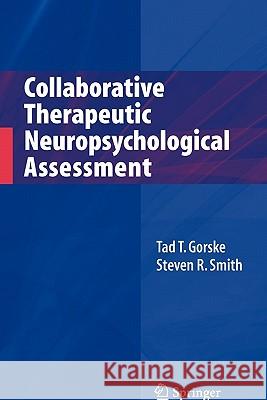
Collaborative Therapeutic Neuropsychological Assessment

ISBN-13: 9781441925916 / Angielski / Miękka / 2010 / 152 str.
Tad T. Gorske; Dr Steven R. Smith
Collaborative Therapeutic Neuropsychological Assessment Tad T. Gorske Steven R. Smith 9781441925916 Springer - książkaWidoczna okładka, to zdjęcie poglądowe, a rzeczywista szata graficzna może różnić się od prezentowanej.

Collaborative Therapeutic Neuropsychological Assessment

ISBN-13: 9781441925916 / Angielski / Miękka / 2010 / 152 str.

Tad T. Gorske; Dr Steven R. Smith
cena 342,14
(netto: 325,85 VAT:  5%)

Najniższa cena z 30 dni: 327,68
Termin realizacji zamówienia:
ok. 22 dni roboczych
Dostawa w 2026 r.

Darmowa dostawa!

One of the challenges the field of clinical neuropsychology faces is to develop an assessment process that is relevant and responsive to the needs of patients. Indeed, it has been suggested that the survival of neuropsychology as a clinical discipline may be threatened due to an overemphasis on diagnosing cognitive deficits as opposed to developing methods that meet patients' needs. One way to meet this need is for psychologists to extend their services by developing clinical interventions that contribute to enhancing patients' cognitive and emotional well-being. Providing feedback from the results of neuropsychological tests is one method suggested as a way to enhance patient care and satisfaction with the assessment process while providing a link between clinical assessment and therapeutic interventions. In current practice, providing feedback to patients about the results of neuropsychological assessments has been considered an optional procedure by clinicians and thus received little attention in the literature. Yet there is evidence that when feedback is provided to patients the effects are overwhelmingly positive. Feedback provides a bridge between assessment and treatment by facilitating the development of applicable treatment plans. There is no agreed upon conceptual framework for providing feedback from neuropsychological assessment, although researchers have made recommendations. However, these recommendations have done little to affect clinical practice and training despite the fact that including patient-oriented feedback enhances the likelihood that neuropsychological assessment will remain a relevant and important component of patient care. The purpose of this proposed book is to first describe developments in methods of neuropsychological assessment feedback that involve active collaboration with patients in an open exchange of information and results. Second, we will present a comprehensive model for conducting neuropsychological assessment feedback. The authors of this book are expert clinical practitioners and academic researchers who are at the forefront of the development and implementation of Collaborative Therapeutic Neuropsychological Assessment methods. Table of contents follows.


Kategorie:
Nauka, Medycyna
Kategorie BISAC:
Psychology > Neuropsychology
Medical > Neurologia i neurofizjologia kliniczna
Psychology > Mental Health
Wydawca:
Springer
Język:
Angielski
ISBN-13:
9781441925916
Rok wydania:
2010
Ilość stron:
152
Waga:
0.27 kg
Wymiary:
23.5 x 15.5
Oprawa:
Miękka
Wolumenów:
01

Foreword by Stephen Finn, Center for Therapeutic Assessment I. Introduction: Overview and Background of CTNA a. This chapter will begin with brief case examples of feedback sessions conducted in a traditional manner and according to CTNA methods as a segue to an overview of CTNA as contrasted with standard practice in neuropsychological assessment, commonly referred to as the 'information gathering model.' b. The next section describes current challenges facing the field of Clinical Neuropsychology. Psychological and neuropsychological assessment have struggled in the era of managed care for a number of reasons, not the least of which include the advent of radiology methods for identifying brain lesions, consumer and provider misunderstanding of the rationale and usefulness of neuropsychological assessment, and the identity confusion many neuropsychologists face in the roles of treatment and rehabilitation planning. CTNA will be introduced as a method for meeting these challenges and helping to make neuropsychological assessment responsive to consumers, providers, and referral sources while enhancing collaboration between professions. An overview will be provided of a published survey, conducted by the editors, on neuropsychological assessment feedback practices. II. Conceptual Foundations: Brief history of neuropsychological assessment feedback a. Therapeutic Assessment Models: The historical background for using psychological testing as a collaborative and therapeutic intervention. First, a review of the early projective test studies will be described. Then the chapter will describe Constance Fischer’s Individualized Psychological Assessment and Stephen Finn’s Therapeutic Psychological Assessment. b. Luria’s work: The chapter will begin with an analysis of Alexandr Rumanovich Luria’s Neuropsychological Investigation and how his methodology provides aprecursor to contemporary client centered neuropsychological interventions and rehabilitation. c. Literature review: Second, a review of the empirical literature will be provided on recommendations for providing feedback from neuropsychological tests. d. Motivational Interviewing: The next generation of client centered feedback. The section will discuss the application of Motivational Interviewing methods for providing client centered feedback. This is relevant because CTNA feedback methods are based on the MI conceptual framework. e. Contemporary applications: In this section a review will be provided on the current work being conducted on CTNA methods. This will include a review of research conducted by the primary editors; the work of Dr. Diane Engelman from the Center for Collaborative Psychology and Psychiatry; Dr. John Strang’s work with the Neuropsychology School Conference; and the study by Dr. Phillip Pegg on providing medical and neuropsychological information to traumatic brain injury patients. III. CTNA Model Basic Assumptions of CTNA . The patient/caregiver/referral source have noticed a change in the patients cognitive and/or behavioral functioning and would like a professional to tell them if there is a true change and to what degree, severity, and if possible potential causes. The patient/family are distressed because of the change in the patient’s cognitive/behavioral functioning. Part of the reason they are coming in for the evaluation is to receive help, direction, and guidance in order to feel less distressed. Patients would like to know of potential ameliorative strategies so that the patient performs better in school, work, social spheres, and begins to feel better about him/herself.

Tad T. Gorske, Ph.D. is an assistant professor in the University of Pittsburgh School of Medicine, Department of Physical Medicine and Rehabilitation and is a licensed psychologist in Pittsburgh, Pennsylvania. His specialty areas include psychotherapy, psychological and neuropsychological testing with adults and older adults with mood, anxiety, and substance use disorders. Dr. Gorske completed his doctoral studies in Counseling Psychology at West Virginia University and postdoctoral training at Western Psychiatric Institute and Clinic in Clinical Neuropsychology and Addiction Medicine. From these experiences he developed Therapeutic Neuropsychological Assessment (TNA) with Dr. Christopher Ryan, an internationally renowned researcher in the field of neuropsychology and alcoholism. Dr. Gorske remains on faculty, studying the effects of TNA with clients. He has published in scholarly journals on topics related to addiction, neuropsychology, and counseling. Dr. Gorske is a member of the Motivational Interviewing Network of Trainers and is also active as Program and Education Board Chair for the Pennsylvania Psychological Association and the Board of Directors for the Greater Pittsburgh Psychological Association. He has presented his methods and results from a federally funded study in local and national conferences.

Steven R. Smith, Ph.D. is an assistant professor in the Department of Counseling, Clinical, and School Psychology at the University of California, Santa Barbara. Dr. Smith conducts research on the integration of neuropsychology and personality assessment. He is the director of the Psychology Assessment Center at UCSB and is co-editor of two recent volumes on assessment: The Clinical Assessment of Children and Adolescents: A Clinician’s Handbook (with Dr. Leonard Handler; LEA) and Personality Assessment: Evaluation, Application, and Integration (with Dr. Robert Archer; LEA). In 2005, he was presented the Beck Award by the Society for Personality Assessment for outstanding early career research. He completed his doctoral studies in clinical psychology at the University of Arkansas before internship and postdoctoral training at Massachusetts General Hospital and Harvard Medical School. After training, Dr. Smith remained on staff at MGH as a child psychotherapist and as Director of Consultation Neuropsychology before joining the faculty of UCSB in 2004.

Collaborative Therapeutic Neuropsychological Assessment

Edited by Tad T. Gorske, University of Pittsburgh, School of Medicine

Steven R. Smith, University of California at Santa Barbara


Perhaps the greatest challenge faced by neuropsychological assessment is its image as a bearer of bad news, i.e., the diagnosis of cognitive impairment. To meet this challenge and better address patient needs, practitioners need to fill the void that too often exists between diagnosis and treatment, starting with exchanging feedback about test results. The contributors to Collaborative Therapeutic Neuropsychological Assessment have developed methods that expand on traditional information-gathering means to build rapport with patients and let their voices be heard in decision-making: this client-centered approach has shown to lead to more personal interventions, better compliance, and stronger recovery.

In contrast with other books in the field, this reader-friendly volume provides detailed methods and procedures on client feedback as well as assessment, in addition to conceptual and practical basics:

  • The CTNA model and its underlying assumptions.
  • The history and development of client-centered feedback in assessment, especially its roots in motivational interviewing.
  • Empirical literature review, including the latest research on CTNA methods.
  • Guidelines for conducting collaborative interviews in CTNA.
  • Basic method for conducting collaborative feedback sessions in CTNA.
  • Practical suggestions for using CTNA in clinical, rehabilitative, school, and other settings, and adapting the method to specialized populations such as children, the elderly, and minorities.
  • Case studies illustrating salient concerns and techniques.

The clinical knowledge presented in Collaborative Therapeutic Neuropsychological Assessment builds on the centrality of assessment in care to signal potent new directions in practice and training. As such, it deserves to be read by neuropsychologists (as well as rehabilitation, clinical, and school psychologists), and used in courses and certification programs in psychological and neuropsychological assessment.


Udostępnij

Facebook - konto krainaksiazek.pl


Opinie o Krainaksiazek.pl na Opineo.pl

Partner Mybenefit

Krainaksiazek.pl w programie rzetelna firma Krainaksiaze.pl - płatności przez paypal

Czytaj nas na:

Facebook - krainaksiazek.pl
  • książki na zamówienie
  • granty
  • książka na prezent
  • kontakt
  • pomoc
  • opinie
  • regulamin
  • polityka prywatności

Zobacz:

  • Księgarnia czeska

  • Wydawnictwo Książkowe Klimaty

1997-2025 DolnySlask.com Agencja Internetowa

© 1997-2022 krainaksiazek.pl
     
KONTAKT | REGULAMIN | POLITYKA PRYWATNOŚCI | USTAWIENIA PRYWATNOŚCI
Zobacz: Księgarnia Czeska | Wydawnictwo Książkowe Klimaty | Mapa strony | Lista autorów
KrainaKsiazek.PL - Księgarnia Internetowa

Polityka prywatnosci - link
Krainaksiazek.pl - płatnośc Przelewy24
Przechowalnia Przechowalnia





