• Wyszukiwanie zaawansowane
  • Kategorie
  • Kategorie BISAC
  • Książki na zamówienie
  • Promocje
  • Granty
  • Książka na prezent
  • Opinie
  • Pomoc
  • Załóż konto
  • Zaloguj się

Cognitive Therapy in Groups: Guidelines and Resources for Practice » książka

zaloguj się | załóż konto
Logo Krainaksiazek.pl

koszyk

konto

szukaj
topmenu
Księgarnia internetowa
Szukaj
Książki na zamówienie
Promocje
Granty
Książka na prezent
Moje konto
Pomoc
 
 
Wyszukiwanie zaawansowane
Pusty koszyk
Bezpłatna dostawa dla zamówień powyżej 20 złBezpłatna dostawa dla zamówień powyżej 20 zł

Kategorie główne

• Nauka
 [2946912]
• Literatura piękna
 [1852311]

  więcej...
• Turystyka
 [71421]
• Informatyka
 [150889]
• Komiksy
 [35717]
• Encyklopedie
 [23177]
• Dziecięca
 [617324]
• Hobby
 [138808]
• AudioBooki
 [1671]
• Literatura faktu
 [228371]
• Muzyka CD
 [400]
• Słowniki
 [2841]
• Inne
 [445428]
• Kalendarze
 [1545]
• Podręczniki
 [166819]
• Poradniki
 [480180]
• Religia
 [510412]
• Czasopisma
 [525]
• Sport
 [61271]
• Sztuka
 [242929]
• CD, DVD, Video
 [3371]
• Technologie
 [219258]
• Zdrowie
 [100961]
• Książkowe Klimaty
 [124]
• Zabawki
 [2341]
• Puzzle, gry
 [3766]
• Literatura w języku ukraińskim
 [255]
• Art. papiernicze i szkolne
 [7810]
Kategorie szczegółowe BISAC

Cognitive Therapy in Groups: Guidelines and Resources for Practice

ISBN-13: 9780470024485 / Angielski / Miękka / 2007 / 400 str.
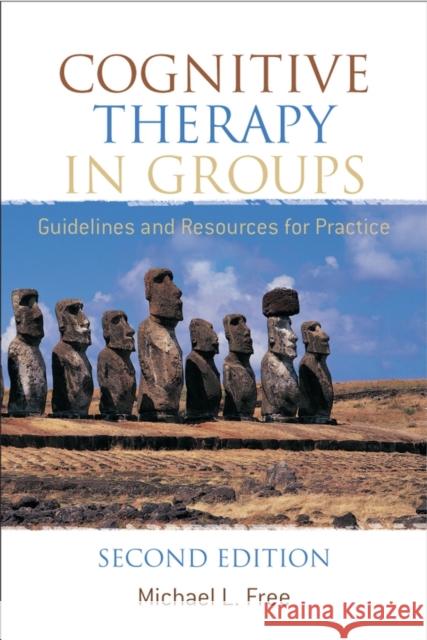
Michael L. Free
Cognitive Therapy in Groups: Guidelines and Resources for Practice Free, Michael L. 9780470024485 John Wiley & Sons - książkaWidoczna okładka, to zdjęcie poglądowe, a rzeczywista szata graficzna może różnić się od prezentowanej.

Cognitive Therapy in Groups: Guidelines and Resources for Practice

ISBN-13: 9780470024485 / Angielski / Miękka / 2007 / 400 str.

Michael L. Free
cena 248,77
(netto: 236,92 VAT:  5%)

Najniższa cena z 30 dni: 248,77
Termin realizacji zamówienia:
ok. 30 dni roboczych
Dostawa w 2026 r.

Darmowa dostawa!

The second edition of Cognitive Therapy in Groups by Michael Free has been completely rewritten as a 25-session, structured programme of cognitive therapy in five modules. It is designed in an easy-to-present psycho-educational format that is intended for groups, but can also be used with individuals. It is sufficiently flexible for clinicians to use and adapt the resources for their own practice, and sufficiently specific to be used verbatim with a wide range of people suffering from emotional and behavioural problems. Web-based support resources include assessment tools, handouts and PowerPoint slides.


Kategorie:
Nauka, Psychologia
Kategorie BISAC:
Psychology > Psychotherapy - General
Psychology > Clinical Psychology
Wydawca:
John Wiley & Sons
Język:
Angielski
ISBN-13:
9780470024485
Rok wydania:
2007
Ilość stron:
400
Waga:
0.73 kg
Wymiary:
23.88 x 16.51 x 2.29
Oprawa:
Miękka
Wolumenów:
01
Dodatkowe informacje:
Bibliografia
Wydanie ilustrowane

"I would recommend the book as a very useful resource for planning a CBT group " ( Behavioural and Cognitive Psychotherapy, January 2008)

About the Author.

Preface to the Second Edition.

PART ONE: PRELIMINARY CONSIDERATIONS.

Chapter One: Introduction to the Program.

The nature of the program.

The search for effective, effi cient and ethical psychotherapy.

The nature of the therapeutic relationship.

Overview of the program.

Chapter Two: Theoretical Foundations.

Background to the theoretical basis for the program.

A general model of disorders.

Beck s cognitive model of emotional disorders.

Ellis Rational Emotive Therapy.

McMullin s Cognitive Restructuring Therapy.

Young s Schema Therapy.

The English cognitive therapists.

Conclusion.

Chapter Three: Preparation.

Rationale behind the manual.

Acquiring appropriate resources.

Selecting participants.

Preparing prospective participants.

Assessment considerations.

Understanding the group cognitive therapy manual.

The role of the therapist in psychoeducational group therapy.

Choosing a format.

TREATMENT MANUAL.

Module One: Surface Beliefs and Processes.

Therapy Session One: Group Basics.

Therapy Session Two: Thinking and Feeling.

Therapy Session Three: Logical Errors.

Therapy Session Four: Appropriate Logic.

Therapy Session Five: Countering Logical Errors.

Module Two: Beneath the Surface: Exploring Your Negative Belief System.

Therapy Session Six: A Generic Model of Emotional, Behavioural and Personality Disorders.

Therapy Session Seven: Identifying Negative Schema Content Using the Vertical Arrow Method.

Therapy Session Eight: Advanced Vertical Arrows and Subjective Units of Disturbance.

Therapy Session Nine: Making Sense of Beliefs: Categorising Beliefs and Making Cognitive Maps.

Therapy Session Ten: Making Sense of Your Beliefs: Developing a Cognitive Diagnosis.

Module Three: Testing Your Beliefs.

Therapy Session Eleven: Beliefs Can be Changed and Adversarial Analysis.

Therapy Session Twelve: Challenging Your Beliefs: Investigatory Analysis.

Therapy Session Thirteen: Scientifi c Analysis.

Therapy Session Fourteen: Consolidation of Information.

Module Four: Changing Your Thinking and Feeling.

Therapy Session Fifteen: Countering and Adversarial Debate.

Therapy Session Sixteen: Propositional Perceptual Shift.

Therapy Session Seventeen: Emotional Shift and Schema Content Shift.

Therapy Session Eighteen: Schema Rebalancing and Schema Imagery.

Therapy Session Nineteen: Negative Schema Imagery.

Therapy Session Twenty: Strong–Nurturing–Self Imagery, Re–parenting, Letter–Writing.

Module Five: Changing Your Counterproductive Behaviour.

Therapy Session Twenty–One: Selecting Behaviour to Change.

Therapy Session Twenty–Two: Making a Behaviour Self–Change Plan.

Therapy Session Twenty–Three: Problem Solving.

Therapy Session Twenty–Four: Cognitive–Behavioural Rehearsal.

Therapy Session Twenty–Five: Maintaining Gains.

Appendices.

1. Phone Screening Protocol.

2. Intake Protocol.

3. Information for Prospective Participants.

4. Information for Referring Agents.

5. Individual Work Contract.

6. Overhead Transparency Templates.

7. Worksheets.

8. Handouts.

9. Resources for Participants.

References.

Index.

Michael Free is a lecturer in clinical psychology at Griffi th University, Brisbane, Australia. He trained as a Clinical Psychologist at The University of Canterbury in Christchurch, New Zealand, qualifying in 1980. He then worked for the Queensland Health Department in a variety of positions in adult psychiatry for 12 years before obtaining his present position in 1993. He obtained his PhD in 1997 for research on the relationship between biological and psychological processes during recovery from depression. He has published a number of research papers on depression. Michael continues to be active in research and maintains a private practice in Ipswich, a regional centre outside Brisbane. He is currently researching his next book, with the working title ′Cognitive Therapy and the Teachings of Jesus′, an integration of the authentic teachings of Jesus with cognitive therapy.

This second edition of Cognitive Therapy in Groups has been completely rewritten as a 25–session, structured programme of cognitive therapy in five modules.  It is designed in an easy–to–present psycho–educational format that is intended for groups, but can also be used with individuals.   The programme is sufficiently flexible for clinicians to use and adapt the resources for their own practice, and sufficiently specific to be used verbatim with a wide range of people suffering from emotional and behavioural problems. The comprehensive coverage includes: identifying and changing counterproductive surface thinking; uncovering deeper level counterproductive thinking; testing and changing thinking, including schema content change; and changing associated counterproductive behaviour. The book also contains OHT masters, worksheets and examples of completed worksheets.  Purchase of the book will provide access to web–based supporting resources such as assessment tools, participant handouts and power–point presentations for each session, all ready to download and use. Cognitive Therapy in Groups, Guidelines and Resources for Practice will be an invaluable resource for psychologists, social workers and mental health practitioners, as well as a useful reference for academics and advanced students who want a structured approach to teaching or learning cognitive therapy.

Free, Michael L. Michael Free is a lecturer in clinical psychology ... więcej >


Udostępnij

Facebook - konto krainaksiazek.pl


Opinie o Krainaksiazek.pl na Opineo.pl

Partner Mybenefit

Krainaksiazek.pl w programie rzetelna firma Krainaksiaze.pl - płatności przez paypal

Czytaj nas na:

Facebook - krainaksiazek.pl
  • książki na zamówienie
  • granty
  • książka na prezent
  • kontakt
  • pomoc
  • opinie
  • regulamin
  • polityka prywatności

Zobacz:

  • Księgarnia czeska

  • Wydawnictwo Książkowe Klimaty

1997-2025 DolnySlask.com Agencja Internetowa

© 1997-2022 krainaksiazek.pl
     
KONTAKT | REGULAMIN | POLITYKA PRYWATNOŚCI | USTAWIENIA PRYWATNOŚCI
Zobacz: Księgarnia Czeska | Wydawnictwo Książkowe Klimaty | Mapa strony | Lista autorów
KrainaKsiazek.PL - Księgarnia Internetowa

Polityka prywatnosci - link
Krainaksiazek.pl - płatnośc Przelewy24
Przechowalnia Przechowalnia






