• Wyszukiwanie zaawansowane
  • Kategorie
  • Kategorie BISAC
  • Książki na zamówienie
  • Promocje
  • Granty
  • Książka na prezent
  • Opinie
  • Pomoc
  • Załóż konto
  • Zaloguj się

Cognitive Techniques in Visual Data Interpretation » książka


zaloguj się | załóż konto
Logo Krainaksiazek.pl

koszyk

konto

szukaj
topmenu
Księgarnia internetowa
Szukaj
Książki na zamówienie
Promocje
Granty
Książka na prezent
Moje konto
Pomoc
 
 
Wyszukiwanie zaawansowane
Pusty koszyk
Bezpłatna dostawa dla zamówień powyżej 20 złBezpłatna dostawa dla zamówień powyżej 20 zł

Kategorie główne

• Nauka
 [2949965]
• Literatura piękna
 [1857847]

  więcej...
• Turystyka
 [70818]
• Informatyka
 [151303]
• Komiksy
 [35733]
• Encyklopedie
 [23180]
• Dziecięca
 [617748]
• Hobby
 [139972]
• AudioBooki
 [1650]
• Literatura faktu
 [228361]
• Muzyka CD
 [398]
• Słowniki
 [2862]
• Inne
 [444732]
• Kalendarze
 [1620]
• Podręczniki
 [167233]
• Poradniki
 [482388]
• Religia
 [509867]
• Czasopisma
 [533]
• Sport
 [61361]
• Sztuka
 [243125]
• CD, DVD, Video
 [3451]
• Technologie
 [219309]
• Zdrowie
 [101347]
• Książkowe Klimaty
 [123]
• Zabawki
 [2362]
• Puzzle, gry
 [3791]
• Literatura w języku ukraińskim
 [253]
• Art. papiernicze i szkolne
 [7933]
Kategorie szczegółowe BISAC

Cognitive Techniques in Visual Data Interpretation

ISBN-13: 9783642026928 / Angielski / Twarda / 2009 / 115 str.
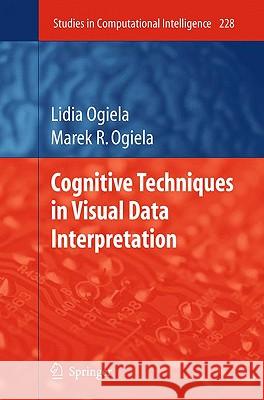
Lidia Ogiela
Cognitive Techniques in Visual Data Interpretation Lidia Ogiela 9783642026928 Springer-Verlag Berlin and Heidelberg GmbH &  - książkaWidoczna okładka, to zdjęcie poglądowe, a rzeczywista szata graficzna może różnić się od prezentowanej.

Cognitive Techniques in Visual Data Interpretation

ISBN-13: 9783642026928 / Angielski / Twarda / 2009 / 115 str.

Lidia Ogiela
cena 403,47
(netto: 384,26 VAT:  5%)

Najniższa cena z 30 dni: 385,52
Termin realizacji zamówienia:
ok. 22 dni roboczych
Bez gwarancji dostawy przed świętami

Darmowa dostawa!
inne wydania

The extremely rapid progress of science dealing with the design of new computer systems and the development of intelligent algorithmic solutions for solving c- plex problems has become apparent also in the field of computational intelligence and cognitive informatics methods. The progress of these new branches of inf- matics has only started a few years ago, but they are already making a very s- nificant contribution to the development of modern technologies, and also forming the foundations for future research on building an artificial brain and systems i- tating human thought processes. We are already able to build robots with basic machine intelligence, which can sometimes perform complex actions and also - erate by adapting to changing conditions of their surroundings. This very impr- sive development of intelligent systems is manifested in the creation of robotic devices which use artificial intelligence algorithms in their operations, mo- ments, when solving difficult problems or communicating with humans. It is also evidenced by the introduction of new methods of reasoning about and interpreting objects or events surrounding the system. One of the fields in which the need to deploy such modern solutions is obvious are cognitive vision systems used both in mobile robots and in computer systems which recognise or interpret the meaning of recorded signals or patterns.


Kategorie:
Informatyka, Bazy danych
Kategorie BISAC:
Computers > Artificial Intelligence - General
Technology & Engineering > Electronics - General
Computers > Software Development & Engineering - Computer Graphics
Wydawca:
Springer-Verlag Berlin and Heidelberg GmbH &
Seria wydawnicza:
Studies in Computational Intelligence
Język:
Angielski
ISBN-13:
9783642026928
Rok wydania:
2009
Dostępne języki:
Angielski
Wydanie:
2009
Numer serii:
000318395
Ilość stron:
115
Waga:
0.78 kg
Wymiary:
23.523.5 x 15.5
Oprawa:
Twarda
Wolumenów:
01

Traditional pattern recognition technigues and latest image interpretation approaches.- Cognitive aspects performed in the human mind.- The fundamentals and development of Cognitive Informatics.- Cognitive information systems.- Understanding-based image analysis systems.- UBIAS systems in cognitive interpretation of medical visualization.- Summary.

The following chapters of this book presents key issues concerning the neurophysiological aspects of executing cognitive thought processes and the basics of cognitive informatics and new proposals of UBIAS systems dedicated to the meaning-based analysis of selected types of medical images. In particular, to structure the considerations of pattern classification methods, Chapter 2 discusses traditional image recognition techniques and algorithms from the simplest methods based on metric spaces up to methods that use the paradigms of computer image understanding. Chapter 3 deals with the cognitive aspects of brain function. Information from this chapter allows the authors, in a latter part of this book, to show functional analogies between the operation of biological systems and computer implementations. Chapter 4 provides a short compendium of knowledge about the new branch of informatics which formally describes thought processes, namely cognitive informatics. The introduction to subjects of cognitive processes analysed by cognitive informatics will then allow us to introduce new classes of computer systems executing cognitive resonance processes. The following Chapter 5 defines a new class of information systems using cognitive resonance processes. This chapter reviews several proposals of various classes of cognitive categorisation systems put forward by the authors. Chapter 6 contains a broader discussion of the UBIAS system class which the authors proposed for the meaning-based analysis of medical images. Then, Chapter 7 discusses in detail two examples of UBIAS systems built for the semantic classification of foot bone X-rays and images of long bone injuries in extremities. Chapter 8, the last, compiles and summarises information on creating cognitive vision systems designed for the semantic classification of patterns.

The authors present this book to Readers in the hope that it will stir their fascination with the scientific aspects of creating new generation computer systems which imitate thought processes and can determine the meaning of complex image patterns.

The following chapters of this book presents key issues concerning the neurophysiological aspects of executing cognitive thought processes and the basics of cognitive informatics and new proposals of UBIAS systems dedicated to the meaning-based analysis of selected types of medical images. In particular, to structure the considerations of pattern classification methods, Chapter 2 discusses traditional image recognition techniques and algorithms from the simplest methods based on metric spaces up to methods that use the paradigms of computer image understanding. Chapter 3 deals with the cognitive aspects of brain function. Information from this chapter allows the authors, in a latter part of this book, to show functional analogies between the operation of biological systems and computer implementations. Chapter 4 provides a short compendium of knowledge about the new branch of informatics which formally describes thought processes, namely cognitive informatics. The introduction to subjects of cognitive processes analysed by cognitive informatics will then allow us to introduce new classes of computer systems executing cognitive resonance processes. The following Chapter 5 defines a new class of information systems using cognitive resonance processes. This chapter reviews several proposals of various classes of cognitive categorisation systems put forward by the authors. Chapter 6 contains a broader discussion of the UBIAS system class which the authors proposed for the meaning-based analysis of medical images. Then, Chapter 7 discusses in detail two examples of UBIAS systems built for the semantic classification of foot bone X-rays and images of long bone injuries in extremities. Chapter 8, the last, compiles and summarises information on creating cognitive vision systems designed for the semantic classification of patterns.

The authors present this book to Readers in the hope that it will stir their fascination with the scientific aspects of creating new generation computer systems which imitate thought processes and can determine the meaning of complex image patterns.

The following chapters of this book presents key issues concerning the neurophysiological aspects of executing cognitive thought processes and the basics of cognitive informatics and new proposals of UBIAS systems dedicated to the meaning-based analysis of selected types of medical images. In particular, to structure the considerations of pattern classification methods, Chapter 2 discusses traditional image recognition techniques and algorithms from the simplest methods based on metric spaces up to methods that use the paradigms of computer image understanding. Chapter 3 deals with the cognitive aspects of brain function. Information from this chapter allows the authors, in a latter part of this book, to show functional analogies between the operation of biological systems and computer implementations. Chapter 4 provides a short compendium of knowledge about the new branch of informatics which formally describes thought processes, namely cognitive informatics. The introduction to subjects of cognitive processes analysed by cognitive informatics will then allow us to introduce new classes of computer systems executing cognitive resonance processes. The following Chapter 5 defines a new class of information systems using cognitive resonance processes. This chapter reviews several proposals of various classes of cognitive categorisation systems put forward by the authors. Chapter 6 contains a broader discussion of the UBIAS system class which the authors proposed for the meaning-based analysis of medical images. Then, Chapter 7 discusses in detail two examples of UBIAS systems built for the semantic classification of foot bone X-rays and images of long bone injuries in extremities. Chapter 8, the last, compiles and summarises information on creating cognitive vision systems designed for the semantic classification of patterns.

The authors present this book to Readers in the hope that it will stir their fascination with the scientific aspects of creating new generation computer systems which imitate thought processes and can determine the meaning of complex image patterns.


Udostępnij

Facebook - konto krainaksiazek.pl


Opinie o Krainaksiazek.pl na Opineo.pl

Partner Mybenefit

Krainaksiazek.pl w programie rzetelna firma Krainaksiaze.pl - płatności przez paypal

Czytaj nas na:

Facebook - krainaksiazek.pl
  • książki na zamówienie
  • granty
  • książka na prezent
  • kontakt
  • pomoc
  • opinie
  • regulamin
  • polityka prywatności

Zobacz:

  • Księgarnia czeska

  • Wydawnictwo Książkowe Klimaty

1997-2025 DolnySlask.com Agencja Internetowa

© 1997-2022 krainaksiazek.pl
     
KONTAKT | REGULAMIN | POLITYKA PRYWATNOŚCI | USTAWIENIA PRYWATNOŚCI
Zobacz: Księgarnia Czeska | Wydawnictwo Książkowe Klimaty | Mapa strony | Lista autorów
KrainaKsiazek.PL - Księgarnia Internetowa

Polityka prywatnosci - link
Krainaksiazek.pl - płatnośc Przelewy24
Przechowalnia Przechowalnia





