• Wyszukiwanie zaawansowane
  • Kategorie
  • Kategorie BISAC
  • Książki na zamówienie
  • Promocje
  • Granty
  • Książka na prezent
  • Opinie
  • Pomoc
  • Załóż konto
  • Zaloguj się

Cognitive Processing Routes in Consecutive Interpreting: A Corpus-Assisted Approach » książka

zaloguj się | załóż konto
Logo Krainaksiazek.pl

koszyk

konto

szukaj
topmenu
Księgarnia internetowa
Szukaj
Książki na zamówienie
Promocje
Granty
Książka na prezent
Moje konto
Pomoc
 
 
Wyszukiwanie zaawansowane
Pusty koszyk
Bezpłatna dostawa dla zamówień powyżej 20 złBezpłatna dostawa dla zamówień powyżej 20 zł

Kategorie główne

• Nauka
 [2949965]
• Literatura piękna
 [1857847]

  więcej...
• Turystyka
 [70818]
• Informatyka
 [151303]
• Komiksy
 [35733]
• Encyklopedie
 [23180]
• Dziecięca
 [617748]
• Hobby
 [139972]
• AudioBooki
 [1650]
• Literatura faktu
 [228361]
• Muzyka CD
 [398]
• Słowniki
 [2862]
• Inne
 [444732]
• Kalendarze
 [1620]
• Podręczniki
 [167233]
• Poradniki
 [482388]
• Religia
 [509867]
• Czasopisma
 [533]
• Sport
 [61361]
• Sztuka
 [243125]
• CD, DVD, Video
 [3451]
• Technologie
 [219309]
• Zdrowie
 [101347]
• Książkowe Klimaty
 [123]
• Zabawki
 [2362]
• Puzzle, gry
 [3791]
• Literatura w języku ukraińskim
 [253]
• Art. papiernicze i szkolne
 [7933]
Kategorie szczegółowe BISAC

Cognitive Processing Routes in Consecutive Interpreting: A Corpus-Assisted Approach

ISBN-13: 9789811641671 / Angielski / Miękka / 2022 / 190 str.
Xiaodong Liu
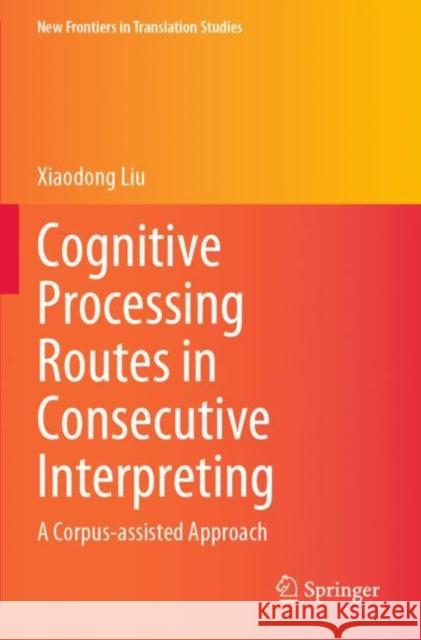
Cognitive Processing Routes in Consecutive Interpreting: A Corpus-Assisted Approach Xiaodong Liu 9789811641671 Springer - książkaWidoczna okładka, to zdjęcie poglądowe, a rzeczywista szata graficzna może różnić się od prezentowanej.

Cognitive Processing Routes in Consecutive Interpreting: A Corpus-Assisted Approach

ISBN-13: 9789811641671 / Angielski / Miękka / 2022 / 190 str.

Xiaodong Liu
cena 443,82 zł
(netto: 422,69 VAT:  5%)

Najniższa cena z 30 dni: 424,07 zł
Termin realizacji zamówienia:
ok. 22 dni roboczych
Bez gwarancji dostawy przed świętami

Darmowa dostawa!
inne wydania
Kategorie:
Nauka, Językoznawstwo
Kategorie BISAC:
Language Arts & Disciplines > Linguistics - General
Language Arts & Disciplines > Translating & Interpreting
Wydawca:
Springer
Seria wydawnicza:
New Frontiers in Translation Studies
Język:
Angielski
ISBN-13:
9789811641671
Rok wydania:
2022
Wydanie:
2021
Numer serii:
000475668
Ilość stron:
190
Oprawa:
Miękka
Wolumenów:
01
Dodatkowe informacje:
Wydanie ilustrowane


Acknowledgements
Abstract
Declaration
List of Tables and Figures
List of Abbreviations
Chapter 1. Introduction
1.1 Purpose and Motivations of the Study
1.2 Research Background
1.2.1 General Background
1.2.2 Specific Background
1.3 Research Questions
1.4 Methodological Issues
1.5 Structure of the Book
1.6 Statement of Originality
1.7 Summary
Chapter 2. Interpreting Process
2.1 Psycholinguistic View
2.1.1 Theoretical Models
2.1.2 Empirical Studies
2.2 Neuro-physiological View
2.3 Interpreting Studies View
2.4 Summary
Chapter 3. An Integrated Neurocognitive Theory of Translating and Interpreting
3.1 An Integrated Perspective to Language Processing
3.1.1 Subsystems of Language Processing
3.1.2 The Interplay of Memory and Computation
3.1.3 Neurocognitive Bilingual Processing and Control
3.1.4 Translating and Interpreting as Bilingual Processing
3.2 Neurocognitive Processing Routes for Translation and Interpreting
3.2.1 Recoding via Meaning-based Processing
3.2.2 Recoding via Form-based Processing
3.2.3 Recoding via Memory-pairing
3.3 Summary
Chapter 4. The Corpus-assisted Approach to Translation Process Research
4.1 Corpus-assisted Research on Translation Processes
4.2 Corpus-assisted Approach Employed in the Previous Studies
4.2.1 Challenges of the Corpus-assisted Approach
4.2.2 Key Concepts of the Corpus-assisted Approach
4.3 Corpus-assisted Approach Employed in the Current Study
4.4 Summary
Chapter 5 Source and Target Material
5.1 Source Speeches and Target Deliveries
5.2 Source Profiling
5.3 Target Profiling
5.4 Summary
Chapter 6. A Parallel Bilingual CI Corpus
6.1 Transcription of Video-recordings
6.1.1 Transcription
6.1.2 Removing Noise from the Corpus
6.2 Corpus Design
6.2.1 Time Span
6.2.2 Corpus Size
6.3 Processing Tools
6.3.1 EditPlus
6.3.2 CorpusWordParser
6.3.3 ABBYY Aligner
6.3.4 Microsoft Excel
6.3.5 ParaConc
6.4 Segmentation and Alignment
6.5 Annotation
6.5.1 Annotation Scheme for the STs and TTs
6.5.2 Using Word Macros for Tagging
6.6 Concordance Search and Query
6.6.1 Concordance Search Steps
6.6.2 ParaConc Search Example
6.7 Summary
Chapter 7 Example Analyses
7.1 Chinese-English Interpreting
7.1.1 Interpreting Proper Names
7.1.2 Interpreting Metaphors
7.1.3 Interpreting Classic Quotations
7.1.4 Interpreting Idiomatic Expressions
7.2 English-Chinese Interpreting
7.2.1 Interpreting Proper Names
7.2.2 Interpreting Metaphors
7.2.3 Interpreting Idiomatic Expressions
7.2.4 Interpreting Classic Quotations
7.3 Summary
Chapter 8. Interpreting Patterns
8.1 A Roadmap of the CSIs Interpreting Patterns
8.2 Patterns of PNs: Lexical vs. Phrasal vs. Clausal
8.2.1 Interpreting Proper Names: C-E Direction
8.2.2 Interpreting Proper Names: E-C Direction
8.3 Patterns of the CSIs in C-E Conferences vs. C-E Talks
8.3.1 Interpreting Proper Names
8.3.2 Interpreting Metaphors
8.3.3 Interpreting Idiomatic Expressions
8.3.4 Interpreting Classic Quotations
8.4 Patterns of the CSIs in C-E vs E-C Language Directions
8.4.1 Interpreting Proper Names
8.4.2 Interpreting Metaphors
8.4.3 Interpreting Idiomatic Expressions
8.4.4 Interpreting Classic Quotations
8.5 Summary
Chapter 9. A Theoretical Account of the Interpreting Patterns
9.1 Grammatical Unit
9.2 Source Categories
9.3 Settings
9.4 Language Direction
9.5 General Discussions
9.6 Summary
Chapter 10 Research Questions Revisited
10.1 Question One: How Are the Neurocognitive Processing Routes reflected in English vs Chinese consecutive interpreting?
10.2 Question Two: Which route dominates English vs Chinese consecutive interpreting?
10.3 Question Three: What affects the adoption of the dominant route?
10.4 The Controversy
10.5 Summary
Chapter 11 Conclusions and Future Perspectives
11.1 Conclusions from the Research
11.2 Limitations of this Study and Suggestions for Future Research
References
Appendix I Information of the Source Materials and Target Deliveries
Appendix II Examples for Tagging
Appendix III Individual Interpreting Patterns
Appendix IIII Segments Randomly Sampled

Dr. Xiaodong Liu is Head of the Business English Department at the School of Foreign Studies, and Director of the Center for Studies of Translation and Cognition, Hunan University of Humanities, Science and Technology, China.

He received his Ph.D. in Translation Studies from the University of Macau, Macao (2018). His main research interests include translation process research, corpus-assisted translation studies, and translation teaching research. He has (co-)initiated numerous translation process research projects at various levels, e.g., Corpus-assisted Translation Process Research (HUHST Startup Research Fund) and Corpus-assisted Research on Neurocognitive Processing Routes (19C0971) supported by the Education Department of Hunan Province. He has published numerous articles on translation studies in national and international journals, such as Babel, Digital Scholarship in the Humanities, Across Languages and Cultures, T & I Review, Foreign Language Education, Chinese Science & Technology Translators Journal, and so on.

He is Member of the Macao Federation of Translators, and created and is Vice President of the Loudi Association of Translators and Interpreters.

This book addresses a controversial issue regarding SL-TL transfer in the translation process, namely the question as to the dominant route in English-Chinese and Chinese-English professional consecutive interpretations, respectively: the form-based processing route or meaning-based processing route. It presents a corpus-assisted product study, in which the interpreting processing patterns of culture-specific items (CSIs) are analyzed. The study reveals that the dominant route in English vs. Chinese consecutive interpreting varies under different circumstances. Four factors are proposed to account for such differences: linguistic variables (e.g., grammatical complexity of the unit), type of CSI, language direction, and extra-linguistic variables (e.g., multilateral or bilateral settings). In summary, the book systematically introduces a corpus-assisted approach to translation process research, which will benefit all readers who are interested in translation process research but cannot employ neuroscientific measures.


Udostępnij

Facebook - konto krainaksiazek.pl


Opinie o Krainaksiazek.pl na Opineo.pl

Partner Mybenefit

Krainaksiazek.pl w programie rzetelna firma Krainaksiaze.pl - płatności przez paypal

Czytaj nas na:

Facebook - krainaksiazek.pl
  • książki na zamówienie
  • granty
  • książka na prezent
  • kontakt
  • pomoc
  • opinie
  • regulamin
  • polityka prywatności

Zobacz:

  • Księgarnia czeska

  • Wydawnictwo Książkowe Klimaty

1997-2025 DolnySlask.com Agencja Internetowa

© 1997-2022 krainaksiazek.pl
     
KONTAKT | REGULAMIN | POLITYKA PRYWATNOŚCI | USTAWIENIA PRYWATNOŚCI
Zobacz: Księgarnia Czeska | Wydawnictwo Książkowe Klimaty | Mapa strony | Lista autorów
KrainaKsiazek.PL - Księgarnia Internetowa

Polityka prywatnosci - link
Krainaksiazek.pl - płatnośc Przelewy24
Przechowalnia Przechowalnia






