• Wyszukiwanie zaawansowane
  • Kategorie
  • Kategorie BISAC
  • Książki na zamówienie
  • Promocje
  • Granty
  • Książka na prezent
  • Opinie
  • Pomoc
  • Załóż konto
  • Zaloguj się

Clustering Techniques for Image Segmentation » książka


zaloguj się | załóż konto
Logo Krainaksiazek.pl

koszyk

konto

szukaj
topmenu
Księgarnia internetowa
Szukaj
Książki na zamówienie
Promocje
Granty
Książka na prezent
Moje konto
Pomoc
 
 
Wyszukiwanie zaawansowane
Pusty koszyk
Bezpłatna dostawa dla zamówień powyżej 20 złBezpłatna dostawa dla zamówień powyżej 20 zł

Kategorie główne

• Nauka
 [2949965]
• Literatura piękna
 [1857847]

  więcej...
• Turystyka
 [70818]
• Informatyka
 [151303]
• Komiksy
 [35733]
• Encyklopedie
 [23180]
• Dziecięca
 [617748]
• Hobby
 [139972]
• AudioBooki
 [1650]
• Literatura faktu
 [228361]
• Muzyka CD
 [398]
• Słowniki
 [2862]
• Inne
 [444732]
• Kalendarze
 [1620]
• Podręczniki
 [167233]
• Poradniki
 [482388]
• Religia
 [509867]
• Czasopisma
 [533]
• Sport
 [61361]
• Sztuka
 [243125]
• CD, DVD, Video
 [3451]
• Technologie
 [219309]
• Zdrowie
 [101347]
• Książkowe Klimaty
 [123]
• Zabawki
 [2362]
• Puzzle, gry
 [3791]
• Literatura w języku ukraińskim
 [253]
• Art. papiernicze i szkolne
 [7933]
Kategorie szczegółowe BISAC

Clustering Techniques for Image Segmentation

ISBN-13: 9783030812324 / Angielski / Miękka / 2022 / 108 str.
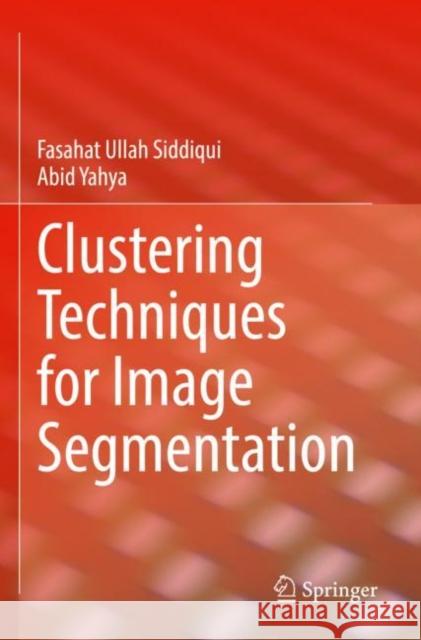
Fasahat Ullah Siddiqui; Abid Yahya
Clustering Techniques for Image Segmentation Fasahat Ullah Siddiqui Abid Yahya 9783030812324 Springer - książkaWidoczna okładka, to zdjęcie poglądowe, a rzeczywista szata graficzna może różnić się od prezentowanej.

Clustering Techniques for Image Segmentation

ISBN-13: 9783030812324 / Angielski / Miękka / 2022 / 108 str.

Fasahat Ullah Siddiqui; Abid Yahya
cena 351,02
(netto: 334,30 VAT:  5%)

Najniższa cena z 30 dni: 335,40
Termin realizacji zamówienia:
ok. 22 dni roboczych
Bez gwarancji dostawy przed świętami

Darmowa dostawa!
inne wydania

This book presents the workings of major clustering techniques along with their advantages and shortcomings. After introducing the topic, the authors illustrate their modified version that avoids those shortcomings. The book then introduces four modified clustering techniques, namely the Optimized K-Means (OKM), Enhanced Moving K-Means-1(EMKM-1), Enhanced Moving K-Means-2(EMKM-2), and Outlier Rejection Fuzzy C-Means (ORFCM). The authors show how the OKM technique can differentiate the empty and zero variance cluster, and the data assignment procedure of the K-mean clustering technique is redesigned. They then show how the EMKM-1 and EMKM-2 techniques reform the data-transferring concept of the Adaptive Moving K-Means (AMKM) to avoid the centroid trapping problem. And that the ORFCM technique uses the adaptable membership function to moderate the outlier effects on the Fuzzy C-meaning clustering technique. This book also covers the working steps and codings of quantitative analysis methods. The results highlight that the modified clustering techniques generate more homogenous regions in an image with better shape and sharp edge preservation.Showcases major clustering techniques, detailing their advantages and shortcomings;Includes several methods for evaluating the performance of segmentation techniques;Presents several applications including medical diagnosis systems, satellite imaging systems, and biometric systems.


This book presents the workings of major clustering techniques along with their advantages and shortcomings. After introducing the topic, the authors illustrate their modified version that avoids those shortcomings. The book then introduces four modified clustering techniques, namely the Optimized K-Means (OKM), Enhanced Moving K-Means-1(EMKM-1), Enhanced Moving K-Means-2(EMKM-2), and Outlier Rejection Fuzzy C-Means (ORFCM). The authors show how the OKM technique can differentiate the empty and zero variance cluster, and the data assignment procedure of the K-mean clustering technique is redesigned. They then show how the EMKM-1 and EMKM-2 techniques reform the data-transferring concept of the Adaptive Moving K-Means (AMKM) to avoid the centroid trapping problem. And that the ORFCM technique uses the adaptable membership function to moderate the outlier effects on the Fuzzy C-meaning clustering technique. This book also covers the working steps and codings of quantitative analysis methods. The results highlight that the modified clustering techniques generate more homogenous regions in an image with better shape and sharp edge preservation.
  • Showcases major clustering techniques, detailing their advantages and shortcomings;
  • Includes several methods for evaluating the performance of segmentation techniques;
  • Presents several applications including medical diagnosis systems, satellite imaging systems, and biometric systems.

Kategorie:
Technologie
Kategorie BISAC:
Technology & Engineering > Electronics - General
Technology & Engineering > Engineering (General)
Computers > Software Development & Engineering - Computer Graphics
Wydawca:
Springer
Język:
Angielski
ISBN-13:
9783030812324
Rok wydania:
2022
Dostępne języki:
Ilość stron:
108
Oprawa:
Miękka

Introduction.- Introduction to Image Segmentation and Clustering.- Hard and Soft Clustering Techniques.- New Enhanced Clustering Techniques.- Mathematical Model of clustering techniques and evaluation methods.- Conclusion.

Fasahat Ullah Siddiqui received a bachelor's degree in Biomedical Engineering from Sir Syed University of Science and Technology (Pakistan) in 2007, and he received his master's and doctoral degree in computer vision from University Sains Malaysia (Malaysia) and Monash University (Australia) in 2012 and 2017. Currently, he is working at Central Queensland University, Australia. His research interest lies in image processing, computer vision, remote sensing, and published papers in reputable journals and conferences. He is also reviewing article papers for reputable journals of MDIP and IEEE publishers.

Abid Yahya began his career on an engineering path, which is rare among other researcher executives. He earned his bachelor's degree from the University of Engineering and Technology, Peshawar, Pakistan, in Electrical and Electronic Engineering, majoring in telecommunication and MSc and Ph.D. degrees in wireless and mobile systems from the Universiti Sains Malaysia, Malaysia. Currently, he is working at the Botswana International University of Science and Technology. He has applied this combination of practical and academic experience to a variety of consultancies for major corporations. Prof. Abid Yahya is a Senior Member of the Institute of Electrical and Electronics Engineers (IEEE), USA, and a Professional Engineer registered with the Botswana Engineers Registration Board (ERB). He has many research publications to his credit in numerous reputable journals, conference articles, and book chapters. He has received several awards and grants from various funding agencies and supervised several Ph.D. and master candidates. His recent four books, 1) Emerging Technologies in Agriculture, Livestock, and Climate by Springer in 2020; 2)Mobile WiMAX Systems: Performance Analysis of Fractional Frequency Reuse published by  CRC Press | Taylor & Francis in 2019, 3) Steganography Techniques for Digital Images; 4) LTE-A Cellular Networks: Multi-Hop Relay for Coverage, Capacity, and Performance Enhancement,  published by Springer International Publishing in July 2018 January 2017 respectively and are being followed in national and international universities. Prof. Yahya was assigned to be an external and internal examiner for postgraduate students. He has been invited many times to be a speaker or visiting lecturer at different multinational companies. He sits on various panels with the government and other industry-related boards of study.

This book presents the workings of major clustering techniques along with their advantages and shortcomings. After introducing the topic, the authors illustrate their modified version that avoids those shortcomings. The book then introduces four modified clustering techniques, namely the Optimized K-Means (OKM), Enhanced Moving K-Means-1(EMKM-1), Enhanced Moving K-Means-2(EMKM-2), and Outlier Rejection Fuzzy C-Means (ORFCM). The authors show how the OKM technique can differentiate the empty and zero variance cluster, and the data assignment procedure of the K-mean clustering technique is redesigned. They then show how the EMKM-1 and EMKM-2 techniques reform the data-transferring concept of the Adaptive Moving K-Means (AMKM) to avoid the centroid trapping problem. And that the ORFCM technique uses the adaptable membership function to moderate the outlier effects on the Fuzzy C-meaning clustering technique. This book also covers the working steps and codings of quantitative analysis methods. The results highlight that the modified clustering techniques generate more homogenous regions in an image with better shape and sharp edge preservation.

  • Showcases major clustering techniques, detailing their advantages and shortcomings;
  • Includes several methods for evaluating the performance of segmentation techniques;
  • Presents several applications including medical diagnosis systems, satellite imaging systems, and biometric systems.




Udostępnij

Facebook - konto krainaksiazek.pl


Opinie o Krainaksiazek.pl na Opineo.pl

Partner Mybenefit

Krainaksiazek.pl w programie rzetelna firma Krainaksiaze.pl - płatności przez paypal

Czytaj nas na:

Facebook - krainaksiazek.pl
  • książki na zamówienie
  • granty
  • książka na prezent
  • kontakt
  • pomoc
  • opinie
  • regulamin
  • polityka prywatności

Zobacz:

  • Księgarnia czeska

  • Wydawnictwo Książkowe Klimaty

1997-2025 DolnySlask.com Agencja Internetowa

© 1997-2022 krainaksiazek.pl
     
KONTAKT | REGULAMIN | POLITYKA PRYWATNOŚCI | USTAWIENIA PRYWATNOŚCI
Zobacz: Księgarnia Czeska | Wydawnictwo Książkowe Klimaty | Mapa strony | Lista autorów
KrainaKsiazek.PL - Księgarnia Internetowa

Polityka prywatnosci - link
Krainaksiazek.pl - płatnośc Przelewy24
Przechowalnia Przechowalnia



