Termin realizacji zamówienia: ok. 30 dni roboczych Bez gwarancji dostawy przed świętami
Darmowa dostawa!
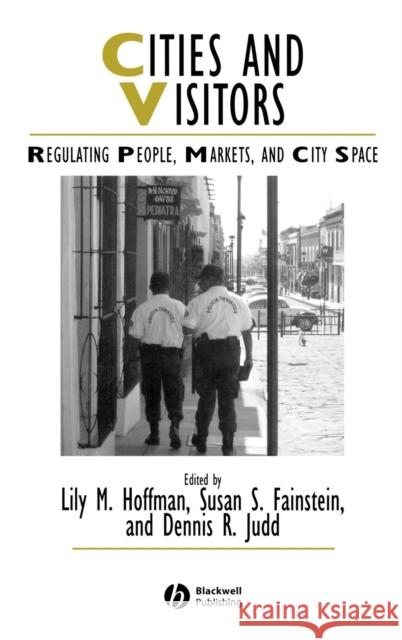
The authors of this book use regulation theory to bring theoretical focus and analytic clarity to the study of urban tourism.
Provides a unifying analytic framework for the study of urban tourism.
Brings urban tourism into focus as an important political, economic and cultural phenomenon.
Presents original essays written by established scholars, including studies of Venice, Mexico, Montreal, New York, Los Angeles, London, Barcelona, Berlin, Amsterdam, Paris, and Australia's Gold Coast.
"Building on the insight that markets rest on political foundations, this volume of highly perceptive studies asks how tourism has become increasingly prominent on the urban scene and how this has affected urban dwellers, positively as well as negatively. Fascinating, provocative, unexpected, never simplistic, this book gives us the state of the art on this timely subject."
John Mollenkopf, Distinguished Professor of Political Science, CUNY Graduate Center
"This book stands out in what is a rapidly growing literature on tourism by attempting a systematic empirical examination of major trends and components of urban tourism. It moves from global trends to the particular ways in which these become concrete economic, social, cultural conditions in specific cities. And it moves from detailed empirical analyses to broader interpretive framings of what it all means." Saskia Sassen, editor of Global Networks/Linked Cities
"The book is coherent, the chapters are consistent and the introduction and conclusion are well–written.....it will serve well the global economists who are interested in relationship between the global trends and tourism dynamics at the local level." Journal of American Planning Association
List of Illustrations vii
List of Tables ix
List of Contributors xi
Series Editors′ Preface xv
Preface xvi
Introduction 1 Susan S. Fainstein, Lily M. Hoffman, and Dennis R. Judd
Part I: Regulating Visitors 21
1 Visitors and the Spatial Ecology of the City Dennis R. Judd 23
2 Cities, Security, and Visitors: Managing Mega–Events in France Sophie Body–Gendrot 39
3 Sociological Theories of Tourism and Regulation Theory Nicolò Costa and Guido Martinotti 53
Part II: Regulating City Space 73
4 Amsterdam: It s All in the Mix Pieter Terhorst, Jacques van de Ven, and Leon Deben 75
5 Revalorizing the Inner City: Tourism and Regulation in Harlem Lily M. Hoffman 91
6 Barcelona: Governing Coalitions, Visitors, and the Changing City Center Marisol García and Núria Claver 113
7 The Evolution of Australian Tourism Urbanization Patrick Mullins 126
Part III: Regulating Labor Markets 143
8 Regulating Hospitality: Tourism Workers in New York and Los Angeles David L. Gladstone and Susan S. Fainstein 145
9 Shaping the Tourism Labor Market in Montreal Marc V. Levine 167
Part IV: Regulating the Tourism Industry 185
10 Mexico: Tensions in the Fordist Model of Tourism Development Daniel Hiernaux–Nicolas 187
11 The New Berlin: Marketing the City of Dreams Hartmut Häussermann and Claire Colomb 200
12 Museums as Flagships of Urban Development Chris Hamnett and Noam Shoval 219
Part V: Conclusion 237
13 Making Theoretical Sense of Tourism Susan S. Fainstein, Lily M. Hoffman, and Dennis R. Judd 239
Index 254
Lily M. Hoffman is Associate Professor and Director of the Rosenberg/Humphrey Program in Public Policy at City College/CUNY.
Susan S. Fainstein is Professor of Urban Planning at Columbia University.
Dennis R. Judd is Professor of Political Science at the University of Illinois at Chicago.
The authors of this book use regulation theory to bring theoretical focus and analytic clarity to the study of urban tourism. The book opens and closes with chapters that analyze urban tourism within the context of a restructured global economy and its interaction with local and global cultural tendencies. The editors and contributors emphasize the role of the state at different spatial scales in the production of the tourist city, examine the ways in which urban images are created, and investigate the place of sports, art museums, and other cultural forms in creating the tourism milieu. Original chapters written by leading scholars illuminate their theoretical perspective with studies of Venice, Mexico, Montreal, New York, Los Angeles, London, Barcelona, Berlin, Amsterdam, Paris, and Australia′s Gold Coast.
These studies are grouped into four categories: regulating tourists, city space, labor markets, and the tourism industry. The regulation framework allows the editors and contributors to show how the political, economic, and cultural elements of urban tourism constitute an interwoven whole.