• Wyszukiwanie zaawansowane
  • Kategorie
  • Kategorie BISAC
  • Książki na zamówienie
  • Promocje
  • Granty
  • Książka na prezent
  • Opinie
  • Pomoc
  • Załóż konto
  • Zaloguj się

Cisgenics and Transgenics: Strategies for Sustainable Crop Development and Food Security » książka


zaloguj się | załóż konto
Logo Krainaksiazek.pl

koszyk

konto

szukaj
topmenu
Księgarnia internetowa
Szukaj
Książki na zamówienie
Promocje
Granty
Książka na prezent
Moje konto
Pomoc
 
 
Wyszukiwanie zaawansowane
Pusty koszyk
Bezpłatna dostawa dla zamówień powyżej 20 złBezpłatna dostawa dla zamówień powyżej 20 zł

Kategorie główne

• Nauka
 [2949965]
• Literatura piękna
 [1857847]

  więcej...
• Turystyka
 [70818]
• Informatyka
 [151303]
• Komiksy
 [35733]
• Encyklopedie
 [23180]
• Dziecięca
 [617748]
• Hobby
 [139972]
• AudioBooki
 [1650]
• Literatura faktu
 [228361]
• Muzyka CD
 [398]
• Słowniki
 [2862]
• Inne
 [444732]
• Kalendarze
 [1620]
• Podręczniki
 [167233]
• Poradniki
 [482388]
• Religia
 [509867]
• Czasopisma
 [533]
• Sport
 [61361]
• Sztuka
 [243125]
• CD, DVD, Video
 [3451]
• Technologie
 [219309]
• Zdrowie
 [101347]
• Książkowe Klimaty
 [123]
• Zabawki
 [2362]
• Puzzle, gry
 [3791]
• Literatura w języku ukraińskim
 [253]
• Art. papiernicze i szkolne
 [7933]
Kategorie szczegółowe BISAC

Cisgenics and Transgenics: Strategies for Sustainable Crop Development and Food Security

ISBN-13: 9789811921186 / Angielski / Twarda / 2022
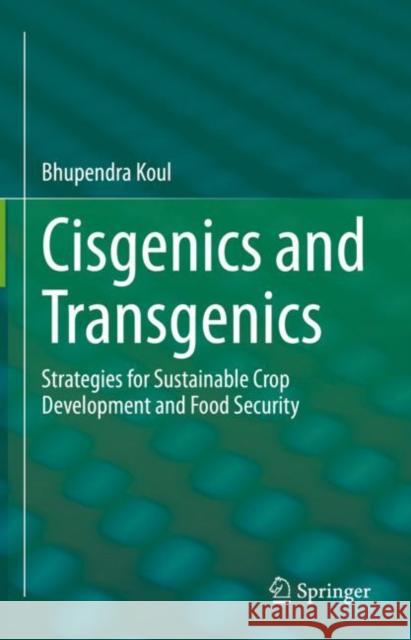
Bhupendra Koul
Cisgenics and Transgenics: Strategies for Sustainable Crop Development and Food Security Koul, Bhupendra 9789811921186 Springer Nature Singapore - książkaWidoczna okładka, to zdjęcie poglądowe, a rzeczywista szata graficzna może różnić się od prezentowanej.

Cisgenics and Transgenics: Strategies for Sustainable Crop Development and Food Security

ISBN-13: 9789811921186 / Angielski / Twarda / 2022

Bhupendra Koul
cena 605,23 zł
(netto: 576,41 VAT:  5%)

Najniższa cena z 30 dni: 578,30 zł
Termin realizacji zamówienia:
ok. 22 dni roboczych
Bez gwarancji dostawy przed świętami

Darmowa dostawa!
inne wydania

This book presents up-to-date information on various vector-less/direct (physical, chemical) and vector-mediated/indirect (Agrobacterium-mediated) plant transformation techniques. It summarizes various strategies that facilitate a gene from lower organism to be expressed in higher plants and also in silico designing of synthetic gene for higher expression. It also highlights the importance of strong promoters to drive the expression of transgene(s). This book encompasses the advantages and drawbacks of cisgenesis and transgenesis, their implications towards sustainable crop improvement, and their future prospects. The importance, limitations, challenges, recent developments, and future prospects of molecular pharming is also discussed.  The book concludes with a chapter that summarizes the major contribution of GM-crops towards global food security and economy, advances in genome editing for crop improvement, challenges and risk associated with the release of GM-crops, and the future of GM technology.This book is meant for students and researchers in the field of life sciences, food science, and agriculture. 

Kategorie:
Nauka, Biologia i przyroda
Kategorie BISAC:
Technology & Engineering > Agriculture - General
Medical > Allied Health Services - Medical Technology
Science > Botanika
Wydawca:
Springer Nature Singapore
Język:
Angielski
ISBN-13:
9789811921186
Rok wydania:
2022
Waga:
0.83 kg
Wymiary:
23.5 x 15.5
Oprawa:
Twarda
Dodatkowe informacje:
Wydanie ilustrowane

Preface

Foreword

Abbreviations

Section 1:Plant transformation techniques

1. Direct DNA Transfer

2. Physical gene transfer methods

2.1 Electroporation

2.2 Particle bombardment/microprojectile

2.3. Macroinjection

2.4. Microinjection

2.5. Liposome-mediated transformation

2.6. Silicon carbide-mediated transformation

2.7. Ultrasound/sonication -mediated transformation

2.8. DNA transfer via pollen

3. Chemical gene transfer methods

3.1. PEG-mediated gene transfer

3.2. Calcium-phosphate co-precipitation

3.3. The polycation DMSO technique

3.4. DEAE dextran procedure

3.5.DNA imbibition by cell, tissues, embryos and seeds

4. Indirect DNA transfer

4.1. Agrobacterium-mediated transformation

4.1.1. Importance of Agrobacterium-mediated transformation

4.1.2. Transformation protocols :

4.1.2.1. Agrobacterium-mediated transformation of Arabidopsis

4.1.2.2. Agrobacterium-mediated transformation of rice

4.1.2.3. Agrobacterium-mediated transformation of chickpea

4.1.2.4. Agrobacterium-mediated transformation of tomato

4.1.2.5. Agrobacterium-mediated transformation of potato

4.1.2.6. Agrobacterium-mediated transformation of cotton

4.1.2.7. Agrobacterium-mediated transformation of stevia

4.1.2.8. Agrobcterium-mediated transformation of sugarbeet

4.1.2.9. Agrobcterium-mediated transformation of maize

4.1.2.10. Agrobcterium-mediated transformation of melon

4.1.2.11. Agrobcterium-mediated transformation of poplar

4.1.2.12. Agrobcterium-mediated transformation of sugarcane

4.1.2.13. Agrobcterium-mediated transformation of apple

4.1.2.14. Agrobcterium-mediated transformation of flax

4.1.2.15. Agrobcterium-mediated transformation of sweet pepper

4.1.2.16. Agrobcterium-mediated transformation of soybean

4.1.2.17. Agrobcterium-mediated transformation of  canola

4.1.2.18. Agrobcterium-mediated transformation of  alfalfa

4.1.2.19. Agrobcterium-mediated transformation of squash

4.1.2.20. Agrobcterium-mediated transformation of eggplant


Section 2: Strategies to enhance the expression of the transgene in plants

5. Enhancement of transgene expression in plants 

6. Designing of coding sequence of the gene

6.1. Avoiding sequence motifs and codons that direct mRNAdegradation

6.2. Incorporation of elements for high-level expression

6.2.1.Use of strong promoter(s)

6.2.2. Untranslated regions (UTR) and sequences

6.2.3. Translation initiation context (TIC)

7. Subcellular targeting of recombinant protein for accumulation and stability


Section 3: Cisgenics and crop improvement

8. Difference between cisgenics and transgenics

9. Limitations of cis-genesis

10. Cis-genesis and sustainable crop improvement


Section 4: Transgenics and crop improvement

11. Crop improvement through transgenic technology

12. Transgenics for herbicide resistance

12.1.The story of transgenic mustard

12.2 Transgenics for pest resistance

13. Bt-technology

13.1. The story of BT cotton

13.2. The story of BTbrinjal

14. Transgenics for disease resistance

14.1. Pathogenesis related proteins (PR proteins)

14.2. Ribosome inactivating proteins

14.3. Use of anti-microbial protein

14.4. Pathogen-derived resistance (PDR) for viral diseases

14.5. Non-pathogen-derived resistance (non-PDR) for viral diseases

15. Transgenics for stress resistance

15.1. Production of osmoprotectants in plants

15.2. Na+/H+ antiporters for improved salt tolerance

15.3. COR and heat-shock regulons

15.4. Expression of enzymes involved in scavenging ROS

15.5. Production of antioxidants

15.6. Transgenics for nutrient biofortication and yield

16.Engineering plant protein composition

17. Engineering plants for Vit A composition

18. Biofortified rice

19. Biofortified maize and cassava

20.Engineering plant mineral composition

21. Biofortified rice and wheat

22. Enhancement of photosynthesis for improved yield


Section 5:Molecular pharming

23. An introduction to molecular pharming

24. Molecular pharming of carbohydrates

25. Molecular pharming of lipids

26. Molecular pharming of proteins


Section 6: Future prospects of GM plants

27. The current state of transgenic crops

28. Ethical issues and risks associated with the transgenic crops

29. Advances in genome editing for crop improvement


Dr. Bhupendra Koul is an assistant professor in the Department of Biotechnology, School of Bioengineering and Biosciences, Lovely Professional University (LPU), Punjab, India. During his PhD at the Plant Transgenics Lab, CSIR-National Botanical Research Institute (CSIR-NBRI), Lucknow, he worked on the optimization, introduction, and expression of modified full-length and truncated versions of Bt-cry1Ab and 1Ac genes in tomato for developing non-chimeric and stable transgenic lines resistant to two lepidopteran insects (Helicoverpa armigera and Spodoptera litura) and evaluated the performance of both the versions of cry1Ab and 1Ac genes for the stability and efficacy of insecticidal toxin in transgenic plants. He also evaluated the performance and role of various cis-motifs of synthetic promoters for overexpression of genes in tomato and performed comparative in silico analyses of several cry1A genes for toxicity to target insects. He has also optimized the regeneration and Agrobacterium-mediated transformation of Stevia (Stevia rebaudiana Bertoni) and has developed herbicide-resistant transgenic Stevia for effective weed management in Stevia cultivation. He has 5 years of research experience and was awarded CSIR-Senior Research Fellowship (SRF) in the year 2013. He also has 8 years of teaching experience and has received the Teacher Appreciation Award 2016 from LPU in the discipline of biotechnology, through the MHRD Minister, Government of India. He has designed the full-length synthetic cry1Ac gene (GenBank: KP195020.1) and has published 45 research papers in national and international journals as well as 21 book chapters and 2 authored book with Springer Nature.


This book presents up-to-date information on various vector-less/direct (physical, chemical) and vector-mediated/indirect (Agrobacterium-mediated) plant transformation techniques. It summarizes various strategies that facilitate a gene from lower organism to be expressed in higher plants and also in silico designing of synthetic gene for higher expression. It also highlights the importance of strong promoters to drive the expression of transgene(s). This book encompasses the advantages and drawbacks of cisgenesis and transgenesis, their implications towards sustainable crop improvement, and their future prospects. The importance, limitations, challenges, recent developments, and future prospects of molecular pharming is also discussed.  The book concludes with a chapter that summarizes the major contribution of GM-crops towards global food security and economy, advances in genome editing for crop improvement, challenges and risk associated with the release of GM-crops, and the future of GM technology.

This book is meant for students and researchers in the field of life sciences, food science, and agriculture. 



Udostępnij

Facebook - konto krainaksiazek.pl


Opinie o Krainaksiazek.pl na Opineo.pl

Partner Mybenefit

Krainaksiazek.pl w programie rzetelna firma Krainaksiaze.pl - płatności przez paypal

Czytaj nas na:

Facebook - krainaksiazek.pl
  • książki na zamówienie
  • granty
  • książka na prezent
  • kontakt
  • pomoc
  • opinie
  • regulamin
  • polityka prywatności

Zobacz:

  • Księgarnia czeska

  • Wydawnictwo Książkowe Klimaty

1997-2025 DolnySlask.com Agencja Internetowa

© 1997-2022 krainaksiazek.pl
     
KONTAKT | REGULAMIN | POLITYKA PRYWATNOŚCI | USTAWIENIA PRYWATNOŚCI
Zobacz: Księgarnia Czeska | Wydawnictwo Książkowe Klimaty | Mapa strony | Lista autorów
KrainaKsiazek.PL - Księgarnia Internetowa

Polityka prywatnosci - link
Krainaksiazek.pl - płatnośc Przelewy24
Przechowalnia Przechowalnia





