Termin realizacji zamówienia: ok. 30 dni roboczych Bez gwarancji dostawy przed świętami
Darmowa dostawa!
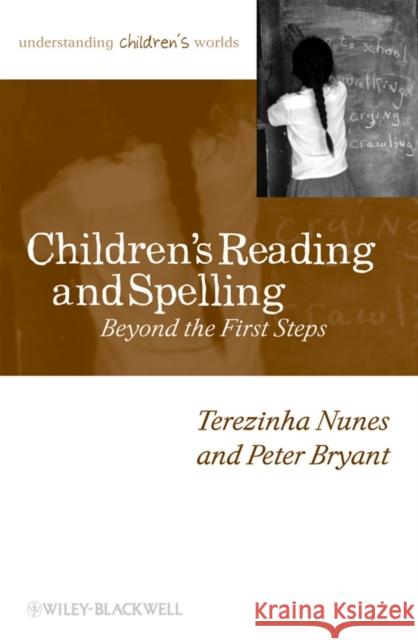
This book extends models of early literacy, analyzing how children's reading and spelling skills develop throughout their school career.
An account of how a child's reading and spelling develop which goes beyond the early years
Shows that there are radical changes in the way children read and spell as they get older
Describes a new theory about the learning that goes on in the later stages of reading and spelling
Makes clear the educational implications of this theory
The authors' research has previously contributed to the 'literacy hour' - a government initiative to improve the teaching of literacy skills in UK schools
2 From Letter–Sound to Grapheme–Phoneme Relationships: The Case of Consonant Digraphs.
3 Spelling Vowels: Digraphs and Split Digraphs.
4 How Children Learn and Can be Taught about Conditional Rules.
5 Morphemes and Spelling.
6 The Importance of Morphemes.
7 Teaching Children about Morphemes.
8 A Framework for Understanding how Children Learn to Read and Spell English Words.
References.
Index
Professor Terezinha Nunes, Department of Education, Child Development and Learning, University of Oxford.
Peter Bryant is a Senior Research Fellow at the Department of Education, University of Oxford and a Visiting Professor at Oxford Brookes University.
Children′s Reading and Spelling draws upon internationally renowned research to extend models of early literacy. While most psychologists have concentrated on the ways in which very young children begin to read and spell, here the focus shifts to how these skills are developed beyond the initial stages.
As children mature, their approach to reading and spelling alters radically, and evidence suggests these changes continue throughout their school career. Authors Terezinha Nunes and Peter Bryant theorize that children use both informal experiences as well as more formalized instruction to devise their own conditional spelling rules. Ideas are presented in an interesting and accessible way, and potential educational implications are thoroughly examined. This innovative research has much to offer professionals and parents alike.