Children's Palliative Care: An International Case-Based Manual » książka

topmenu




Children's Palliative Care: An International Case-Based Manual
ISBN-13: 9783030273743 / Angielski / Miękka / 2020 / 290 str.
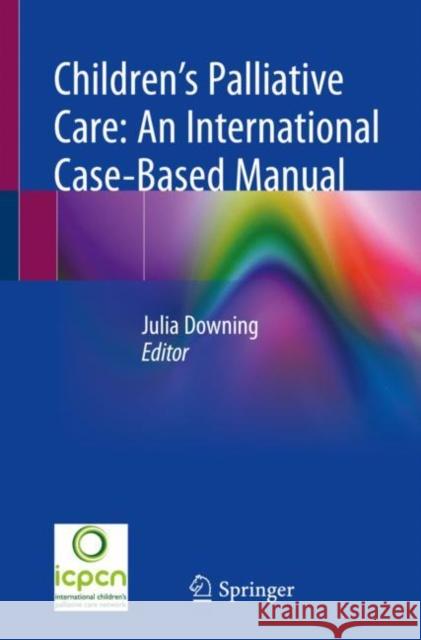
Children's Palliative Care: An International Case-Based Manual
ISBN-13: 9783030273743 / Angielski / Miękka / 2020 / 290 str.
cena 189,17
(netto: 180,16 VAT: 5%)
Najniższa cena z 30 dni: 181,18
(netto: 180,16 VAT: 5%)
Najniższa cena z 30 dni: 181,18
Termin realizacji zamówienia:
ok. 22 dni roboczych.
ok. 22 dni roboczych.
Darmowa dostawa!
Kategorie BISAC:
Wydawca:
Springer
Język:
Angielski
ISBN-13:
9783030273743
Rok wydania:
2020
Wydanie:
2020
Ilość stron:
290
Waga:
0.45 kg
Wymiary:
23.37 x 19.56 x 1.02
Oprawa:
Miękka
Wolumenów:
01
"If you work in paediatric palliative care, you should have this book, as it will make you think about what you do. ... And just before you adult palliative care people switch off, I think this book will make you think about your work - I found myself repeatedly asking similar or parallel questions related to the management of adult patients." (Roger Woodruff, IAHPC Book Reviews, hospicecare.com, Vol. 21 (11), November, 2020)
Chapter 1. Introduction to children’s palliative care and serious health related suffering, along with how to use this case based manual
Prof Julia Downing – ICPCN
This chapter will introduce the philosophy of children’s palliative care, the concept of Serious Health related Suffering (SHS) as introduced in the Lancet Commission report in October 2017. This chapter is introductory in nature and so it is not anticipated that it will revolve around a case study, although case examples may be utilised to illustrate the concepts, and to demonstrate how this case based manual should be used.
Chapter 2. The need for and gaps in provision of children’s palliative care globally Prof Julia Downing - ICPCN
Dr Stephen Connor, Dr Lorna Fraser
There is great variety globally with regards to the need for and accessibility to children’s palliative care services. This chapter will introduce this disparity and through case examples will demonstrate some of the differences, and the strengths and challenges for CPC provision globally.
Prof Julia Downing - ICPCN, Dr MG Rajagopal - India, Dr Liliana de Lima – USA/ Columbia, Prof Felicia Knaull
UHC and SHS are important concepts for the ongoing development and advocacy for children’s palliative care globally. Through the use of a case study, these concepts will be demonstrated along with the implications for children’s palliative care and what this will mean for service provision in different parts of the world.Chapter 4. Children’s palliative care across a range of conditions, settings and resources
Lizzie Chambers, Dr Megan Doherty, Regina Okhuysen-Cawley
Palliative care should be provided across a range of settings, such as home care, hospital care, hospice care etc. Through the use of a complex case study, that takes the child and their family through these different settings, this concept and the provision of palliative care in each setting will be explored, highlighting the principles that should be applied regardless of the resources available. The issue of the provision of palliative care for children with a range of conditions, and not just cancer will also be explored, along with access to care
Chapter 5. The importance of good holistic assessment
Busi Nkosi – South Africa, Dr Jane Nakawesi – Uganda Doctor - UK
Chapter 6. Communication to children and their families
Sue Boucher – South Africa, Maha Atout – Jordan, Katrina Macnamara Goodger
Chapter 7. Pain assessment and management
Dr Stefan Friedrichsdorf
Each of these chapters (7-8-9-10) will utilised a different case study to equip readers to manage different types of symptoms encountered in children’s palliative care. It will not be an exhaustive list, but readers will learn the principles behind symptom management which can be applied in different settings, and will learn the principles behind the management of different symptoms. The case studied will develop such that the initial symptoms become more complex and more challenging to manage, and examples of how they can be managed in different settings will be shared. There will be some overlap and cross -referencing between these chapters and some of the others such as end-of-life care.Chapter 8. Respiratory care
Mary Ann Muckaden – India, Sat Jassal – UK
Chapter 9. Gastrointestinal symptoms
Mercedes Bernada - Uraquay Dr Julia Ambler – South Africa
Chapter 10. Fatigue
Christina Vadeboncoeur - Canada, Chi-Kong Li – Hong Kong
Chapter 11. Nutritional support
Gayatri Palat, Dr Ana Lacerda
Nutritional support in palliative care can be challenging and often is a cause of distress for family members, especially in children with cachexia who do not respond to diet. Through the case study, readers will learn when nutritional support and supplements are needed, what should be given, and how children who are not responding to such supplements can be supported, along with the familiesChapter 12. Psychological care and distress
Tracey Brand – South Africa, Anna Garchakova – Belarus, Tamara Klikovac – Serbia
Chapter 13. Spiritual care
Joan Marston – SA, Fr Rick Baur – Kenya, Giovanna Fogliati - Italy
Chapter 14. Social and cultural support
Maraliza de Haan, Lynda Gould
Whilst culture is important in different settings, the world has become quite small with people from many different cultures living together in cities far from home. Thus the issue of culturally appropriate care along with the provision of social support is an important one which will be discussed through the use of the case study. Important issues will be raised with regards to the social network and support provided in different contexts, and where expectations may not be able to be met, thus impacting the care that we provideChapter 15. End of life care
Poh Heng, Nahla Gafa
End-of-life case including symptom control, spiritual aspects, advanced care planning, etc will be discussed through a case study of a child nearing the end of life. This chapter will bring together many of the issues raised in other chapters, in particular that of communication and preparing families for the end of life
Chapter 16. Supporting the family at the time of death
Zipporah Ali, Maiara Rodrigues Santos, Regina Szylit - Brazil
This chapter will lead out of the previous one, with the support being given to family members at the end of life being illustrated through one or two case studies, highlighting the differences seen in different settings and cultures and what that means for us as health and social care professionals working within children’s palliative care
Jenny Hunt, Helen Wilson - Australia
The issue of grief and bereavement in children is an important one, both in terms of anticipatory grief for the child, their family and their siblings, but also in terms of the support provided to their siblings, and parents after the death of the child. Some of the key issues will be raised through the case study, looking both at anticipatory grief, but also grief after the death of a child.
Chapter 18. Perinatal and neonatal palliative care
Alex Mancini, Dr Rut Kiman This is an area of care which is growing. It is only recently that the areas of perinatal and neonatal palliative care have been highlighted as a growing area for children’s palliative care. A case study will be utilised to highlight some of the key issues in perinatal/ neonatal palliative care and how we can support families who choose to go through their pregnancy despite knowing that something is wrong with their baby, or those who are unaware until after the birth. Situations for child birth and support vary substantially across the world, so it may be necessary to highlight a couple of different case studies in order to demonstrate the care that can be provided in different settingsChapter 19. Supporting the adolescent and young adult
Dr Marianne Phillips, Dr Pat Carragher, Lucy Watts
More children with life-limiting conditions are living into adolescence and adulthood, thus issues of who will provide their care, transitioning to adult services, and how they transition from providing assent to providing consent. The challenges experienced by adolescents and young adults will be highlighted through a complex case discussion, with one of the authors having herself gone through this in her own situation of receiving palliative care in the UKChapter 20. Managing ethical issues
Dr Richard Hain, Delia Birtar, Amanda Evans
In the last couple of years there have been several high profile ethical cases that have hit the headlines. Whilst there is often no easy answer to some of the ethical issues that we come across in children’s palliative care, some of the principles that we can apply will be explored through the discussion of a complex case highlighting the issues for the child, their family and the health and social care professionals, and measures that we can take to try and unite differing viewpoints in order to protect the childChapter 21. Collaborative working and use of national, regional and international networks
Sue Boucher – ICPCN, Dr Julie Ling – EAPC, Lizzie Chambers - UK, Dr Regina Okhuysen-Cawley – ALCP, Dr Poh Heng - APHN
Chapter 22. Empowering the team through education
Alex Daniels, Linda Ganca, Susie Lapwood
Whilst the book is focused on the child and their family, the importance of educating and training those taking care of them cannot be forgotten. The case study used in this chapter will emphasise the importance of education, the different competencies required for different levels of care, and the need for clinical placements, supervision and mentorshipChapter 23. Integrating research into care
Jan Aldridge, Hanneke Britts – South Africa, Jan Aldridge – UK
In order for children’s palliative care to continued to develop and move forward, research needs to be an integral part of the care that we provide. One or two case studies will be shared in this chapter that will help the reader explore how to do this, how to integrate research findings, how to participate and instigate research, and how to ensure that all research is aimed at improving the quality of care provided to the child and their familyChapter 24. Conclusion
Prof Julia Downing
This chapter will draw together some of the key learning points from across the book and encourage the reader to utilise the knowledge that they have learnt in the provision of care such that they provide quality palliative care for children in their setting, regardless of where they are in the world.Chapter 25. Index
Professor Julia Downing, Chief Executive of the International Children’s Palliative Care Network (ICPCN), is an experienced palliative care nurse, educationalist and researcher with a PhD in palliative care education. She has been working within palliative care for 26 years, with eighteen of those working internationally in low and middle income countries, including in Uganda, across Africa, Eastern Europe and globally, developing palliative care services for children and adults. She is recognised as a global leader and expert in the field and sits on various technical and advisory groups. She is the Honorary Professor at Makerere University, Kampala, a Visiting Professor at the University of Belgrade in Serbia, Edge Hill University and the University of South Wales, and an honorary senior research fellow at the Cicely Saunders Institute, King’s College London.
She has extensive experience in research, presenting at conferences and writing for publication, and is on the editorial board of the International Journal of Palliative Nursing (IJPN) and ecancer. Professor Downing serves on the Boards of several NGOs including the Worldwide Hospice and Palliative Care Alliance, the International Association of Hospice and Palliative Care, the African Palliative Care Association UK, and the Palliative Care Research Society. She was the recipient of the IJPN’s Development Award in 2006, the Robert Tiffany lectureship from the ISNCC in 2014 and the Pearl Moore “Making a Difference” International Award for Contributions to Cancer Care from the Oncology Nursing Society in 2015. She was also recognised as a leading change agent in oncology in the ‘Women as Change Agents’ publication for International Women’s Day in 2016.
This manual enables individuals working in children’s palliative care (CPC) globally to learn through engaging real-world cases. The aim is to provide a clinical case-based resource that is globally relevant and accessible to those working in CPC. Drawing on case histories from around the world that reflect key issues and elements of CPC, it provides a practical approach grounded in experience. It addresses multidisciplinary care in the management of children and their families; discusses cases from an international perspective, and shares examples from a variety of countries, utilising cases across a range of ages and conditions, demonstrating holistic care. It represents the first case-based manual on global CPC and is endorsed and promoted by the International Children’s Palliative Care Network (ICPCN).
Children’s palliative care is a rapidly developing field, both in the UK and internationally. The provision of CPC varies considerably, with provision often being insufficient, and over 65% of countries having no recognised CPC service provision whatsoever. As such, while there are an estimated 21.6 million children who require palliative care, in many areas of the world, CPC is poor or non-existent, and children are treated like little adults without their distinctive needs being recognised or understood. There is also a dearth of literature on CPC, hence this clinical case-based manual fills a gap in the market, and is aimed at a global audience, making it a unique text in the field.




Czytaj nas na:
1997-2026 DolnySlask.com Agencja Internetowa
Zobacz: Księgarnia Czeska | Wydawnictwo Książkowe Klimaty | Mapa strony | Lista autorów
KrainaKsiazek.PL - Księgarnia Internetowa

KrainaKsiazek.PL - Księgarnia Internetowa

