Children, Teens, Families, and Mass Media: The Millennial Generation » książka





Children, Teens, Families, and Mass Media: The Millennial Generation
ISBN-13: 9780805845631 / Angielski / Twarda / 2003 / 408 str.
Children, Teens, Families, and Mass Media: The Millennial Generation
ISBN-13: 9780805845631 / Angielski / Twarda / 2003 / 408 str.
(netto: 668,09 VAT: 5%)
Najniższa cena z 30 dni: 654,86
ok. 22 dni roboczych
Bez gwarancji dostawy przed świętami
Darmowa dostawa!
This volume begins with a look at children's experiences with the mass media to ground the book in personal relationships to the mass media. To understand the experiences, the book examines the children at various developmental ages and across generations. It looks at the variety of effects that can operate due to children's perceptions at different ages including fear, aggression and sexuality. Theoretical perspectives coupled with research on effects explain and predict how the communication process may occur. Cultivation theorists, for example, look at the message with their yearly content analysis of prime time and they also look at the receivers or audience as they examine self-report surveys to compare light viewers with heavy viewers. Concerned families and child advocates have worked to empower individuals in their use of television and the internet through legislation such as the Children's Television Act of 1990 and the Children's Online Privacy Protection Act.
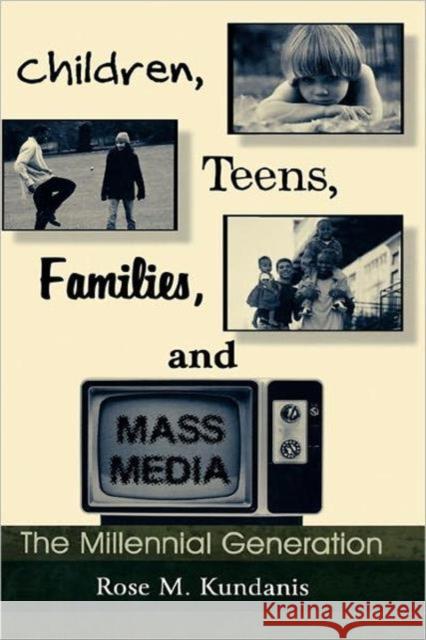
This text provides a survey of the relationship between children and those mass media found in the home--radio, television, and the Internet. Using a theory-based approach, with attention to developmental, gender, ethnic, and generational differences, author Rose M. Kundanis explores the nature of these relationships and their influences on children and families, looking at the experiences children have at various developmental ages and across generations. She reviews children's own experiences with media and examines the variety of effects that can operate due to children's perceptions at different ages, including fear, aggression, and sexuality. The text includes theory and research from mass communication, developmental psychology, education, and other areas, representing the broad spectrum of influences at work.
Features of this text include:
*side-bar interviews with teens who work in media and people who develop policy or programming for children's media;
*in-depth explanations of the Generational Theory and the Developmental Theory as they apply to children and the media, plus a survey of other applicable theories;
*description of the key points of the Children's Television Act of 1990, the Telecommunications Act of 1996, and other relevant legislation; and
*questions and activities to extend the exploration of topics.
This text will help students develop a critical understanding of the relationship of children and the media; the variables affecting and influencing children's response to media; the theories that explain and predict this relationship; and the ways in which children use the media and can develop media literacy. It is appropriate for courses at the advanced undergraduate and graduate level, including children and media, media literacy, mass communication and society, and media processes and effects, as well as special topics courses in education, communication, and psychology.




Czytaj nas na:
KrainaKsiazek.PL - Księgarnia Internetowa


