• Wyszukiwanie zaawansowane
  • Kategorie
  • Kategorie BISAC
  • Książki na zamówienie
  • Promocje
  • Granty
  • Książka na prezent
  • Opinie
  • Pomoc
  • Załóż konto
  • Zaloguj się

Chemo Fog: Cancer Chemotherapy-Related Cognitive Impairment » książka


zaloguj się | załóż konto
Logo Krainaksiazek.pl

koszyk

konto

szukaj
topmenu
Księgarnia internetowa
Szukaj
Książki na zamówienie
Promocje
Granty
Książka na prezent
Moje konto
Pomoc
 
 
Wyszukiwanie zaawansowane
Pusty koszyk
Bezpłatna dostawa dla zamówień powyżej 20 złBezpłatna dostawa dla zamówień powyżej 20 zł

Kategorie główne

• Nauka
 [2949965]
• Literatura piękna
 [1857847]

  więcej...
• Turystyka
 [70818]
• Informatyka
 [151303]
• Komiksy
 [35733]
• Encyklopedie
 [23180]
• Dziecięca
 [617748]
• Hobby
 [139972]
• AudioBooki
 [1650]
• Literatura faktu
 [228361]
• Muzyka CD
 [398]
• Słowniki
 [2862]
• Inne
 [444732]
• Kalendarze
 [1620]
• Podręczniki
 [167233]
• Poradniki
 [482388]
• Religia
 [509867]
• Czasopisma
 [533]
• Sport
 [61361]
• Sztuka
 [243125]
• CD, DVD, Video
 [3451]
• Technologie
 [219309]
• Zdrowie
 [101347]
• Książkowe Klimaty
 [123]
• Zabawki
 [2362]
• Puzzle, gry
 [3791]
• Literatura w języku ukraińskim
 [253]
• Art. papiernicze i szkolne
 [7933]
Kategorie szczegółowe BISAC

Chemo Fog: Cancer Chemotherapy-Related Cognitive Impairment

ISBN-13: 9781441963055 / Angielski / Twarda / 2010 / 216 str.
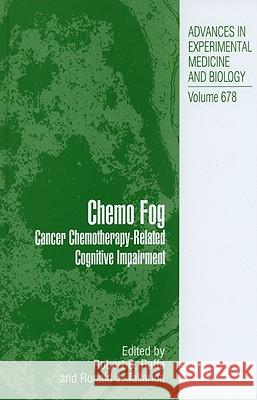
Raffa;¬Abar
Chemo Fog: Cancer Chemotherapy-Related Cognitive Impairment Raffa, Robert B. 9781441963055 SPRINGER - książkaWidoczna okładka, to zdjęcie poglądowe, a rzeczywista szata graficzna może różnić się od prezentowanej.

Chemo Fog: Cancer Chemotherapy-Related Cognitive Impairment

ISBN-13: 9781441963055 / Angielski / Twarda / 2010 / 216 str.

Raffa;¬Abar
cena 605,23 zł
(netto: 576,41 VAT:  5%)

Najniższa cena z 30 dni: 578,30 zł
Termin realizacji zamówienia:
ok. 22 dni roboczych
Bez gwarancji dostawy przed świętami

Darmowa dostawa!

Cancer patients have benefitted greatly from recent advances in the drugs, dose regimens, and combinations used to treat their primary tumor and for the treatment or prevention of spread of their disease. Due to the advances in chemotherapy and other aspects of prevention, early detection, and treatment modalities, an increasing percentage of patients are surviving the disease. For some types of cancer, the majority of patients live decades beyond their diagnosis. For this they are forever thankful and appreciative of the drugs that helped lead to this increased survival rate. But no drug is devoid of adverse effects. This also applies to chemotherapeutic agents. The acute cytotoxic effects of these agents are well known--indeed are often required for their therapeutic benefit. The chronic adverse effects are varied and in some cases less well known. With the increase in survival rates, there has emerged a new awareness of these chronic adverse effects.


Kategorie:
Nauka, Medycyna
Kategorie BISAC:
Medical > Chemotherapy
Medical > Oncology - General
Psychology > Neuropsychology
Wydawca:
SPRINGER
Seria wydawnicza:
Cancer Chemotherapyrelated Cog
Język:
Angielski
ISBN-13:
9781441963055
Rok wydania:
2010
Numer serii:
000253056
Ilość stron:
216
Waga:
0.54 kg
Wymiary:
25.65 x 17.27 x 1.78
Oprawa:
Twarda
Wolumenów:
01
Dodatkowe informacje:
Bibliografia
Wydanie ilustrowane

1. Short Introduction and History Robert B. Raffa Abstract Introduction and History Conclusion 2. Patient’s Perspective Robert B. Raffa and Kathy Martin Abstract Introduction Conclusion 3. Oncology Nurse’s Perspective Jamie S. Myers Abstract Prelude: Personal Reflections of an Oncology Nurse Chemotherapy?Related Cognitive Impairment: The Oncology Nurse Perspective Oncology Nursing Research Oncology Nursing Education Conclusion 4. Oncology Pharmacist’s Perspective Rachel Clark?Vetri Abstract Introduction Conclusion 5. The Impact of Chemo Brain on the Patient with a High Grade Glioma Michele R. Lucas Abstract Background Brain Cancer Impact of Chemo Brain on the Patient Impact of Chemo Brain on the Family Impact of Chemo Brain on Society Conclusion 6. Neurocognitive Efects of Childhood Cancer Treatment Jennifer Costa Abstract Background Identified Risk Factors Treatment of Childhood Leukemia: Past and Present Treatment of Childhood Brain Tumors: Past and Present Neurocognitive Effects of Chemotherapy Cognitive Remediation Pharmacological Intervention: Methylphenidate Conclusion 7. The Economic Burden Albert I. Wertheimer Abstract Epidemiology of Chemo Fog Disease Impact Economic Burden of Chemo Fog Conclusion 8. Designing Conceptual Model?Based Research in Chemotherapy?Related Changes in Cognitive Function Lisa M. Hess Abstract Understanding the Issue Designing Research Trials Conclusion 9. Neuropsychologic Testing for Chemotherapy?Related Cognitive Impairment Jamie S. Myers Abstract Introduction Neuropsychologic Test Overview Issues Related to Neurocognitive Testing for CRCI Conclusion 10. Imaging as a Means of Studying Chemotherapy?Related Cognitive Impairment Robert B. Raffa Abstract Introduction Electrophysiological Studies Neuroimaging Studies Conclusion 11. Chemotherapy Associated Central Nervous System Damage Jörg Dietrich Abstract Introduction Stem Cells, Progenitor Cells and Lineage Systems within the Central NervousSystem Cell?Biological Analysis of Chemotherapy Associated Brain Damage Conclusion 12. Is Systemic Anti?Cancer Therapy Neurotoxic? Does Chemo Brain Exist? And Should We Rename It? Sophie Taillibert Abstract Introduction Towards a Better Definition of Chemo Brain Towards a Better Understanding of Chemo Brain Does Chemo Brain Exist? Conclusion 13. Evaluation of Multiple Neurotoxic Outcomes in Cancer Chemotherapy Bernard Weiss Abstract Introduction Two Contrasting Views of Neurotoxicity Dimensions of Neurotoxicity Lessons Learned from Studies of Cognitive Dysfunction Cognitive Function Approaches Sensory Function Motor Function Animal Models Alternative Approaches Conclusion 14. Chemotherapy?Related Visual System Toxicity Robert B. Raffa Abstract Introduction Visual?System Deficits in Chemo Fog/‘Chemo Brain’ Chemotherapeutic Agent Toxicity on the Visual System Conclusion 15. The Possible Role of Cytokines in Chemotherapy?Induced Cognitive Deficits Jamie S. Myers Abstract The Role of Proinflammatory Cytokines Overview of Cytokines The Immune Response Proinflammatory Cytokines and Cancer Proinflammatory Cytokines and Antineoplastic Agents Proinflammatory Cytokines and Sickness Behavior Proinflammatory Cytokines and Other Symptoms Future Implications Conclusion 16. Pharmacokinetics of Anti?Cancer Drugs Used in Breast Cancer Chemotherapy Swati Nagar Abstract Introduction Pharmacokinetics of Anticancer Drugs Used in Breast Cancer Chemotherapy Pharmacokinetics in Special Populations: Age and Menopause Status Pharmacokinetics of Anticancer Drugs and Memory Deficit as a Pharmacodynamic Endpoint Conclusion 17. Combination Analysis Ronald J. Tallarida Abstract Introduction Drug Additivity Tests of Drug Combinations and the Isobole Error Estimates Dose?Effect Relation of the Drug Combination Variable Potency Ratio Conclusion 18. Animal Models Ellen A. Walker Abstract Introduction Effects of Cancer Chemotherapeutic Agents on the Disruption of Sensory Processing

ROBERT B. RAFFA, PhD, is Professor of Pharmacology and Chair of the Department of Pharmaceutical Sciences at Temple University School of Pharmacy in Philadelphia, Pennslyvania. He holds B Chem E and BS degrees in Chemical Engineering and Physiological Psychology, MS degrees in Biomedical Engineering and Toxicology, and a PhD in Pharmacology. He is the co-author or editor of several books on pharmacology and thermodynamics and over 200 articles in refereed journals, and is active in NIH-funded research, editorial, and professional society activities. Dr. Raffa became co-founder and president of the Forget-Me-Not Foundation in 2009. RONALD J. TALLAR IDA, PhD, is a Professor of Pharmacology at Temple University School of Medicine. He has BS and MS degrees in physics/mathematics from Drexel University and a PhD in pharmacology. His work, primarily concerned with quantitative aspects of pharmacology, is represented in more than 250 published works that include eight books he has authored or co-authored. Dr. Tallarida currently teaches, serves on editorial advisory boards, conducts NIH-funded research, and is active in professional societies. Dr. Tallarida became co-founder and Vice-president of the Forget-Me-Not Foundation in 2009.


Udostępnij

Facebook - konto krainaksiazek.pl


Opinie o Krainaksiazek.pl na Opineo.pl

Partner Mybenefit

Krainaksiazek.pl w programie rzetelna firma Krainaksiaze.pl - płatności przez paypal

Czytaj nas na:

Facebook - krainaksiazek.pl
  • książki na zamówienie
  • granty
  • książka na prezent
  • kontakt
  • pomoc
  • opinie
  • regulamin
  • polityka prywatności

Zobacz:

  • Księgarnia czeska

  • Wydawnictwo Książkowe Klimaty

1997-2025 DolnySlask.com Agencja Internetowa

© 1997-2022 krainaksiazek.pl
     
KONTAKT | REGULAMIN | POLITYKA PRYWATNOŚCI | USTAWIENIA PRYWATNOŚCI
Zobacz: Księgarnia Czeska | Wydawnictwo Książkowe Klimaty | Mapa strony | Lista autorów
KrainaKsiazek.PL - Księgarnia Internetowa

Polityka prywatnosci - link
Krainaksiazek.pl - płatnośc Przelewy24
Przechowalnia Przechowalnia





