• Wyszukiwanie zaawansowane
  • Kategorie
  • Kategorie BISAC
  • Książki na zamówienie
  • Promocje
  • Granty
  • Książka na prezent
  • Opinie
  • Pomoc
  • Załóż konto
  • Zaloguj się

Chemical Carcinogenesis: Models and Mechanisms » książka


zaloguj się | załóż konto
Logo Krainaksiazek.pl

koszyk

konto

szukaj
topmenu
Księgarnia internetowa
Szukaj
Książki na zamówienie
Promocje
Granty
Książka na prezent
Moje konto
Pomoc
 
 
Wyszukiwanie zaawansowane
Pusty koszyk
Bezpłatna dostawa dla zamówień powyżej 20 złBezpłatna dostawa dla zamówień powyżej 20 zł

Kategorie główne

• Nauka
 [2946350]
• Literatura piękna
 [1816154]

  więcej...
• Turystyka
 [70666]
• Informatyka
 [151172]
• Komiksy
 [35576]
• Encyklopedie
 [23172]
• Dziecięca
 [611458]
• Hobby
 [135995]
• AudioBooki
 [1726]
• Literatura faktu
 [225763]
• Muzyka CD
 [378]
• Słowniki
 [2917]
• Inne
 [444280]
• Kalendarze
 [1179]
• Podręczniki
 [166508]
• Poradniki
 [469467]
• Religia
 [507199]
• Czasopisma
 [496]
• Sport
 [61352]
• Sztuka
 [242330]
• CD, DVD, Video
 [3348]
• Technologie
 [219391]
• Zdrowie
 [98638]
• Książkowe Klimaty
 [124]
• Zabawki
 [2382]
• Puzzle, gry
 [3525]
• Literatura w języku ukraińskim
 [259]
• Art. papiernicze i szkolne
 [7107]
Kategorie szczegółowe BISAC

Chemical Carcinogenesis: Models and Mechanisms

ISBN-13: 9781475796421 / Angielski / Miękka / 2013 / 679 str.
Francisco Feo; Paolo Pani
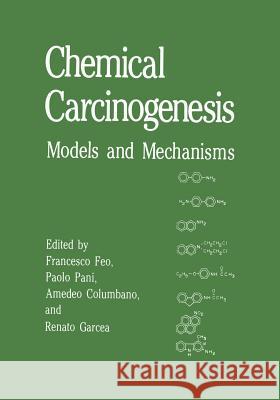
Chemical Carcinogenesis: Models and Mechanisms Feo, Francisco 9781475796421 Springer - książkaWidoczna okładka, to zdjęcie poglądowe, a rzeczywista szata graficzna może różnić się od prezentowanej.

Chemical Carcinogenesis: Models and Mechanisms

ISBN-13: 9781475796421 / Angielski / Miękka / 2013 / 679 str.

Francisco Feo; Paolo Pani
cena 201,24
(netto: 191,66 VAT:  5%)

Najniższa cena z 30 dni: 192,74
Termin realizacji zamówienia:
ok. 16-18 dni roboczych.

Darmowa dostawa!

About two centuries after the communication by Sir Percival Pott that the "chimney sweeper disease" was a cancer and its suggestion that active compounds of soot were the causative agents, and about one century after the description of urinary bladder cancer in dye workers, an enormous number of substances have been synthesized and have probably come into contact with man. Research in cancer prevention is of primary importance, and may receive continuous support from new discoveries on cancer etiology and pathogenesis. If one accepts the multistage model of chemical carcinogenesis, one has also to accept that many events occur between the contact of carcino- genic compounds and their specific targets and the development of a clinically recognizable neoplasm. Thus, animal studies become essential to elucidate the different steps by which chemical carcinogens induce neoplasia. The analysis of these steps and the comparative evaluation of experimental models is essential to an understanding of pathogenesis.


Kategorie:
Nauka, Biologia i przyroda
Kategorie BISAC:
Medical > Oncology - General
Science > Biologia i przyroda
Wydawca:
Springer
Język:
Angielski
ISBN-13:
9781475796421
Rok wydania:
2013
Wydanie:
Softcover Repri
Ilość stron:
679
Waga:
1.30 kg
Wymiary:
25.4 x 17.8
Oprawa:
Miękka
Wolumenów:
01

Section I Xenobiotics: Metabolism and Interaction with Cellular Macromolecules.- Cytochrome P-450 Function Analyses with Monoclonal Antibodies and cDNA Expression Vectors.- Cytochromes P-450 as Determinants of Susceptibility to Carcinogenesis by Aromatic Amines and Nitroaromatic Hydrocarbons.- Species-Dependent Differences in the Metabolic Activation of Polycyclic Aromatic Hydrocarbons in Cells in Culture.- Complex Metabolic Activation Pathways of Polycyclic Aromatic Hydrocarbons: 3-Hydroxy-trans-7,8-Dihydroxy-7,8-Dihydrobenzo[a]-pyrene as a Proximate Mutagen of 3-Hydroxybenzo[a]pyrene.- Carcinogenicity of Methyl Halides: Current Problems Concerning Chloromethane.- Relationship Between Structure and Mutagenic/Carcinogenic Activity of Short Chain Aliphatic Halocompounds: A Collaborative Project.- Enzymatic Detoxication of Tumorigenic Bay-Region Diol-Epoxides of Polycyclic Aromatic Hydrocarbons by Conjugation with Glutathione.- Antigenotoxic and Anticarcinogenic Effects of Thiols. In Vitro Inhibition of the Mutagenicity of Drug Nitrosation Products and Protection of Rat Liver ADP-Ribosyl Transferase Activity.- Relationships between NADPH Content and Benzo(a)pyrene Metabolism in Normal and Glucose-6-Phosphate Dehydrogenase-Deficient Human Fibroblasts.- Comparison of the Covalent Binding of Various Chloroethanes with Nucleic Acids.- In Situ Detection of Hepatic AF-DNA Adduct Formation During Continuous Feeding of 0.02% Acetylaminofluorene and in Enzyme-Altered Foci Induced by Four Different Protocols.- Interaction of Activated N-Nitrosamines with DNA.- Antibodies Specific for DNA Components Modified by Chemical Carcinogens and Their Binding Efficiency to DNA Modified in Vivo and in Vitro with the Corresponding Carcinogens.- Liver DNA Dammage by Chemical Carcinogens: Role of Thyroid Hormones.- Activation of Urinary Bladder Carcinogens within the Target Organ.- Lipid Peroxidation and Bioactivation of Halogenated Hydrocarbons in Rat Liver Mitochondria During Experimental Siderosis.- Lipid Peroxidation, Protein Thiols, Calcium Homeostasis and Imbalance of Antioxidant Systems in Bromobenzene Induced Liver Damage.- Section II Developmental Stages of Carcinogenesis.- Cell Proliferation and Cell Loss in Progression in Liver Carcinogenesis: A New Hypothesis.- Human Papillomavirus 16 DNA and Epithelial Cell Immortalization.- Cellular and Molecular Studies of Growth, Differentiation and Neoplastic Transformation of Human Bronchial Epithelial Cells in Vitro.- New Insights into Tumor Promotion from Molecular Studies of Protein Kinase C.- Model Studies on the in Vitro Activation of c-Ha-ras Protooncogene by Dietary Components.- DNA Fragmentation or Changes in Chromatin Conformation. Results with Two Model Systems: Promotion in Rat Liver Carcinogenesis and Proliferation in Mastocytes.- Cellular and Molecular Changes in Early Stages of Hepatocarcinogenesis.- Sequential Phenotypic Conversion of Renal Epithelial Cells During Neoplastic Development.- The Wound Response as a Key Element for an Understanding of Multistage Carcinogenesis in Skin.- Possible Mechanism of Orotic Acid Induced Liver Tumor Promotion in the Rat.- The Role of Initiating and Promoting Properties in Aromatic Amine Carcinogenesis.- Long-Term Fate of the Hepatocyte Hyperplastic Foci Induced by a Two Stage Carcinogenetic Protocol.- Effects of Chronic Thioacetamide Administration on Liver Drug Metabolizing System and on the Development of Hepatocyte Foci, Nodules and Tumors.- Cell Death by Apoptosis in Normal, Preneoplastic and Neoplastic Tissue.- Role of Cell Death for Growth and Regression of Hormone-Dependent H-301 Hamster Kidney Tumors.- Can Apoptosis Influence Initiation of Chemical Hepatocarcinogenesis?.- Analysis of the Biology of Initiation Using the Resistant Hepatocyte Model.- Theoretical Calculations of the Electrostatic Potential of Some Tumor Promoters.- A Cell Culture Model for Study of Chemically-Derived and Spontaneous Mouse Lung Alveologenic Carcinoma.- Studies on Metabolic Perturbations and Tumor Promotion: Glycine Induces the Synthesis of Orotic Acid, a Tumor Promoter and the Expression of Certain Cell Cycle Dependent Genes.- Comparative Study on the Effect of Different Treatment Schedules on Some Carbohydrate Metabolizing Enzyme Activities in Rats During Hepatocarcinogenesis.- Expression of a Novel N-Acetylglucosaminyltransferase in Rat Hepatic Nodules.- Cytosolic and Plasmamembranes Enzymatic Activities During Diethylnitrosamine-Induced Carcinogenesis in Rat Liver.- Chemoprevention of Experimental Tumorigenesis by Dehydroepiandrosterone and Structural Analogs.- Inhibition of Initiation and Promotion Steps of Carcinogenesis by Glucose-6-Phosphate Dehydrogenase Deficiency.- Additive Effect of Low-Dose Diethylnitrosamine on the Initiation of Liver Carconogenesis in Rats.- Modulation of Liver Carcinogenesis by Surgery.- Analysis of the Effects of Modifying Agents on Six Different Phenotypes in Preneoplastic Foci in the Liver in Medium-Term Bioassay Model in Rats.- S-Adenosylmethionine Antipromotion and Antiprogression Effect in Hepatocarcinogenesis. Its Association with Inhibition of Gene Expression.- Development and Application of an in Vivo Medium-Term Bioassay System for the Screening of Hepatocarcinogens and Inhibiting Agents of Hepatocarcinogenesis.- Section III Regulation of Cell Growth in Chemical Carcinogenesis.- Nuclear Alterations in Liver Carcinogenesis: The Role of Non-Polyploidizing Growth.- Growth Control of Hepatocytes in Primary Culture and Its Aberration in Carcinogenesis.- Constitutive and Induced Expression of Heat Shock Proteins During Liver Carcinogenesis and in Hepatomas.- Regulation of S-Adenosyl-L-Methionine Decarboxylase in Normal and Regenerating Rat Liver by Adenosine-Containing Molecules.- Derangements of Cationic Amino Acid Transport in Fibroblasts from Human Desmoid Tumor.- Lipids as Effectors and Mediators in Growth Control of Ascites Tumor Cells.- Susceptibility of grc-Bearing Rats to DEN and Its Relationship to the HMP Pathway.- Lipoproteins, Cell Proliferation and Cancer.- A Mechanistic Association Between Cholesterol Metabolism and Cell Proliferation.- Modifying Influence of Fasting on DNA Synthesis, Cholesterol Metabolism and HMP Shunt Enzymes in Liver Hyperplasia Induced by Lead Nitrate.- Regulation of Protein Degradation in Neoplastic Cells.- Proteolysis Associated with Thymidine-Induced Selective Cell Death in L-Cell Cultures.- Role of Intermediate Filaments and Ubiquitin in Protein Catabolism in Tumor Cells.- Section IV Nutritional Carcinogenesis and Anticarcinogenesis.- The Choline-Devoid Diet Model of Hepatocarcinogenesis in the Rat.- Methyl Insufficiency in Carcinogensis.- Choline Deficiency, Lipid Peroxidation, Liver Cell Surface Receptor Alterations and Liver Tumor Promotion.- Mechanism of Initiation of Liver Carcinogenesis by Dietary Imbalance.- Modulation by Polyunsaturated Lipid Diets of Nitrosamine-Induced Cancers in Rats: Effects on Prooxidant State and Drug Metabolism.- Lipids and Colonic Carcinogenesis. Fact or Artefact?.- Section V Mechanisms in Human Carcinogeneis.- Mechanisms of Endogenous Nitrosation.- The Role of N-Nitroso Compounds in Human Cancer.- Models for Combined Action of Alcohol and Tobacco on Risk of Cancer: What Do We Really Know from Epidemiological Studies?.- Epidemiological Approach to the Investigation of Mechanisms of Action in Human Bladder Carcinogenesis.- Concluding Remarks.


Udostępnij

Facebook - konto krainaksiazek.pl


Opinie o Krainaksiazek.pl na Opineo.pl

Partner Mybenefit

Krainaksiazek.pl w programie rzetelna firma Krainaksiaze.pl - płatności przez paypal

Czytaj nas na:

Facebook - krainaksiazek.pl
  • książki na zamówienie
  • granty
  • książka na prezent
  • kontakt
  • pomoc
  • opinie
  • regulamin
  • polityka prywatności

Zobacz:

  • Księgarnia czeska

  • Wydawnictwo Książkowe Klimaty

1997-2026 DolnySlask.com Agencja Internetowa

© 1997-2022 krainaksiazek.pl
     
KONTAKT | REGULAMIN | POLITYKA PRYWATNOŚCI | USTAWIENIA PRYWATNOŚCI
Zobacz: Księgarnia Czeska | Wydawnictwo Książkowe Klimaty | Mapa strony | Lista autorów
KrainaKsiazek.PL - Księgarnia Internetowa

Polityka prywatnosci - link
Krainaksiazek.pl - płatnośc Przelewy24
Przechowalnia Przechowalnia






