Changing Channels: Television and the Struggle for Power in America » książka





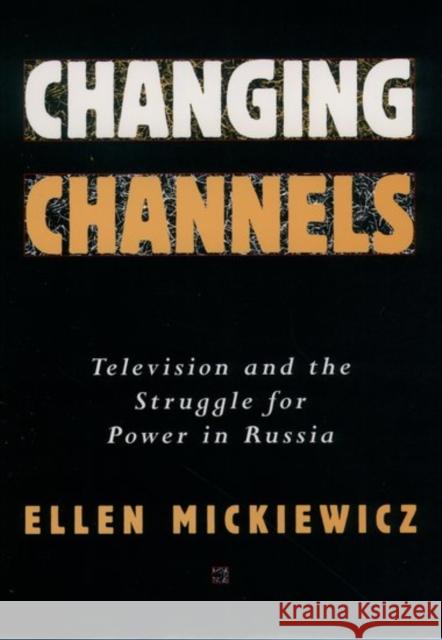
Changing Channels: Television and the Struggle for Power in America
ISBN-13: 9780195101638 / Angielski / Twarda / 1997 / 368 str.
At 7:20 pm on October 3, 1993, a nervous and shaky anchor broke into coverage of a soccer match to tell Russian viewers that their state television was shutting down. In the opening salvos of the parliamentary revolt against Boris Yeltsin's government, a mob had besieged the station's headquarters. A man had just been killed in front of the news director. Moments later, screens all across Russia went blank, leaving audiences in the dark. But in less than an hour, Russia's second state channel went on the air. Millions watched as Sergei Torchinsky anchored thirteen straight hours of coverage, often with the sound of shooting clearly audible in the background. Streams of politicians, trade union leaders, writers, television personalities, and other well-known figures braved gunfire to reach Channel Two's makeshift studios and speak directly to the nation. In one stunning moment, a famous actress extemporaneously pleaded with viewers not to return to the horrors of Stalinism. Boris Yeltsin, who had been glued to his television set like everyone else, later recalled, "For the rest of my life I will remember the anxious but resolute and courageous expression of Liya Akhedzhakova. . . her hoarse, cracking voice remains in my memory."
In that time of crisis, television bound the nation together, a continuing emblem of legitimate authority which lent an image of stability and credibility to Yeltsin's besieged government. "Television saved Russia," the Russian president said. Changing Channels vividly recreates this exciting time, as television both helped and hindered the Russian nation's struggle to create a new democracy. From the moribund, state-controlled television broadcasts at the end of the Soviet Union, through Mikhail Gorbachev's glasnost, up to Yeltsin's victory in the most recent Russian presidential elections of 1996, Mickiewicz charts the omnipresent role of television, drawing on interviews, public opinion surveys, research, and the television programming itself. Analyzing the rise of political advertising (sometimes with controversial US participation), the birth of journalists as opinionated television personalities, and the changing news coverage of coups, elections, and wars, she shows both how the gradual development of private, independent stations has begun to make real pluralism possible and how the authoritarian legacy of the Soviet state structure continues to affect Russian television even today. With television in 97% of all Russian households, and the nightly news watched by a viewership matching that for the Super Bowl in the US, the struggle for control over television became the struggle for control over the nation. Mickiewicz illuminates the efforts of those both in and out of power to control the media.
Behind the momentous political changes are the stories of the men and women who chose to resist, test, or submit to the system. Mickiewicz offers brilliant sketches of these individuals: Yegor Ligachev, Gorbachev's second in command, a man of strongly held opinions who, in retirement, still orated loudly, even over tea; Boris Yeltsin, having not even put on his shirt yet, watching the early morning coverage of the attempted coup against Gorbachev; or the new breed of Russian journalists covering the war in Chechnya with footage of bombed out streets and charred corpses for privately owned NTV, despite continuing government intimidation. In vivid interviews, all the key players, including Gorbachev himself, offered Mickiewicz their unique insights and frank personal commentary. Drawing on these interviews and on her extensive research on the interactions of politics, economics, and society, Mickiewicz presents a rich and authoritative analysis of television in Russia. In many ways, Mickiewicz writes, no other country in the world offers television a greater opportunity and a greater role. Changing Channels tells the fascinating story of a truly modern phenomenon: the struggle to create genuine political pluralism, helped and hindered by the barrage of information, advertisements, and media-created personalities that make up modern television.




Czytaj nas na:
KrainaKsiazek.PL - Księgarnia Internetowa


