• Wyszukiwanie zaawansowane
  • Kategorie
  • Kategorie BISAC
  • Książki na zamówienie
  • Promocje
  • Granty
  • Książka na prezent
  • Opinie
  • Pomoc
  • Załóż konto
  • Zaloguj się

Chalcogenide Glasses: Preparation, Properties and Applications » książka

zaloguj się | załóż konto
Logo Krainaksiazek.pl

koszyk

konto

szukaj
topmenu
Księgarnia internetowa
Szukaj
Książki na zamówienie
Promocje
Granty
Książka na prezent
Moje konto
Pomoc
 
 
Wyszukiwanie zaawansowane
Pusty koszyk
Bezpłatna dostawa dla zamówień powyżej 20 złBezpłatna dostawa dla zamówień powyżej 20 zł

Kategorie główne

• Nauka
 [2949965]
• Literatura piękna
 [1857847]

  więcej...
• Turystyka
 [70818]
• Informatyka
 [151303]
• Komiksy
 [35733]
• Encyklopedie
 [23180]
• Dziecięca
 [617748]
• Hobby
 [139972]
• AudioBooki
 [1650]
• Literatura faktu
 [228361]
• Muzyka CD
 [398]
• Słowniki
 [2862]
• Inne
 [444732]
• Kalendarze
 [1620]
• Podręczniki
 [167233]
• Poradniki
 [482388]
• Religia
 [509867]
• Czasopisma
 [533]
• Sport
 [61361]
• Sztuka
 [243125]
• CD, DVD, Video
 [3451]
• Technologie
 [219309]
• Zdrowie
 [101347]
• Książkowe Klimaty
 [123]
• Zabawki
 [2362]
• Puzzle, gry
 [3791]
• Literatura w języku ukraińskim
 [253]
• Art. papiernicze i szkolne
 [7933]
Kategorie szczegółowe BISAC

Chalcogenide Glasses: Preparation, Properties and Applications

ISBN-13: 9780857093455 / Angielski / Twarda / 2013 / 704 str.
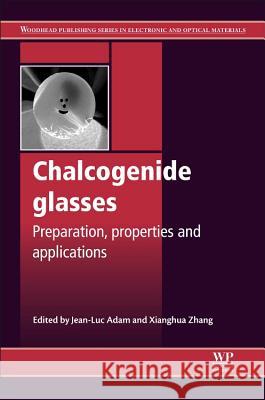
Jean-Luc Adam; Zianghua Zhang
Chalcogenide Glasses: Preparation, Properties and Applications Jean-Luc Adam Zianghua Zhang 9780857093455 Woodhead Publishing - książkaWidoczna okładka, to zdjęcie poglądowe, a rzeczywista szata graficzna może różnić się od prezentowanej.

Chalcogenide Glasses: Preparation, Properties and Applications

ISBN-13: 9780857093455 / Angielski / Twarda / 2013 / 704 str.

Jean-Luc Adam; Zianghua Zhang
cena 1121,89 zł
(netto: 1068,47 VAT:  5%)

Najniższa cena z 30 dni: 1110,42 zł
Termin realizacji zamówienia:
ok. 30 dni roboczych
Bez gwarancji dostawy przed świętami

Darmowa dostawa!

The unique properties and functionalities of chalcogenide glasses make them promising materials for photonic applications. Chalcogenide glasses are transparent from the visible to the near infrared region and can be moulded into lenses or drawn into fibres. They have useful commercial applications as components for lenses for infrared cameras, and chalcogenide glass fibres and optical components are used in waveguides for use with lasers, for optical switching, chemical and temperature sensing and phase change memories. Chalcogenide glasses comprehensively reviews the latest technological advances in this field and the industrial applications of the technology.

Part one outlines the preparation methods and properties of chalcogenide glasses, including the thermal properties, structure, and optical properties, before going on to discuss mean coordination and topological constraints in chalcogenide network glasses, and the photo-induced phenomena in chalcogenide glasses. This section also covers the ionic conductivity and physical aging of chalcogenide glasses, deposition techniques for chalcogenide thin films, and transparent chalcogenide glass-ceramics. Part two explores the applications of chalcogenide glasses. Topics discussed include rare-earth-doped chalcogenide glass for lasers and amplifiers, the applications of chalcogenide glasses for infrared sensing, microstructured optical fibres for infrared applications, and chalcogenide glass waveguide devices for all-optical signal processing. This section also discusses the control of light on the nanoscale with chalcogenide thin films, chalcogenide glass resists for lithography, and chalcogenide for phase change optical and electrical memories. The book concludes with an overview of chalcogenide glasses as electrolytes for batteries.

Chalcogenide glasses comprehensively reviews the latest technological advances and applications of chalcogenide glasses, and is an essential text for academics, materials scientists and electrical engineers working in the photonics and optoelectronics industry.

  • Outlines preparation methods and properties, and explores applications of chalcogenide glasses.
  • Covers the ionic conductivity and physical aging of chalcogenide glasses, deposition techniques for chalcogenide thin films, and transparent chalcogenide glass-ceramics
  • Discusses the control of light on the nanoscale with chalcogenide thin films, chalcogenide glass resists for lithography, and chalcogenide for phase change optical and electrical memories


Kategorie:
Inne
Kategorie BISAC:
Technology & Engineering > Electrical
Technology & Engineering > Optics
Technology & Engineering > Lasers & Photonics
Wydawca:
Woodhead Publishing
Seria wydawnicza:
Woodhead Publishing Series in Electronic and Optical Materia
Język:
Angielski
ISBN-13:
9780857093455
Rok wydania:
2013
Numer serii:
000454534
Ilość stron:
704
Waga:
1.16 kg
Wymiary:
23.39 x 15.6 x 3.81
Oprawa:
Twarda
Wolumenów:
01

  • Contributor contact details
  • Woodhead Publishing Series in Electronic and Optical Materials
  • Part I: Preparation and properties of chalcogenide glasses
    • 1: Preparation of high-purity chalcogenide glasses
      • Abstract:
      • 1.1 Introduction
      • 1.2 Preparation of vitreous chalcogenides
      • 1.3 Properties of chalcogenide glasses determining their application as optical materials
      • 1.4 Preparation of high-purity chalcogenide glasses
      • 1.5 Preparation and characterization of chalcogenide optical fibers
      • 1.6 Conclusion
    • 2: Structure of chalcogenide glasses characterized by nuclear magnetic resonance (NMR) spectroscopy
      • Abstract:
      • 2.1 Introduction
      • 2.2 The 77Se nuclear magnetic resonance (NMR) spectroscopy in chalcogenide glasses
      • 2.3 Other nuclei: 125Te, 75As, 73Ge, 71Ga
      • 2.4 Conclusion
    • 3: Mean coordination and topological constraints in chalcogenide network glasses
      • Abstract:
      • 3.1 Introduction
      • 3.2 Mean coordination and topological constraints: the rigidity percolation model
      • 3.3 Applicability of the rigidity percolation model
      • 3.4 The temperature dependence of constraints
      • 3.5 Conclusion and future trends
    • 4: Thermal properties of chalcogenide glasses
      • Abstract:
      • 4.1 Introduction
      • 4.2 Differential scanning calorimetry (DSC)
      • 4.3 Thermogravimetric analysis (TGA)
      • 4.4 Thermomechanical analysis (TMA)
      • 4.5 Viscometry
      • 4.6 Thermo-optic behavior
      • 4.7 Conclusion and future trends
      • 4.8 Sources of further information and advice
    • 5: Optical properties of chalcogenide glasses and fibers
      • Abstract:
      • 5.1 Introduction
      • 5.2 Optical transmission theory
      • 5.3 Impurity absorptions
      • 5.4 Refractive index, dispersion and dn/dT
      • 5.5 Transmission and laser power delivery of chalcogenide fibers
      • 5.6 Current and future trends
      • 5.7 Conclusion
    • 6: Photo-induced phenomena in chalcogenide glasses
      • Abstract:
      • 6.1 Introduction
      • 6.2 Scalar changes
      • 6.3 Enhancement and suppression of photodarkening
      • 6.4 Excitation condition dependent scalar changes
      • 6.5 Vector deformations
      • 6.6 Conclusion
    • 7: Ionic conductivity of chalcogenide glasses
      • Abstract:
      • 7.1 Introduction
      • 7.2 Preparation of ionic conductive chalcogenide glasses
      • 7.3 Electrical and electrochemical characterisations
      • 7.4 Conductivity versus composition
      • 7.5 Direct current (dc) conductivity models
      • 7.6 Frequency-dependent conductivity models
      • 7.7 Applications
      • 7.8 Conclusion
    • 8: Physical ageing of chalcogenide glasses
      • Abstract:
      • 8.1 Introduction
      • 8.2 Experimental characterization of physical ageing in glasses using thermal analysis
      • 8.3 Physical ageing effects in chalcogenide glasses
      • 8.4 Phenomenological description of physical ageing
      • 8.5 On the origin of physical ageing in chalcogenide glasses
      • 8.6 Conclusion and future trends
    • 9: Deposition techniques for chalcogenide thin films
      • Abstract:
      • 9.1 Introduction
      • 9.2 Thin-film deposition
      • 9.3 Conclusion and future trends
      • 9.4 Sources of further information and advice
      • 9.5 Acknowledgements
    • 10: Transparent chalcogenide glass-ceramics
      • Abstract:
      • 10.1 Introduction
      • 10.2 The recent history of chalcogenide glass-ceramics
      • 10.3 Synthesis of transparent chalcogenide glass-ceramics
      • 10.4 Properties of glass-ceramics
      • 10.5 Future trends
      • 10.6 Conclusion
  • Part II: Applications of chalcogenide glasses
    • 11: Rare-earth-doped chalcogenide glass for lasers and amplifiers
      • Abstract:
      • 11.1 Introduction
      • 11.2 Rare-earth (RE)-doped chalcogenide glasses for optical fiber amplifiers
      • 11.3 Local structure of RE ions
      • 11.4 RE-doped chalcogenide glasses for mid-infrared lasers
      • 11.5 Conclusion and future trends
    • 12: Chalcogenide waveguides for infrared sensing
      • Abstract:
      • 12.1 Introduction
      • 12.2 Fiber evanescent wave spectroscopy
      • 12.3 Fabrication of the fiber sensor
      • 12.4 Characterization and optimization of the sensor
      • 12.5 Applications of the sensor
      • 12.6 Spatial area
      • 12.7 Conclusion
    • 13: Chalcogenide microstructured optical fibers for infrared applications
      • Abstract:
      • 13.1 Introduction
      • 13.2 General principles of microstructured optical fibers
      • 13.3 Elaboration of chalcogenide microstructured optical fibers
      • 13.4 Optical properties
      • 13.5 Nonlinear optical properties
      • 13.6 Conclusion
    • 14: Chalcogenide glass waveguide devices for all-optical signal processing
      • Abstract:
      • 14.1 Introduction
      • 14.2 Stimulated Brillouin scattering (SBS) based on-chip processing
      • 14.3 On-chip processing using the Kerr effect
      • 14.4 Conclusion
    • 15: Controlling light on the nanoscale with chalcogenide thin films
      • Abstract:
      • 15.1 Introduction
      • 15.2 Chalcogenide-based active elements
      • 15.3 Nanoscale switches
      • 15.4 Modelled phase change functionality in metamaterials
      • 15.5 Electro-optic switches
      • 15.6 All-optical switches
      • 15.7 Conclusion
    • 16: Second harmonic generation in chalcogenide glasses
      • Abstract:
      • 16.1 Introduction
      • 16.2 General principles for the generation of second-order nonlinear optical effects in glasses
      • 16.3 Second harmonic generation (SHG) in glasses: origin and mechanism
      • 16.4 Optical waveguide for electro-optic effects and quasi-phase matching second harmonic generation (QPM-SHG) in glass
      • 16.5 SHG in chalcogenide glasses: induced polarization by external stimulation
      • 16.6 Thermal poling in chalcogenide glasses
      • 16.7 Glass-ceramic samples
      • 16.8 Infrared (IR) stimulated processes in chalcogenide glasses
      • 16.9 Conclusion
    • 17: Chalcogenide glass resists for lithography
      • Abstract:
      • 17.1 Introduction
      • 17.2 Resist materials for lithography
      • 17.3 Basics of chalcogenide glass resists
      • 17.4 Examples of chalcogenide resist applications
      • 17.5 Advantages and disadvantages of chalcogenide resists
      • 17.6 Conclusion and future trends
      • 17.7 Acknowledgements
    • 18: Chalcogenide for phase change optical and electrical memories

      • Abstract:
      • 18.1 Introduction: the basics of rewritable phase change data storage
      • 18.2 Crystal nucleation in chalcogenide Ge2Sb2Te5 alloys: application to optical memories
      • 18.3 Stability of very thin amorphous chalcogenide layers
      • 18.4 Influence of nitrogen on GeTe crystallization ability: application to embedded electrical memories
      • 18.5 Conclusion
    • 19: Chalcogenide glasses as electrolytes for batteries
      • Abstract:
      • 19.1 Introduction
      • 19.2 Advantages of sulfide glasses as solid electrolytes
      • 19.3 Development of sulfide electrolytes for battery application
      • 19.4 All-solid-state lithium secondary batteries with sulfide electrolytes
      • 19.5 Conclusion
  • Index

Dr Jean-Luc Adam is Director of Research at Centre National de la Recherche Scientifique (CNRS) and Director of the Institut des Sciences Chimiques de Rennes, France. Dr Xianghua Zhang is a Director of Research at Centre National de la Recherche Scientifique (CNRS) -Université de Rennes 1, France.


Udostępnij

Facebook - konto krainaksiazek.pl


Opinie o Krainaksiazek.pl na Opineo.pl

Partner Mybenefit

Krainaksiazek.pl w programie rzetelna firma Krainaksiaze.pl - płatności przez paypal

Czytaj nas na:

Facebook - krainaksiazek.pl
  • książki na zamówienie
  • granty
  • książka na prezent
  • kontakt
  • pomoc
  • opinie
  • regulamin
  • polityka prywatności

Zobacz:

  • Księgarnia czeska

  • Wydawnictwo Książkowe Klimaty

1997-2025 DolnySlask.com Agencja Internetowa

© 1997-2022 krainaksiazek.pl
     
KONTAKT | REGULAMIN | POLITYKA PRYWATNOŚCI | USTAWIENIA PRYWATNOŚCI
Zobacz: Księgarnia Czeska | Wydawnictwo Książkowe Klimaty | Mapa strony | Lista autorów
KrainaKsiazek.PL - Księgarnia Internetowa

Polityka prywatnosci - link
Krainaksiazek.pl - płatnośc Przelewy24
Przechowalnia Przechowalnia






