• Wyszukiwanie zaawansowane
  • Kategorie
  • Kategorie BISAC
  • Książki na zamówienie
  • Promocje
  • Granty
  • Książka na prezent
  • Opinie
  • Pomoc
  • Załóż konto
  • Zaloguj się

Cgm and CGI: Metafile and Interface Standards for Computer Graphics » książka


zaloguj się | załóż konto
Logo Krainaksiazek.pl

koszyk

konto

szukaj
topmenu
Księgarnia internetowa
Szukaj
Książki na zamówienie
Promocje
Granty
Książka na prezent
Moje konto
Pomoc
 
 
Wyszukiwanie zaawansowane
Pusty koszyk
Bezpłatna dostawa dla zamówień powyżej 20 złBezpłatna dostawa dla zamówień powyżej 20 zł

Kategorie główne

• Nauka
 [2946912]
• Literatura piękna
 [1852311]

  więcej...
• Turystyka
 [71421]
• Informatyka
 [150889]
• Komiksy
 [35717]
• Encyklopedie
 [23177]
• Dziecięca
 [617324]
• Hobby
 [138808]
• AudioBooki
 [1671]
• Literatura faktu
 [228371]
• Muzyka CD
 [400]
• Słowniki
 [2841]
• Inne
 [445428]
• Kalendarze
 [1545]
• Podręczniki
 [166819]
• Poradniki
 [480180]
• Religia
 [510412]
• Czasopisma
 [525]
• Sport
 [61271]
• Sztuka
 [242929]
• CD, DVD, Video
 [3371]
• Technologie
 [219258]
• Zdrowie
 [100961]
• Książkowe Klimaty
 [124]
• Zabawki
 [2341]
• Puzzle, gry
 [3766]
• Literatura w języku ukraińskim
 [255]
• Art. papiernicze i szkolne
 [7810]
Kategorie szczegółowe BISAC

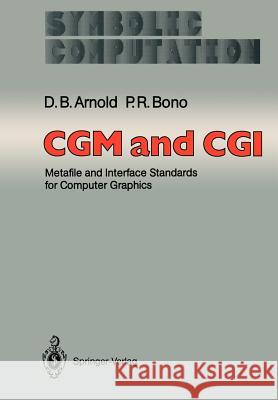
Cgm and CGI: Metafile and Interface Standards for Computer Graphics

ISBN-13: 9783642648175 / Angielski / Miękka / 2011 / 279 str.
David B. Arnold; Peter R. Bono
Cgm and CGI: Metafile and Interface Standards for Computer Graphics Arnold, David B. 9783642648175 Springer - książkaWidoczna okładka, to zdjęcie poglądowe, a rzeczywista szata graficzna może różnić się od prezentowanej.

Cgm and CGI: Metafile and Interface Standards for Computer Graphics

ISBN-13: 9783642648175 / Angielski / Miękka / 2011 / 279 str.

David B. Arnold; Peter R. Bono
cena 402,53
(netto: 383,36 VAT:  5%)

Najniższa cena z 30 dni: 385,52
Termin realizacji zamówienia:
ok. 22 dni roboczych
Bez gwarancji dostawy przed świętami

Darmowa dostawa!

This book describes two ISO standardization projects - the Computer Graphics Interface (CGI) and the Computer Graphics Metafile (CGM). It has been written principally for users and practitioners of computer graphics. In particular, system designers, independent software vendors, graphics system implementors, and application program developers need to understand the basic standards being put into place at the so-called Virtual Device Interface. Technical managers, graduate students in computer science specializing in graphics, and buyers in government and industry will also find this book valuable. The CGI project is standardizing a functional and syntactic specification for the exchange of device-independent data and associated control information between systems with graphical capabilities. The CGI defines idealized abstract classes of graphical devices capable of accepting input and generating, storing and manipulating pictures. The CGM provides a file format suitable for the storage and retrieval of device-independent picture descriptions. Pictures described by a sequence of CGI function invocations can be written to disk and stored compactly as CGMs, and CGMs can be interpreted and displayed efficiently using a CGI implementation. Formal standards documents are difficult to read. They are dry, complex and lack tutorial material. This book is intended to supplement the standards documents themselves. Organized into four parts comprising seventeen chapters, it includes many illustrations and examples not found in the standards. The book also explains the relationship of the CGI and CGM to other standards, both formal and de facto, describes some early commercial implementations of the standards, and gives the reader insight into the future evolution of these standards.


Kategorie:
Informatyka
Kategorie BISAC:
Computers > Software Development & Engineering - Computer Graphics
Computers > Hardware - Personal Computers - General
Computers > Software Development & Engineering - General
Wydawca:
Springer
Seria wydawnicza:
Symbolic Computation / Computer Graphics - Systems and Appli
Język:
Angielski
ISBN-13:
9783642648175
Rok wydania:
2011
Wydanie:
Softcover Repri
Numer serii:
000343638
Ilość stron:
279
Waga:
0.54 kg
Wymiary:
24.4 x 17.0
Oprawa:
Miękka
Wolumenów:
01
Dodatkowe informacje:
Bibliografia
Glosariusz/słownik
Wydanie ilustrowane

I: The Computer Graphics Interface.- 1: Introduction to Computer Graphics Standards.- 1.1 Overview of Various Graphics Standards.- 1.1.1 A Reference Model.- 1.1.2 The Application Programmer Interface.- 1.1.3 The Virtual Device Interface.- 1.1.4 Developments in the Reference Architecture.- 1.2 Organization of the Book.- 2: The Computer Graphics Interface.- 2.1 What is the CGI?.- 2.2 Purpose.- 2.3 Uses and Benefits.- 2.4 Design Requirements.- 2.5 Design Criteria.- 2.6 Relationship with Other Standards.- 2.6.1 CGI Data Encodings Standard.- 2.6.2 CGI Language Binding Standards.- 2.6.3 Relationship of CGI Data Encoding and Language Binding Standards.- 2.6.4 Relationship with GKS.- 2.6.5 Relationship with GKS-3D and PHIGS.- 2.6.6 Relationship with the CGM.- 2.6.7 Relationship with Window Managers.- 2.6.8 Relationship with PostScript.- 2.6.9 Relationship with ISO Register of Graphical Items.- 2.7 Main Concepts.- 2.7.1 The CGI Pipeline.- 2.7.2 The CGI State Model.- 2.7.3 Interrogation and Inquiry.- 2.7.4 CGI Error Philosophy.- 3: Elementary CGI Output and Attribute Functions.- 3.1 Introduction.- 3.2 Line Class Graphic Objects.- 3.2.1 Line Class Primitives.- 3.2.2 Attributes of Line Class Primitives.- 3.3 Polymarker Primitive and Attributes.- 3.4 Text.- 3.4.1 Introduction to Text Primitives and Attributes.- 3.4.2 Font Description Coordinate System.- 3.4.3 Character Expansion Factor and Character Spacing.- 3.4.4 Character Orientation.- 3.4.5 Text Path.- 3.4.6 Text Alignment.- 3.4.7 Text Precision.- 3.5 Filled Area Primitives.- 4: Control and Error Handling.- 4.1 Virtual Device Management.- 4.1.1 Managing a Dialogue Session.- 4.1.2 Managing the Display Surface.- 4.1.3 Controlling Deferral Modes and Regeneration.- 4.1.4 Classes of CGI Devices.- 4.2 Characteristics of Output Devices.- 4.3 Coordinate Space Control.- 4.4 Clipping Control.- 4.5 Error Model.- 4.5.1 Error Classification Scheme.- 4.5.2 Mechanism for Error Reporting.- 4.6 Interrogation and Inquiry.- 4.7 Interrogation and Negotiation.- 4.8 Miscellaneous Control.- 5: The Raster Functions in the CGI.- 5.1 Introduction.- 5.2 Representation and Storage of Bitmaps.- 5.3 Bitmap Data Structure.- 5.4 Control of Bitmap Manipulations.- 5.5 Pixel Array.- 5.6 BITMAP Interior Style.- 5.7 Displayable Bitmaps.- 6: Synchronous Input.- 6.1 Introduction.- 6.2 Logical Input Devices and Their Measures.- 6.3 Coordinate Systems for Stroke and Locator.- 6.4 CGI Input Model.- 6.5 Triggers.- 6.6 Request Input.- 6.7 Echoing, Prompting, and Acknowledgement.- 6.8 Setting Initial Conditions for Devices.- II: Advanced Features of the CGI.- 7: Segmentation in the CGI.- 7.1 Introduction.- 7.2 Segments in the CGI.- 7.3 Creation of Segments.- 7.4 Segment Attributes.- 7.5 Segment Display.- 7.6 Segment Manipulations.- 7.7 Pick Input and Segmentation.- 7.8 Segment Interrogations and Inquiries.- 7.9 Segment Storage Overflow Handling.- 8: Further CGI Output and Attribute Functions.- 8.1 Introduction.- 8.2 Additional Line Class Primitives.- 8.2.1 Disjoint Polyline.- 8.2.2 Circular ARC Centre Backwards.- 8.2.3 Elliptical ARC.- 8.3 Further Text Primitives.- 8.3.1 Append Text.- 8.3.2 The Restricted Text Primitive.- 8.4 Additional Filled Area Primitives.- 8.5 Closed Figures.- 8.6 Controlling Edge Visibility.- 8.7 Cell Array Primitive.- 8.8 Generalized Drawing Primitive.- 8.9 Output and Attribute Control Functions.- 8.9.1 Specification Modes and Colour Definition.- 8.9.2 Transparency.- 8.9.3 Setting Bundle Table Contents.- 8.10 Save and Restore Primitive Attributes Settings.- 8: (Cont).- 8.11 Inquiry and Interrogation.- 8.12 New CGI Pipeline Model.- 8.13 Fonts and Character Sets.- 9: Asynchronous Input.- 9.1 Introduction.- 9.2 Event Input.- 9.3 Event Queue Management.- 9.4 Echo Request Input Mode.- 10: CGI Conformance and Constituency Profiles.- 10.1 Purpose.- 10.2 Conformance and Constituency Profiles.- 11: Implementations of the CGI.- 11.1 Overview.- 11.2 Traditional Output Primitives and Attributes.- 11.3 Raster Graphics Capabilities.- 11.4 Control.- 11.5 Segmentation.- 11.6 Input.- 11.7 Hardware Manifestations of the CGI.- III: The Computer Graphics Metafile.- 12: CGM Concepts and Purposes.- 12.1 Metafiles.- 12.1.1 GKS Metafiles.- 12.1.2 The Computer Graphics Metafile.- 12.2 A Reference Model for Data Interchange.- 12.3 Purposes of Metafiles.- 12.3.1 Picture File Transfer and Storage.- 12.3.2 Product Definition Data Base Transfer and Storage.- 12.3.3 Transaction Recording.- 12.3.4 Symbol Libraries.- 13: CGM Elements.- 13.1 Delimiter Elements.- 13.2 Metafile Descriptor Elements.- 13.3 Picture Descriptor Elements.- 13.4 Control Elements.- 13.5 CGM Tailoring.- 13.6 Graphical Primitive Elements.- 13.7 Attribute Elements.- 13.8 Escape and External Elements.- 13.9 Metafile Defaults.- 14: CGM Encodings.- 14.1 Binary Encoding.- 14.1.1 Overview.- 14.1.2 List of Binary Encoding Metafile Element Codes.- 14.1.3 Binary Encoding Defaults.- 14.2 Clear Text Encoding.- 14.2.1 Overview.- 14.2.2 List of Clear Text Encoding Derived Element Names.- 14.2.3 Clear Text Encoding Defaults.- 14.3 Character Encoding.- 14.3.1 Overview.- 14.3.2 List of Character Encoding Metafile Element Codes.- 14.3.3 Character Encoding Defaults.- 14.4 Private Encodings.- 15: Relationship of the CGM to Other Standards.- 15.1 CGI.- 15.2 GKS.- 15.3 Registration of Graphical Items.- 15.4 Office Document Architecture.- 15.5 Standard Generalized Markup Language.- 16: Implementations of the CGM.- 16.1 CGM Exporters.- 16.1.1 On Mainframes, Minicomputers, and Workstations.- 16.1.2 On Personal Computers and in Hardware.- 16.2 CGM Importers.- 16.2.1 On Mainframes, Minicomputers, and Workstations.- 16.2.2 On Personal Computers and in Hardware.- 16.3 CGM Editors.- 16.4 NCGAGraphNet’88.- 16.5 Practical Considerations.- 16: (Cont).- 16.5.1 Barriers to Interchange.- 16.5.2 Using Outside CGMs.- 16.5.3 Issues for the Application Developer.- 17: Future Extensions to the CGM.- 17.1 The CGM as a GKS Metafile.- 17.2 Global Segments.- 17.3 New Elements from the CGI.- 17.4 3D Elements.- 17.5 Other Requirements.- 17.5.1 Purpose.- 17.5.2 Scope.- 17.5.3 Suggested New Elements.- IV: The Appendices.- Appendix A: Glossary.- Appendix B: Bibliography.- B.1 Standards Documents.- B.2 Books.- B.3 Journal Articles.- Appendix C: The Standards-Making System.- C.1 Standards Bodies.- C.2 The ANSI Process.- C.3 The ISO Process.- C.4 Standards Status.- Appendix D: CGI Description Tables and State Lists.- D.1 Device Description Table.- D.2 Output Description Table.- D.3 Attributes Description Table.- D.4 Raster Description Table.- D.5 Segmentation Description Table.- D.6 Input Description Table.- D.7 Echo Output Description Table.- D.8 Output State List.- Appendix D (Cont).- D.9 Control State List.- D. 10 Raster State List.- D. 11 Segmentation State List.- D. 12 Logical Input Device State List.- D. 13 Event Queue State List.- D. 14 Echo Entity State List.- Appendix E: CGI Functions and Parameterization.- E.1 Introduction and Conventions.- E.2 Part 2 Functions.- E.2.1 Virtual Device Management.- E.2.2 Coordinate Space Control.- E.2.3 Error Handling.- E.2.4 Miscellaneous Control.- E.3 Part 3 Functions.- E.3.1 Graphical Primitives.- E.3.2 Attribute Functions.- E.3.3 Output and Attribute Control Functions.- E.4 Part 4 Functions.- E.4.1 Segment Manipulation.- E.4.2 Segment Attributes.- E.4.3 Segment Interrogations.- E.5 Part 5 Functions.- E.5.1 Logical Input Device Functions.- E.5.2 Echo Output Functions.- E.6 Part 6 Functions.- E.6.1 Output and Attributes.- E.6.2 Raster Control Functions.- E.6.3 Raster Inquiry Functions.- Appendix F: TOP CGM Application Profile.- F.1 What is an Application Profile?.- F.2 The Technical Office Protocols Organization.- F.3 TOP Version 3.0.- F.4 Constraints on the Metafile Contents.- F.5 Constraints on Generators and Interpreters.


Udostępnij

Facebook - konto krainaksiazek.pl


Opinie o Krainaksiazek.pl na Opineo.pl

Partner Mybenefit

Krainaksiazek.pl w programie rzetelna firma Krainaksiaze.pl - płatności przez paypal

Czytaj nas na:

Facebook - krainaksiazek.pl
  • książki na zamówienie
  • granty
  • książka na prezent
  • kontakt
  • pomoc
  • opinie
  • regulamin
  • polityka prywatności

Zobacz:

  • Księgarnia czeska

  • Wydawnictwo Książkowe Klimaty

1997-2025 DolnySlask.com Agencja Internetowa

© 1997-2022 krainaksiazek.pl
     
KONTAKT | REGULAMIN | POLITYKA PRYWATNOŚCI | USTAWIENIA PRYWATNOŚCI
Zobacz: Księgarnia Czeska | Wydawnictwo Książkowe Klimaty | Mapa strony | Lista autorów
KrainaKsiazek.PL - Księgarnia Internetowa

Polityka prywatnosci - link
Krainaksiazek.pl - płatnośc Przelewy24
Przechowalnia Przechowalnia





