Cetacean Paleobiology » książka





Cetacean Paleobiology
ISBN-13: 9781118561539 / Angielski / Miękka / 2016 / 336 str.
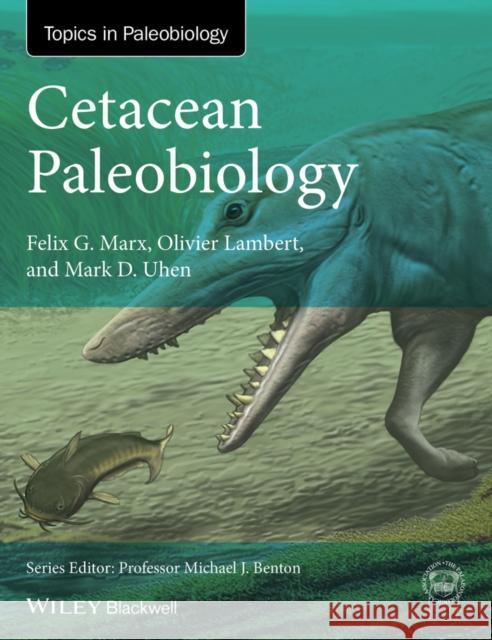
Cetacean Paleobiology
ISBN-13: 9781118561539 / Angielski / Miękka / 2016 / 336 str.
(netto: 233,81 VAT: 5%)
Najniższa cena z 30 dni: 239,10
ok. 30 dni roboczych.
Darmowa dostawa!
Cetaceans (whales, dolphins, and porpoises) have fascinated and bewildered humans throughout history. Their mammalian affinities have been long recognized, but exactly which group of terrestrial mammals they descend from has, until recently, remained in the dark.
Series Editor’s Preface vii
Preface viii
Acknowledgments x
1 Cetaceans, Past and Present 1
1.1 Introduction and scope of the book 1
1.2 What is a whale? 2
1.3 Diversity, distribution, and ecology of modern cetaceans 3
1.4 How to study extinct cetaceans 5
1.4.1 Comparative and functional anatomy 5
1.4.2 Evolutionary relationships 6
1.4.3 Habitat and feeding preferences 9
1.4.4 Macroevolutionary dynamics 11
1.4.5 Other methodologies 13
1.5 Suggested readings 13
References 13
2 Cetacean Fossil Record 19
2.1 A history of exploration 19
2.2 Strengths and weaknesses of the cetacean fossil record 23
2.2.1 Preservation potential 23
2.2.2 Biases affecting fossil recovery 24
2.2.3 Outlook 27
2.3 Major fossil localities 28
2.3.1 Tethys 28
2.3.2 North Atlantic 30
2.3.3 South Atlantic 32
2.3.4 North Pacific 32
2.3.5 South Pacific 33
2.3.6 Dredge sites: South Africa and Iberia 35
2.4 Suggested Readings 35
References 35
3 Morphology 44
3.1 Overview 44
3.2 The skull 46
3.2.1 Rostrum and central facial region 46
3.2.2 Forehead, skull vertex, and posterior cranium 50
3.2.3 Temporal fossa and basicranium 54
3.2.4 Periotic 56
3.2.5 Tympanic bulla 63
3.2.6 Auditory ossicles 64
3.2.7 Dentition 65
3.2.8 Mandible 66
3.2.9 Hyoid apparatus 67
3.3 The postcranial skeleton 68
3.3.1 Vertebral column and rib cage 68
3.3.2 Forelimb 70
3.3.3 Hind limb 73
3.4 Osteological correlates of soft tissue anatomy 74
3.4.1 Musculature 74
3.4.2 Baleen 79
3.4.3 Air sinus system, air sacs and fat pads 79
3.4.4 Brain anatomy and cranial nerves 80
3.4.5 Sensory organs 84
3.4.6 Flukes 86
3.5 Suggested readings 87
References 87
4 Phylogeny and Taxonomy 95
4.1 Cetacean origins 95
4.2 The earliest whales: archaeocetes 97
4.2.1 Pakicetids, ambulocetids, and remingtonocetids 97
4.2.2 Protocetidae and basal Pelagiceti 99
4.3 Filter]feeding whales: Mysticeti 102
4.3.1 Toothed mysticetes 103
4.3.2 Toothless mysticetes 106
4.4 Echolocating whales: Odontoceti 114
4.4.1 Stem odontocetes 115
4.4.2 Potential crown odontocetes 119
4.4.3 Basal crown odontocetes 122
4.4.4 Delphinida 130
4.4.5 Crown Delphinoidea 136
4.5 Consensus, conflicts, and diversification dates 141
4.5.1 High]level conflicts and possible solutions 141
4.5.2 Divergence dates 142
4.6 Suggested readings 145
References 145
5 Major Steps in the Evolution of Cetaceans 157
5.1 From land to sea: the last steps 157
5.1.1 Initial forays into the water 157
5.1.2 Transition to marine environments 162
5.1.3 Divorce from land 169
5.2 Key innovations: baleen and echolocation 171
5.2.1 Baleen 171
5.2.2 Echolocation 174
5.3 Invasion of freshwater habitats 176
5.4 Key fossils 180
5.4.1 Archaeocetes 180
5.4.2 Mysticeti 183
5.4.3 Odontoceti 186
5.5 Suggested readings 189
References 189
6 Fossil Evidence of Cetacean Biology 198
6.1 Feeding strategies 198
6.1.1 Archaeocetes 198
6.1.2 Mysticeti 203
6.1.3 Odontoceti 211
6.2 Cetaceans as a source of food 217
6.2.1 Active predation 217
6.2.2 Whale falls 218
6.3 Reproduction 220
6.4 Migration 222
6.5 Sexual dimorphism 222
6.6 Diving 225
6.7 Ontogenetic age 227
6.8 Suggested readings 228
References 229
7 Macroevolutionary Patterns 239
7.1 Patterns in cetacean diversity: radiations and extinctions 239
7.1.1 Paleogene 240
7.1.2 Neogene 242
7.2 Major turnover events 246
7.2.1 Archaeocetes to neocetes 247
7.2.2 Decline of toothed mysticetes 249
7.2.3 Delphinoids and platanistoids—ships passing in the night? 249
7.2.4 Establishment of the modern fauna 250
7.3 Disparity and evolutionary rates 251
7.4 Body size 251
7.5 Brain size 257
7.5.1 Trends 257
7.5.2 Potential causes 259
7.6 Paleobiogeography 260
7.6.1 Initial dispersal from land 261
7.6.2 Neoceti 261
7.7 Convergent evolution 264
7.8 Suggested readings 268
References 269
8 Paleontological Insights into Evolution and Development 277
8.1 Limb morphology and development 277
8.1.1 Forelimb 277
8.1.2 Hind limb 281
8.2 Regionalization of the vertebral column 284
8.3 The origins of homodonty, polydonty, and monophyodonty 286
8.3.1 Archaeocetes 286
8.3.2 Neoceti 288
8.4 Heterochrony: aged youngsters, juvenile adults 291
8.5 Suggested readings 296
References 296
9 Living Cetaceans in an Evolutionary Context 302
9.1 A modern view of cetacean evolution 302
9.2 Cetacea—quo vadis? 304
References 304
Index 307
Felix G. Marx is a postdoctoral research fellow at the Institut royal des Sciences naturelles de Belgique (Brussels), currently on secondment to Monash University and Museum Victoria in Melbourne, Australia. After obtaining his PhD in New Zealand, he spent two years as a postdoctoral fellow at the National Museum of Nature and Science of Japan, where he wrote most of his contributions to this book. His research focuses primarily on the origins, phylogeny, feeding ecology and macroevolution of living and extinct baleen whales, based on specimens from around the globe.
Dr Olivier Lambert is a vertebrate palaeontologist at the Institut royal des Sciences naturelles de Belgique, Brussels. Interested in the secondary adaptations of mammals to the marine environment, Dr Lambert studies fossil cetaceans from many geological ages and localities in the world. Most of his publications focus on extinct echolocating toothed whales, especially from the North Atlantic and South–East Pacific realms.
Dr Mark D. Uhen is an Assistant Professor of Geology at George Mason University. Dr Uhen’s research focuses on the origin and evolution of cetaceans (whales and dolphins), and other marine mammals. He has conducted field work around the world, developed exhibits and lessons on cetacean evolution for museums, and published on his work in journals, and books. Dr Uhen is also a leader of the Paleobiology Database, an on–line open resource that documents every fossil occurrence on the planet.
Cetaceans (whales, dolphins, and porpoises) have fascinated and bewildered humans throughout history. Their mammalian affinities have been long recognized, but exactly which group of terrestrial mammals they descend from has, until recently, remained in the dark. Recent decades have produced a flurry of new fossil cetaceans, extending their fossil history to over 50 million years ago. Along with new insights from genetics and developmental studies, these discoveries have helped to clarify the place of cetaceans among mammals, and enriched our understanding of their unique adaptations for feeding, locomotion and sensory systems. Their continuously improving fossil record and successive transformation into highly specialized marine mammals have made cetaceans a textbook case of evolution – as iconic in its own way as the origin of birds from dinosaurs. This book aims to summarize our current understanding of cetacean evolution for the serious student and interested amateur using photographs, drawings, charts and illustrations.




Czytaj nas na:
1997-2026 DolnySlask.com Agencja Internetowa
KrainaKsiazek.PL - Księgarnia Internetowa


