• Wyszukiwanie zaawansowane
  • Kategorie
  • Kategorie BISAC
  • Książki na zamówienie
  • Promocje
  • Granty
  • Książka na prezent
  • Opinie
  • Pomoc
  • Załóż konto
  • Zaloguj się

CMOS Capacitive Sensors for Lab-On-Chip Applications: A Multidisciplinary Approach » książka


zaloguj się | załóż konto
Logo Krainaksiazek.pl

koszyk

konto

szukaj
topmenu
Księgarnia internetowa
Szukaj
Książki na zamówienie
Promocje
Granty
Książka na prezent
Moje konto
Pomoc
 
 
Wyszukiwanie zaawansowane
Pusty koszyk
Bezpłatna dostawa dla zamówień powyżej 20 złBezpłatna dostawa dla zamówień powyżej 20 zł

Kategorie główne

• Nauka
 [2946600]
• Literatura piękna
 [1856966]

  więcej...
• Turystyka
 [72221]
• Informatyka
 [151456]
• Komiksy
 [35826]
• Encyklopedie
 [23190]
• Dziecięca
 [619653]
• Hobby
 [140543]
• AudioBooki
 [1577]
• Literatura faktu
 [228355]
• Muzyka CD
 [410]
• Słowniki
 [2874]
• Inne
 [445822]
• Kalendarze
 [1744]
• Podręczniki
 [167141]
• Poradniki
 [482898]
• Religia
 [510455]
• Czasopisma
 [526]
• Sport
 [61590]
• Sztuka
 [243598]
• CD, DVD, Video
 [3423]
• Technologie
 [219201]
• Zdrowie
 [101638]
• Książkowe Klimaty
 [124]
• Zabawki
 [2473]
• Puzzle, gry
 [3898]
• Literatura w języku ukraińskim
 [254]
• Art. papiernicze i szkolne
 [8170]
Kategorie szczegółowe BISAC

CMOS Capacitive Sensors for Lab-On-Chip Applications: A Multidisciplinary Approach

ISBN-13: 9789048137268 / Angielski / Twarda / 2010 / 146 str.
Ghafar-Zadeh
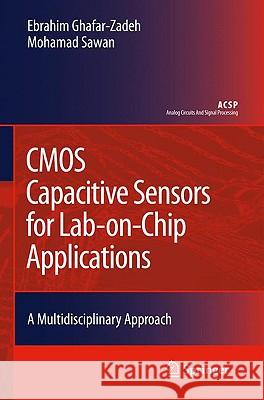
CMOS Capacitive Sensors for Lab-On-Chip Applications: A Multidisciplinary Approach Ghafar-Zadeh, Ebrahim 9789048137268 SPRINGER - książkaWidoczna okładka, to zdjęcie poglądowe, a rzeczywista szata graficzna może różnić się od prezentowanej.

CMOS Capacitive Sensors for Lab-On-Chip Applications: A Multidisciplinary Approach

ISBN-13: 9789048137268 / Angielski / Twarda / 2010 / 146 str.

Ghafar-Zadeh
cena 403,47 zł
(netto: 384,26 VAT:  5%)

Najniższa cena z 30 dni: 385,52 zł
Termin realizacji zamówienia:
ok. 22 dni roboczych
Bez gwarancji dostawy przed świętami

Darmowa dostawa!
inne wydania

1.1 Overview of Lab-on-Chip Laboratory-on-Chip (LoC) is a multidisciplinary approach used for the miniaturization, integration and automation of biological assays or procedures in analytical chemistry 1 3]. Biology and chemistry are experimental sciences that are continuing to evolve and develop new protocols. Each protocol offers step-by-step laboratory instructions, lists of the necessary equipments and required biological and/or chemical substances 4 7]. A biological or chemical laboratory contains various pieces of equipment used for performing such protocols and, as shown in Fig. 1.1, the engineering aspect of LoC design is aiming to embed all these components in a single chip for single-purpose applications. 1.1.1 Main Objectives of LoC Systems Several clear advantages of this technology over conventional approaches, including portability, full automation, ease of operation, low sample consumption and fast assays time, make LoC suitable for many applications including. 1.1.1.1 Highly Throughput Screening To conduct an experiment, a researcher fills a well with the required biological or chemical analytes and keeps the sample in an incubator for some time to allowing the sample to react properly. Afterwards, any changes can be observed using a microscope. In order to quickly conduct millions of biochemical or pharmacolo- cal tests, the researchers will require an automated highly throughput screening (HTS) 8], comprised of a large array of wells, liquid handling devices (e.g., mic- channel, micropump and microvalves 9 11]), a fully controllable incubator and an integrated sensor array, along with the appropriate readout system."


Kategorie:
Technologie
Kategorie BISAC:
Technology & Engineering > Electronics - Circuits - General
Technology & Engineering > Biomedical
Science > Biotechnology
Wydawca:
SPRINGER
Seria wydawnicza:
Analog Circuits And Signal Pro
Język:
Angielski
ISBN-13:
9789048137268
Rok wydania:
2010
Wydanie:
2010
Numer serii:
000108233
Ilość stron:
146
Waga:
0.40 kg
Wymiary:
23.39 x 15.6 x 1.12
Oprawa:
Twarda
Wolumenów:
01
Dodatkowe informacje:
Wydanie ilustrowane

Chapter 1: Introduction

1.1 Overview of Lab-on-Chip (LoC)

1.2 From Macro to Micro Bioassays

1.3 CMOS-Based Lab-on-Chips

1.4 Objectives and Organization of book

Chapter 2: CMOS sensing electrodes

2.1 On-chip microelectrode configurations

2.2 Micromachining gold electrode on CMOS chip

2.3 Electrical model of capacitive sensing electrodes

2.4 Summary

Chapter 3: Capacitive Biochemical Interfaces

3.1 Biochemical capacitive sensing methods

3.2 Design of recognition element: An example for CGM

3.3 Summary

Chapter 4: Capacitive Interface circuits

4.1 LBCS vs. MBCS

4.2 LBCS methods

4.3 Core-CBCM interface circuit

4.4 Core-CBCM sigma-delta capacitive sensor

4.5 Core-CBCM capacitive sensing system

4.6 Summary

Chapter 5: Microfluidic Packaging Techniques

5.1 Microfluidic packaging methods

5.2 Direct-write microfabrication process

5.3 Direct-write microfluidic packaging procedure

5.4 Emerging applications of DWFP

5.5 Summary

Chapter 6: Present and Future Technology of Capacitive Biosensors

6.1 Conventional impedometric and capacitive measurement systems

6.2 Handheld impedance measurement systems

6.3 Towards fully integrated capacitive sensing LoC

6.4 Summary

Ebrahim Ghafar-Zadeh received the BSc and MSc degrees in Electrical Engineering from KNT and Tehran Universities, Tehran, Iran, in 1992 and 1994, respectively. In 1994 he joints the electrical engineering department at SCU University, Ahvaz, Iran as faculty memeber. During 2004-2008, he pursued a PhD degree in electrical engineering at Ecole Polytechnique de Montreal, Canada. In January 2008 and September 2008, he received two fellowship award from NSERC Canada and ReSMiQ Quebec, Canada which allowed him to continue his research for fully integrated bacteria detection. The research interests of Dr. Ghafar-zadeh include the circuit and system design, implementation and packaging technologies for lab-on-chip applications.

Mohamad Sawan received his BSc in Electrical Engineering from Université Laval (1984), and MSc (1986) and PhD (1990) both in Electrical Engineering from Université de Sherbrooke. He then completed post-doctoral training at Montréal's McGill University in 1991, and in that same year, joined École Polytechnique de Montréal, where he is currently a Professor of Microelectronics. Dr. Sawan's scientific interests focus on the design and testing of mixed-signal (analog, digital and RF) circuits and systems; digital and analog signal processing; and the modelling, design, integration, assembly and validation of advanced wirelessly powered and controlled monitoring and measurement techniques. These topics are oriented toward biomedical implantable devices and telecommunications applications. Dr. Sawan is holder of the Canada Research Chair in Smart Medical Devices. He heads the Microsystems Strategic Alliance of Québec – ReSMiQ and is founder of the Eastern Canada Chapter of the IEEE-Solid State Circuits Society. He also founded the International IEEE-NEWCAS conference, co-founded the International Functional Electrical Stimulation Society, and founded the Polystim Neurotechnologies Laboratory at Ecole Polytechnique. He is the editor of Springer mixed-signal letters, Chair of the IEEE Biomedical CAS (BioCAS) Technical Committee, and member of the Biotechnology Council representing the IEEE-CAS Society. He has been awarded seven patents. He received the Barbara Turnbull Award for spinal cord research, the Medal of Merit from the Lebanese President (2005), and the J.-A. Bombardier Award from the Association Francophone pour le savoir (ACFAS). Dr. Sawan is a Fellow of both the Canadian Academy of Engineering and the IEEE.

Laboratory-on-Chip (LoC) is a multidisciplinary approach toward the miniaturization, integration and automation of biological assays. A biological laboratory contains various pieces of equipment used for performing a variety of biological protocols. The engineering aspect of LoC design is aiming to embed all these components in a single chip for single-purpose applications. LoC is a young discipline which is expected to subsequently expand over the next few years, stimulated by considerable development of applications in the mechanical, biochemical and electrical engineering domains. Among various microelectronic devices employed for LoC applications, CMOS capacitive sensors have received a significant interest for several applications including DNA detection, antibody-antigen recognition and bacteria growth monitoring. The main components of CMOS capacitive biosensors including sensing electrodes, bio-functionalized sensing layer, interface circuitries and microfluidic packaging are verbosely explained in chapters 2-6 after a brief introduction on CMOS based LoCs in Chapter 1. CMOS Capacitive Sensors for Lab-on-Chip Applications is written in a simple pedagogical way. It emphasises practical aspects of fully integrated CMOS biosensors rather than mathematical calculations and theoretical details. By using CMOS Capacitive Sensors for Lab-on-Chip Applications, the reader will have circuit design methodologies, main important biological capacitive interfaces and the required microfluidic fabrication procedures to create capacitive biosensor through standard CMOS process.


Udostępnij

Facebook - konto krainaksiazek.pl


Opinie o Krainaksiazek.pl na Opineo.pl

Partner Mybenefit

Krainaksiazek.pl w programie rzetelna firma Krainaksiaze.pl - płatności przez paypal

Czytaj nas na:

Facebook - krainaksiazek.pl
  • książki na zamówienie
  • granty
  • książka na prezent
  • kontakt
  • pomoc
  • opinie
  • regulamin
  • polityka prywatności

Zobacz:

  • Księgarnia czeska

  • Wydawnictwo Książkowe Klimaty

1997-2025 DolnySlask.com Agencja Internetowa

© 1997-2022 krainaksiazek.pl
     
KONTAKT | REGULAMIN | POLITYKA PRYWATNOŚCI | USTAWIENIA PRYWATNOŚCI
Zobacz: Księgarnia Czeska | Wydawnictwo Książkowe Klimaty | Mapa strony | Lista autorów
KrainaKsiazek.PL - Księgarnia Internetowa

Polityka prywatnosci - link
Krainaksiazek.pl - płatnośc Przelewy24
Przechowalnia Przechowalnia





