• Wyszukiwanie zaawansowane
  • Kategorie
  • Kategorie BISAC
  • Książki na zamówienie
  • Promocje
  • Granty
  • Książka na prezent
  • Opinie
  • Pomoc
  • Załóż konto
  • Zaloguj się

Business Practice in Socialist Hungary, Volume 2: From Chaos to Contradiction, 1957-1972 » książka


zaloguj się | załóż konto
Logo Krainaksiazek.pl

koszyk

konto

szukaj
topmenu
Księgarnia internetowa
Szukaj
Książki na zamówienie
Promocje
Granty
Książka na prezent
Moje konto
Pomoc
 
 
Wyszukiwanie zaawansowane
Pusty koszyk
Bezpłatna dostawa dla zamówień powyżej 20 złBezpłatna dostawa dla zamówień powyżej 20 zł

Kategorie główne

• Nauka
 [2949965]
• Literatura piękna
 [1857847]

  więcej...
• Turystyka
 [70818]
• Informatyka
 [151303]
• Komiksy
 [35733]
• Encyklopedie
 [23180]
• Dziecięca
 [617748]
• Hobby
 [139972]
• AudioBooki
 [1650]
• Literatura faktu
 [228361]
• Muzyka CD
 [398]
• Słowniki
 [2862]
• Inne
 [444732]
• Kalendarze
 [1620]
• Podręczniki
 [167233]
• Poradniki
 [482388]
• Religia
 [509867]
• Czasopisma
 [533]
• Sport
 [61361]
• Sztuka
 [243125]
• CD, DVD, Video
 [3451]
• Technologie
 [219309]
• Zdrowie
 [101347]
• Książkowe Klimaty
 [123]
• Zabawki
 [2362]
• Puzzle, gry
 [3791]
• Literatura w języku ukraińskim
 [253]
• Art. papiernicze i szkolne
 [7933]
Kategorie szczegółowe BISAC

Business Practice in Socialist Hungary, Volume 2: From Chaos to Contradiction, 1957-1972

ISBN-13: 9783031239311 / Angielski / Twarda / 2023
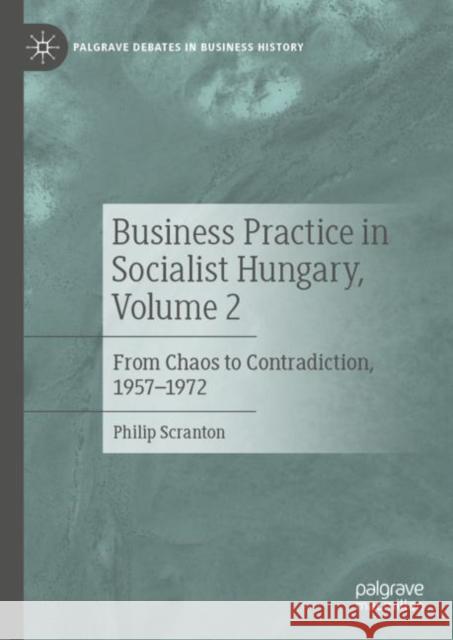
Philip Scranton
Business Practice in Socialist Hungary, Volume 2: From Chaos to Contradiction, 1957-1972 Philip Scranton 9783031239311 Palgrave MacMillan - książkaWidoczna okładka, to zdjęcie poglądowe, a rzeczywista szata graficzna może różnić się od prezentowanej.

Business Practice in Socialist Hungary, Volume 2: From Chaos to Contradiction, 1957-1972

ISBN-13: 9783031239311 / Angielski / Twarda / 2023

Philip Scranton
cena 645,58
(netto: 614,84 VAT:  5%)

Najniższa cena z 30 dni: 578,30
Termin realizacji zamówienia:
ok. 22 dni roboczych
Bez gwarancji dostawy przed świętami

Darmowa dostawa!
inne wydania

This book aims to reconstruct the activities of enterprises and individuals over two decades in one developing country (Hungary), within and across four politico-economic domains (agriculture, infrastructure/construction, commerce, and manufacturing), from the initial Stalinist obsession with heavy industry through later reforms paying greater attention to profitable farming and the provision of abundant consumer goods.  It provides hundreds of grounded, granular stories for reflection, as reported by actors and direct observers, ranging from innovation and improvisation to obstruction, failure, and fraud. Further, it offers an otherwise-unobtainable close encounter with another world, familiar in some respects while amazingly peculiar in others.The social history of enterprise and work in postwar Central European nations “building socialism” has long been underdeveloped. Through extensive macro-level research on planning and policy in Hungary, Poland, Czechoslovakia, and other Bloc countries, a grand narrative has been framed:  reconstruction and breakneck industrialization under Soviet tutelage; then eventual mismanagement, stagnation and crisis, leading to collapse. This book seeks to explore what socialism actually looked like to those sustaining (or enduring} it as they faced forward into an unknowable future, to assess how and where it did (or didn’t) work, and to recount how ordinary people responded to its opportunities and constraints.This study will appeal to readers interested in a understanding how businesses worked day-to-day in a planned economy, how enterprise practices and technological strategies shifted during the first postwar generation, how novice managers and technicians emerged during rapid industrialization, how peasants learned to farm cooperatively, how organizations improvised and adapted, how political purity and practical expertise contended for control, and how the controversies and convulsions of the postwar decades shaped a deeply flawed project to “build socialism.”


This book aims to reconstruct the activities of enterprises and individuals over two decades in one developing country (Hungary), within and across four politico-economic domains (agriculture, infrastructure/construction, commerce, and manufacturing), from the initial Stalinist obsession with heavy industry through later reforms paying greater attention to profitable farming and the provision of abundant consumer goods.  It provides hundreds of grounded, granular stories for reflection, as reported by actors and direct observers, ranging from innovation and improvisation to obstruction, failure, and fraud. Further, it offers an otherwise-unobtainable close encounter with another world, familiar in some respects while amazingly peculiar in others.The social history of enterprise and work in postwar Central European nations “building socialism” has long been underdeveloped. Through extensive macro-level research on planning and policy in Hungary, Poland, Czechoslovakia, and other Bloc countries, a grand narrative has been framed:  reconstruction and breakneck industrialization under Soviet tutelage; then eventual mismanagement, stagnation and crisis, leading to collapse. This book seeks to explore what socialism actually looked like to those sustaining (or enduring} it as they faced forward into an unknowable future, to assess how and where it did (or didn’t) work, and to recount how ordinary people responded to its opportunities and constraints.This study will appeal to readers interested in a understanding how businesses worked day-to-day in a planned economy, how enterprise practices and technological strategies shifted during the first postwar generation, how novice managers and technicians emerged during rapid industrialization, how peasants learned to farm cooperatively, how organizations improvised and adapted, how political purity and practical expertise contended for control, and how the controversies and convulsions of the postwar decades shaped a deeply flawed project to “build socialism.”

Kategorie:
Nauka, Ekonomia i biznes
Kategorie BISAC:
Business & Economics > Zarządzenie i techniki zarządzania
Business & Economics > Management Science
Business & Economics > Historia ekonomii
Wydawca:
Palgrave MacMillan
Seria wydawnicza:
Palgrave Debates in Business History
Język:
Angielski
ISBN-13:
9783031239311
Rok wydania:
2023
Dostępne języki:
Numer serii:
001236117
Oprawa:
Twarda
Dodatkowe informacje:
Wydanie ilustrowane

Preface: The Terrible Twelve: Core Tasks for Socialist and Capitalist Enterprises.-Introduction:  Hungary as Site and Process: Geography, History, and Society to 1945.- Chapter 1: Postwar Reconstruction and Forced Industrialization, 1946-56.- Chapter 2: Socializing Agriculture, 1957-66.- Chapter 3: Construction: The Infrastructure Dilemma, 1957-1966.- Chapter 4: Commerce: Transactions Without and With Markets, 1957-1966.- Chapter 5: Manufacturing: Concretizing A Great Illusion, 1957-1966.- Chapter 6: The New Economic Mechanism and Bureaucratic Resistance: 1966-1972.- Conclusion: Never Quite Socialist?.- A Note on Sources.

Philip Scranton is University Board of Governors Professor Emeritus, History of Industry and Technology, at Rutgers University, USA. He also directed the Hagley Museum & Library's research arm, the Center for the History of Business, Technology and Society, 1992-2012, with responsibility for a seminar series, twice-yearly conferences, grants-in-aid and annual fellowships in support of dissertation research and writing. His publications include fourteen books and seventy scholarly articles, multiple contributions to exhibit catalogs, and numerous reviews of books and conferences.


This book aims to reconstruct the activities of enterprises and individuals in one developing country (Hungary), within and across four politico-economic domains (agriculture, construction, commerce, and manufacturing), from the aftermath of the 1956 revolt through extensive reforms emphasizing profits more than ideology so as to provide abundant consumer goods.  It provides hundreds of grounded, granular stories for reflection, as reported by actors and direct observers, ranging from innovation and improvisation to obstruction, failure, and fraud. Further, it offers an otherwise-unobtainable close encounter with another world, familiar in some respects while amazingly peculiar in others. The social history of enterprise and work in postwar Central European nations “building socialism” has long been underdeveloped. Through extensive macro-level research on planning and policy in Hungary, Poland, Czechoslovakia, and other Bloc countries, a grand narrative has been framed:  reconstruction and breakneck industrialization under Soviet tutelage; then eventual mismanagement, stagnation and crisis, leading to collapse. This successor volume to an earlier study of the 1945–57 period seeks to explore what socialism actually looked like to those sustaining (or enduring} it as they faced forward into an unknowable future, to assess how and where it did (or didn’t) work, and to recount how ordinary people responded to its opportunities and constraints. 

This study will appeal to readers interested in a understanding how businesses worked day-to-day in a planned economy, how enterprise practices and technological strategies shifted during the first postwar generation, how  managers and technicians learned by doing, how peasants  began to farm cooperatively, how organizations improvised and adapted, how political purity and practical expertise contended for control, and how controversies and contradiction shaped a deeply flawed project to “build socialism.”

Philip Scranton is University Board of Governors Professor Emeritus, History of Industry and Technology, at Rutgers University, USA.. His publications include nineteen books and 80+ scholarly articles, multiple contributions to exhibition catalogs, and numerous reviews of books and conferences.


Udostępnij

Facebook - konto krainaksiazek.pl


Opinie o Krainaksiazek.pl na Opineo.pl

Partner Mybenefit

Krainaksiazek.pl w programie rzetelna firma Krainaksiaze.pl - płatności przez paypal

Czytaj nas na:

Facebook - krainaksiazek.pl
  • książki na zamówienie
  • granty
  • książka na prezent
  • kontakt
  • pomoc
  • opinie
  • regulamin
  • polityka prywatności

Zobacz:

  • Księgarnia czeska

  • Wydawnictwo Książkowe Klimaty

1997-2025 DolnySlask.com Agencja Internetowa

© 1997-2022 krainaksiazek.pl
     
KONTAKT | REGULAMIN | POLITYKA PRYWATNOŚCI | USTAWIENIA PRYWATNOŚCI
Zobacz: Księgarnia Czeska | Wydawnictwo Książkowe Klimaty | Mapa strony | Lista autorów
KrainaKsiazek.PL - Księgarnia Internetowa

Polityka prywatnosci - link
Krainaksiazek.pl - płatnośc Przelewy24
Przechowalnia Przechowalnia




