• Wyszukiwanie zaawansowane
  • Kategorie
  • Kategorie BISAC
  • Książki na zamówienie
  • Promocje
  • Granty
  • Książka na prezent
  • Opinie
  • Pomoc
  • Załóż konto
  • Zaloguj się

Building a Software Company: How to Drive Business Value Through Software » książka


zaloguj się | załóż konto
Logo Krainaksiazek.pl

koszyk

konto

szukaj
topmenu
Księgarnia internetowa
Szukaj
Książki na zamówienie
Promocje
Granty
Książka na prezent
Moje konto
Pomoc
 
 
Wyszukiwanie zaawansowane
Pusty koszyk
Bezpłatna dostawa dla zamówień powyżej 20 złBezpłatna dostawa dla zamówień powyżej 20 zł

Kategorie główne

• Nauka
 [2946600]
• Literatura piękna
 [1856966]

  więcej...
• Turystyka
 [72221]
• Informatyka
 [151456]
• Komiksy
 [35826]
• Encyklopedie
 [23190]
• Dziecięca
 [619653]
• Hobby
 [140543]
• AudioBooki
 [1577]
• Literatura faktu
 [228355]
• Muzyka CD
 [410]
• Słowniki
 [2874]
• Inne
 [445822]
• Kalendarze
 [1744]
• Podręczniki
 [167141]
• Poradniki
 [482898]
• Religia
 [510455]
• Czasopisma
 [526]
• Sport
 [61590]
• Sztuka
 [243598]
• CD, DVD, Video
 [3423]
• Technologie
 [219201]
• Zdrowie
 [101638]
• Książkowe Klimaty
 [124]
• Zabawki
 [2473]
• Puzzle, gry
 [3898]
• Literatura w języku ukraińskim
 [254]
• Art. papiernicze i szkolne
 [8170]
Kategorie szczegółowe BISAC

Building a Software Company: How to Drive Business Value Through Software

ISBN-13: 9781484291689 / Angielski / Miękka / 2023 / 100 str.
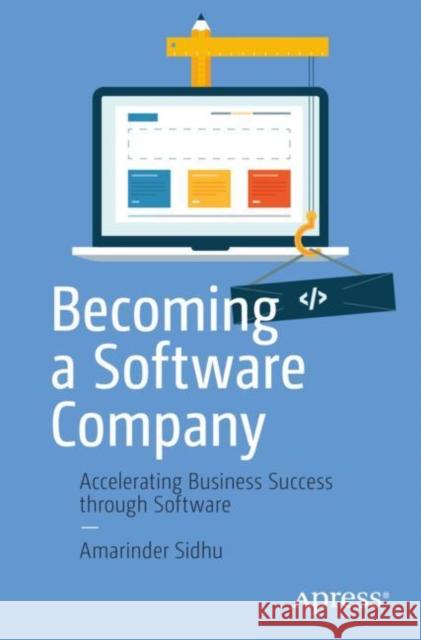
Amarinder Sidhu
Building a Software Company: How to Drive Business Value Through Software Amarinder Sidhu 9781484291689 APress - książkaWidoczna okładka, to zdjęcie poglądowe, a rzeczywista szata graficzna może różnić się od prezentowanej.

Building a Software Company: How to Drive Business Value Through Software

ISBN-13: 9781484291689 / Angielski / Miękka / 2023 / 100 str.

Amarinder Sidhu
cena 153,30 zł
(netto: 146,00 VAT:  5%)

Najniższa cena z 30 dni: 134,90 zł
Termin realizacji zamówienia:
ok. 22 dni roboczych
Bez gwarancji dostawy przed świętami

Darmowa dostawa!

There is a call to action reverberating in company boardrooms, earnings calls, technology conferences, and IT departments: every company should be a software company. The call makes intuitive sense. Software, when done right, creates infinite business leverage. It is not a coincidence that 7 out of 10 largest companies in the world are software companies. But how does a company become a software company? This book will​ help enterprises transform into a software company.The software-driven future that Marc Andreessen predicted in his now-famous 2011 essay is here but unevenly distributed. While enterprises, and teams within, grasp the software technologies, they lack the context to leverage them — much less understand the fundamental principles that drive the business value from software: What is the real essence of the software-based transformation? If every enterprise is implementing the same technologies, what is the source of differentiation? How do you manage the inherent complexity of software such that it doesn't destroy software's value? How do you build and nurture talent so that it is empowered to create the best solutions for your customers' problems? This book will answer all of that and more.The boundary between enterprise and consumer software is rapidly blurring. IEEE reports that 40% of the cost of a new car comes from software . Elsewhere, software is becoming synonymous with medical devices and therapeutics . FinTech and EdTech trends are primarily about personalization through software at an internet-scale. The struggling enterprises are up against it. They have no choice but to figure out how to ship consumer-grade software. It is an existential problem for them.This book compiles the timeless principles of building good software, yet often disregarded while building and deploying software products for enterprises.What You'll LearnLeverage people to build creative software solutionsManage development complexity so that we keep software focused on user problemsUnderstand software technology as a means of producing valueWho This Book Is ForEnterprise Executive Management, Enterprise IT Management Professionals, Software Practitioners within Enterprise

There is a call to action reverberating in company boardrooms, earnings calls, technology conferences, and IT departments: every company should be a software company. The call makes intuitive sense. Software, when done right, creates infinite business leverage. It is not a coincidence that 7 out of 10 largest companies in the world are software companies. But how does a company become a software company? This book will​ help enterprises transform into a software company.


The software-driven future that Marc Andreessen predicted in his now-famous 2011 essay is here but unevenly distributed. While enterprises, and teams within, grasp the software technologies, they lack the context to leverage them — much less understand the fundamental principles that drive the business value from software: What is the real essence of the software-based transformation? If every enterprise is implementing the same technologies, what is the source of differentiation? How do you manage the inherent complexity of software such that it doesn't destroy software's value? How do you build and nurture talent so that it is empowered to create the best solutions for your customers' problems? This book will answer all of that and more.

The boundary between enterprise and consumer software is rapidly blurring. IEEE reports that 40% of the cost of a new car comes from software . Elsewhere, software is becoming synonymous with medical devices and therapeutics . FinTech and EdTech trends are primarily about personalization through software at an internet-scale. The struggling enterprises are up against it. They have no choice but to figure out how to ship consumer-grade software. It is an existential problem for them.

This book compiles the timeless principles of building good software, yet often disregarded while building and deploying software products for enterprises.

What You'll Learn
  • Leverage people to build creative software solutions
  • Manage development complexity so that we keep software focused on user problems
  • Understand software technology as a means of producing value
Who This Book Is For
Enterprise Executive Management, Enterprise IT Management Professionals, Software Practitioners within Enterprise

Kategorie:
Nauka, Ekonomia i biznes
Kategorie BISAC:
Computers > Business & Productivity Software - Business Intelligence
Business & Economics > Information Management
Computers > Software Development & Engineering - Project Management
Wydawca:
APress
Język:
Angielski
ISBN-13:
9781484291689
Rok wydania:
2023
Dostępne języki:
Ilość stron:
100
Oprawa:
Miękka
Dodatkowe informacje:
Wydanie ilustrowane

Introduction 


The book is a series of essays exploring 1 or 2 fundamental principles of good software. The first set of essays will cover understanding software technology as a means of producing value. The second set of essays will describe the state-of-the-art process of building software. The third and final set of essays will focus on how people are critical to building great software. 

Part I: Means 

Software is a soft technology with leverage similar to money and written language . But enterprises are still figuring out how to harness the potential of this new soft technology. Understanding and mastering software as a means of production is critical to succeeding in the age of software. 

Chapter 1: Transformation 
Digital Transformation doesn't come from large and expensive programs to implement newer and better technologies. Instead, the transformation comes from continuously improving at the art of envisioning, building, and shipping software. 

Chapter 2: Essence 
The prevailing hypothesis is that enterprises' inability to build good software is due to a lack of capital. It couldn't be further from the truth. The reason enterprises struggle is because they mismanage the complexity of the software development process. 

Chapter 3: Value 
"Meeting Stakeholder Requirements", a typical approach for enterprise software programs, is a value-destroying mistake. Good software evolves from adaptive designs which resolve ever-changing user problems. Because users don't want more features, users want their "jobs to be done" . 

Part II: Process 

Enterprise software industry is obsessed with implementing best practice processes to build good software. But these processes become an end unto themselves. Understanding the core principles behind these processes can help enterprises to right-size these processes to what they need. 

Chapter 4: Iteration 
The currency for creating new value is "working software". But it is easier said than done in an enterprise environment. Building and delivering on progressively shorter planning horizons can get them on a path of iterative learning with “working software”. 

Chapter 5: Flow 
A lot of effort in enterprise software goes into managing plans - in estimating effort and deadlines and keeping projects on track. But when value comes from differentiation, the teams must focus on managing the demonstrable flow of value to the users. 

Chapter 6: Supply Chain 
Enterprise processes to procure software are extremely slow. By the time the process completes and technology sees action, it is already obsolete. Instead of one-off procurements, a different approach is a consistent supply chain to rent, buy or reuse undifferentiated software components. 

Chapter 7: Agility 
Enterprises misunderstand Agility. It isn't about building software fast. Instead, it is about leveraging software's fundamental agility and building solutions that can help an enterprise respond to the accelerating pace of change. Part III: People Following best practices on technologies and processes can result in good software. But the transition from good to great happens when teams are assigned problems and are empowered to create the best solutions within an organizational culture that rewards creativity. 

Chapter 8: Team 
Teams build good software, not a collection of resources. Teams develop through long-term shared motivation; from experiencing failures and successes together. When raw material is ideas, like with software, the quality of the team determines the quality of the output. 

Chapter 9: Culture 
Culture eats strategy. Therefore, teams need a medium of good culture to thrive. Because innovation always happens within a creative culture, never within a compliance culture. Rigid processes create compliance but dampen creativity. 

Chapter 10: Management 
Creative culture requires Creative management. You have to equip and empower teams to solve user and customer problems. And an enterprise must model every important solution attribute within the organization structure first. 

Epilogue

Amarinder Sidhu is a Managing Director at ConvergeHEALTH by Deloitte. He creates health and medical software products, and manages a portfolio of software products that enable patient engagement for health enterprise companies. He loves understanding and applying technology to solve real business problems, from ideation to deployment. He has learned all aspects of enterprise software through hands-on work in product management, software development, and business strategy and is passionate about building great product and software engineering teams because great teams build great software. He had presented at conferences like Salesforce’s Dreamforce and AWS’s Re:Invent.

There is a call to action reverberating in company boardrooms, earnings calls, technology conferences, and IT departments: every company should be a software company. The call makes intuitive sense. Software, when done right, creates infinite business leverage. It is not a coincidence that 7 out of 10 largest companies in the world are software companies. But how does a company become a software company? This book will​ help enterprises transform into a software company.


The software-driven future that Marc Andreessen predicted in his now-famous 2011 essay is here but unevenly distributed. While enterprises, and teams within, grasp the software technologies, they lack the context to leverage them — much less understand the fundamental principles that drive the business value from software: What is the real essence of the software-based transformation? If every enterprise is implementing the same technologies, what is the source of differentiation? How do you manage the inherent complexity of software such that it doesn't destroy software's value? How do you build and nurture talent so that it is empowered to create the best solutions for your customers' problems? This book will answer all of that and more.

The boundary between enterprise and consumer software is rapidly blurring. IEEE reports that 40% of the cost of a new car comes from software . Elsewhere, software is becoming synonymous with medical devices and therapeutics . FinTech and EdTech trends are primarily about personalization through software at an internet-scale. The struggling enterprises are up against it. They have no choice but to figure out how to ship consumer-grade software. It is an existential problem for them.

This book compiles the timeless principles of building good software, yet often disregarded while building and deploying software products for enterprises.


Udostępnij

Facebook - konto krainaksiazek.pl


Opinie o Krainaksiazek.pl na Opineo.pl

Partner Mybenefit

Krainaksiazek.pl w programie rzetelna firma Krainaksiaze.pl - płatności przez paypal

Czytaj nas na:

Facebook - krainaksiazek.pl
  • książki na zamówienie
  • granty
  • książka na prezent
  • kontakt
  • pomoc
  • opinie
  • regulamin
  • polityka prywatności

Zobacz:

  • Księgarnia czeska

  • Wydawnictwo Książkowe Klimaty

1997-2025 DolnySlask.com Agencja Internetowa

© 1997-2022 krainaksiazek.pl
     
KONTAKT | REGULAMIN | POLITYKA PRYWATNOŚCI | USTAWIENIA PRYWATNOŚCI
Zobacz: Księgarnia Czeska | Wydawnictwo Książkowe Klimaty | Mapa strony | Lista autorów
KrainaKsiazek.PL - Księgarnia Internetowa

Polityka prywatnosci - link
Krainaksiazek.pl - płatnośc Przelewy24
Przechowalnia Przechowalnia







