Building Microservices Applications on Microsoft Azure: Designing, Developing, Deploying, and Monitoring » książka





Building Microservices Applications on Microsoft Azure: Designing, Developing, Deploying, and Monitoring
ISBN-13: 9781484248270 / Angielski / Miękka / 2019 / 262 str.
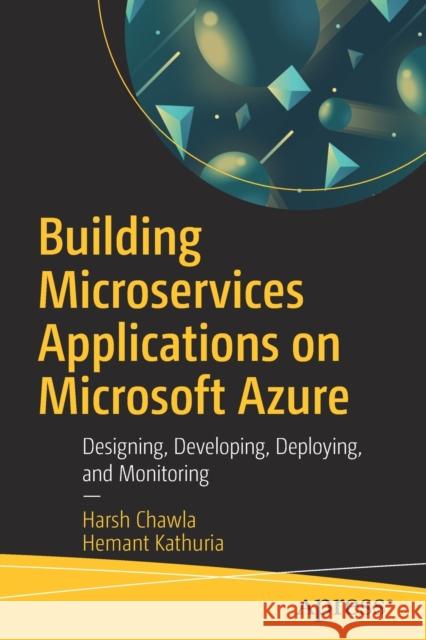
Building Microservices Applications on Microsoft Azure: Designing, Developing, Deploying, and Monitoring
ISBN-13: 9781484248270 / Angielski / Miękka / 2019 / 262 str.
(netto: 167,36 VAT: 5%)
Najniższa cena z 30 dni: 168,64
ok. 16-18 dni roboczych.
Darmowa dostawa!
1. Evolution and Need of Microservices
Chapter Goal: Understand the benefits of microservices architecture over monolithic architecture.
Number of Pages :20
Chapter Outline
a. Overview of monolithic architectureb. Scalability challenges of monolithic applications
c. Need of Microservices architecture
d. How Microservices can solve scalability challenges
2. Microservices in enterprise
Chapter Goal: Understand the valid use cases and need of microservices for enterprise audience and various deployment choices on Microsoft Azure
Number of Pages :40
Chapter Outline
a. Use cases of microservices Architecture
b. Options to deploy microservices
c. Deployment options on Azure
i. Deployment options overview
ii. Containers on AKS
1. Container basics
2. Maintain container registry using Azure Container Registry
3. Deploy containers on AKS
iii. Azure Service Fabric
1. Stateless Services
2. Stateful Services
3. Guest Executables
d. Database deployment options for Microservices
i. Deployment options overview
ii. Deploy database on Azure SQL DB
iii. Deploy database on Azure SQL database managed instance
e. Microservices commonly used patterns and practices
i. API Gateway
ii. Versioning Microservices
iii. Inter Service Communication
3. Azure Service Fabric
Chapter Goal: Deep dive into various Azure service Fabric deployment options and the benefits of using this solution to deploy microservices applications
Number of Pages :30
Chapter Outline
a. Azure Service Fabric Key Concepts
i. Fault Domain
ii. Upgrade Domain
iii. Interservice Communication
b. Create Azure Service Fabric Cluster
c. Advantages over on-premise Azure Service Fabric cluster
d. Deploy application on Azure Service Fabric
i. Stateless services
ii. Stateful services
iii. Guest executables
e. Deploy .Net Core Stateless Service on Azure Service Fabric cluster
f. Options to integrate with DevOps
4. Monitoring Azure Service Fabric Clusters
Chapter Goal: Understand various monitoring options on Azure for Azure Service Fabric Clusters
Number of Pages :20
Chapter Outline
a. Options to monitor Azure Service Fabric Clusters
b. Application Insights
i. Database dependency Calls
ii. Application Map
c. OMS
d. Service Fabric Explorer
5. Azure Kubernetes Service - AKS
Chapter Goal: Deep dive into various AKS options and the benefits of using this solution to deploy microservices applications
Number of Pages: 40
Chapter Outline
a. AKS Cluster Key Concepts
b. Create AKS cluster
c. Advantages over on-premise Kubernetes cluster
d. Deploy containerized .Net Core based web application
e. Options to integrate with DevOps
6. Azure Kubernetes Cluster Monitoring
Chapter Goal: Understand various monitoring options to monitor containers and applications hosted on Azure Kubernetes services
Number of Pages :20
Chapter Outline
a. Options to monitor Azure Kubernetes Services
b. Application Insights
i. Database Dependency Calls
ii. Application Map
c. Azure Monitor for Containers
7. Securing your Microservices
Chapter Goal This chapter details out the options available to secure your ASP.Net MVC Frontend, MVC Web API and SPA based applications using Azure Active Directory.
Number of Pages :20
Outline
a. Securing ASP.Net MVC – Core application using AAD.
b. Securing ASP.Net MVC API -Core application using AAD bearer tokensc. Securing Angular based SPA applications using AAD implicit flow.
8. Database Design Patterns
Chapter Goal: This chapter focuses on various database options for Microservices applications. This will also clarify the question on whether the microservices should be deployed on separate DBs or a single DBs.
· Chapter Outline
o Common database patterns and techniques
o Common challenges to host databases for microservices architecture
o Shared DB vs isolated DB for each microserviceo Host separate DB per microservice
o Hosting shared DB on Azure SQL DB
o Multiple Schemas on Azure SQL database managed instance
o Various synchronization options for common data across Microservices
9. Build hybrid applications using Microsoft Azure Stack
Chapter Goal: Organizations which are getting ready for cloud or want hybrid cloud options, Azure stack is the solution for them. In this chapter we will discuss about how to use Azure stack services to build microservices applications.
Number of Pages :30
Chapter Outline
o Overview of Azure Stack
o Azure services available on Azure stack
o Build application and database containers on Azure Stack
o Deploy containerized application on service fabric cluster on Azure stack
o Monitoring application on Azure Stack- Understand the criteria used in microservices and monolithic applications
- Build scalable, agile, and secure microservices applications on Microsoft Azure
- Create hybrid microservices applications on Microsoft Azure stack
- Organize and monitor microservices applications running on containers using Kubernetes
- Secure ASP.NET MVC, MVC Web API, and SPA microservices




Czytaj nas na:
1997-2026 DolnySlask.com Agencja Internetowa
KrainaKsiazek.PL - Księgarnia Internetowa


