• Wyszukiwanie zaawansowane
  • Kategorie
  • Kategorie BISAC
  • Książki na zamówienie
  • Promocje
  • Granty
  • Książka na prezent
  • Opinie
  • Pomoc
  • Załóż konto
  • Zaloguj się

Bringing Skepticism to Crop Science » książka


zaloguj się | załóż konto
Logo Krainaksiazek.pl

koszyk

konto

szukaj
topmenu
Księgarnia internetowa
Szukaj
Książki na zamówienie
Promocje
Granty
Książka na prezent
Moje konto
Pomoc
 
 
Wyszukiwanie zaawansowane
Pusty koszyk
Bezpłatna dostawa dla zamówień powyżej 20 złBezpłatna dostawa dla zamówień powyżej 20 zł

Kategorie główne

• Nauka
 [2952079]
• Literatura piękna
 [1850969]

  więcej...
• Turystyka
 [71058]
• Informatyka
 [151066]
• Komiksy
 [35579]
• Encyklopedie
 [23181]
• Dziecięca
 [620496]
• Hobby
 [139036]
• AudioBooki
 [1646]
• Literatura faktu
 [228729]
• Muzyka CD
 [379]
• Słowniki
 [2932]
• Inne
 [445708]
• Kalendarze
 [1409]
• Podręczniki
 [164793]
• Poradniki
 [480107]
• Religia
 [510956]
• Czasopisma
 [511]
• Sport
 [61267]
• Sztuka
 [243299]
• CD, DVD, Video
 [3411]
• Technologie
 [219640]
• Zdrowie
 [100984]
• Książkowe Klimaty
 [124]
• Zabawki
 [2281]
• Puzzle, gry
 [3363]
• Literatura w języku ukraińskim
 [258]
• Art. papiernicze i szkolne
 [8020]
Kategorie szczegółowe BISAC

Bringing Skepticism to Crop Science

ISBN-13: 9783031144134 / Angielski / Miękka / 2023 / 66 str.
Thomas Sinclair; Thomas W. Rufty
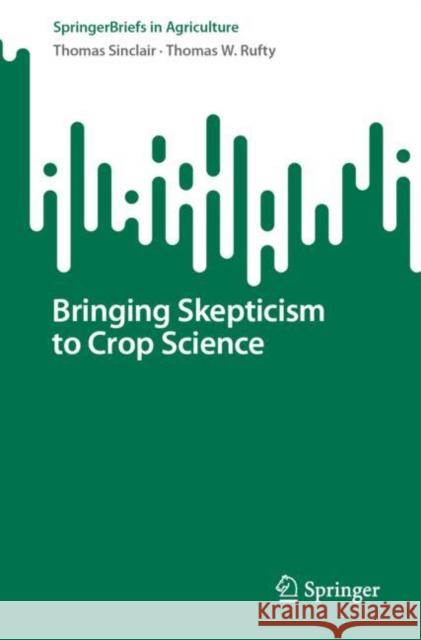
Bringing Skepticism to Crop Science Thomas Sinclair Thomas W. Rufty 9783031144134 Springer - książkaWidoczna okładka, to zdjęcie poglądowe, a rzeczywista szata graficzna może różnić się od prezentowanej.

Bringing Skepticism to Crop Science

ISBN-13: 9783031144134 / Angielski / Miękka / 2023 / 66 str.

Thomas Sinclair; Thomas W. Rufty
cena 201,24
(netto: 191,66 VAT:  5%)

Najniższa cena z 30 dni: 192,74
Termin realizacji zamówienia:
ok. 22 dni roboczych.

Darmowa dostawa!

Global food production and climate change among other concerns are societal issues that require major research input from crop science. While suggestions are abundant on how crop science can help to resolve these issues, many of the suggestions come from people who are not actually familiar with the challenges and requirements to modify crop plants grown under field conditions to achieve the necessary improvements. Efforts to alter a gene or even several genes have very rarely proven successful in having impact on crop production under realistic field conditions. This lack of success has not been addressed head on. This book serves as a reminder to crop scientists and others that open, clear-minded assessments of the entirety of evidence concerning a hypothesis is required before making claims of possible increases in crop performance. This attitude of skepticism is not a negative attitude but rather an employment of the cornerstone of scientific investigation based on formation and evaluation of hypotheses. Skeptical analyses are to be presented in the book on some of the common suggestions for improving crop plants. The six specific topics to be addressed are photosynthesis, seed number, nitrogen use efficiency, water use efficiency, crop water loss, and unconfirmed field observations. Each of the topics in this book, will first be reviewed to present the origins of the popular assumptions about how specific plant modification will result in improved crop performance. The review of the background information will be followed by an examination of the evidence, logic, and predicted outcomes for the assumed benefits of the modifications. Finally, each chapter will offer novel, alternate approaches to plant modification that have documented support for positively impacting crop performance. The book will not be written in specialized, detail language but offer access for those with a wide range of interests in options for increasing crop production in the future. The goal of the book is to provide information that is useful to those with interests ranging from climatologist to food-oriented sociologists. Of course, the topics covered will be of direct interest to those studying plant sciences, particularly crop scientists. The hope is to challenge a reader to re-examine some of her/his assumptions about crop improvement and approach the topic with a renewed practice of skepticism in formulating and evaluating hypotheses.


Global food production and climate change among other concerns are societal issues that require major research input from crop science. While suggestions are abundant on how crop science can help to resolve these issues, many of the suggestions come from people who are not actually familiar with the challenges and requirements to modify crop plants grown under field conditions to achieve the necessary improvements. Efforts to alter a gene or even several genes have very rarely proven successful in having impact on crop production under realistic field conditions. This lack of success has not been addressed head on. This book serves as a reminder to crop scientists and others that open, clear-minded assessments of the entirety of evidence concerning a hypothesis is required before making claims of possible increases in crop performance. This attitude of skepticism is not a negative attitude but rather an employment of the cornerstone of scientific investigation based on formation and evaluation of hypotheses. Skeptical analyses are to be presented in the book on some of the common suggestions for improving crop plants. The six specific topics to be addressed are photosynthesis, seed number, nitrogen use efficiency, water use efficiency, crop water loss, and unconfirmed field observations. Each of the topics in this book, will first be reviewed to present the origins of the popular assumptions about how specific plant modification will result in improved crop performance. The review of the background information will be followed by an examination of the evidence, logic, and predicted outcomes for the assumed benefits of the modifications. Finally, each chapter will offer novel, alternate approaches to plant modification that have documented support for positively impacting crop performance. The book will not be written in specialized, detail language but offer access for those with a wide range of interests in options for increasing crop production in the future. The goal of the book is to provide information that is useful to those with interests ranging from climatologist to food-oriented sociologists. Of course, the topics covered will be of direct interest to those studying plant sciences, particularly crop scientists. The hope is to challenge a reader to re-examine some of her/his assumptions about crop improvement and approach the topic with a renewed practice of skepticism in formulating and evaluating hypotheses. 

Kategorie:
Nauka, Biologia i przyroda
Kategorie BISAC:
Technology & Engineering > Agriculture - General
Wydawca:
Springer
Seria wydawnicza:
Springerbriefs in Agriculture
Język:
Angielski
ISBN-13:
9783031144134
Rok wydania:
2023
Dostępne języki:
Numer serii:
000433837
Ilość stron:
66
Oprawa:
Miękka
Dodatkowe informacje:
Wydanie ilustrowane

Chapter 1 The Role of Skepticism in Science?

Chapter 2 Warnings for Septics
Chapter 3 Photosynthesis
Chapter 4 Seed Number
Chapter 5 Nitrogen Use Efficiency
Chapter 6 Water Use Efficiency
Chapter 7 Water Loss
Chapter 8 Unconfirmed Field Observations (UFOs)

Thomas Sinclair has a 50-year career in crop science and has published on several topics that have contributed to the advancement of the science.

Global food production and climate change among other concerns are societal issues that require major research input from crop science. While suggestions are abundant on how crop science can help to resolve these issues, many of the suggestions come from people who are not actually familiar with the challenges and requirements to modify crop plants grown under field conditions to achieve the necessary improvements. Efforts to alter a gene or even several genes have very rarely proven successful in having impact on crop production under realistic field conditions. This lack of success has not been addressed head on. This book serves as a reminder to crop scientists and others that open, clear-minded assessments of the entirety of evidence concerning a hypothesis is required before making claims of possible increases in crop performance. This attitude of skepticism is not a negative attitude but rather an employment of the cornerstone of scientific investigation based on formation and evaluation of hypotheses. Skeptical analyses are to be presented in the book on some of the common suggestions for improving crop plants. The six specific topics to be addressed are photosynthesis, seed number, nitrogen use efficiency, water use efficiency, crop water loss, and unconfirmed field observations. Each of the topics in this book, will first be reviewed to present the origins of the popular assumptions about how specific plant modification will result in improved crop performance. The review of the background information will be followed by an examination of the evidence, logic, and predicted outcomes for the assumed benefits of the modifications. Finally, each chapter will offer novel, alternate approaches to plant modification that have documented support for positively impacting crop performance. The book will not be written in specialized, detail language but offer access for those with a wide range of interests in options for increasing crop production in the future. The goal of the book is to provide information that is useful to those with interests ranging from climatologist to food-oriented sociologists. Of course, the topics covered will be of direct interest to those studying plant sciences, particularly crop scientists. The hope is to challenge a reader to re-examine some of her/his assumptions about crop improvement and approach the topic with a renewed practice of skepticism in formulating and evaluating hypotheses. 


Sinclair, Thomas THOMAS SINCLAIR is Director and Assistant Professo... więcej >


Udostępnij

Facebook - konto krainaksiazek.pl


Opinie o Krainaksiazek.pl na Opineo.pl

Partner Mybenefit

Krainaksiazek.pl w programie rzetelna firma Krainaksiaze.pl - płatności przez paypal

Czytaj nas na:

Facebook - krainaksiazek.pl
  • książki na zamówienie
  • granty
  • książka na prezent
  • kontakt
  • pomoc
  • opinie
  • regulamin
  • polityka prywatności

Zobacz:

  • Księgarnia czeska

  • Wydawnictwo Książkowe Klimaty

1997-2026 DolnySlask.com Agencja Internetowa

© 1997-2022 krainaksiazek.pl
     
KONTAKT | REGULAMIN | POLITYKA PRYWATNOŚCI | USTAWIENIA PRYWATNOŚCI
Zobacz: Księgarnia Czeska | Wydawnictwo Książkowe Klimaty | Mapa strony | Lista autorów
KrainaKsiazek.PL - Księgarnia Internetowa

Polityka prywatnosci - link
Krainaksiazek.pl - płatnośc Przelewy24
Przechowalnia Przechowalnia



