• Wyszukiwanie zaawansowane
  • Kategorie
  • Kategorie BISAC
  • Książki na zamówienie
  • Promocje
  • Granty
  • Książka na prezent
  • Opinie
  • Pomoc
  • Załóż konto
  • Zaloguj się

Brazil--Japan Cooperation: From Complementarity to Shared Value » książka


zaloguj się | załóż konto
Logo Krainaksiazek.pl

koszyk

konto

szukaj
topmenu
Księgarnia internetowa
Szukaj
Książki na zamówienie
Promocje
Granty
Książka na prezent
Moje konto
Pomoc
 
 
Wyszukiwanie zaawansowane
Pusty koszyk
Bezpłatna dostawa dla zamówień powyżej 20 złBezpłatna dostawa dla zamówień powyżej 20 zł

Kategorie główne

• Nauka
 [2950560]
• Literatura piękna
 [1849509]

  więcej...
• Turystyka
 [71097]
• Informatyka
 [151150]
• Komiksy
 [35848]
• Encyklopedie
 [23178]
• Dziecięca
 [617388]
• Hobby
 [139064]
• AudioBooki
 [1657]
• Literatura faktu
 [228597]
• Muzyka CD
 [383]
• Słowniki
 [2855]
• Inne
 [445295]
• Kalendarze
 [1464]
• Podręczniki
 [167547]
• Poradniki
 [480102]
• Religia
 [510749]
• Czasopisma
 [516]
• Sport
 [61293]
• Sztuka
 [243352]
• CD, DVD, Video
 [3414]
• Technologie
 [219456]
• Zdrowie
 [101002]
• Książkowe Klimaty
 [124]
• Zabawki
 [2311]
• Puzzle, gry
 [3459]
• Literatura w języku ukraińskim
 [254]
• Art. papiernicze i szkolne
 [8079]
Kategorie szczegółowe BISAC

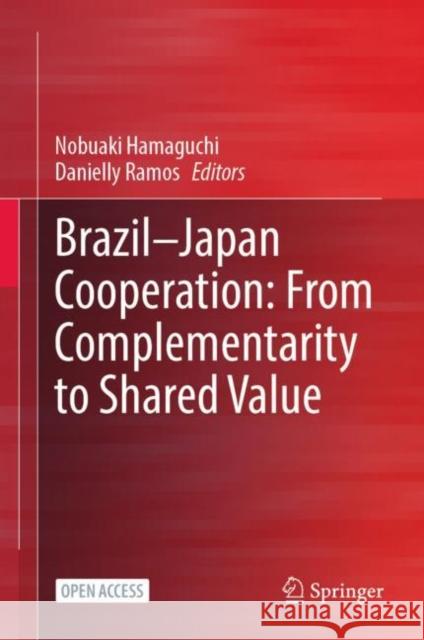
Brazil--Japan Cooperation: From Complementarity to Shared Value

ISBN-13: 9789811940286 / Angielski / Twarda / 2022
Hamaguchi, Nobuaki
Brazil--Japan Cooperation: From Complementarity to Shared Value Hamaguchi, Nobuaki 9789811940286 Springer Nature Singapore - książkaWidoczna okładka, to zdjęcie poglądowe, a rzeczywista szata graficzna może różnić się od prezentowanej.

Brazil--Japan Cooperation: From Complementarity to Shared Value

ISBN-13: 9789811940286 / Angielski / Twarda / 2022

Hamaguchi, Nobuaki
cena 200,77
(netto: 191,21 VAT:  5%)

Najniższa cena z 30 dni: 192,74
Termin realizacji zamówienia:
ok. 22 dni roboczych
Dostawa w 2026 r.

Darmowa dostawa!
inne wydania


This is an open access book. Relations between Brazil and Japan progressed dynamically in the 1960s and 1970s, centering on the substantial complementarity between Japan’s needing primary goods to sustain high economic growth and Brazil’s seeking non-hegemonic investment to invigorate its resource potential. Now that this complementarity has lost significance, the two countries are restructuring their relations to protect shared values of democracy, freedom, the rule of law, and the need for maintaining good relations with both China and the United States.Analyzed here is the development of this renewed bilateral relationship in multiple directions: productivity, global environment and health, migration, and triangular cooperation in third countries’ development. Facing the prospect of a declining population, Japan may become more open to international migration, but the experience with Japanese-descent Brazilian workers since the amendment of the migration control law in 1990 presents many lessons and challenges for the symbiosis of multicultural groups. Brazil, for its part, needs to address social inequality. To this end, it is fundamental to improve the quality of work.This book argues that Brazil and Japan can benefit from cooperation in managing those country-specific issues. It also discusses ways that Brazil and Japan can profit from coordinating action on global problems such as greenhouse gas reduction, mitigation of tropical diseases, healthy community building, and high-quality infrastructure for poverty reduction.



Kategorie:
Nauka, Polityka
Kategorie BISAC:
Political Science > International Relations - Diplomacy
Business & Economics > International - Economics & Trade
Political Science > Globalization
Wydawca:
Springer Nature Singapore
Język:
Angielski
ISBN-13:
9789811940286
Rok wydania:
2022
Waga:
0.51 kg
Wymiary:
23.5 x 15.5
Oprawa:
Twarda
Dodatkowe informacje:
Wydanie ilustrowane

Introduction (Nobuaki Hamaguchi and Danielly Ramos)


Part I: Brazil-Japan Cooperation from Global Perspective

Chapter 1 Brazil - Japan Relationship: A Partnership? (Henrique Altemani de Oliveira and Antonio Carlos Lessa)

1. Introduction        

2. From an economic standpoint to a political perspective: basis for a strategic partnership?

3. Phases of the bilateral relationship during the Cold War

4. First attempts to resume the relationship and the importance of the Asian Crisis

5. Conclusion

Chapter 2 Global Environmental Governance and ODA from Japan to Brazil (Shuichiro Masukata, Cristina Y. A. Inoue, and Nanahira de Rabelo e Sant’Anna)

1.    Introduction

2.    Multilateral-global dimension/level

3.    Japan’s cooperation trajectory and “green” ODA to Brazil

4.    Subnational-local: Prodecer in Paracatu and Agroforestry Systems in Tomé-Açu

5.    Conclusion Lessons learned from cooperation in environmental sustainability

Chapter 3 Global Health (Rodrigo Pires de Campos and Saori Kawai)

     Contents to be added


Chapter 4 Trilateral Cooperation for Infrastructure (Akiko Koyasu and Danielly Ramos)

    Contents to be added


Part II: Brazil-Japan Cooperation from Bilateral Perspective

Chapter 5 Brazilian Workers in Japan and Public Policies for Promoting their Social Integration with a Focus on Basic Education to the Children (Mauricio Bugarin and Keiichi Yamazaki)

1. Recent trends of the Brazilian workers and their families in Japan

2. Challenges faced by the children

3. Public intervention

4. Formal modeling: Schooling choices and government intervention

5. Conclusions

Chapter 6 Dissemination of Japanese Quality Control in Brazil (Nobuaki Hamaguchi and Silvio Miyazaki)

1.    Introduction

2.    Japanese TQC transfer to Brazil until the 1980s

3.    Japanese-style TQC in Brazil since the 1990s

4.    Contemporary cases of TQC in Brazil

5.    Final remarks: TQC in Japan-Brazil relation in the next stage


Conclusion: Structuring Brazil-Japan Cooperation from Complementarity to Shared Value  (Nobuaki Hamaguchi and Danielly Ramos)

Nobuaki Hamaguchi is a professor at the Research Institute for Economics and Business Administration (RIEB) at Kobe University, Japan. He holds a Ph.D. degree in regional science from the University of Pennsylvania, USA. His research interests are in regional/industrial policies and economic integration. From 2011 to date, he has been a program director and a faculty fellow of the Research Institute of Economy, Trade, and Industry (RIETI). He is the co-author of Spatial Economics for Building Back Better: The Japanese Experience (Springer 2021) and Cutting the Distance: Benefits and Tensions from the Recent Active Engagement of China, Japan, and Korea in Latin America (Springer 2018).


Danielly Ramos, Ph.D., is an associate professor at the Institute of International Relations and director of the Center for Global Studies at the University of Brasília (UnB). She coordinates the Asia–Latin America and Caribbean research group (ASIALAC). Her research focuses on Brazil’s foreign policy and Asia–Latin America relations. Her publications probe China’s foreign direct investment in Latin America and the Caribbean, inter alia, especially connections between Chinese multinational corporations’ investments and Brazil's domestic political economy. She is the co-author of “Rise and Fall of Triumphalism in Brazilian Foreign Policy: The International Strategy of the Workers Party’s Governments” in Status and the Rise of Brazil (Palgrave Macmillan) and “One Step Closer: The Politics and the Economics of China's Strategy in Brazil and the Case of the Electric Power Sector” in China–Latin America Relations in the 21st Century (Springer 2020).


This is an open access book. Relations between Brazil and Japan progressed dynamically in the 1960s and 1970s, centering on the substantial complementarity between Japan’s needing primary goods to sustain high economic growth and Brazil’s seeking non-hegemonic investment to invigorate its resource potential. Now that this complementarity has lost significance, the two countries are restructuring their relations to protect shared values of democracy, freedom, the rule of law, and the need for maintaining good relations with both China and the United States.

Analyzed here is the development of this renewed bilateral relationship in multiple directions: productivity, global environment and health, migration, and triangular cooperation in third countries’ development. Facing the prospect of a declining population, Japan may become more open to international migration, but the experience with Japanese-descent Brazilian workers since the amendment of the migration control law in 1990 presents many lessons and challenges for the symbiosis of multicultural groups. Brazil, for its part, needs to address social inequality. To this end, it is fundamental to improve the quality of work.

This book argues that Brazil and Japan can benefit from cooperation in managing those country-specific issues. It also discusses ways that Brazil and Japan can profit from coordinating action on global problems such as greenhouse gas reduction, mitigation of tropical diseases, healthy community building, and high-quality infrastructure for poverty reduction.



Udostępnij

Facebook - konto krainaksiazek.pl


Opinie o Krainaksiazek.pl na Opineo.pl

Partner Mybenefit

Krainaksiazek.pl w programie rzetelna firma Krainaksiaze.pl - płatności przez paypal

Czytaj nas na:

Facebook - krainaksiazek.pl
  • książki na zamówienie
  • granty
  • książka na prezent
  • kontakt
  • pomoc
  • opinie
  • regulamin
  • polityka prywatności

Zobacz:

  • Księgarnia czeska

  • Wydawnictwo Książkowe Klimaty

1997-2025 DolnySlask.com Agencja Internetowa

© 1997-2022 krainaksiazek.pl
     
KONTAKT | REGULAMIN | POLITYKA PRYWATNOŚCI | USTAWIENIA PRYWATNOŚCI
Zobacz: Księgarnia Czeska | Wydawnictwo Książkowe Klimaty | Mapa strony | Lista autorów
KrainaKsiazek.PL - Księgarnia Internetowa

Polityka prywatnosci - link
Krainaksiazek.pl - płatnośc Przelewy24
Przechowalnia Przechowalnia



