• Wyszukiwanie zaawansowane
  • Kategorie
  • Kategorie BISAC
  • Książki na zamówienie
  • Promocje
  • Granty
  • Książka na prezent
  • Opinie
  • Pomoc
  • Załóż konto
  • Zaloguj się

Brain and Music » książka

zaloguj się | załóż konto
Logo Krainaksiazek.pl

koszyk

konto

szukaj
topmenu
Księgarnia internetowa
Szukaj
Książki na zamówienie
Promocje
Granty
Książka na prezent
Moje konto
Pomoc
 
 
Wyszukiwanie zaawansowane
Pusty koszyk
Bezpłatna dostawa dla zamówień powyżej 20 złBezpłatna dostawa dla zamówień powyżej 20 zł

Kategorie główne

• Nauka
 [2946600]
• Literatura piękna
 [1856966]

  więcej...
• Turystyka
 [72221]
• Informatyka
 [151456]
• Komiksy
 [35826]
• Encyklopedie
 [23190]
• Dziecięca
 [619653]
• Hobby
 [140543]
• AudioBooki
 [1577]
• Literatura faktu
 [228355]
• Muzyka CD
 [410]
• Słowniki
 [2874]
• Inne
 [445822]
• Kalendarze
 [1744]
• Podręczniki
 [167141]
• Poradniki
 [482898]
• Religia
 [510455]
• Czasopisma
 [526]
• Sport
 [61590]
• Sztuka
 [243598]
• CD, DVD, Video
 [3423]
• Technologie
 [219201]
• Zdrowie
 [101638]
• Książkowe Klimaty
 [124]
• Zabawki
 [2473]
• Puzzle, gry
 [3898]
• Literatura w języku ukraińskim
 [254]
• Art. papiernicze i szkolne
 [8170]
Kategorie szczegółowe BISAC

Brain and Music

ISBN-13: 9780470683392 / Angielski / Miękka / 2012 / 336 str.
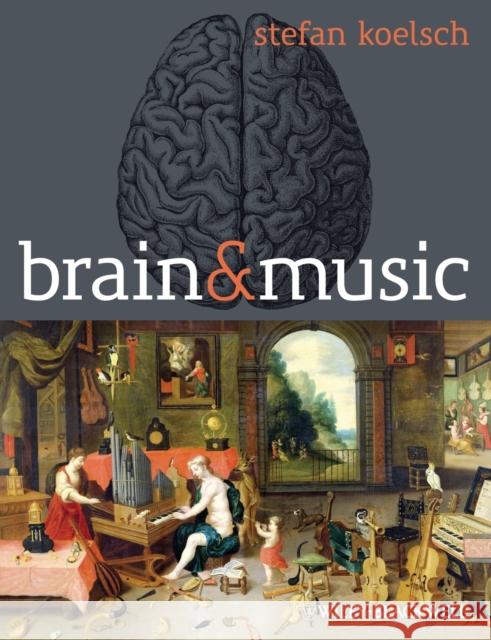
Stefan Koelsch
Brain and Music Stefan Koelsch 9780470683392 Wiley - książkaWidoczna okładka, to zdjęcie poglądowe, a rzeczywista szata graficzna może różnić się od prezentowanej.

Brain and Music

ISBN-13: 9780470683392 / Angielski / Miękka / 2012 / 336 str.

Stefan Koelsch
cena 199,58 zł
(netto: 190,08 VAT:  5%)

Najniższa cena z 30 dni: 197,95 zł
Termin realizacji zamówienia:
ok. 30 dni roboczych
Bez gwarancji dostawy przed świętami

Darmowa dostawa!

A comprehensive survey of the latest neuroscientific research into the effects of music on the brain

  • Covers a variety of topics fundamental for music perception, including musical syntax, musical semantics, music and action, music and emotion
  • Includes general introductory chapters to engage a broad readership, as well as a wealth of detailed research material for experts
  • Offers the most empirical (and most systematic) work on the topics of neural correlates of musical syntax and musical semantics
  • Integrates research from different domains (such as music, language, action and emotion both theoretically and empirically, to create a comprehensive theory of music psychology


Kategorie:
Nauka, Psychologia
Kategorie BISAC:
Science > Life Sciences - Neuroscience
Music > Instruction & Study - Appreciation
Wydawca:
Wiley
Język:
Angielski
ISBN-13:
9780470683392
Rok wydania:
2012
Ilość stron:
336
Waga:
0.55 kg
Wymiary:
24.13 x 18.8 x 1.52
Oprawa:
Miękka
Wolumenów:
01
Dodatkowe informacje:
Bibliografia
Wydanie ilustrowane

Preface ix

Part I Introductory Chapters 1

1 Ear and Hearing 3

1.1 The ear 3

1.2 Auditory brainstem and thalamus 6

1.3 Place and time information 8

1.4 Beats, roughness, consonance and dissonance 9

1.5 Acoustical equivalency of timbre and phoneme 11

1.6 Auditory cortex 12

2 Music–theoretical Background 17

2.1 How major keys are related 17

2.2 The basic in–key functions in major 20

2.3 Chord inversions and Neapolitan sixth chords 21

2.4 Secondary dominants and double dominants 21

3 Perception of Pitch and Harmony 23

3.1 Context–dependent representation of pitch 23

3.2 The representation of key–relatedness 26

3.3 The developing and changing sense of key 29

3.4 The representation of chord–functions 30

3.5 Hierarchy of harmonic stability 31

3.6 Musical expectancies 35

3.7 Chord sequence paradigms 36

4 From Electric Brain Activity to ERPs and ERFs 40

4.1 Electro–encephalography (EEG) 43

4.1.1 The 10 20 system 43

4.1.2 Referencing 45

4.2 Obtaining event–related brain potentials (ERPs) 45

4.3 Magnetoencephalography (MEG) 48

4.3.1 Forward solution and inverse problem 49

4.3.2 Comparison between MEG and EEG 49

5 ERP Components 51

5.1 Auditory P1, N1, P2 51

5.2 Frequency–following response (FFR) 53

5.3 Mismatch negativity 54

5.3.1 MMN in neonates 57

5.3.2 MMN and music 57

5.4 N2b and P300 59

5.5 ERP–correlates of language processing 59

5.5.1 Semantic processes: N400 60

5.5.2 Syntactic processes: (E)LAN and P600 63

5.5.3 Prosodic processes: Closure Positive Shift 67

6 A Brief Historical Account of ERP Studies of Music Processing 70

6.1 The beginnings: Studies with melodic stimuli 70

6.2 Studies with chords 74

6.3 MMN studies 75

6.4 Processing of musical meaning 76

6.5 Processing of musical phrase boundaries 77

6.6 Music and action 77

7 Functional Neuroimaging Methods: fMRI and PET 79

7.1 Analysis of fMRI data 81

7.2 Sparse temporal sampling in fMRI 84

7.3 Interleaved silent steady state fMRI 85

7.4 Activation vs. activity change 85

Part II Towards a New Theory of Music Psychology 87

8 Music Perception: A Generative Framework 89

9 Musical Syntax 98

9.1 What is musical syntax? 98

9.2 Cognitive processes 102

9.3 The early right anterior negativity (ERAN) 109

9.3.1 The problem of confounding acoustics and possible solutions 113

9.3.2 Effects of task–relevance 120

9.3.3 Polyphonic stimuli 121

9.3.4 Latency of the ERAN 127

9.3.5 Melodies 127

9.3.6 Lateralization of the ERAN 129

9.4 Neuroanatomical correlates 131

9.5 Processing of acoustic vs. music–syntactic irregularities 133

9.6 Interactions between music– and language–syntactic processing 138

9.6.1 The Syntactic Equivalence Hypothesis 145

9.7 Attention and automaticity 147

9.8 Effects of musical training 149

9.9 Development 151

10 Musical Semantics 156

10.1 What is musical semantics? 156

10.2 Extra–musical meaning 158

10.2.1 Iconic musical meaning 158

10.2.2 Indexical musical meaning 159

Excursion: Decoding of intentions during musinc listening 161

10.2.3 Symbolic musical meaning 162

10.3 Extra–musical meaning and the N400 163

10.4 Intra–musical meaning 170

Excursion: Posterior temporal cortex and processing of meaning 166

10.4.1 Intra–musical meaning and the N5 171

10.5 Musicogenic meaning 177

10.5.1 Physical 177

10.5.2 Emotional 179

10.5.3 Personal 180

10.6 Musical semantics 181

10.6.1 Neural correlates 181

10.6.2 Propositional semantics 182

10.6.3 Communication vs. expression 182

10.6.4 Meaning emerging from large–scale relations 183

10.6.5 Further theoretical accounts 184

11 Music and Action 186

11.1 Perception action mediation 186

11.2 ERP correlates of music production 189

12 Emotion 203

12.1 What are musical emotions ? 204

12.2 Emotional responses to music underlying mechanisms 207

12.3 From social contact to spirituality The Seven Cs 208

12.4 Emotional responses to music underlying principles 212

12.5 Musical expectancies and emotional responses 216

12.5.1 The tension–arch 218

12.6 Limbic and paralimbic correlates of music–evoked emotions 219

12.6.1 Major minor and happy sad music 225

12.6.2 Music–evoked dopaminergic neural activity 226

12.6.3 Music and the hippocampus 227

12.6.4 Parahippocampal gyrus 231

12.6.5 A network comprising hippocampus, parahippocampal gyrus, and temporal poles 232

12.6.6 Effects of music on insular and anterior cingulate cortex activity 232

12.7 Electrophysiological effects of music–evoked emotions 233

12.8 Time course of emotion 234

12.9 Salutary effects of music making 235

13 Concluding Remarks and Summary 241

13.1 Music and language 241

13.2 The music–language continuum 244

13.3 Summary of the theory 249

13.4 Summary of open questions 258

References 267

Index 303

Stefan Koelsch is Professor of Music Psychology at the Freie University Berlin. He is a former post–doctoral research fellow at Harvard Medical School, and led an independent Junior Research Group at the Max Planck Institute for Human Cognitive and Brain Sciences in Leipzig. His main areas of research are neurocognition of music, music and emotion, and music therapy.

Making and listening to music engages a large array of psychological processes, including perception, attention, learning and memory, syntactic processing, the processing of meaning, and social cognition. This richness makes music the ideal tool to investigate human psychology and the workings of the human brain, and in recent years neuroscientists have increasingly used this tool to inform and extend their ideas. This book offers a comprehensive survey of the current state of knowledge in the cross–disciplinary field of music psychology.

An expert in his field, Stefan Koelsch establishes basic neuroscientific, music–theoretical, and music–psychological concepts, before presenting the brain correlates of music perception, musical syntax, musical semantics, music and action, and music and emotion.

Koelsch synthesizes all these conceptual threads into a new theory of music psychology. His theory integrates different areas such as music, language, action, and emotion that are traditionally treated as separate domains.


Udostępnij

Facebook - konto krainaksiazek.pl


Opinie o Krainaksiazek.pl na Opineo.pl

Partner Mybenefit

Krainaksiazek.pl w programie rzetelna firma Krainaksiaze.pl - płatności przez paypal

Czytaj nas na:

Facebook - krainaksiazek.pl
  • książki na zamówienie
  • granty
  • książka na prezent
  • kontakt
  • pomoc
  • opinie
  • regulamin
  • polityka prywatności

Zobacz:

  • Księgarnia czeska

  • Wydawnictwo Książkowe Klimaty

1997-2025 DolnySlask.com Agencja Internetowa

© 1997-2022 krainaksiazek.pl
     
KONTAKT | REGULAMIN | POLITYKA PRYWATNOŚCI | USTAWIENIA PRYWATNOŚCI
Zobacz: Księgarnia Czeska | Wydawnictwo Książkowe Klimaty | Mapa strony | Lista autorów
KrainaKsiazek.PL - Księgarnia Internetowa

Polityka prywatnosci - link
Krainaksiazek.pl - płatnośc Przelewy24
Przechowalnia Przechowalnia






