• Wyszukiwanie zaawansowane
  • Kategorie
  • Kategorie BISAC
  • Książki na zamówienie
  • Promocje
  • Granty
  • Książka na prezent
  • Opinie
  • Pomoc
  • Załóż konto
  • Zaloguj się

Bone Quantitative Ultrasound » książka


zaloguj się | załóż konto
Logo Krainaksiazek.pl

koszyk

konto

szukaj
topmenu
Księgarnia internetowa
Szukaj
Książki na zamówienie
Promocje
Granty
Książka na prezent
Moje konto
Pomoc
 
 
Wyszukiwanie zaawansowane
Pusty koszyk
Bezpłatna dostawa dla zamówień powyżej 20 złBezpłatna dostawa dla zamówień powyżej 20 zł

Kategorie główne

• Nauka
 [2946912]
• Literatura piękna
 [1852311]

  więcej...
• Turystyka
 [71421]
• Informatyka
 [150889]
• Komiksy
 [35717]
• Encyklopedie
 [23177]
• Dziecięca
 [617324]
• Hobby
 [138808]
• AudioBooki
 [1671]
• Literatura faktu
 [228371]
• Muzyka CD
 [400]
• Słowniki
 [2841]
• Inne
 [445428]
• Kalendarze
 [1545]
• Podręczniki
 [166819]
• Poradniki
 [480180]
• Religia
 [510412]
• Czasopisma
 [525]
• Sport
 [61271]
• Sztuka
 [242929]
• CD, DVD, Video
 [3371]
• Technologie
 [219258]
• Zdrowie
 [100961]
• Książkowe Klimaty
 [124]
• Zabawki
 [2341]
• Puzzle, gry
 [3766]
• Literatura w języku ukraińskim
 [255]
• Art. papiernicze i szkolne
 [7810]
Kategorie szczegółowe BISAC

Bone Quantitative Ultrasound

ISBN-13: 9783030919788 / Angielski / Twarda / 2022
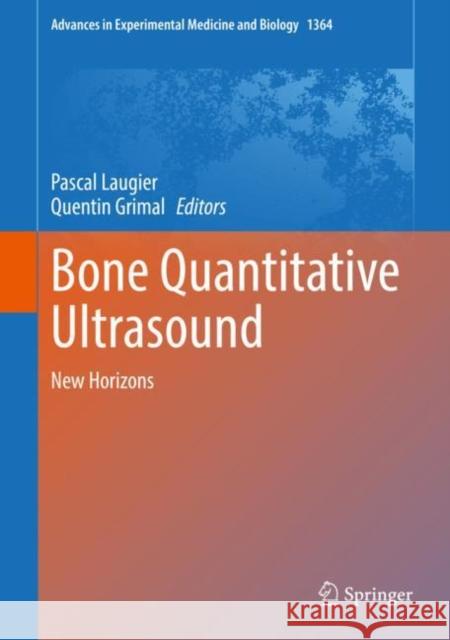
Bone Quantitative Ultrasound  9783030919788 Springer International Publishing - książkaWidoczna okładka, to zdjęcie poglądowe, a rzeczywista szata graficzna może różnić się od prezentowanej.

Bone Quantitative Ultrasound

ISBN-13: 9783030919788 / Angielski / Twarda / 2022

cena 644,07
(netto: 613,40 VAT:  5%)

Najniższa cena z 30 dni: 616,85
Termin realizacji zamówienia:
ok. 22 dni roboczych
Bez gwarancji dostawy przed świętami

Darmowa dostawa!
inne wydania

Many significant achievements in new ultrasound technologies to measure bone and models to elucidate the interaction and the propagation of ultrasonic waves in complex bone structures have been reported over the past ten years. Impaired bone remodeling affects not only the trabecular compartment but also the cortical one. Despite the crucial contribution of the cortical structure to the whole bone mechanical competence, cortical bone was understudied for a long time. A paradigm shift occurred around 2010, with a special focus placed on the importance of cortical bone. This has sparkled a great deal of interest in new ultrasound techniques to assess cortical bone. While our book ‘Bone Quantitative Ultrasound’ published in 2011 emphasized techniques to measure trabecular bone, this new book is devoted for a large part to the technologies introduced recently to measure cortical bone. These include resonant ultrasound spectroscopy, guided waves, scattering, and pulse-echo and tomography imaging techniques. Instrumentation, signal processing techniques and models used are detailed. Importantly, the data accumulated in recent years  such as anisotropic stiffness, elastic engineering moduli, compression and shear wave speeds of cortical bones from various skeletal sites are presented comprehensively. A few chapters deal with the recent developments achieved in quantitative ultrasound of trabecular bone. These include (i) scattering-based approaches and their application to measure skeletal sites such as the spine and proximal femur and (ii) approaches exploiting the poro-elastic nature of bone. While bone fragility and osteoporosis are still the main motivation for developing bone QUS, this Book also includes chapters reporting ultrasound techniques developed for other applications of high interest such as 3-D imaging of the spine, assessment of implant stability and transcranial brain imaging.This book, together with the book ‘Bone Quantitative Ultrasound’ published in 2011 will provide a comprehensive overview of the methods and principles used in bone quantitative ultrasound and will be a benchmark for all novice or experienced researchers in the field.The book will offer recent experimental results and theoretical concepts developed so far and would be intended for researchers, graduate or undergraduate students, engineers, and clinicians who are involved in the field.The book should be considered as a complement to the first book publisher in 2011, rather than a second edition, in the sense that basic notions already presented in the first book are not repeated.


Kategorie:
Nauka, Medycyna
Kategorie BISAC:
Medical > Laboratory Medicine
Medical > Fizjologia
Medical > Allied Health Services - Medical Technology
Wydawca:
Springer International Publishing
Seria wydawnicza:
Advances in Experimental Medicine and Biology
Język:
Angielski
ISBN-13:
9783030919788
Rok wydania:
2022
Waga:
1.09 kg
Wymiary:
25.4 x 17.8
Oprawa:
Twarda

​Preface (Claus Glüer).- Chapter 1. Introduction (Quentin Grimal and Pascal Laugier).- Part I: Ultrasound Methods for Skeletal Status Clinical Assessment.- Chapter 2. Quantitative Ultrasound (QUS) in the Management of Osteoporosis and Assessment of Fracture Risk: An Update (Didier Hans, Antoine Metrailler, Elena Gonzalez Rodriguez, Olivier Lamy, Enisa Shevroja).- Chapter 3. Clinical devices for bone assessment (Kay Raum and Pascal Laugier).- Chapter 4. Axial transmission – Techniques, devices and clinical results (Nicolas Bochud and Pascal Laugier).- Chapter 5. Signal processing techniques applied to axial transmission ultrasound (Tho N.H.T. Tran, Kailiang Xu, Lawrence H. Le, and Dean Ta).- Chapter 6. Ultrasonic Assessment of Cancellous Bone Based on the Two-Wave Phenomenon (Katsunori Mizuno, Yoshiki Nagatani, Isao Mano).- Chapter 7. Pulse-echo Measurements of Bone Tissues. Techniques and Clinical Results at the Spine and Femur (Delia Ciardo, Paola Pisani, Francesco Conversano, Sergio Casciaro).- Chapter 8. Scattering in Cancellous Bone (Keith Wear).- Chapter 9. Ultrasound Scattering in Cortical Bone (Yasamin Karbalaeisadegh and Marie Muller).- Chapter 10. Single-sided ultrasound imaging of the bone cortex: anatomy, tissue characterization and blood flow (Guillaume Renaud and Sébastien Salles).- Chapter 11. Ultrasound Computed Tomography (Philippe Lasaygues, Luis Espinosa, Simon Bernard, Philippe Petit, Régine Guillermin).- Part II: Ex vivo Measurement of Bone Material Properties: New Methods and Data.- Chapter 12. Measurement of Cortical Bone Elasticity Tensor with Resonant Ultrasound Spectroscopy (Simon Bernard, Xiran Cai and Quentin Grimal).- Chapter 13. Documenting the anisotropic stiffness of hard tissues with resonant ultrasound spectroscopy (Xiran Cai, Simon Bernard, Quentin Grimal).- Chapter 14. Assessing the elasticity of child cortical bone (Cécile Baron, Hélène Follet, Martine Pihioux, Cédric Payan, and Philippe Lasaygues).- Chapter 15. Piezoelectric and Opto-Acoustic Material Properties of Bone (Atsushi Hosokawa and Mami Matsukawa).- Part III: Emerging applications of Bone Quantitative Ultrasound.- Chapter 16. 3D Ultrasound Imaging of the Spine (Yong Ping Zheng and Timothy Tin Yan Lee).- Chapter 17. Ultrasonic Evaluation of the Bone-Implant Interface (Yoann Hériveaux, Vu-Hieu Nguyen, Guillaume Haïat).- Chapter 18. Adaptive ultrasound focusing through the cranial bone for non-invasive treatment of brain disorders (Thomas Bancel, Thomas Tiennot, Jean-François Aubry).- Chapter 19. GuidedWaves in the Skull (Héctor Estrada and Daniel Razansky).- Index.

Pascal Laugier received his PhD in physical acoustics in 1987 from the University of Paris. He held a full time permanent position at CNRS (National Center for Scientific Research) as a Research Director and was a former director of the Biomedical Imaging Laboratory (2014-2018), a former director of the Parametric Imaging Lab (2001-2014). He co-authored about 220 articles in peer review journals, 200 conference proceedings papers, 700 conference abstracts, 30 book chapters, 12 patents, co-edited a book entitled Bone quantitative ultrasound (Springer 2011) and gave about120 invited talks and keynotes. He is on the editorial board of medical engineering journals, among which IEEE Transactions on Ultrasonics Ferroelectric andFrequency Control, Ultrasonic Imaging, Ultrasound in Medicine and Biology, and Physics in Medicine.

Dr Laugier is the recipient of the CNRS Bronze Medal, the European Grand Prix for Innovation and the Medal of French Acoustical Society. He has been elected Member of the European Academy of Sciences. He is Fellow of the American Institute for Medical and Biological Engineering, Fellow of the Acoustical Society of America and Honorary Fellow of the American Institute of Ultrasound in Medicine. He has been involved for 25 years in sustained research in the field of bone quantitative ultrasound. Much of the science and technological breakthrough in bone quantitative ultrasound, e.g., ultrasound bone imaging, guided waves and resonant ultrasound spectroscopy, have been developed in his group.


Quentin Grimal received his PhD in applied mechanics in 2003 from the University of Paris 12. He is currently professor of Mechanics and Acoustics at the Faculty of Science & Engineering of Sorbonne University (Paris). His main research interests are acoustic wave propagation physics, modeling and simulation in biological tissues, and in particular bones; and mechanical properties of hard biological tissues. He has been involved for 15 years in the field of bone quantitative ultrasound. He has published about 80 publications on peer-reviewed international scientific journals, and 100 communications in international and national congresses. He is Associate Editor of Ultrasonics since 2016 and President of the International Bone Ultrasound Society (BoneUS) since 2017.

Many significant achievements in new ultrasound technologies to measure bone and models to elucidate the interaction and the propagation of ultrasonic waves in complex bone structures have been reported over the past ten years. Impaired bone remodeling affects not only the trabecular compartment but also the cortical one. Despite the crucial contribution of the cortical structure to the whole bone mechanical competence, cortical bone was understudied for a long time. A paradigm shift occurred around 2010, with a special focus placed on the importance of cortical bone. This has sparkled a great deal of interest in new ultrasound techniques to assess cortical bone. While our book ‘Bone Quantitative Ultrasound’ published in 2011 emphasized techniques to measure trabecular bone, this new book is devoted for a large part to the technologies introduced recently to measure cortical bone. These include resonant ultrasound spectroscopy, guided waves, scattering, and pulse-echo and tomography imaging techniques. Instrumentation, signal processing techniques and models used are detailed. Importantly, the data accumulated in recent years  such as anisotropic stiffness, elastic engineering moduli, compression and shear wave speeds of cortical bones from various skeletal sites are presented comprehensively.

A few chapters deal with the recent developments achieved in quantitative ultrasound of trabecular bone. These include (i) scattering-based approaches and their application to measure skeletal sites such as the spine and proximal femur and (ii) approaches exploiting the poro-elastic nature of bone.

While bone fragility and osteoporosis are still the main motivation for developing bone QUS, this Book also includes chapters reporting ultrasound techniques developed for other applications of high interest such as 3-D imaging of the spine, assessment of implant stability and transcranial brain imaging.

This book, together with the book ‘Bone Quantitative Ultrasound’ published in 2011 will provide a comprehensive overview of the methods and principles used in bone quantitative ultrasound and will be a benchmark for all novice or experienced researchers in the field.

The book will offer recent experimental results and theoretical concepts developed so far and would be intended for researchers, graduate or undergraduate students, engineers, and clinicians who are involved in the field.

The book should be considered as a complement to the first book publisher in 2011, rather than a second edition, in the sense that basic notions already presented in the first book are not repeated.




Udostępnij

Facebook - konto krainaksiazek.pl


Opinie o Krainaksiazek.pl na Opineo.pl

Partner Mybenefit

Krainaksiazek.pl w programie rzetelna firma Krainaksiaze.pl - płatności przez paypal

Czytaj nas na:

Facebook - krainaksiazek.pl
  • książki na zamówienie
  • granty
  • książka na prezent
  • kontakt
  • pomoc
  • opinie
  • regulamin
  • polityka prywatności

Zobacz:

  • Księgarnia czeska

  • Wydawnictwo Książkowe Klimaty

1997-2025 DolnySlask.com Agencja Internetowa

© 1997-2022 krainaksiazek.pl
     
KONTAKT | REGULAMIN | POLITYKA PRYWATNOŚCI | USTAWIENIA PRYWATNOŚCI
Zobacz: Księgarnia Czeska | Wydawnictwo Książkowe Klimaty | Mapa strony | Lista autorów
KrainaKsiazek.PL - Księgarnia Internetowa

Polityka prywatnosci - link
Krainaksiazek.pl - płatnośc Przelewy24
Przechowalnia Przechowalnia




