• Wyszukiwanie zaawansowane
  • Kategorie
  • Kategorie BISAC
  • Książki na zamówienie
  • Promocje
  • Granty
  • Książka na prezent
  • Opinie
  • Pomoc
  • Załóż konto
  • Zaloguj się

Blue Justice: Small-Scale Fisheries in a Sustainable Ocean Economy » książka


zaloguj się | załóż konto
Logo Krainaksiazek.pl

koszyk

konto

szukaj
topmenu
Księgarnia internetowa
Szukaj
Książki na zamówienie
Promocje
Granty
Książka na prezent
Moje konto
Pomoc
 
 
Wyszukiwanie zaawansowane
Pusty koszyk
Bezpłatna dostawa dla zamówień powyżej 20 złBezpłatna dostawa dla zamówień powyżej 20 zł

Kategorie główne

• Nauka
 [2949965]
• Literatura piękna
 [1857847]

  więcej...
• Turystyka
 [70818]
• Informatyka
 [151303]
• Komiksy
 [35733]
• Encyklopedie
 [23180]
• Dziecięca
 [617748]
• Hobby
 [139972]
• AudioBooki
 [1650]
• Literatura faktu
 [228361]
• Muzyka CD
 [398]
• Słowniki
 [2862]
• Inne
 [444732]
• Kalendarze
 [1620]
• Podręczniki
 [167233]
• Poradniki
 [482388]
• Religia
 [509867]
• Czasopisma
 [533]
• Sport
 [61361]
• Sztuka
 [243125]
• CD, DVD, Video
 [3451]
• Technologie
 [219309]
• Zdrowie
 [101347]
• Książkowe Klimaty
 [123]
• Zabawki
 [2362]
• Puzzle, gry
 [3791]
• Literatura w języku ukraińskim
 [253]
• Art. papiernicze i szkolne
 [7933]
Kategorie szczegółowe BISAC

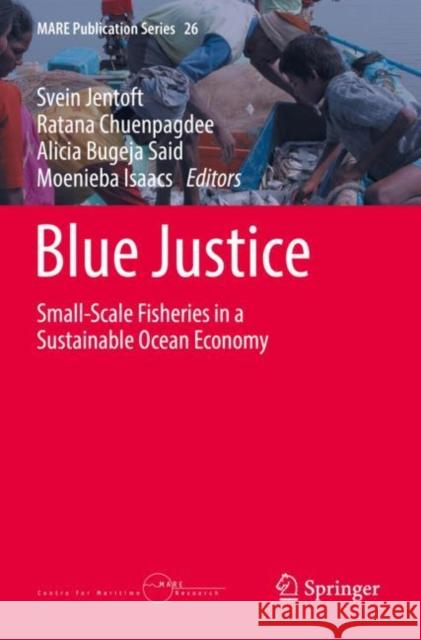
Blue Justice: Small-Scale Fisheries in a Sustainable Ocean Economy

ISBN-13: 9783030896263 / Angielski / Miękka / 2023 / 701 str.
Svein Jentoft; Ratana Chuenpagdee; Alicia Bugeja Said
Blue Justice: Small-Scale Fisheries in a Sustainable Ocean Economy Svein Jentoft Ratana Chuenpagdee Alicia Bugej 9783030896263 Springer - książkaWidoczna okładka, to zdjęcie poglądowe, a rzeczywista szata graficzna może różnić się od prezentowanej.

Blue Justice: Small-Scale Fisheries in a Sustainable Ocean Economy

ISBN-13: 9783030896263 / Angielski / Miękka / 2023 / 701 str.

Svein Jentoft; Ratana Chuenpagdee; Alicia Bugeja Said
cena 685,93
(netto: 653,27 VAT:  5%)

Najniższa cena z 30 dni: 655,41
Termin realizacji zamówienia:
ok. 22 dni roboczych
Bez gwarancji dostawy przed świętami

Darmowa dostawa!
inne wydania

For small-scale fisheries around the world, the Blue Growth and Blue Economy initiatives may provide sustainable development, but only insofar as they align with the global consensus enshrined in the Voluntary Guidelines for Securing Sustainable Small-Scale Fisheries in the context of Food Security and Poverty Eradication. If states do nothing to fulfill the promises they made when they endorsed these guidelines in 2014, the Blue Economy will come at a loss for small-scale fisheries and further their marginalization in the ocean economy. Under the umbrella of Blue Justice, this book demonstrates that these risks are real and must be considered as states implement their sustainable ocean development plans. These are human rights issues, which are embedded into governance principles and institutions and which make a difference for small-scale fisheries people in their daily lives. In stressing the importance of policies and institutions that build on the experiences of small-scale fisheries people in the contexts in which they operate, this book draws on case studies of small-scale fisheries from countries on all continents to clarify what Blue Justice entails for small-scale fisheries and make suggestions for real change.“Through the Blue Justice paradigm, this book flags the relevance of recognizing the potential impact that different factors, including the Blue Economy approach, could bring to fishing communities, their livelihoods, cultural traditions, and other potential multidimensional conflicts. Vulnerability in fishing communities can increase and inequalities can be reinforced at different levels if individuals and community capabilities are not strengthened… A first of its kind, not to be missed, this book is informative, purposeful, and pertinent in an era of change”.Silvia Salas, CINVESTAV, Marine Resources Department, Mérida, Mexico"The studies reveal that Blue Justice is a ‘governability’ issue, which requires establishing ‘right’ institutions, that are transdisciplinary (integrated), participatory, and holistic. It is implicit from these writings that the SSF Guidelines and Blue Growth initiatives do not form two different discourses, and that the implementation of the former would resolve many of the justice issues caused by the latter, in favor of small-scale fisheries and their communities".Oscar Amarasinghe, Professor & Chancellor, Ocean University of Sri Lanka and     President, Sri Lanka Forum for Small Scale Fisheries (SLFSSF)

For small-scale fisheries around the world, the Blue Growth and Blue Economy initiatives may provide sustainable development, but only insofar as they align with the global consensus enshrined in the Voluntary Guidelines for Securing Sustainable Small-Scale Fisheries in the context of Food Security and Poverty Eradication. If states do nothing to fulfill the promises they made when they endorsed these guidelines in 2014, the Blue Economy will come at a loss for small-scale fisheries and further their marginalization in the ocean economy. Under the umbrella of Blue Justice, this book demonstrates that these risks are real and must be considered as states implement their sustainable ocean development plans. These are human rights issues, which are embedded into governance principles and institutions and which make a difference for small-scale fisheries people in their daily lives. In stressing the importance of policies and institutions that build on the experiences of small-scale fisheries people in the contexts in which they operate, this book draws on case studies of small-scale fisheries from countries on all continents to clarify what Blue Justice entails for small-scale fisheries and make suggestions for real change. “Through the Blue Justice paradigm, this book flags the relevance of recognizing the potential impact that different factors, including the Blue Economy approach, could bring to fishing communities, their livelihoods, cultural traditions, and other potential multidimensional conflicts. Vulnerability in fishing communities can increase and inequalities can be reinforced at different levels if individuals and community capabilities are not strengthened… A first of its kind, not to be missed, this book is informative, purposeful, and pertinent in an era of change”. Silvia Salas, CINVESTAV, Marine Resources Department, Mérida, Mexico "The studies reveal that Blue Justice is a ‘governability’ issue, which requires establishing ‘right’ institutions, that are transdisciplinary (integrated), participatory, and holistic. It is implicit from these writings that the SSF Guidelines and Blue Growth initiatives do not form two different discourses, and that the implementation of the former would resolve many of the justice issues caused by the latter, in favor of small-scale fisheries and their communities".  Oscar Amarasinghe, Professor & Chancellor, Ocean University of Sri Lanka and     President, Sri Lanka Forum for Small Scale Fisheries (SLFSSF)

Kategorie:
Nauka, Polityka
Kategorie BISAC:
Science > Environmental Science (see also Chemistry - Environmental)
Science > Earth Sciences - Geography
Political Science > Public Policy - Environmental Policy
Wydawca:
Springer
Seria wydawnicza:
Mare Publication
Język:
Angielski
ISBN-13:
9783030896263
Rok wydania:
2023
Dostępne języki:
Ilość stron:
701
Waga:
1.28 kg
Wymiary:
23.5 x 15.5
Oprawa:
Miękka

Part 1: Justice is Needed in Three Governance Orders.- Chapter 1: Small-Scale Fisheries in the Blue Economy.- Chapter 2: Justice in Three Orders.- Part 2: Justice Issues Have Deep Historical Roots.- Chapter 3: Coastal Small-Scale Fisheries in Brazil: Resentment against Policy Disarray.- Chapter 4: Social (In)Justice for Small-Scale Fisherfolk in the Turks And Caicos Islands: Struggling to Stay Afloat in a Tax Haven.- Chapter 5: Governance for Blue Justice: Examining Struggles and Contradictions in Atlantic Canada’s Small-Scale Fisheries.- Part 3: Justice Issues Stem from Old and New Conflicts.- Chapter 6: Conflicts in the Artisanal Fishing Industry of Ghana: Reactions of Fishers to Regulatory Measures.- Chapter 7: Blue Justice and Small-Scale Fisher Migration: A Case Study from Sri Lanka.- Chapter 8: Marginalization and Reinvention of Small-Scale Fisheries: A Finnish Case Study of Social Justice.- Part 4: Justice is Systemic and Multi-Dimensional.- Chapter 9: An Evaluation of Multidimensional Conflicts in Small-Scale Fisheries in Nigeria.- Chapter 10: Perception and Reality of Justice in the Small-Scale Fisheries of Nigeria.- Chapter 11: Making Sense Of Multidimensional Injustice for Creating Viable Small-Scale Fisheries in Chilika Lagoon, Bay of Bengal.- Part 5: Justice Is a Territorial and Spatial Issue.- Chapter 12: Legalized Injustices: Old Providence Island (Colombia) Small Scale Fisheries in the Context of Geopolitical Disputes and State Power.- Chapter 13: Social Conflicts and Fishery Governance Systems in the Estuary and Coast of Pará, Amazonia, Brazil.- Chapter 14: Flagging Justice Matters in EU Fisheries Local Action Groups (FLAGs).- Part 6: Justice is Competitive in Alternative Livelihoods.- Chapter 15: Adopting a Blue Justice Lens for Japanese Small-Scale Fisheries: Important Insights from the Case of Inatori Kinme Fishery.- Chapter 16: Feeling the Pinch: Perceived Marginalization of Small-Scale Commercial Crab Fishers by an Expanding Recreational Sector.- Chapter 17: Making Pescatourism Just for Small-Scale Fisheries: The Case of Turkey and Lessons for Others.- Part 7: Justice is an Imminent Issue for Inland Fisheries.- Chapter 18: Exploring Challenges of “Blue Justice” in Landlocked Mountainous Countries: The Case of Nepal.- Chapter 19: Blue Justice and Inland Fisheries: How Justice Principles Could Support Transformative Knowledge Production in the Mekong Region.- Chapter 20: Navigating Conflicts to Improve Livelihoods of Traditional Communities Impacted by Hydroelectric Dams.- Part 8: Justice Issues Are More Evident when in Crisis .- Chapter 21: The 2019 Brazilian Oil Spill: Perceptions of Affected Fishers.- Chapter 22: Small-Scale Fishers in the Time of Covid-19: Reinforcing the Inequalities in the Food, Economic and Governance Systems in South Africa and Zimbabwe.- Chapter 23: Vulnerability and Social Justice among Fishing Households Headed by Women in Batticaloa, Sri Lanka.- Part 9: Justice is a Priori Condition for Sustainable Development.- Chapter 24: Understanding Vulnerability of Urban Waterfront Communities to Rapid Development: the Case of Lagos Lagoon, Nigeria.- Chapter 25: Mariculture Parks in the Philippines Push Small-Scale Fishers out of, or far into, the Waters.- Chapter 26: Incentives to Mariculture Development in Brazil: Environmental Injustice on Traditional Fishing Communities.- Chapter 27: Pescastemic Rights for Blue Justice: Aquaculture and Coal Power Complexes in Chile.- Part 10: Justice Is about Going beyond Claims.- Chapter 28: Institutionalizing Injustice? Aligning Governance Orders in Swedish Small-Scale Fisheries.- Chapter 29: Navigating Institutional Change in the French Atlantic Fishing Sector: How do Artisanal Fishers Obtain and Secure Fishing Opportunities?.- Chapter 30: Blue Justice and Small-Scale Fisher Mobilizations in Istanbul, Turkey: Justice Claims, Political Agency and Alliances.- Part 11: Justice Needs a Strong Knowledge Foundation.- Chapter 31: Transdisciplinarity and Blue Justice: The Alianza Nuquí, a Research-Action Platform for Wellbeing and Reflexive Governance in the Colombian Pacific Coast.- Chapter 32: Strengthening Capabilities of Individuals and Communities through a Small-Scale Fisheries Academy.- Chapter 33: Understanding Gender Equality in Small-Scale Fisheries and its Role in Enhancing Blue Justice.- Part 12: Justice is Better Understood from Experience.- Chapter 34: Collective Experiences, Lessons and Reflections about Blue Justice.- Chapter 35: Towards Blue Justice for Small-Scale Fisheries.

Svein Jentoft is Professor Emeritus at the Norwegian College of Fishery Science, UiT - The Arctic University of Norway. His long career as a social scientist specializing on fisheries management and fisheries communities has yielded numerous articles and books. He has been involved in and led many international projects in both the Global South and North. Jentoft is a founding member of TBTI, and has been leading a working group on ʻGoverning the Governanceʼ and a research cluster related to the ʻSSF Guidelinesʼ. He has edited and authored several TBTI books including ʻLife Above Waterʼ (published 2019).


Ratana Chuenpagdee is a university research professor at Memorial University of Newfoundland in St. John's, Canada. Her research emphasizes transdisciplinary approaches to coastal fisheries and ocean governance, focusing particularly on small-scale fisheries, marine protected areas, community-based management, and food security. Dr. Chuenpagdee leads Too Big To Ignore (TBTI), a global partnership for small-scale fisheries, and a research module on informing governance responses in a changing ocean for the Canadian-based Ocean Frontier Institute. Her most recent book 'Transdisciplinarity for Small-Scale Fisheries Governance: Analysis and Practice', co-edited with Svein Jentoft, was published by Springer in 2019.

Alicia Bugeja Said is a Fisheries Advisor within the Ministry for Agriculture, Fisheries, Food and Animal Rights, where she is responsible for implementing Fisheries Strategy through research and policy. Alicia holds a PhD in Anthropology and Conservation (University of Kent, UK), and has written about the socio-ecological resilience of fisheries systems, advocating for equitable and sustainable livelihoods of island communities. She has also held post-doctoral fellowships with Memorial University of Newfoundland (Canada), and IFREMER in France. She has published in high-impact journals and participated in several regional and international fora, and acted as the Maltese delegate for several COST Action programmes, focusing on Ocean Governance (OceanGov) and Marine Conservation (MARCONS).

Moenieba Isaacs is a Professor with the Institute for Poverty, Land, and Agrarian Studies (PLAAS) at the University of Western Cape. She focuses on the social and political processes of fisheries reform in South Africa and southern Africa, mainly through the lenses of small-scale fishers. She is an engaged and reflective scholar interested in Blue Justice, rethinking conservation, and governmentality of natural resources. She is a founding member of the TBTI network, and coined the term Blue Justice for small-scale fisheries at the 3rd World Small-Scale Fisheries Congress in 2018, Chiang Mai, Thailand, based on her work with fishers’ movements in South Africa for over 25 years.

For small-scale fisheries around the world, the Blue Growth and Blue Economy initiatives may provide sustainable development, but only insofar as they align with the global consensus enshrined in the Voluntary Guidelines for Securing Sustainable Small-Scale Fisheries in the context of Food Security and Poverty Eradication. If states do nothing to fulfill the promises they made when they endorsed these guidelines in 2014, the Blue Economy will come at a loss for small-scale fisheries and further their marginalization in the ocean economy. Under the umbrella of Blue Justice, this book demonstrates that these risks are real and must be considered as states implement their sustainable ocean development plans. These are human rights issues, which are embedded into governance principles and institutions and which make a difference for small-scale fisheries people in their daily lives. In stressing the importance of policies and institutions that build on the experiences of small-scale fisheries people in the contexts in which they operate, this book draws on case studies of small-scale fisheries from countries on all continents to clarify what Blue Justice entails for small-scale fisheries and make suggestions for real change. 

“Through the Blue Justice paradigm, this book flags the relevance of recognizing the potential impact that different factors, including the Blue Economy approach, could bring to fishing communities, their livelihoods, cultural traditions, and other potential multidimensional conflicts. Vulnerability in fishing communities can increase and inequalities can be reinforced at different levels if individuals and community capabilities are not strengthened… A first of its kind, not to be missed, this book is informative, purposeful, and pertinent in an era of change”.

Silvia Salas, CINVESTAV, Marine Resources Department, Mérida, Mexico 

"The studies reveal that Blue Justice is a ‘governability’ issue, which requires establishing ‘right’ institutions, that are transdisciplinary (integrated), participatory, and holistic. It is implicit from these writings that the SSF Guidelines and Blue Growth initiatives do not form two different discourses, and that the implementation of the former would resolve many of the justice issues caused by the latter, in favor of small-scale fisheries and their communities". 

Oscar Amarasinghe, Professor & Chancellor, Ocean University of Sri Lanka and    President, Sri Lanka Forum for Small Scale Fisheries (SLFSSF)



Udostępnij

Facebook - konto krainaksiazek.pl


Opinie o Krainaksiazek.pl na Opineo.pl

Partner Mybenefit

Krainaksiazek.pl w programie rzetelna firma Krainaksiaze.pl - płatności przez paypal

Czytaj nas na:

Facebook - krainaksiazek.pl
  • książki na zamówienie
  • granty
  • książka na prezent
  • kontakt
  • pomoc
  • opinie
  • regulamin
  • polityka prywatności

Zobacz:

  • Księgarnia czeska

  • Wydawnictwo Książkowe Klimaty

1997-2025 DolnySlask.com Agencja Internetowa

© 1997-2022 krainaksiazek.pl
     
KONTAKT | REGULAMIN | POLITYKA PRYWATNOŚCI | USTAWIENIA PRYWATNOŚCI
Zobacz: Księgarnia Czeska | Wydawnictwo Książkowe Klimaty | Mapa strony | Lista autorów
KrainaKsiazek.PL - Księgarnia Internetowa

Polityka prywatnosci - link
Krainaksiazek.pl - płatnośc Przelewy24
Przechowalnia Przechowalnia




