• Wyszukiwanie zaawansowane
  • Kategorie
  • Kategorie BISAC
  • Książki na zamówienie
  • Promocje
  • Granty
  • Książka na prezent
  • Opinie
  • Pomoc
  • Załóż konto
  • Zaloguj się

Blue Carbon Reservoir of the Blue Planet » książka


zaloguj się | załóż konto
Logo Krainaksiazek.pl

koszyk

konto

szukaj
topmenu
Księgarnia internetowa
Szukaj
Książki na zamówienie
Promocje
Granty
Książka na prezent
Moje konto
Pomoc
 
 
Wyszukiwanie zaawansowane
Pusty koszyk
Bezpłatna dostawa dla zamówień powyżej 20 złBezpłatna dostawa dla zamówień powyżej 20 zł

Kategorie główne

• Nauka
 [2949965]
• Literatura piękna
 [1857847]

  więcej...
• Turystyka
 [70818]
• Informatyka
 [151303]
• Komiksy
 [35733]
• Encyklopedie
 [23180]
• Dziecięca
 [617748]
• Hobby
 [139972]
• AudioBooki
 [1650]
• Literatura faktu
 [228361]
• Muzyka CD
 [398]
• Słowniki
 [2862]
• Inne
 [444732]
• Kalendarze
 [1620]
• Podręczniki
 [167233]
• Poradniki
 [482388]
• Religia
 [509867]
• Czasopisma
 [533]
• Sport
 [61361]
• Sztuka
 [243125]
• CD, DVD, Video
 [3451]
• Technologie
 [219309]
• Zdrowie
 [101347]
• Książkowe Klimaty
 [123]
• Zabawki
 [2362]
• Puzzle, gry
 [3791]
• Literatura w języku ukraińskim
 [253]
• Art. papiernicze i szkolne
 [7933]
Kategorie szczegółowe BISAC

Blue Carbon Reservoir of the Blue Planet

ISBN-13: 9788132235286 / Angielski / Miękka / 2016 / 299 str.
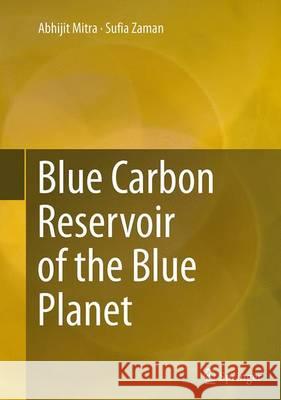
Abhijit Mitra; Sufia Zaman
Blue Carbon Reservoir of the Blue Planet Abhijit Mitra Sufia Zaman 9788132235286 Springer - książkaWidoczna okładka, to zdjęcie poglądowe, a rzeczywista szata graficzna może różnić się od prezentowanej.

Blue Carbon Reservoir of the Blue Planet

ISBN-13: 9788132235286 / Angielski / Miękka / 2016 / 299 str.

Abhijit Mitra; Sufia Zaman
cena 403,47 zł
(netto: 384,26 VAT:  5%)

Najniższa cena z 30 dni: 385,52 zł
Termin realizacji zamówienia:
ok. 22 dni roboczych
Bez gwarancji dostawy przed świętami

Darmowa dostawa!

The ever increasing emission of carbon dioxide due to rapid industrialization, urbanization, unplanned tourism and alteration of land use pattern is causing unprecedented changes to marine biodiversity. Irrespective of political philosophy, nation, caste, sex and religion, mankind is under the appalling shadow of climate change. Today nature-based approaches for the mitigation of climate change are increasingly accepted as part of the low-cost solution. Thrust has been given by several scientific communities to assess the magnitude and viability of carbon sequestering potential of plants. Coastal producer communities like mangroves, salt marsh grass, seagrass beds, and seaweeds absorb atmospheric carbon dioxide during the process of photosynthesis. This carbon known as the 'blue carbon' is thus associated with the marine and estuarine ecosystems. However, a number of gaps in our scientific knowledge on blue carbon domain still exist. Molluscs, coral reefs, phytoplankton, which are amongst the important storehouses of carbon, have not been addressed. Very few scientific studies on the carbon stored in these valuable natural vaults have been performed, and no data bank is available on their carbon sequestering capacity on global basis. The methodologies for assessing blue carbon stock also need further standardization so that credit from blue carbon reservoir is accepted by the International bodies in the form of a concrete policy. It is a matter of great appreciation that Conservation International (CI), the International Union for Conservation of Natural Resources (IUCN), and the Intergovernmental Oceanic Commission (IOC) of UNESCO is collaborating with governments, research institutions, non-governmental and international organizations, and communities around the world to develop management approaches, financial incentives and policy mechanisms for ensuring conservation and restoration of blue carbon ecosystems and implement projects around the world that demonstrate the feasibility of blue carbon accounting, management, and incentive agreements. The present book has critically presented the data bank for each community of blue carbon not merely in the form of text description, but also through case studies that are the outcomes of research projects and pilot programmes.


Kategorie:
Nauka, Geografia
Kategorie BISAC:
Science > Earth Sciences - Oceanography
Science > Earth Sciences - Meteorology & Climatology
Science > Environmental Science (see also Chemistry - Environmental)
Wydawca:
Springer
Język:
Angielski
ISBN-13:
9788132235286
Rok wydania:
2016
Wydanie:
Softcover Repri
Ilość stron:
299
Waga:
6.59 kg
Wymiary:
25.4 x 17.8
Oprawa:
Miękka
Wolumenów:
01

Chapter 1: The Blue Zone of the Planet Earth.- Chapter 2: Biodiversity of the Blue Zone.- Chapter 3: Blue Carbon Assessment.- Chapter 4: Blue Carbon in Floral Community.- Chapter 5: Phytoplankton Carbon Stock.- Chapter 6: Blue Carbon in Faunal Community.- Chapter 7: Threats to Blue Carbon Reservoir.- Chapter 8: Road Map to Expand Blue Carbon Reservoir.

Dr. Abhijit Mitra, Associate Professor and former Head, Dept. of Marine Science, University of Calcutta (INDIA) has been active in the sphere of Oceanography since 1985. He obtained his Ph. D as NET qualified scholar in 1994. Since then he joined Calcutta Port Trust and WWF (World Wide Fund for Nature-India), in various capacities to carry out research programmes on environmental science, biodiversity conservation, climate change and carbon sequestration. Presently Dr. Mitra is serving as the advisor of Oceanography Division of Techno India University, Kolkata. He has to his credit about 274 scientific publications in various National and International journals, and 26 books of postgraduate standards. Dr. Mitra is presently the member of several committees like PACON International, IUCN, SIOS, Mangrove Society of India etc. and has successfully completed about 16 projects on biodiversity loss in fishery sector, coastal pollution, aquaculture, alternative livelihood, climate change and carbon sequestration. Dr. Mitra also visited as faculty member and invited speaker in several Universities of Singapore, Kenya, Oman and USA. In 2008 Dr. Mitra was invited as visiting fellow at University of Massachusetts at Dartmouth, USA to deliver a series of lecture on Climate Change. Dr. Mitra also successfully guided 22 Ph.D students. Presently his research areas include environmental science, mangrove ecology, sustainable aquaculture, alternative livelihood, climate change and carbon sequestration.

Dr. Sufia Zaman, presently serving as Adjunct Assistant Professor in the Department of Oceanography in Techno India University (Kolkata) started her career in the field of Marine Science since 2001. She worked in the rigorous region of Indian Sundarbans and has wide range of experience in exploring the floral and faunal diversity of Sundarbans. She has published 1 book on carbon sequestration, 45 scientific papers and contributed chapters in several books on biodiversity, environmental science, aquaculture and livelihood development. Dr. Zaman is presently a member of Fisheries Society of India. She is also running projects on carbon sequestration by mangroves of Indian Sundarbans. She is the recipient of DST Women Scientist and Jawaharlal Memorial Doctoral fellowship awards. Her areas of research include aquaculture, fish nutrition, phytoplankton diversity, climate change and mangrove ecology. Dr. Zaman is also the first researcher in the maritime state of West Bengal (India), who initiated trial experiments on iron fertilization and subsequent enhancement of primary (phytoplankton) and secondary (fish) productions in the brackish water ponds of Indian Sundarbans with the financial assistance of Department of Science and Technology, Government of India.

The ever increasing emission of carbon dioxide due to rapid industrialization, urbanization, unplanned tourism and alteration of land use pattern is causing unprecedented changes to marine biodiversity. Irrespective of political philosophy, nation, caste, sex and religion, mankind is under the appalling shadow of climate change. Today nature-based approaches for the mitigation of climate change are increasingly accepted as part of the low-cost solution. Thrust has been given by several scientific communities to assess the magnitude and viability of carbon sequestering potential of plants. Coastal producer communities like mangroves, salt marsh grass, sea grass beds, and seaweeds absorb atmospheric carbon dioxide during the process of photosynthesis. This carbon known as the ‘blue carbon’ is thus associated with the marine and estuarine ecosystems. However, a number of gaps in our scientific knowledge on blue carbon domain still exist. Molluscs, coral reefs, phytoplankton, which are amongst the important storehouses of carbon, have not been addressed. Very few scientific studies on the carbon stored in these valuable natural vaults have been performed, and no data bank is available on their carbon sequestering capacity on global basis.

The methodologies for assessing blue carbon stock also need further standardization so that credit from blue carbon reservoir is accepted by the International bodies in the form of a concrete policy. It is a matter of great appreciation that Conservation International (CI), the International Union for Conservation of Natural Resources (IUCN), and the Intergovernmental Oceanic Commission (IOC) of UNESCO is collaborating with governments, research institutions, non-governmental and international organizations, and communities around the world to develop management approaches, financial incentives and policy mechanisms for ensuring conservation and restoration of blue carbon ecosystems and implement projects around the world that demonstrate the feasibility of blue carbon accounting, management, and incentive agreements.

The present book has critically presented the data bank for each community of blue carbon not merely in the form of text description, but also through case studies that are the outcomes of research projects and pilot programmes.




Udostępnij

Facebook - konto krainaksiazek.pl


Opinie o Krainaksiazek.pl na Opineo.pl

Partner Mybenefit

Krainaksiazek.pl w programie rzetelna firma Krainaksiaze.pl - płatności przez paypal

Czytaj nas na:

Facebook - krainaksiazek.pl
  • książki na zamówienie
  • granty
  • książka na prezent
  • kontakt
  • pomoc
  • opinie
  • regulamin
  • polityka prywatności

Zobacz:

  • Księgarnia czeska

  • Wydawnictwo Książkowe Klimaty

1997-2025 DolnySlask.com Agencja Internetowa

© 1997-2022 krainaksiazek.pl
     
KONTAKT | REGULAMIN | POLITYKA PRYWATNOŚCI | USTAWIENIA PRYWATNOŚCI
Zobacz: Księgarnia Czeska | Wydawnictwo Książkowe Klimaty | Mapa strony | Lista autorów
KrainaKsiazek.PL - Księgarnia Internetowa

Polityka prywatnosci - link
Krainaksiazek.pl - płatnośc Przelewy24
Przechowalnia Przechowalnia




