• Wyszukiwanie zaawansowane
  • Kategorie
  • Kategorie BISAC
  • Książki na zamówienie
  • Promocje
  • Granty
  • Książka na prezent
  • Opinie
  • Pomoc
  • Załóż konto
  • Zaloguj się

Blinding as a Solution to Bias: Strengthening Biomedical Science, Forensic Science, and Law » książka


zaloguj się | załóż konto
Logo Krainaksiazek.pl

koszyk

konto

szukaj
topmenu
Księgarnia internetowa
Szukaj
Książki na zamówienie
Promocje
Granty
Książka na prezent
Moje konto
Pomoc
 
 
Wyszukiwanie zaawansowane
Pusty koszyk
Bezpłatna dostawa dla zamówień powyżej 20 złBezpłatna dostawa dla zamówień powyżej 20 zł

Kategorie główne

• Nauka
 [2946912]
• Literatura piękna
 [1852311]

  więcej...
• Turystyka
 [71421]
• Informatyka
 [150889]
• Komiksy
 [35717]
• Encyklopedie
 [23177]
• Dziecięca
 [617324]
• Hobby
 [138808]
• AudioBooki
 [1671]
• Literatura faktu
 [228371]
• Muzyka CD
 [400]
• Słowniki
 [2841]
• Inne
 [445428]
• Kalendarze
 [1545]
• Podręczniki
 [166819]
• Poradniki
 [480180]
• Religia
 [510412]
• Czasopisma
 [525]
• Sport
 [61271]
• Sztuka
 [242929]
• CD, DVD, Video
 [3371]
• Technologie
 [219258]
• Zdrowie
 [100961]
• Książkowe Klimaty
 [124]
• Zabawki
 [2341]
• Puzzle, gry
 [3766]
• Literatura w języku ukraińskim
 [255]
• Art. papiernicze i szkolne
 [7810]
Kategorie szczegółowe BISAC

Blinding as a Solution to Bias: Strengthening Biomedical Science, Forensic Science, and Law

ISBN-13: 9780128024607 / Angielski / Twarda / 2016 / 388 str.
Aaron Kesselheim
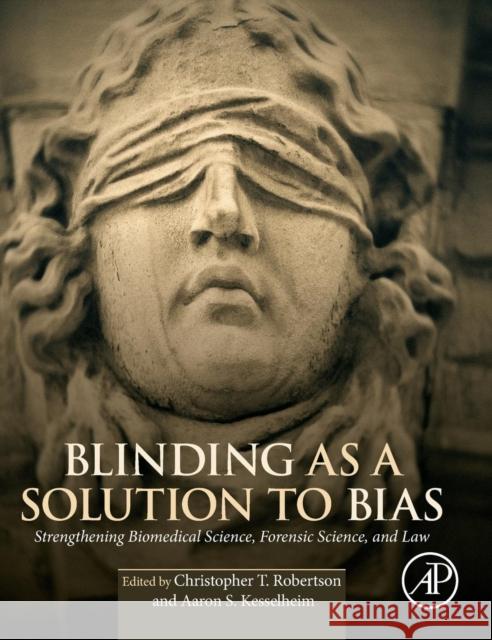
Blinding as a Solution to Bias: Strengthening Biomedical Science, Forensic Science, and Law Aaron Kesselheim 9780128024607 ACADEMIC PRESS - książkaWidoczna okładka, to zdjęcie poglądowe, a rzeczywista szata graficzna może różnić się od prezentowanej.

Blinding as a Solution to Bias: Strengthening Biomedical Science, Forensic Science, and Law

ISBN-13: 9780128024607 / Angielski / Twarda / 2016 / 388 str.

Aaron Kesselheim
cena 357,22
(netto: 340,21 VAT:  5%)

Najniższa cena z 30 dni: 357,22
Termin realizacji zamówienia:
ok. 30 dni roboczych
Dostawa w 2026 r.

Darmowa dostawa!

What information should jurors have during court proceedings to render a just decision? Should politicians know who is donating money to their campaigns? Will scientists draw biased conclusions about drug efficacy when they know more about the patient or study population? The potential for bias in decision-making by physicians, lawyers, politicians, and scientists has been recognized for hundreds of years and drawn attention from media and scholars seeking to understand the role that conflicts of interests and other psychological processes play. However, commonly proposed solutions to biased decision-making, such as transparency (disclosing conflicts) or exclusion (avoiding conflicts) do not directly solve the underlying problem of bias and may have unintended consequences. Robertson and Kesselheim bring together a renowned group of interdisciplinary scholars to consider another way to reduce the risk of biased decision-making: blinding. What are the advantages and limitations of blinding? How can we quantify the biases in unblinded research? Can we develop new ways to blind decision-makers? What are the ethical problems with withholding information from decision-makers in the course of blinding? How can blinding be adapted to legal and scientific procedures and in institutions not previously open to this approach? Fundamentally, these sorts of questions--about who needs to know what--open new doors of inquiry for the design of scientific research studies, regulatory institutions, and courts. The volume surveys the theory, practice, and future of blinding, drawing upon leading authors with a diverse range of methodologies and areas of expertise, including forensic sciences, medicine, law, philosophy, economics, psychology, sociology, and statistics.

  • Introduces readers to the primary policy issue this book seeks to address: biased decision-making.
  • Provides a focus on blinding as a solution to bias, which has applicability in many domains.
  • Traces the development of blinding as a solution to bias, and explores the different ways blinding has been employed.
  • Includes case studies to explore particular uses of blinding for statisticians, radiologists, and fingerprint examiners, and whether the jurors and judges who rely upon them will value and understand blinding.


Kategorie:
Nauka, Medycyna
Kategorie BISAC:
Law > Forensic Science
Medical > Forensic Medicine
Wydawca:
ACADEMIC PRESS
Język:
Angielski
ISBN-13:
9780128024607
Rok wydania:
2016
Ilość stron:
388
Waga:
0.99 kg
Wymiary:
23.62 x 19.3 x 2.54
Oprawa:
Twarda
Wolumenów:
01

"Since the time of Ben Franklin, scientists have recognized the power of blinding to help us see the world more objectively. This collection of essays explores the complicated psychology of blinding, while making a compelling case that we have yet to fully embrace the power of invisibility." --Peter A. Ubel, University Professor, Fuqua School of Business, Duke University

"Robertson and Kesselheim's book provides an authoritative look at the practice of blinding and how it can be used to improve our health care and legal systems. It is a wonderful resource for medical students, policymakers, and anyone else interested in studying conflicts of interest and helping address bias in clinical practice and biomedical research." --Jerry Avorn, Professor of Medicine, Harvard Medical School

"This extraordinary collection of scholars takes on in exhaustive detail one of the foundational questions of public policy - under what circumstances are decisions improved by limiting decisionmakers' access to information.  From orchestra auditions and secret ballots to blinded trials and the parole evidence rule, the examples discussed in in this volume's broad-ranging contributions illuminate when veils of ignorance should be embraced." --Ian Ayres, Professor, Yale Law School

BLINDING AND BIAS Chapter 1. A Primer on the Psychology of Cognitive Bias (Carla Lindsay MacLean and Itiel Dror) Chapter 2. Why Blinding? How Blinding? A Theory of Blinding and Its Application to Institutional Corruption (Christopher Robertson)

BIOMEDICAL SCIENCE Chapter 3. From Trials to Trials: Blinding, Medicine, and Honest Adjudication (Scott H. Podolsky, David S. Jones, and Ted J. Kaptchuk) Chapter 4. Blinding in Biomedical Research: An Essential Method to Reduce Risk of Bias (Asbjorn Hrobjartsson) Chapter 5. Blind Peer Review by Academic Journals (Emily A. Largent and Richard T. Snodgrass) Chapter 6. Clinical Trial Blinding in the Age of Social Media (Paul Wicks) Chapter 7. The Ethics of Single-Blind Trials in Biomedicine (Franklin G. Miller) Chapter 8: "Money Blinding” as a Solution to Biased Design and Conduct of Scientific Research (Christopher Robertson and Marc A. Rodwin)

FORENSIC SCIENCE:  CRIMINAL AND CIVIL Chapter 9. Determining the Proper Evidentiary Basis for an Expert Opinion: What Do Experts Need to Know and When Do They Know Too Much? (William C. Thompson) Chapter 10. Minimizing and Leveraging Bias in Forensic Science (Roger Koppl and Dan Krane) Chapter 11. What Do Statisticians Really Need to Know, and When Do They Need to Know It? (D. James Greiner) Chapter 12. Using Blind Reviews to Address Biases in Medical Malpractice (Jeffrey D. Robinson) Chapter 13. Mock Juror and Jury Assessment of Blinded Expert Witnesses (Megan S. Wright, Christopher Robertson, and David V. Yokum) Chapter 14. Disclosure Discretion and Selection Bias in Blinding of Experts (Christopher Robertson)

BLINDING IN LEGAL INSTITUTIONS Chapter 15. Why Eyes? Cautionary Tales from Law's Blindfolded Justice (Judith Resnik and Dennis Curtis) Chapter 16. A Theory of Anonymity (Jeffery M. Skopek) Chapter 17. The Cases for and Against Blindfolding the Jury (Shari Seidman Diamond) Chapter 18. The Compliance Equation: Creating a More Ethical and Equitable Campaign Financing System by Blinding Contributions to Federal Candidates (Bertram Levine and Michael Johnston) Chapter 19. Blinding Eyewitness Identifications (Brandon Garrett) Chapter 20. Blind Appointments in Arbitration (Sergio Puig) Chapter 21. Psychological Obstacles to the Judicial Disqualification Inquiry,and Blinded Review was an Aid (David V. Yokum) Chapter 22. Masking Information Source Within the Internal Revenue Service (Karie Davis-Nozemack) Chapter 23. Blinding the Law: The Potential Virtue of Legal Uncertainty (Yuval Feldman and Shahar Lifshitz)


Udostępnij

Facebook - konto krainaksiazek.pl


Opinie o Krainaksiazek.pl na Opineo.pl

Partner Mybenefit

Krainaksiazek.pl w programie rzetelna firma Krainaksiaze.pl - płatności przez paypal

Czytaj nas na:

Facebook - krainaksiazek.pl
  • książki na zamówienie
  • granty
  • książka na prezent
  • kontakt
  • pomoc
  • opinie
  • regulamin
  • polityka prywatności

Zobacz:

  • Księgarnia czeska

  • Wydawnictwo Książkowe Klimaty

1997-2025 DolnySlask.com Agencja Internetowa

© 1997-2022 krainaksiazek.pl
     
KONTAKT | REGULAMIN | POLITYKA PRYWATNOŚCI | USTAWIENIA PRYWATNOŚCI
Zobacz: Księgarnia Czeska | Wydawnictwo Książkowe Klimaty | Mapa strony | Lista autorów
KrainaKsiazek.PL - Księgarnia Internetowa

Polityka prywatnosci - link
Krainaksiazek.pl - płatnośc Przelewy24
Przechowalnia Przechowalnia





